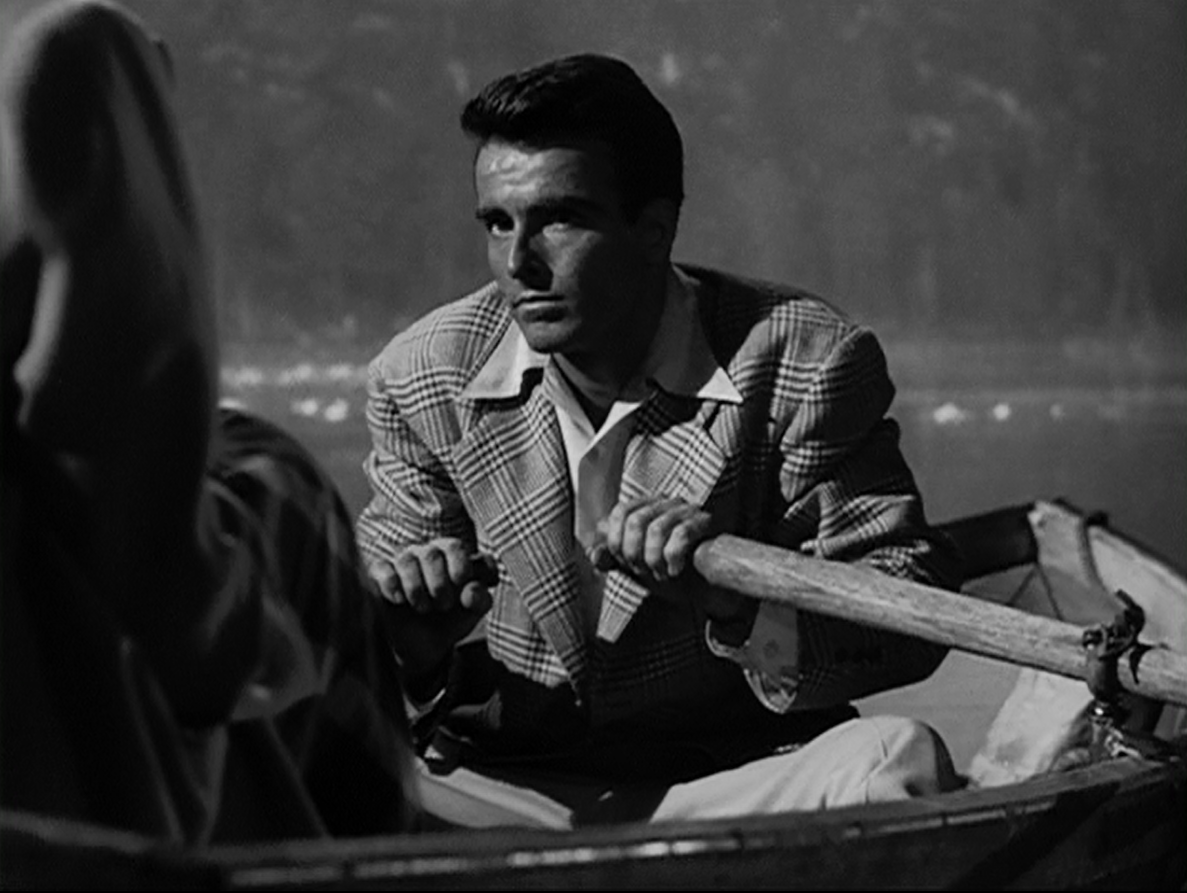
A PLACE IN THE SUN has managed to hold its bright place in the vast and glittering cinema cosmos, the light from its deceased stars able to reach old fans and make new ones decades after its passions first burned across screens in 1951. Forgive that purplish prosing, but it is a romance after all, one that sends many critics and personality worshipers into gush contests of praise; the breathless response occasionally goes a gasp too far with “OMG, Monty & Liz!” swooning. But plaudits are definitely warranted: past the love-to-die (and kill)-for theme, it’s also a telling social class drama and snapshot period piece, a crime & punishment thriller and certainly one sleek 122-minute slice of classic Old Hollywood craftsmanship. *

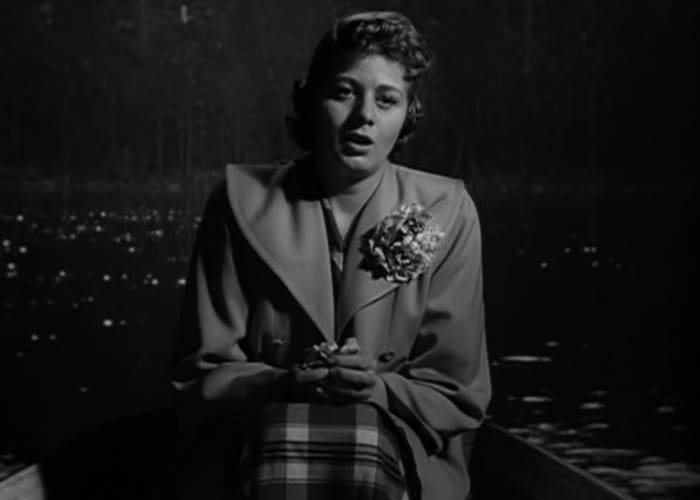
Poor and not well educated, but ambitious and anxious to improve his lot, ‘George Eastman’ (Montgomery Clift) takes an entry level job at his wealthy uncle’s factory. George breaks company rules by getting involved with naive, somewhat dowdy co-worker, ‘Alice Tripp’ (Shelley Winters), who falls hard for him. He moves up in the company and is gradually allowed to mix with his ‘betters’ but he also takes another risk by getting hot & heavy with socialite beauty ‘Angela Vickers’ (Elizabeth Taylor), and soon enough his self-created relationship mousetrap snaps shut. Not just on him.
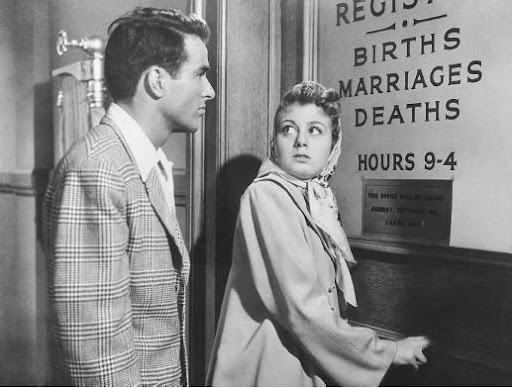
The screenplay by Harry Brown and Michael Wilson took on Theodore Dreiser’s 1925 novel “An American Tragedy” and a subsequent play based on it, wisely cut to the heart of the story (the book a daunting 896 pages), updated it a quarter century and changed character names. Elegantly produced & painstakingly directed by George Stevens for $2,300,000, its $10,000,000 gross was #11 at the year’s box office and industry peers awarded Oscars for Director, Screenplay, Cinematography, Music Score, Film Editing and Costume Design. Further nominations came for Best Picture, Actor (Clift) and Actress (Winters).
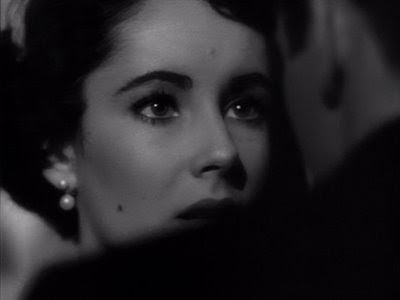
Meticulously constructed from frame 1 to finish, beautifully photographed by William C. Mellor, the ‘American tragedy’ succeeds in nearly all aspects. We think Franz Waxman’s score lays on the ‘sweeping romance’ stuff a violin (or five) too far, but is quite effective in the suspenseful elements when they come up. And while Raymond Burr’s zealous-to-frothing prosecutor is theatrically fun the courtroom histrionics with the boat are too much (oarful?) to fully accept. Minor quibbles next to the overall excellence. Already lauded for The Search, Red River and The Heiress, Clift continued his meteoric rise with his emotionally entrapped George, a striver/weakling/hero/cad/villain/victim whose choices on one hand damn him as a louse (dumping a sweet girl, literally overboard, for someone both immature and out of his league, and at the same time, absolve him—at least if you’re a guy, and a little honest—considering his conscience rudder has to steer from frumpish, whining Shelley Winters to panting goddess Elizabeth Taylor. Gosh, what to do? It’s one of his best roles (along with From Here To Eternity, Judgement at Nuremberg and Wild River), prime material for his hesitant off-kilter delivery. Taylor’s a drop-dead vision, those Pandora’s box closeups might as well exist in a dream. Winters excels in one of her best ever performances, certainly most sympathetic, with the possible exception of her also-victimized puppy in The Night Of The Hunter.

With Anne Revere (George’s suffocating, religion-swacked mama), Fred Clark, Herbert Hayes, Shepperd Strudwick, Walter Sande, Keefe Brasselle, Ted de Corsia, John Ridgely, Douglas Spencer, Paul Frees, Ian Wolfe, Kathleen Freeman.
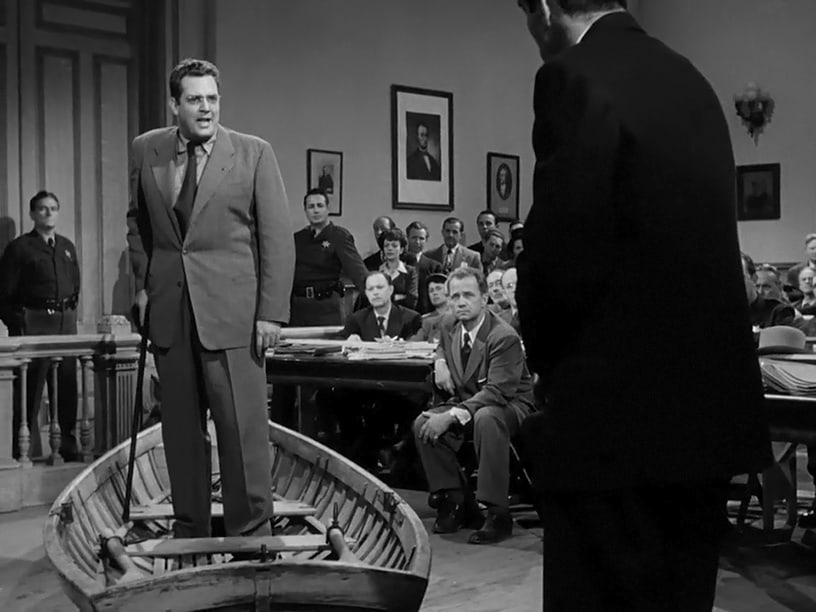
* Placed & spaced in the sun—busy Burr’s far cry from Perry Mason was one of eight 1951 movies he appeared in. Anne Revere’s left-wing politics and decency ran afoul of the McCarthy scoundrels and she—a direct descendant of Paul Revere yet—was blacklisted that year: it was nineteen before she’d make another film. Dreiser’s doorstop book was inspired by a real life murder that took place in 1906. It had been filmed before back in 1931, using Dreiser’s title. Though released in the Fall of 1951, A Place In The Sun was shot in 1949. Taylor was 17 at the time, Clift 30, Winters 29. Stevens later used Winters in The Diary Of Anne Frank (netting her an Oscar) and gave her a cameo in The Greatest Story Ever Told. He put Taylor into Giant, a smash, and later The Only Game In Town, a woofer. The ‘legendary’—if you give a fig about it—‘special friendship’ between two talented, attractive but royally messed up movie stars Liz & Monty began with ‘Place‘, and they worked together again in Raintree County and Suddenly, Last Summer. Neither come off well in either the overblown ‘Raintree’ or wackadoodle ‘Summer’: but they surely do glow together in A Place In The Sun.


 Movies ala Mark
Love your shoutout to Anne Revere. One of the best character actresses who ever appeared on film. I consider her America’s Flora Robson.
When someone says something like “America’s Flora Robson” you know you’re hearing from a classic film fan. I also like that she didn’t cower before the Congressional creeps.
That took great courage.
Maddy