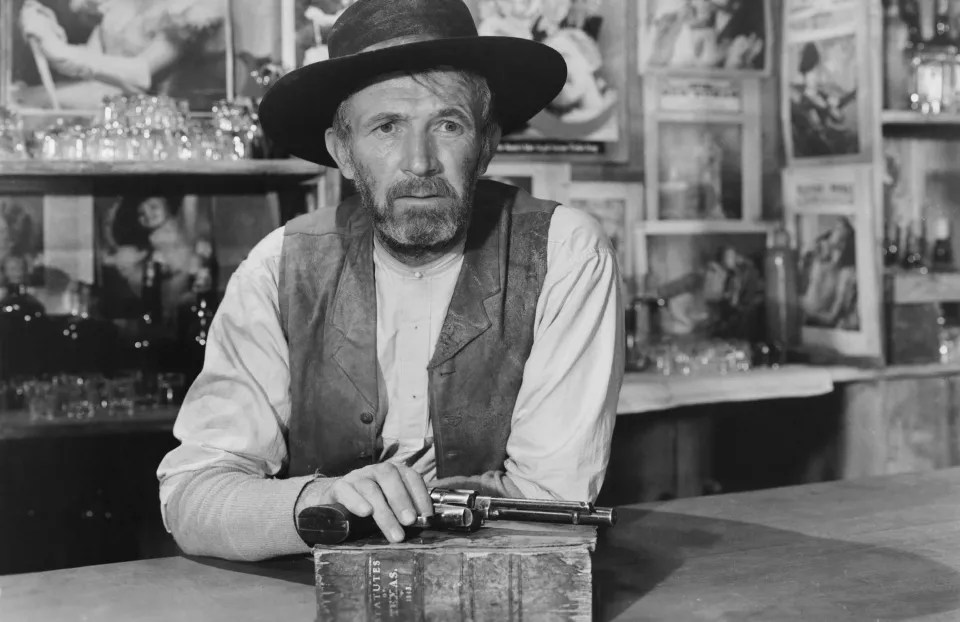
THE WESTERNER galloped into 1940 as the best of that year’s passel of upscale cowpokes in a durably adaptive genre. Produced by Samuel Goldwyn, starring Gary Cooper (the nation’s #1 wage earner), it was superbly directed by William Wyler, knocking back another in a remarkable run of winners. Though deservedly holding a big rep, it wasn’t a major boxoffice hit, placing 41st; still, a $3,500,000 gross was respectable enough to cancel out the $1,000,000 budget. Walter Brennan, 46, aced his third Supporting Actor Oscar; both the Story and Art Direction drew nominations. *
“Don’t spill none of that liquor, son. It eats right into the bar.”

Texas, 1882. Amiable drifter ‘Cole Harden’ (Coop), falsely accused of stealing a horse (belonging to a scruffy lowlife called ‘Chickenfoot’) is brought before corrupt ‘hanging judge’ Roy Bean (Brennan) who runs the law-optional town of Vinegaroon. Cole foxes Bean with Roy’s weak spot for famous actress Lily Langtry (claiming to have a lock of her hair) and over more than a few drinks decide they can get along after all, sparing Cole one of Bean’s “suspended sentences“. Then Cole befriends farmer’s daughter ‘Jane-Ellen Matthews’ (Doris Davenport), which is a problem since Bean and his cattle rancher cronies plague homesteaders.

The rancher-sodbuster angle is old as the ever-contested real estate, but thanks to the clever screenplay, astute direction and gratifyingly fun acting it emerges fresh (if appropriately dusty) in this tall tale, with the ‘historical’ inclusion of real-life scoundrel Bean to make it all neat and (il)legal. Though he purportedly didn’t care for the picture (and resisted doing it since Goldwyn had stuck him into a couple of duds) Cooper, 38, shines here, the lanky charm unforced; his hangover scene is one of the funniest he ever did. He had to be on top of his game to hold the screen against Brennan, who’s perfect as the sly, oddly engaging yet decidedly dangerous self-proclaimed justice dispenser. Savvy Walter knew a plum role when he saw one, and he draws the lion’s share of applause for his merrily malevolent cuss, but Cooper’s no slouch at scene-stealing. The two play off one another like a low-key frontier comedy team. **

Pretty, likable Doris Davenport, 22 (she’d been considered for Gone With The Wind‘s ‘Scarlett O’Hara’) had appeared in just a handful of pictures and did just one more minor one after this; her warm smile wins you over. New to the screen are Dana Andrews (30, debut year, 4th film) and Forrest Tucker (21, debut); both register to good effect.
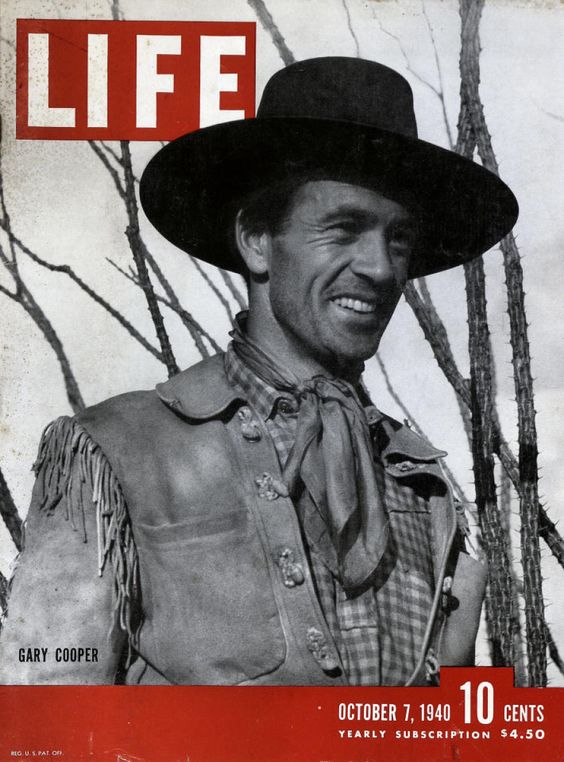 Great writing: amplifying a story from Stuart M. Lake, Jo Swerling and Niven Busch wrote the script, while pitching in without credit were W.R. Burnett, Lillian Hellman, Oliver La Farge and Dudley Nichols.
Shooting on Arizona locations, Gregg Toland’s clean-cut b&w cinematography adds atmospheric luster to the wide-open scenery, simply adorned sets and convincingly rugged costuming. There’s a quite impressive wildfire sequence and a rousing fistfight between Cooper and Tucker. In his first go the genre, Dimitri Tiomkin wrassel’d up the score; Alfred Newman did some touch-ups. For some additional, uncredited work, Goldwyn briefly enlisted director Lewis Milestone and cameraman Rudolph Maté.
100 minutes, with Fred Stone, Paul Hurst (‘Chickenfoot’), Charles Halton (the impatient undertaker), Tom Tyler, Trevor Bardette, Jack Pennick and Lilian Bond (Miss Langtry).

* 1940’s posse, a solidly entertaining baker’s dozen, in order of box office stampede: Boom Town, Northwest Passage, The Mark Of Zorro, Sante Fe Trail, Brigham Young, Virginia City, Northwest Mounted Police (Cooper), The Return Of Frank James, The Westerner, Arizona, Dark Command, When The Daltons Rode, Kit Carson.
** This marked the 4th of eight Cooper-Brennan collaborations, and Brennan’s Oscar win caused a rule-ruckus: not only dang good, he was very popular with the ‘little folk’—the extras–whose votes helped him triple-win the gold. The Academy changed the rules and the extras were afterwards excluded. Brennan did get one more nomination, for 1941’s Sergeant York, and deserved (but didn’t receive) noms for My Darling Clementine and Rio Bravo.

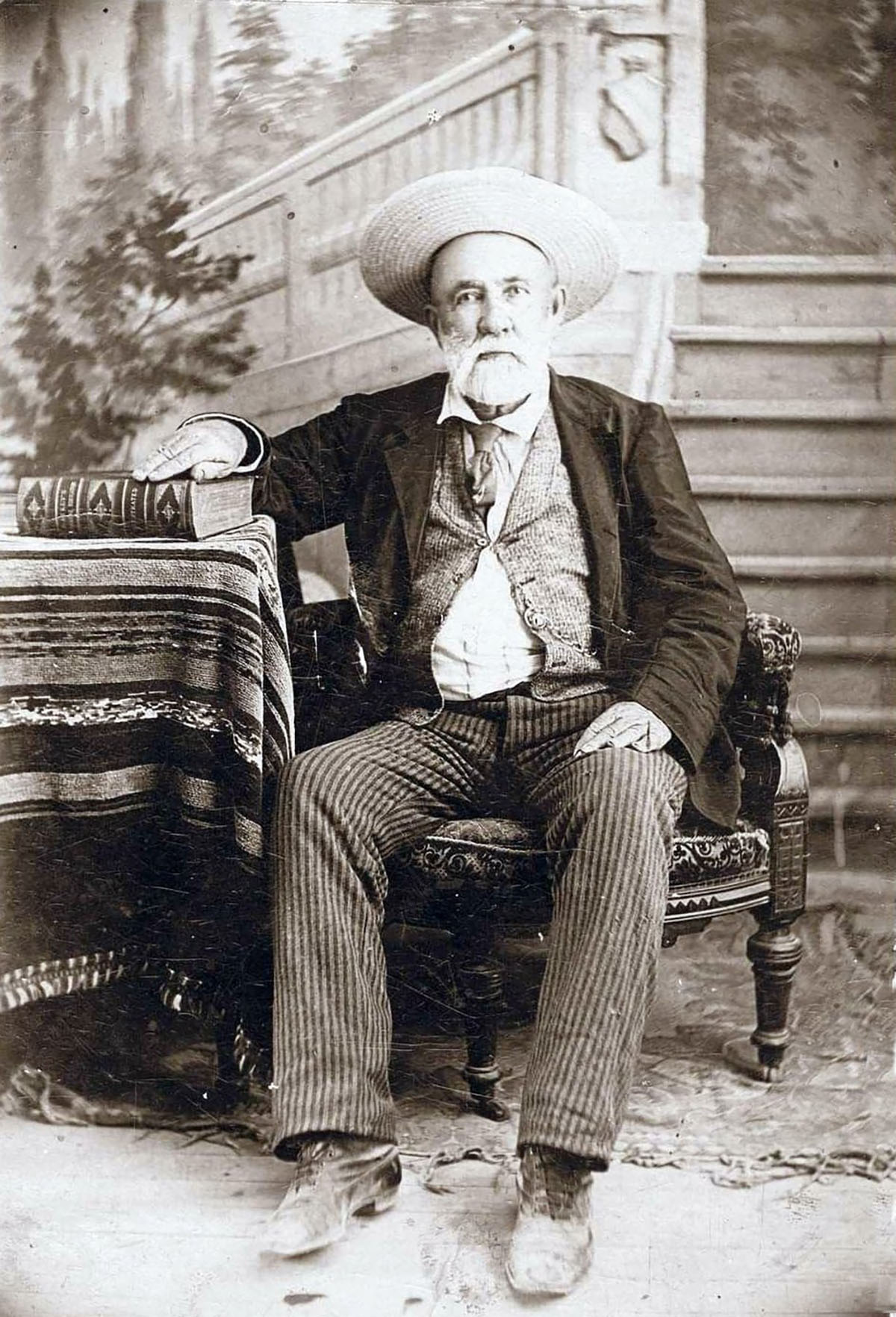
“The Only Law West Of The Pecos”—the cacti-comforted rascal Phantly Roy Bean Jr. (1825– 1903) would later turn up on TV in a 1955 series, 39 episodes of Judge Roy Bean played by crusty cuss expert Edgar Buchanan. Victor Jory took a saguaro-chawing swipe at him in 1969’s minor botch A Time For Dying and then Paul Newman went full loco in 1972’s goofy, star-spangled shoot-em-up The Life And Times Of Judge Roy Bean.
 Movies ala Mark