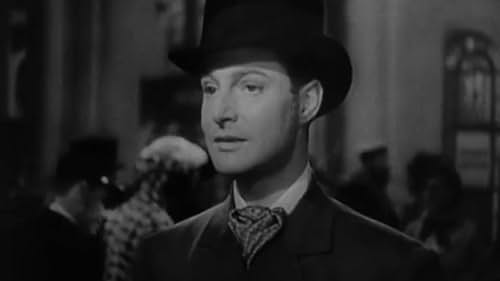
GOODBYE, MR. CHIPS was a big hit in 1939, ranking #12 in that year’s fabled array of classics, and long carried a nostalgia cachet for its gentle-sentimental story and the admirable performance of its unassuming hero by the likewise disposed Robert Donat. Besides the fine work from the star (and his unexpected Oscar win over surefire competition), this seminal ‘teacher’ lesson benefited from Hollywood’s ingrained sympathy to an idealized England, and an all-round skillful production. Topping it off was the introduction of a new charmer from Britain, 34-year-old Greer Garson.
“I’m sorry for shy people. They must be…awfully lonely, sometimes.”

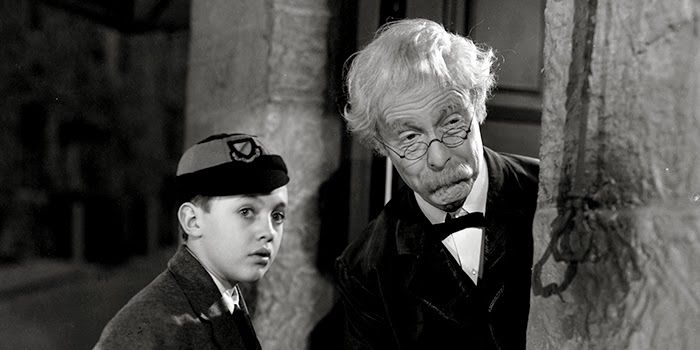
In his early 20s ‘Charles Chipping’ (Donat) begins teaching Latin at a prestigious public school that for generations has educated the sons of the upper class. Decent makeup and performance skill age Donat (who was 33) over the story’s six decades, 1870 to 1933. The boys become men whose own lads in turn become Chipping’s pupils. Later many won’t survive the 1914-18 passage of World War One. Self-effacing to a fault, ‘Chip’s (the students nickname sticks) becomes an institution within one. Partway thru his span he’s blessed by meeting ‘Kathy Ellis’ (Garson), and they marry.
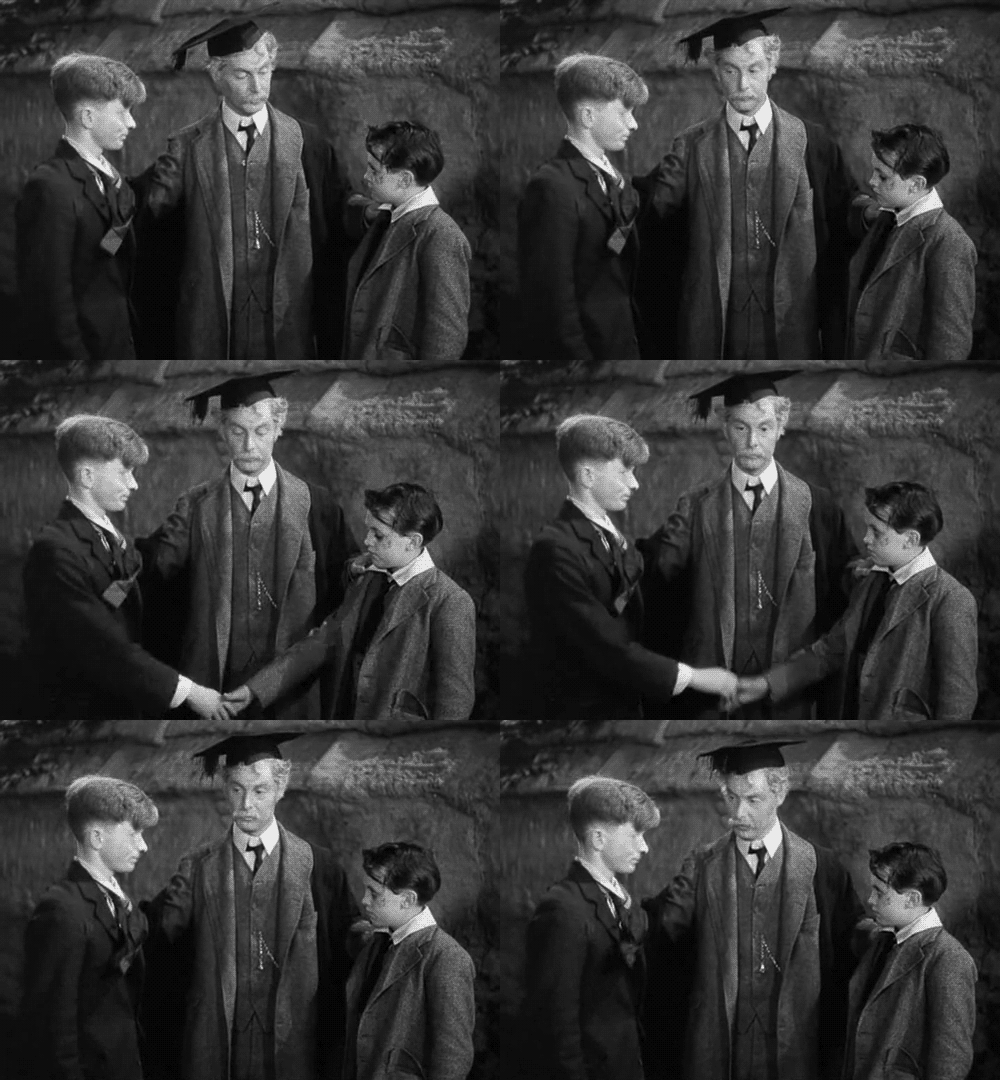
Though commissioned and bankrolled by MGM, instead of ringing deaf notes by casting Americans in Hollywood, the production was tasked to their Brit branch, filming at Denham Studios in Buckinghamshire. Almost everything was done on sets with the exception of a few sequences at Repton School in the Midlands, doubling the fictional ‘Brookfield’ of novel and film. Hundreds of Repton lads served as extras. Directing, Sam Wood (Our Town, Kings Row, For Whom The Bell Tolls) was the lone Yank in an otherwise all-Blighty crew. The script, adapted from James Hilton’s 1934 novella, was put together by a vetted trio of writing talent in R.C. Sherriff, Claudine West and Eric Maschwitz. Richard Addinsell arranged a fairly stirring score.
As with politics, in the movies reality behind facades was mostly held at bay until after the Second World War (erupting less than four months after this came out) and its raft of horrors sunk in. With Chips, cozy tradition and accepted class distinctions receive genteel polish (scrutiny was for the scruffy) so the less-than-chummy aspects of boarding school are as politely distant as the Empire’s subject colonies. The dogged quaintness is bearable thanks to the warmth that emanates from Donat and a beaming Garson. Donat’s innate humility and naturalistic delivery—when he smiles or laughs it comes off genuine rather than rehearsed— made him perhaps the most accessible British leading man of the era. Cary Grant and Ronald Colman were more popular, but it takes nothing away from their charm and skill to offer that Donat seemed more like a real, approachable person than a rarefied movie star. Garson glows, her fresh, seemingly unaffected charm won immediate admiration, enough to rank an Oscar nomination right out of the gate. Six more would follow.
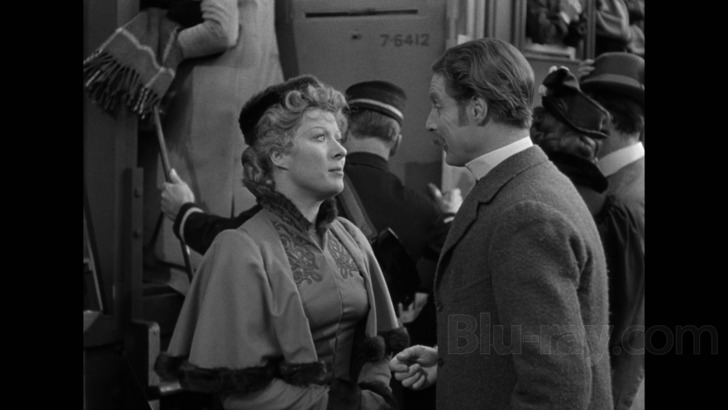
Along with Donat’s recognition and Garson’s elevation, Academy Award nominations went up for Best Picture, Director, Screenplay, Film Editing and Sound. *
“I know the world’s changing, Dr. Alston. I’ve seen the old traditions die, one by one. Grace and dignity, and feeling for the past. All that matters here today is a fat banking account, you’re trying to run the school like a factory for turning out money-making, machine-made snobs! You’ve raised the fees and in the end the boys who really belong to Brookfield have been frozen out. Frozen out. Modern methods! Intensive training. Poppycock! Give a boy a sense of humor and a sense of proportion and he’ll stand up to anything!”
The grosses look to have reached $6,900,000, easily quaffing the $1,051,000 MGM spent to mount it. With Paul Henreid (31, he’d age noticeably over the three years between this and Now,Voyager and Casablanca), John Mills, Lyn Harding, Terry Kilburn, Judith Furse, Nigel Stock, Martita Hunt. 114 minutes.
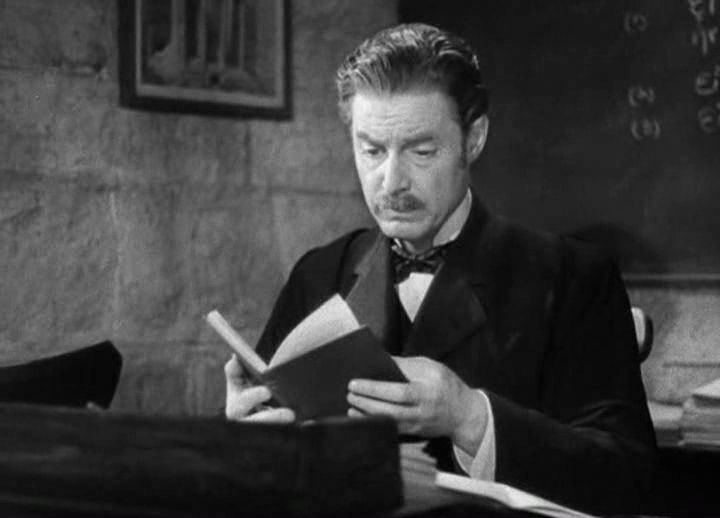
* Garson really should have been nominated in the Supporting category, since her Kathy is present for just a quarter of the running time. One doesn’t mean to demote the subtle and disarming Donat, but Chips ever-present reticence pales next to Clark Gable’s protean rascal Rhett Butler (the expected fave to win) or James Stewart’s finest hour as the impassioned people’s champion Mr. Smith.
Remade as a lumbering musical in 1969, a box office fiasco. Teach me once…
 Movies ala Mark
What a beautiful and poignant film. One of Robert Donat’s best.
Hope all good with you.
Maddy
Thanks, Maddy. Had to take weeks off from blogging to deal with multiple family crises (ongoing, alas) and just started adding new ones. I’d never seen the original ‘Chips’: a treat. During the down time at least I cleaned up errors (a zillion) in the Index. All the best, Mark
I’m so sorry mate. Fingers crossed things get better for you all soon.
It really is a gem. Heartbreaking that we lost Robert Donat so soon.
Maddy