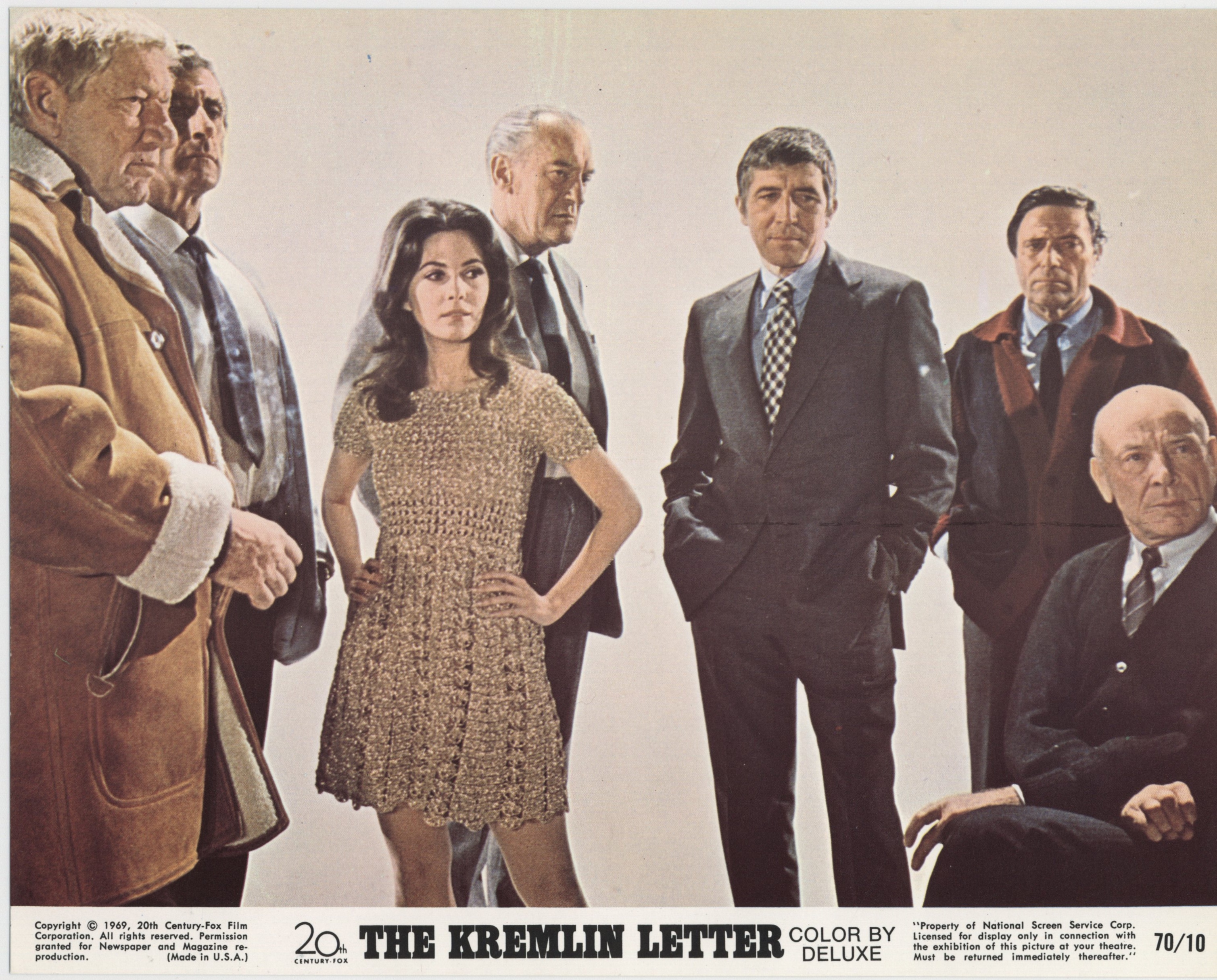
THE KREMLIN LETTER—an espionage story for those who think Bond too gentle and Le Carre too simplistic. Insistently harsh and numbingly complex, this 1970 thriller put off audiences and critics as too hard to follow and—even by the standards of a year with slew of dispiriting movies—just too unpleasant. John Huston directed, co-writing the script with Gladys Hill, basing it on the novel by Noel Dehn. As the author commented, “In a detective novel, the hero solves a crime; in a spy novel, the hero commits one.” Good luck finding a hero.

High stakes and low blows in the Cold War. Brilliant US Navy intelligence officer ‘Charles Rone’ (Patrick O’Neal) switches uniforms for cloak & dagger disguises as the freshman inserted into a veteran team of quasi-freelance government agents seeking retrieval of a letter that, if delivered, could provoke catastrophic conflict between the US, the Soviet Union and Red China. Other than Rone and his chief contact ‘Ward’ (Richard Boone), the other agents all go by code names. They include burglar/safecracker ‘B.A.’ (Barbara Parkins), hedonistic procurer ‘The Whore’ (Nigel Greene) and ‘Warlock’ (George Sanders), a sophisticated drag queen. Utter ruthlessness is reciprocal from their Russian counterparts including mass murderer ‘Kosnov’ (Max Von Sydow), his sadomasochistic wife ‘Erika’ (Bibi Andersson) and ‘Bresnavitch’ (Orson Welles), part of the Soviet ruling elite. Extortion, seduction, prostitution, the drug trade, kidnapping, torture and triple-crossing are tools of the trade.

The high-powered cast deliver keenly observed performances, and the sordid nastiness is as voyeuristically enthralling as it is morally repugnant. In the wake of 007 and his sillier clones (Flint, Helm, the TV swarm) came a slate of ‘serious’ spy films, singularly and collectively cheerless (The Spy Who Came In From The Cold, The Ipcress File, The Deadly Affair, Torn Curtain, etc.—count the laughs in The Quiller Memorandum)–The Kremlin Letter is the bleakest, most unforgiving of them all. *
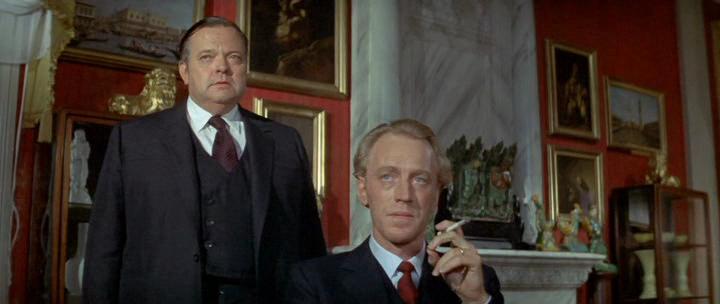
It’s also the hardest to follow, so dense in dialogue exposition and incident that you practically need to take notes to keep up with the Who, What & Why. That, and the tone, didn’t bode well at the time: Cogerson posts the US gross at a pulse-fading $2,100,000 (103rd for the year), mission impossible against the $6,095,000 production tab. O’Neal, great at playing sly bastards in supporting roles (King Rat, In Harm’s Way, Alvarez Kelly) is less effective in the lead and Parkins is underused, but all the rest are in fine form, with kudos to volatile Andersson and calmly sinister Welles. Boone was in a stretch of playing really bad bad guys (The Night Of The Following Day, Big Jake); he has an evil field day here. The movie, now being positively reappraised, is frustrating but fascinating, and one look isn’t sufficient to do it justice.
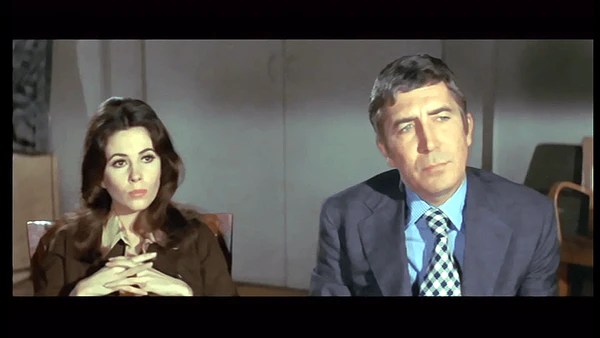
Helsinki doubles for Moscow, there was one segment filmed in Mexico. Huston cameos as an admiral, and other supporting players include Dean Jagger (‘The Highwayman’), Lila Kedrova (flawless as usual), Raf Vallone (‘Puppet Maker’), Micheál MacLiammóir (dripping ooze as ‘Sweet Alice’), Ronald Radd, Niall MacGinnis (‘The Erector Set’), Vonetta McGee (‘The Negress’) and Marc Lawrence (‘The Dentist’). 120 minutes.

* Huston: “I thought The Kremlin Letter had all the makings of a success… The book by Noel Behn had been a best-seller. It had, moreover, all those qualities that were just coming into fashion in 1970– violence, lurid sex, drugs. The cast was exceptionally strong… and the performances couldn’t have been bettered…Gladys Hill and I wrote the script, which I considered quite good, though in retrospect it was perhaps overcomplicated.” (cough)
 Movies ala Mark