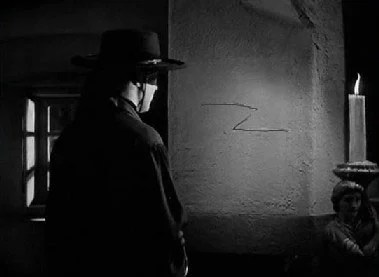
THE MARK OF ZORRO—Spanish colonial California, the late 1790s. Back from military education in Madrid, aristocrat ‘Don Diego Vega’ (Tyrone Power) finds things have changed for the worse in balmy, sun-kissed El Pueblo de Nuestra Señora la Reina de los Ángeles. His patrician father has been replaced as alcalde by a corrupt swine under the sway of a brutal capitano and his troops; the populace grieves under their yoke. Passing himself off as a frivolous and harmless fop, Diego in disguise is man-among-men ‘Zorro’, fearless outlaw-revolutionary and swordsman, determined to deal justice to the usurpers and while he’s at it win the hand of loveliest maiden in Old Los Angeles.
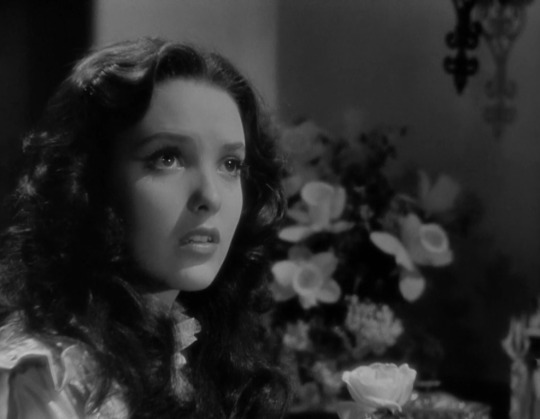
20th-Century Fox whirlwind Darryl F. Zanuck, his prize package Power’s ability at manhandling action proven in Suez, The Rains Came and Jesse James, grasped his genial charmer was ‘swashbuckler’ safe, 20th’s answer to Warner’s wild man Errol Flynn. Johnston McCulley’s 1919 novel “The Curse Of Capistrano” birthed a smash silent (#4 in 1920) for Douglas Fairbanks. With the cachet of that version carrying over, Power’s popularity and a fine cast and crew backing him, this 1940 version won over a new generation of fans and became the year’s 11th most popular release. Modestly budgeted at $1,000,000, its zest, jest and derring-do galloped away with $5,700,000 and a Oscar nomination for Alfred Newman’s energetic score. *
“MADRID —when the Spanish Empire encompassed the globe, and young blades were taught the fine and fashionable art of killing…”
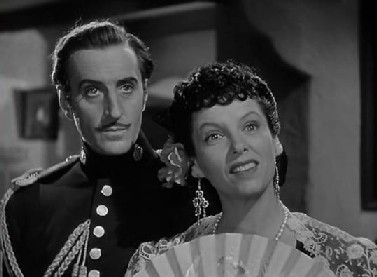
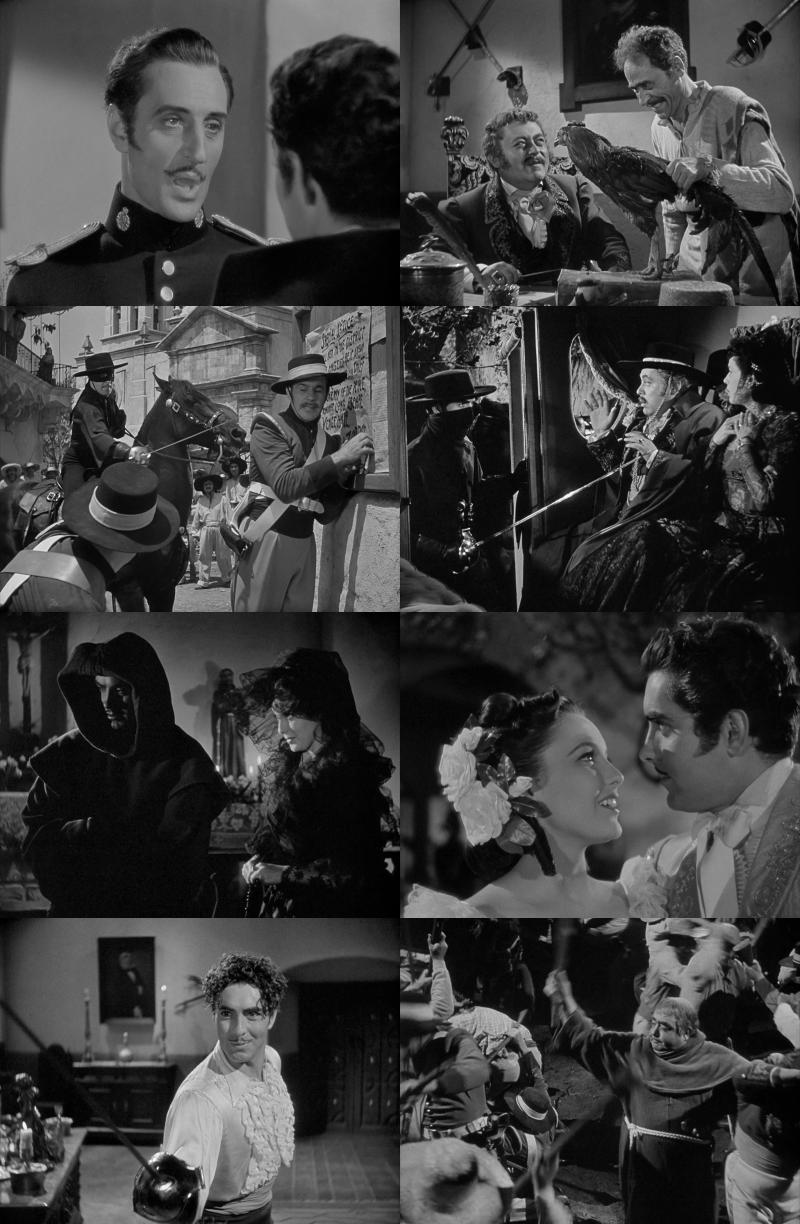
Power’s sword-wielding hero hiding as a fan-fluttering dandy is flanked by Linda Darnell’s peach-fresh beauty as ‘Lolita Quintero’, pining for a dashing cabalerro; Gale Sondergaard’s scheming cuckoldress ‘Inez’; and the great Basil Rathbone, embodying malevolence as ‘Captain Esteban Pasquale’, who we see from the start will eventually pay for being such a scorpion.
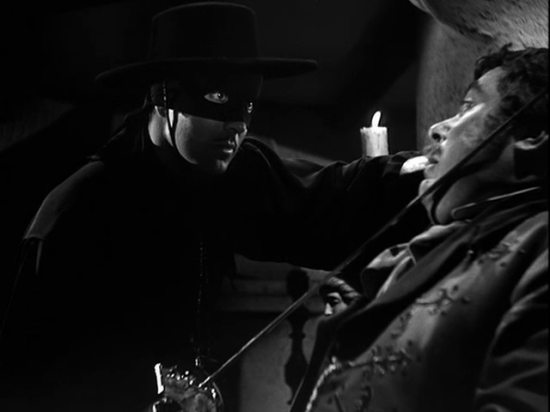
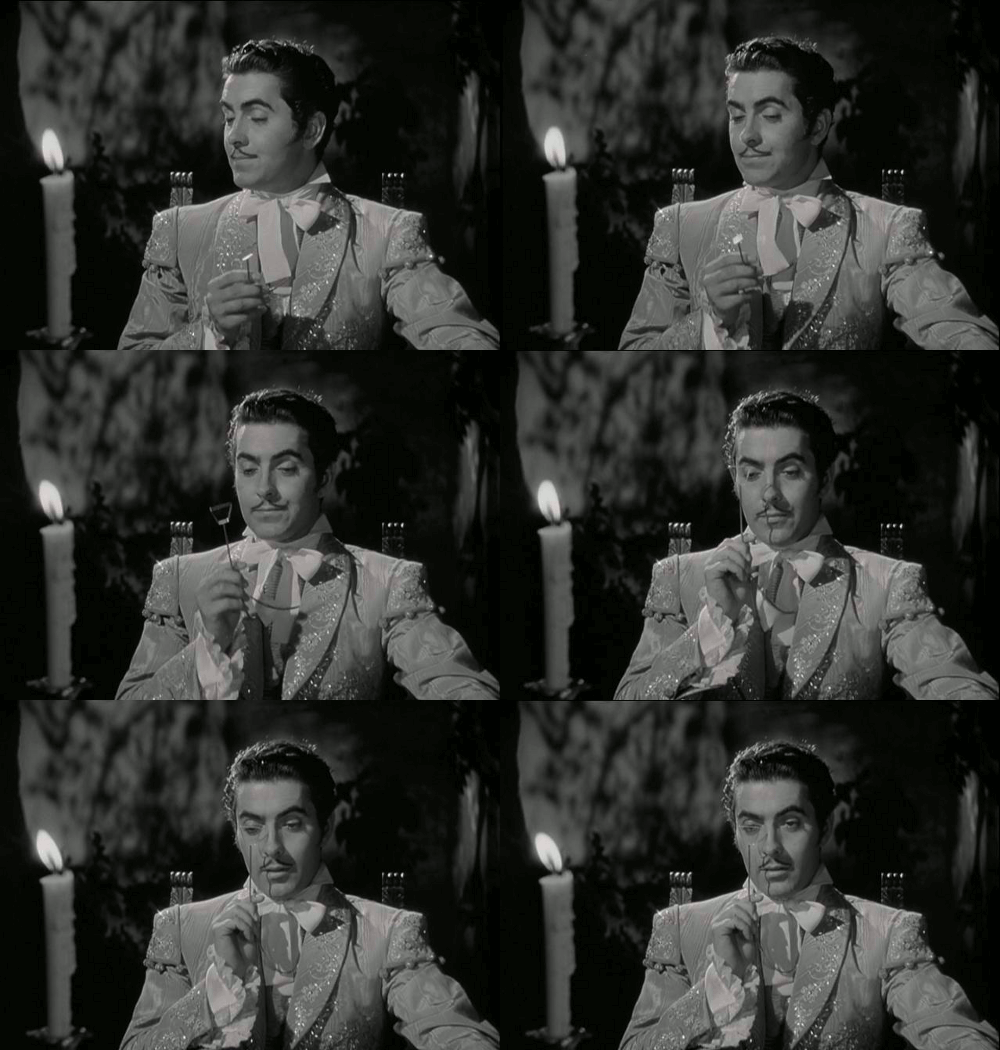
Stylishly directed by Rouben Mamoulian, the puckish script by John Taintor Foote playfully teases Diego’s popinjay prissiness put-on (Power relishing the chance to kid, self-confident enough to risk it) and manages to get away with loaded lines like Diego’s dig at Pasquale, who’s jabbing at an orange: “Captain, you seem to regard that fruit as an enemy.”
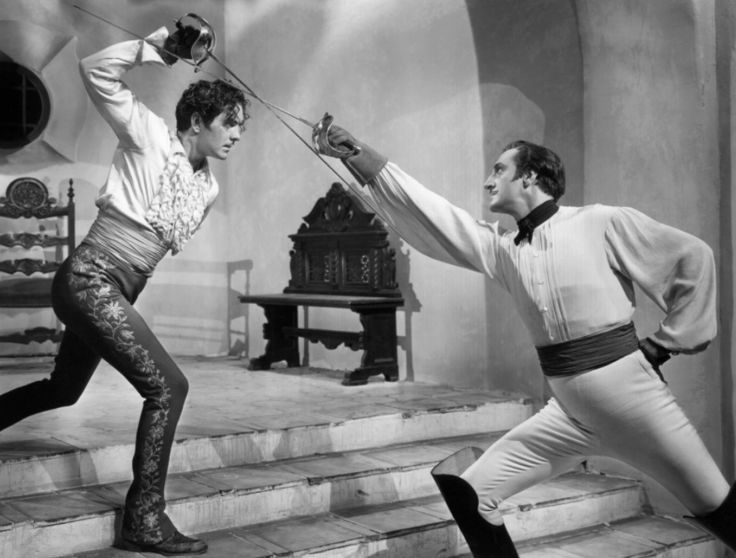
Rathbone, regarded the best fencer in Hollywood, said “Power was the most agile man with a sword I’ve ever faced before a camera”; their eventual swordfight is one of the best-choreographed (by fencing master Fred Cavens) bouts in an era studded with duel jewels.
93 minutes, with Eugene Pallette (militant ‘Friar Felipe’, channeling his Friar Tuck from The Adventures Of Robin Hood), J. Edward Bromberg (spineless snake ‘Don Luis’), Montagu Love, Chris-Pin Martin, Robert Lowery, Frank Puglia and Pedro de Cordoba.
* Post-Power Zorro’s have been of varying quality. Among them the notables include the 78 TV episodes from Disney, thrilling kids starting in 1957 (boomers know that before Guy Williams was Lost In Space he could be found slashing Z’s in Old California), 1981’s silly sendup Zorro, the Gay Blade with George Hamilton (it gracefully kicked off with “This film is dedicated to Rouben Mamoulian and the other great filmmakers whose past gives us our future”) and then the plush, gratifyingly flavorful 1998 hit The Mask Of Zorro with Antonio Banderas, one instance of a remake that hits the mark. Alas, its sequel dropped the blade.

This was the third matchup for Power and Darnell (she was just sixteen), following Day-time Wife and Brigham Young; they were immediately reteamed with director Mamoulian and composer Newman for the Technicolor bullfight saga Blood And Sand.
Fred Cavens (1882-1962) honed his honor-settling skills from the age of 15, and emerged from Belgium’s Military Institute of Physical Education and Fencing to guide Hollywood pupils slash & parry techniques through swashbucklers like Captain Blood, The Adventures Of Robin Hood, The Sea Hawk, The Black Swan, Forever Amber and Anne Of The Indies.
 Movies ala Mark