
A TIME TO LOVE AND A TIME TO DIE, a compelling WW2 tragedy from 1958, would be a grade-A picture but for some flaws in casting. While a stronger, more familiar actor in the lead role may have helped, its lackluster performance at the box office and relative obscurity today is unfortunate but understandable. From a 432-page novel by Erich Maria Remarque, set in the misery of collapsing Berlin and the dire Russian Front, it’s assuredly somber, fell in the long shadow cast by the same author’s 1930 WW1 classic All Quiet On The Western Front, and had to jostle for attention in 1958 with no less than seventeen other pictures set during World War Two. Still, directed with skill and sensitivity by stylist Douglas Sirk (his 18-year-old son died on the Russian Front in 1944), meticulously produced on location in West Germany, it’s marked by a number of subtly powerful moments, and ultimately conveys a warning: there’s a bitter price exacted from answering calls to glory snarled by perverted con artists. *

Spring, 1944. On a few weeks leave after two years on the Russian Front, disillusioned German soldier ‘Ernst Graeber’ (John Gavin) finds Berlin is ‘a front behind the front’, battered by Allied bombing, the civilians wracked by privation and lost loved ones, misery compounded by fanatical Nazi die-hards, craven opportunists and the lurking Gestapo. Searching for his missing parents, Ernst finds temporary solace with ‘Elizabeth Kruse’ (Lilo Pulver), the distraught daughter of his family’s doctor who is languishing in a concentration camp.

Remarque helped with the screenplay, credited to Orin Jannings, and has a small add-prestige role as Ernst’s former professor, hiding out in the ruins, a fugitive from the Gestapo. Tall and handsome in the mold of Rock Hudson, 26-year-old Gavin, with a quartet of small parts logged, was cast hoping to emulate the success newcomer Lew Ayres enjoyed from ‘All Quiet’. At 28, Swiss actress Lisolotte Pulver was quite popular in German films: this was her international introduction; she only made a handful of Hollywood pictures. She’s fine, Gavin’s earnest yet reticent, too emotionally conservative to be more than serviceable. In supporting roles as Ernst’s earthy comrades, the presence of recognizably American types Keenan Wynn and Don DeFore doesn’t work all that well.
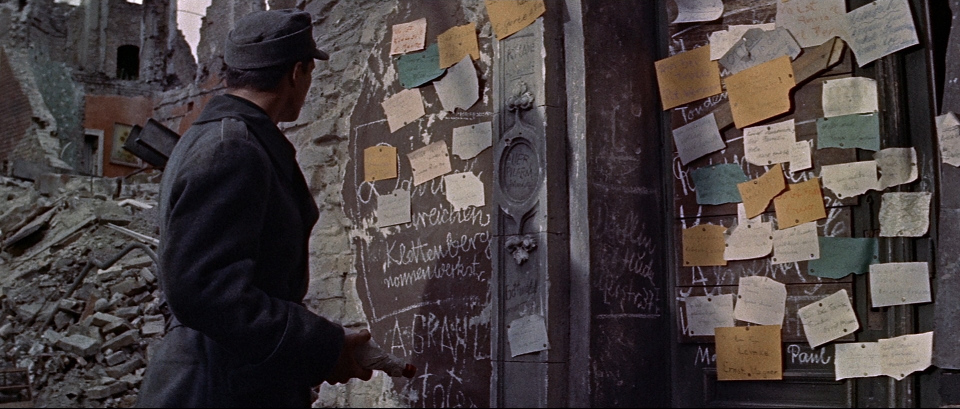
But the bulk of the mostly European secondary players are effective and director Sirk stages the canvas of sad vignettes with integrity and impact, aided by Russell Metty’s excellent cinematography and a host of telling details in the art direction, costuming and action sequences. The quality sound work drew an Oscar nomination, and the downbeat mood was scored in typically dramatic fashion by Miklos Rozsa; fans of the composer will recognize his ‘sound’.

Box office in the US ranked 87th ($2,600,000), and it did decent business in France, for example, where it recorded 2,800,000 admissions. The USSR and Israel banned it for being presumptuous enough to suggest that not everyone in Hitlerian Germany was thrilled to be caught up in the 3rd Reich’s destructive insanity.
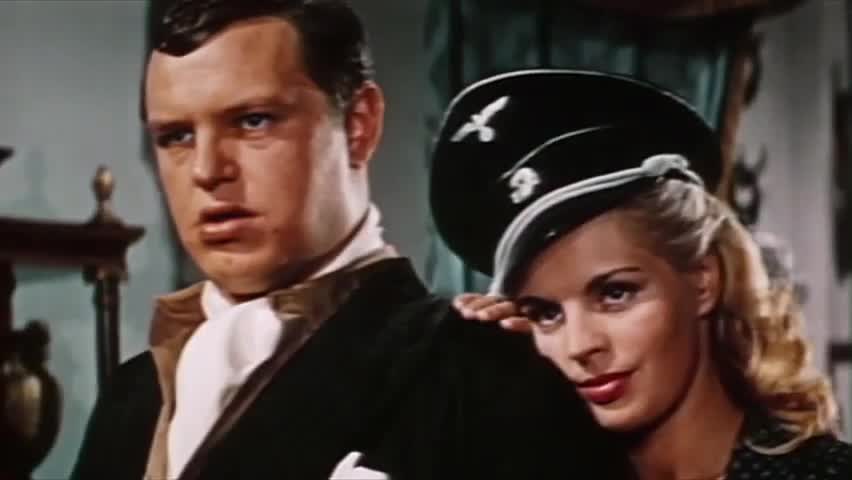
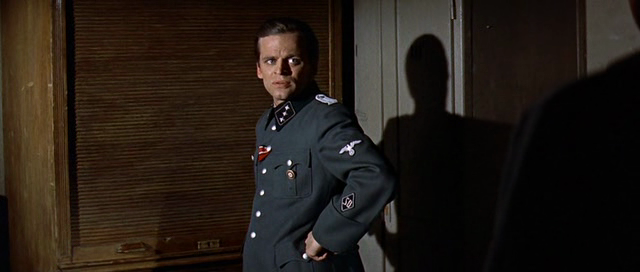
132 minutes, with Dieter Borsche, Thayer David (oily as a jovially corrupt Nazi), Charles Regnier, Jock Mahoney,Clancy Cooper, Dorothea Wieck, Kurt Meisel (depraved concentration camp commander), Jim Hutton (debut, 23), Klaus Kinski, John Van Dreelen and Barbara Rütting.
* 1958’s WW2-set movies, in order of box office success: South Pacific, The Young Lions, Kings Go Forth, In Love And War, Run Silent Run Deep, The Naked And The Dead, The Key, Imitation General, Darby’s Rangers, Me And The Colonel, Torpedo Run, this film, China Doll, The Deep Six, Tank Force, The Silent Enemy, Another Time Another Place and Dunkirk.


 Movies ala Mark