
UP FROM THE BEACH or ‘The Day After The Longest Day’, as this 1965 WW2 flick not only takes place on D-Day+1 but makes use of discarded footage from the 1962 epic, bolstered by 400 French soldiers dressed as G.I.’s and a lot of equipment (tanks and assorted vehicles), was shot around several villages in Normandy and features three cast members (Irina Demick, Red Buttons, Fernand Ledoux) who’d figured in the earlier spectacular. An offbeat curio, hardly in the same heavyweight class as its predecessor, a character piece and observation on absurdity rather than an exciting actioner, its 99 minutes are mildly interesting in an undemanding way.

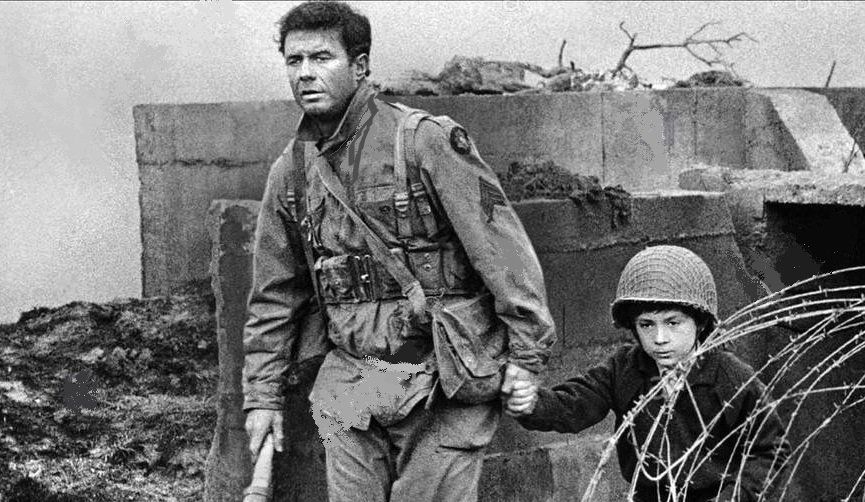
June 7th, 1944. During the immediate confusion following the Allied landing in France, U.S. Army Sergeant ‘Edward Baxter’ (Cliff Robertson), aided by chatty Pvt. ‘Harry Devine’ (Buttons) is ordered to escort two dozen French civilians and a captured German officer (Marius Goring) from their combat zone village to the beach and evacuation to England. The chore becomes an exercise in futility as Baxter and his charges are repeatedly ordered, by one irate officer or another, to go back where they came from, get the hell out of the way or just become someone else’s headache. Meanwhile, as they trudge back & forth and get to know each other, the fighting crackles around them.
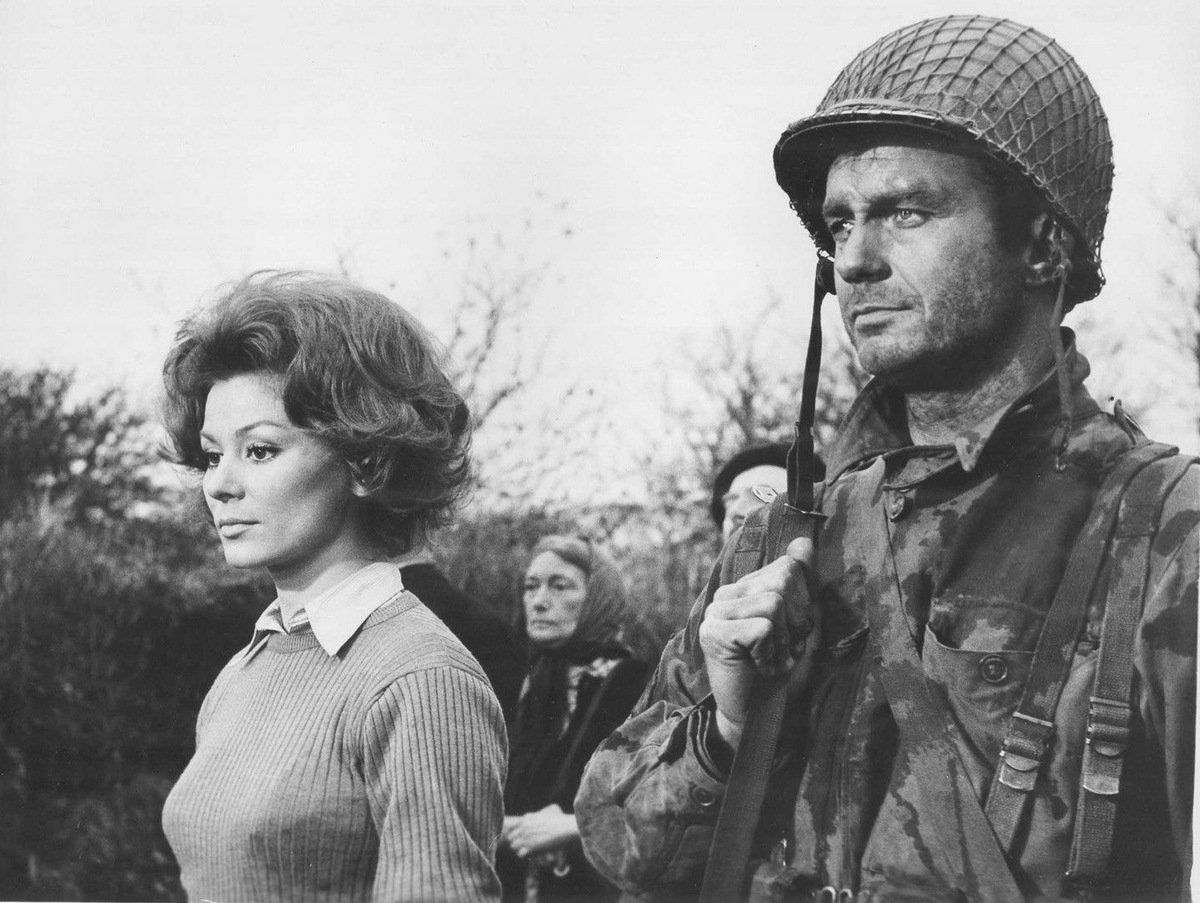
Though directed by Robert Parrish (The Purple Plain, The Wonderful Country), the unseen hand of Darryl F. Zanuck, the fabled Boss Fox of 20th who orchestrated The Longest Day, was present, especially in pushing DFZs then-current mistress, 28-year-old French model-turned-actress Irina Demick. She’d cameoed as real life Resistance fighter Janine Botard in The Longest Day; here, bumped up in billing, she’s a fictional counterpart. Equipped with a mid 60s hairstyle, she’s also required to act, which doesn’t come off too well. *
As it were, Robertson and Buttons (not as abrasive as usual) soldier thru, the assorted French actors are fine, and there are glorified cameos from Slim Pickens, Broderick Crawford and James Robertson Justice as officers expressing exasperation with and adding to the sergeant’s FUBAR mission.

The incongruity of human foibles vs. the gristmill of a giant war machine on overdrive is the theme, with the micro-scaled task of a few thrown-together people framed by the big-scaled hustle and peril around them. The script, loosely lifted off George Barr’s 1959 novel “Epitaph For An Enemy”, was cobbled together by Claude Brulé (Barbarella), Howard Clewes (The One That Got Away) and Stanley Mann (The Mouse That Roared, The Collector). The music score from Edgar Cosma has a fairly decent main theme, though much of the rest is overdone. Along with the impressive array of equipment and personnel milling around the actors, one excellent attribute is the sound effects track, its constant background of combat noises, usually in the distance, adding to the sense that the characters are constantly enveloped by something really big (and deadly serious) going on all around them, counterpointing the casual lunacy of conflicting orders that keep them hoofing to & fro, seeking shelter and relief.
Figures (the fog of accounting war) are hard to pin down. Cogerson lowballs a gross of $1,500,000 (113th in ’65); other sources indicate more, and it’s possible the production cost was at least $4,500,000. With Francoise Ronay, Raymond Bussières and Georges Chamarat.

* Robertson quipped it should have been called Up From The Bitch, thanks to Zanuck’s insistence on showcasing his latest obsession ‘discovery’. To be fair to the comely Ms. Demick (1936-2004) she was amusing in one of 1965’s biggest hits Those Magnificent Men In Their Flying Machines.
Strang(er) bedfellows—Marius Goring (1912-1998), the resigned Wehrmacht captive, played Nazis a dozen times (usually less humane than this one) yet he was English, born in Sussex: during 1944-5 he was a Colonel on the intelligence staff of SHAEF, the Supreme Headquarters Allied Expeditionary Force.

 Movies ala Mark