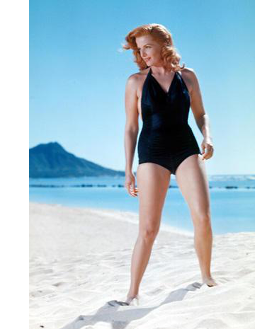
Why We Fight, boys
THE REVOLT OF MAMIE STOVER—“Stay away from that one, son – it’ll cost ya! She takes guys like you to the cleaners!” Like the song says “When will we ever learn…?” Don’t give yourself a stroke with the answer. Veteran director Raoul Walsh steered the $2,000,000 1956 melodrama written by Sidney Boehm (The Big Heat, The Tall Men) and William Bradford Huie, based—or debased, thanks to the Production Code—on Huie’s popular 1951 novel. *
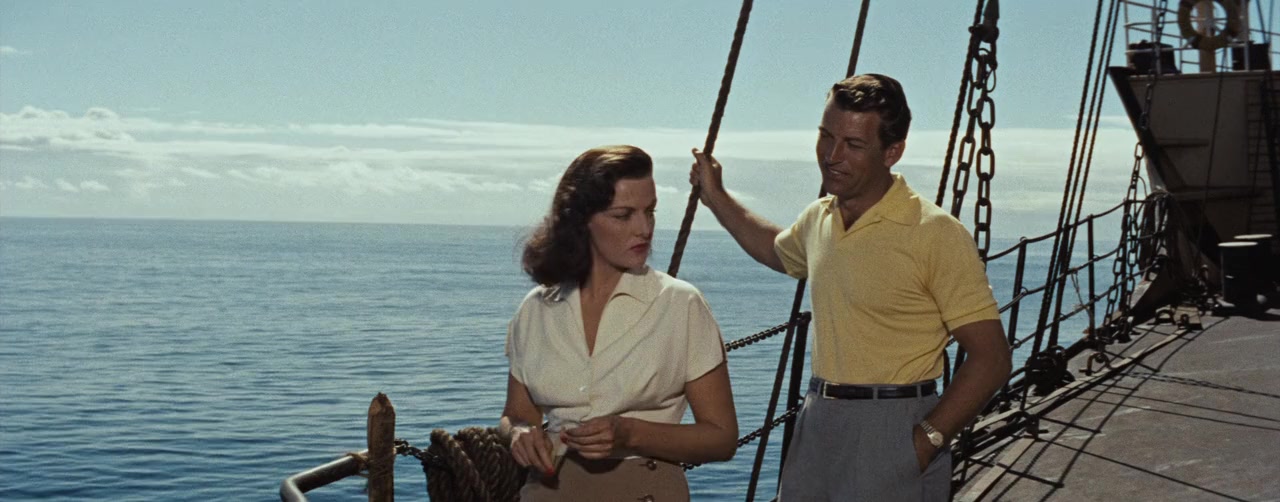
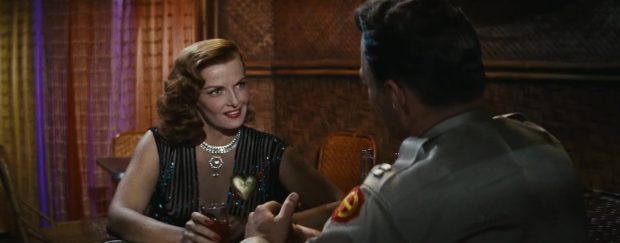
1941. On a freighter to Hawaii, writer ‘Jim Driscoll’ (Richard Egan) meets ‘Mamie Stover’ (Jane Russell), a ‘good-time girl’ booted out of San Francisco for being too good at being bad. Their casually frisky friendship blooms in Honolulu, despite Jim having a steady “nice” gal (Joan Leslie) in his cozy hilltop life. Working as “drink hostess” (tell me another one, pal) in a nightclub for hard-as-nails boss dame ‘Bertha Parchman’ (Agnes Moorehead), Mamie rakes in dough, and when WW2 arrives on wings of the Rising Sun she spies a goldmine in the real estate uproar and surge of battle-bound clients. Jim goes off to fight, while Mamie uses allure & need to corral cash on the home front. Rosie the Riveting.
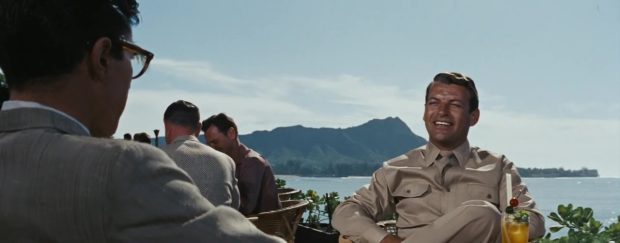
Framed by Diamond Head, studley Dick Egan is about 30 seconds from clobbering snide pimp Michael Pate: we approve.
In Huie’s book Mamie was described thusly “…physically, she had been almost perfectly assembled for the satisfaction of vigorous lust.” Anyone over reading age could figure out that Mamie is a hooker, but the Production Code forced the script into ‘let’s pretend’ somersaults. Russell and Egan (both were underrated) have swell rapport, even if the character relationship is straight from Sketchville. And please—in 1942, somehow Jim’s shoulder wound provides a “ten day furlough” back to Hawaii. From where? New Guinea? Guadalcanal? Sure. Further undercutting plausibility is a markedly flat supporting performance from Richard Coogan, as an officer who pursues dame Mamie while simple sarge Jim is busy tangling with the Japanese.
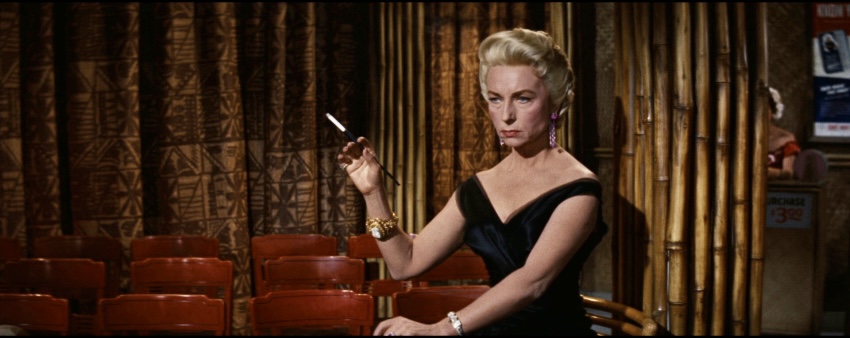
Agnes Moorehead nails cold as ice
On the decided plus side, there’s tart dialogue as confident Russell brings a neat mix of heat, humor and hustle to Mamie, Egan employs his relaxed masculinity (like Tyrone Power, he had a smoothly effective voice) and everything looks grand in Leo Tover’s CinemaScope & Deluxe Color camerawork. Moorehead has a great time as the frosty but forthright madam, and action pro Walsh stages a pretty good Pearl Harbor attack sequence, with nifty model work from visual effects man Ray Kellogg, and well-done crowd shots of the civilian reaction observing and/or fleeing the disaster from neighborhoods and fields.
Back when, critics sloughed it off, but its reputation has increased over time. The public signaled approval with a ticket take of $5,700,000, #51 for ’56.
92 minutes, with Jorja Curtwright, Michael Pate, Alan Reed, Leon Lontoc, Eddie Firestone, Jean Willes and Hugh Beaumont. That hot ride that Russell and Egan zip around in is a 1941 Mercury Model Eight Club convertible coupe, which today would fetch sixty grand.
* Huie’s 248 page steamer was the first part of a trilogy that took wartime profiteering and hypocrisy to task, followed by 1959’s “The Americanization Of Emily” (done as a fine movie in 1964) and “Hotel Mamie Stover” in 1963.
Jaunty craftsman Walsh and the saucy, likable Russell formed a warm friendship the year before on the popular western The Tall Men, and he was impressed enough by Egan to use him a few years later in Esther And The King (to this fan he’ll always be Leonidas in The 300 Spartans). Ray Kellogg’s credits as 2nd-unit director included Cleopatra and Tora! Tora! Tora! and his impressive visual effects work was on display in 116 features, mostly for Fox, with nineteen in 1956 alone.
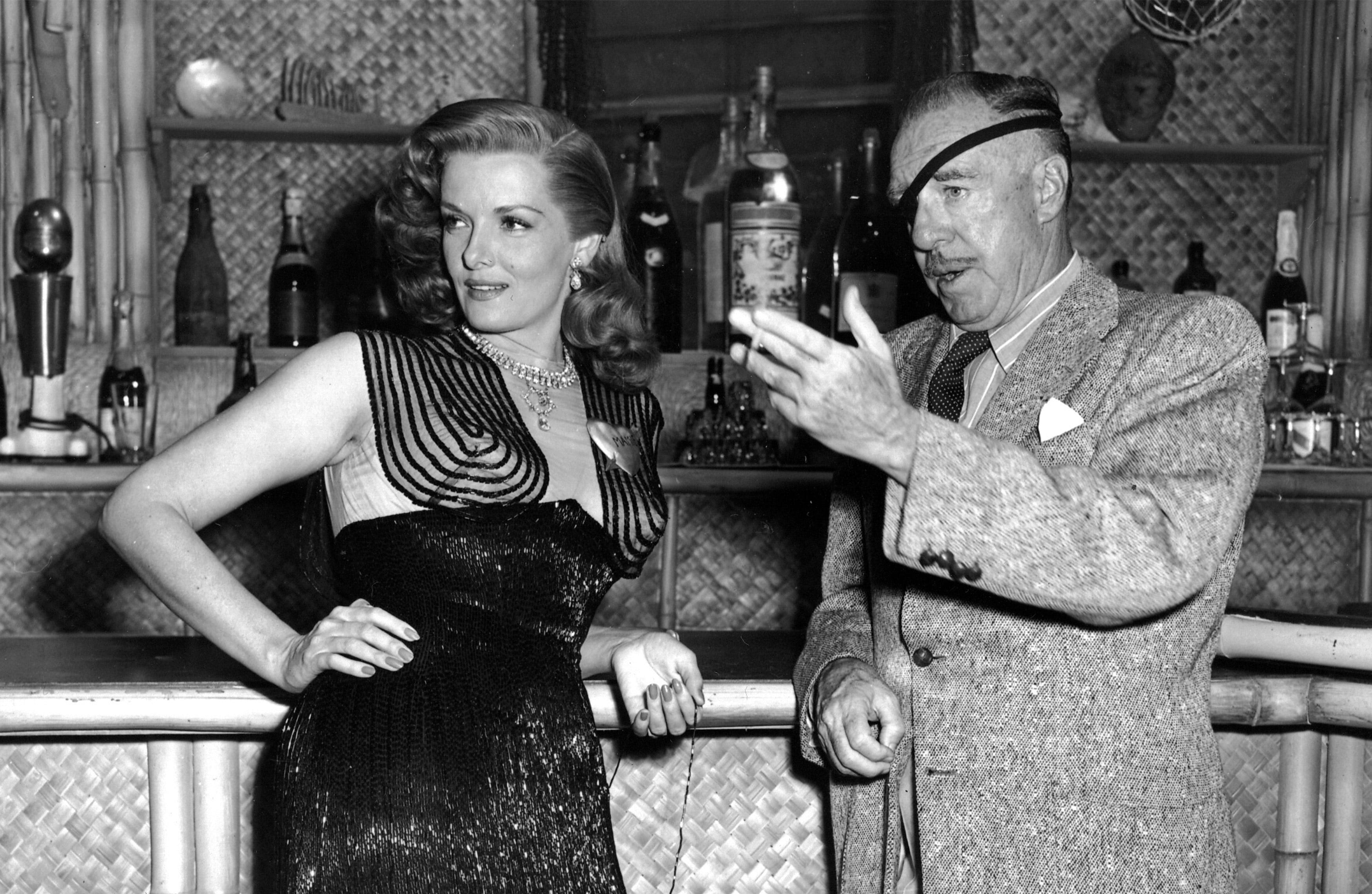
Jane on set with director and pal Raoul Walsh
 Movies ala Mark