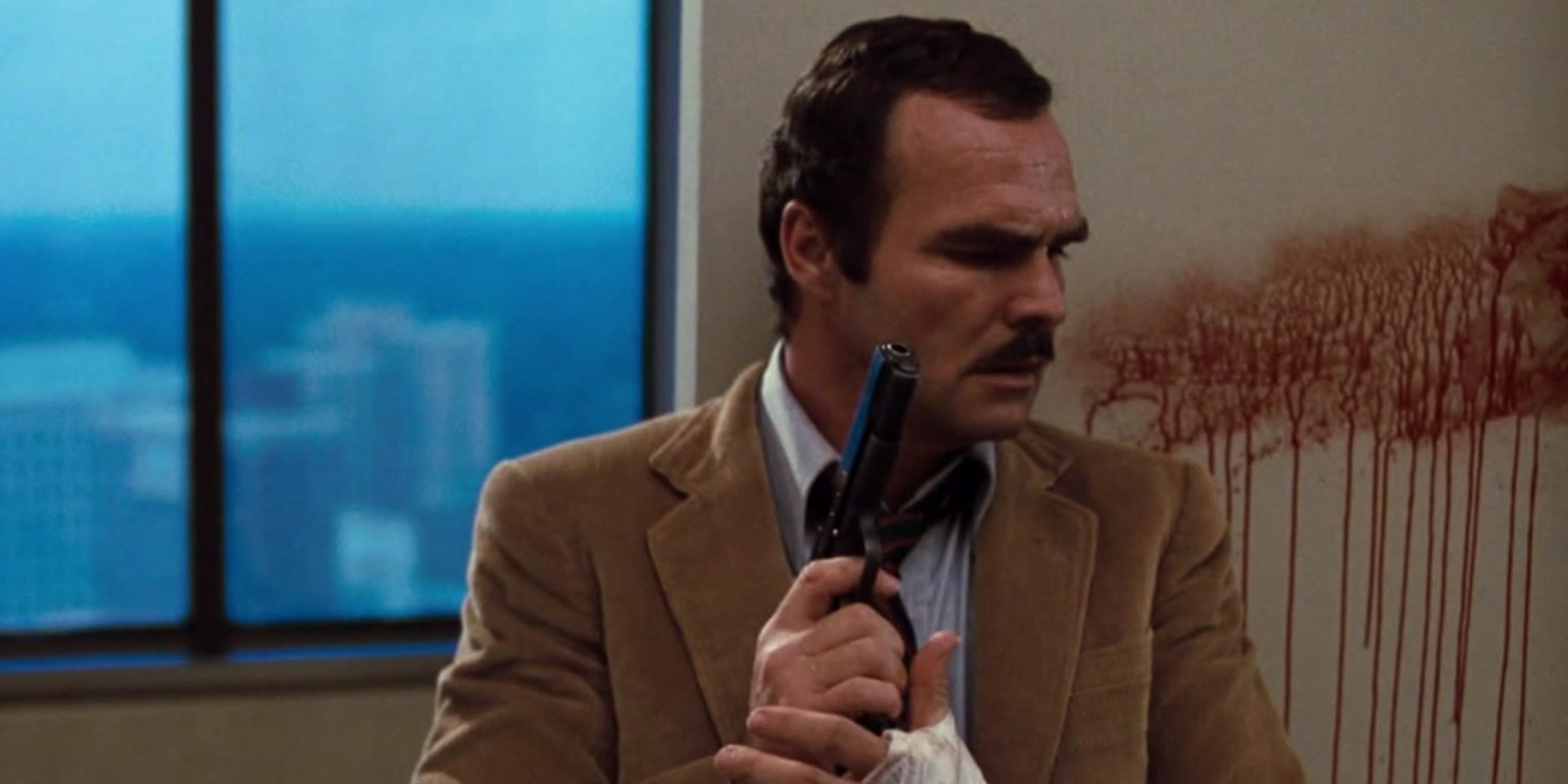
SHARKY’S MACHINE, starring and directed by Burt Reynolds, was a moderate success in 1981, when his high tide was beginning to turn (back out to sea), ranking 17th in the national box office. A neo-noir detective flick, it has some positive aspects (a few of the performances, the cinematography) but in the main is a crudely written and violent downer, with uneasy tonal shifts and a cavalier attitude toward realism that renders it not at all believable. Gerald Di Pego’s vulgarism-laden script was based off the debut novel by William Diehl.
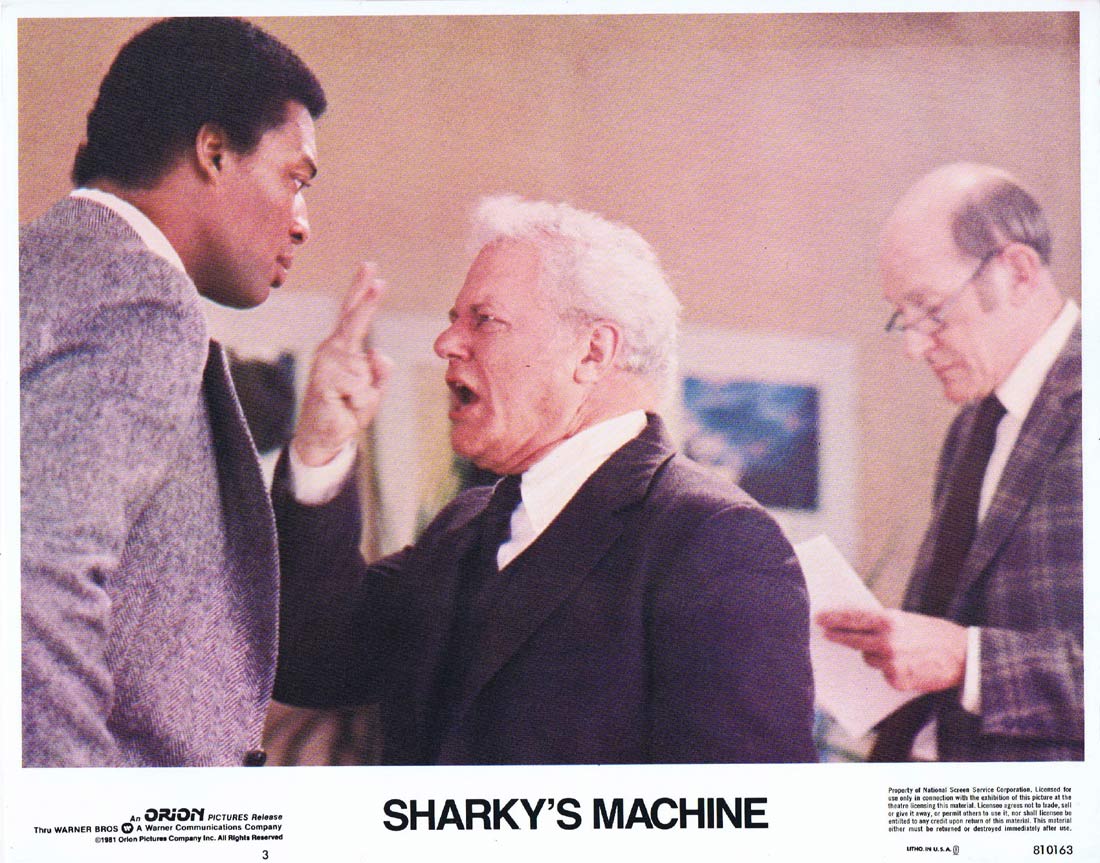
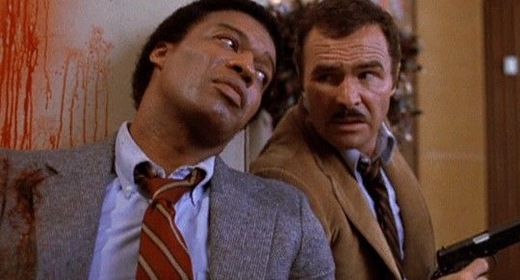
Atlanta police sergeant ‘Tom Sharky’ (Burt, 44), demoted from narcotics to vice, becomes involved in tracking an upscale prostitution ring that ties in a slick gubernatorial candidate and a slicker Italian-born crime boss. Sharkey’s ‘machine’ is composed of his fellow department vets. His direct personal interest/obsession focuses on a stunning $1,000-a-night call girl. Everyone’s safety is at risk from a zonked-out hit man.
A deadly serious subject (sex trafficking) is scuttled not just by lazy profanity and emphatic viciousness but a barrage of sexist and racist jokes (among the squad) that fail to endear us to the good guys. Reynolds adopted a sort of loosey-goosey pseudo-improv shtick for the actors playing the cops (Charles Durning, Brian Keith, Bernie Casey, Richard Libertini) that isn’t anywhere near as ‘cute’ as it’s intended to be: it’s a case of pros forcing naturalism. Burt let Durning in particular roam so far over-the-top he almost opens a new category, apparently trying to out-bellow the ghost of Lee J. Cobb. The absurdly constructed wrapup ensures something painful or fatal happens to everybody and that a bad taste is left hanging in the air. The pretense, nonsense and nastiness is accompanied by a jazz-accented score by Tonight Show pal Doc Severinsen, an ill-advised choice as the music, rather than layering in mystery and suspense, instead acts as a drag on the momentum. *
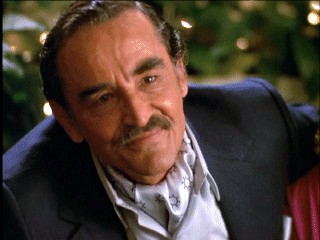
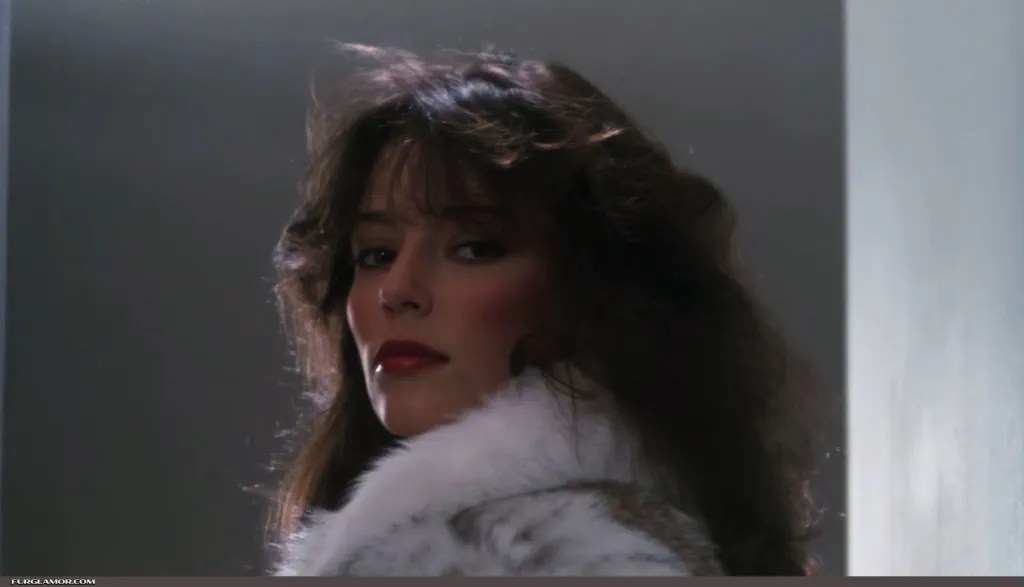
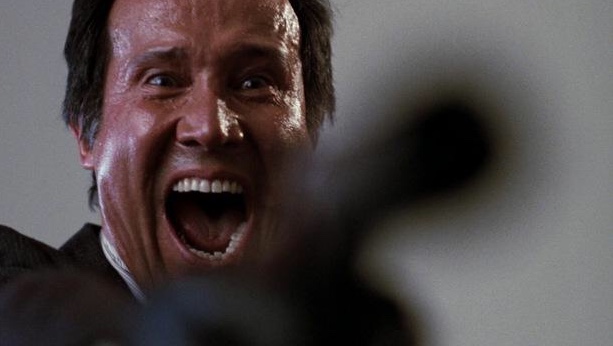
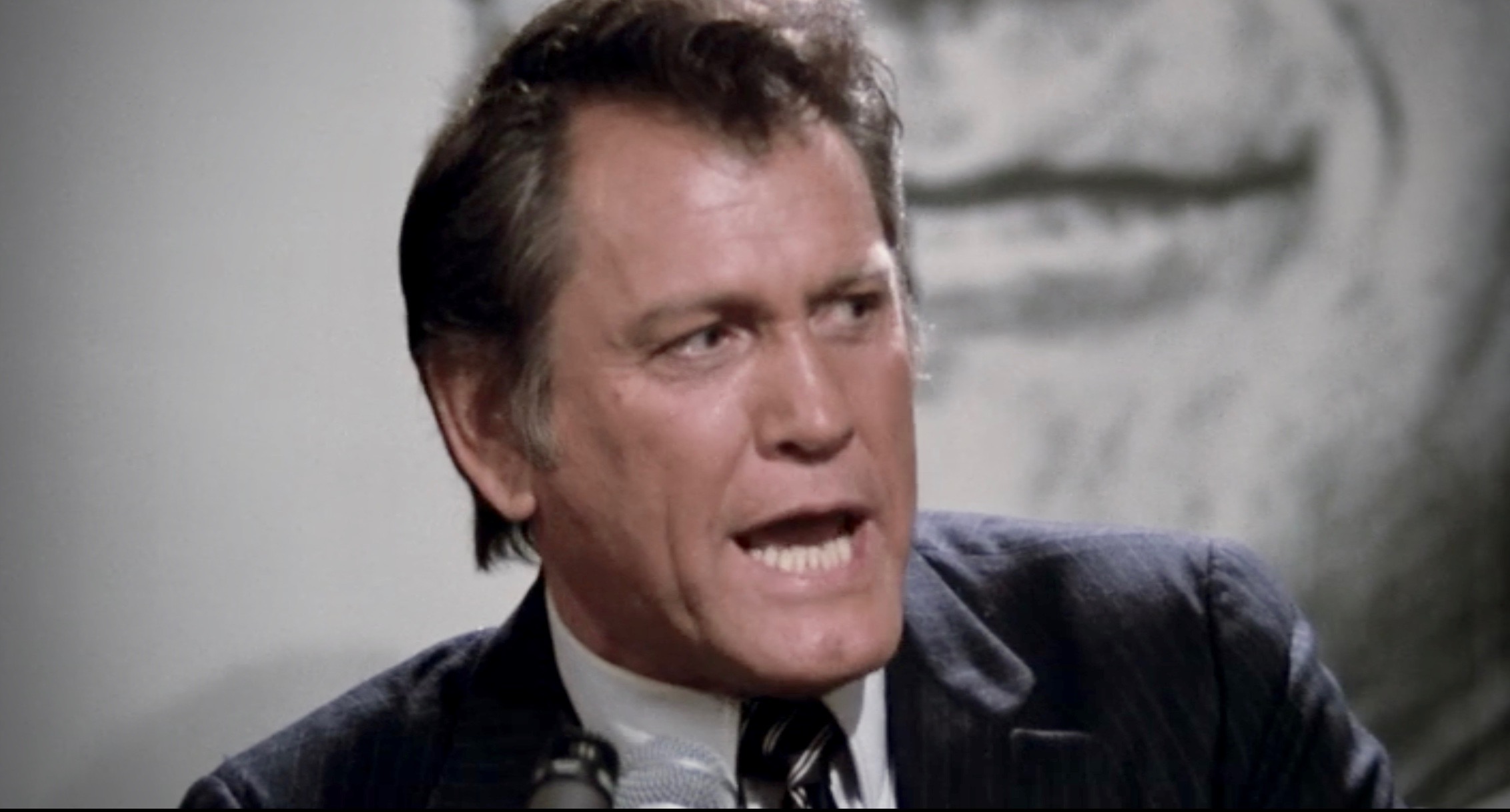
Plus column. Reynolds had cameraman William A. Fraker shoot in 70mm, so it all looks extra sharp. Burt doesn’t stint on his own coverage, playing Sharky in his pensive brooder mode (ala the more enjoyable Hustle); while he encouraged others to ‘go big’, at least he doesn’t overdo his grab bag of knowing smirks. Honored with second billing, Vittorio Gassman, 58, as the happily heartless trafficker ‘Albert Scorelli/Victor D’Anton’, calmly conveys the sort of power-shielded creepiness of a creature like Jeffrey Epstein. Model-turned-actress Rachel Ward, 23, had only done one minor film (slasher drivel Night School, also 1981); her arresting role as ensnared hooker ‘Dominoe’ jumped her into stardom. As the sex co-opted politician, Earl Holliman, 52, enjoys his best part since the TV movie Tribes back in 1970. And venerable weirdster Henry Silva, 54, has a blast going full metal bonkers as ‘Carlo “Billy Score” Scorelli’, who seems to really enjoy the work he’s best suited for.
Made for $17,500,000, taking in $35,600,000 domestically. With Joseph Mascolo (tone it down, for F’s sake!), Darryl Hickman (49, final feature appearance), John Fiedler (we don’t buy him here), Hari Rhodes (48, final feature part), Weaver Lee (55, final role), Val Avery (56, always welcome, though here we’re allowed to find he had more body hair than a musk ox—don’t eat while watching) and—easier to digest—Suzee Pai, 18, flash-in-the-Penthouse Magazine-pan sizzler, later to help bring Big Trouble In Little China: this can be filed under ‘Mark’s Doggedly Impartial Research’. **
* Languor linger—Burt/Doc scatter hopeful mood muses around, familiar numbers sung by Randy Crawford, Peggy Lee, Julie London, Sarah Vaughan and The Manhattan Transfer. Nothing against the singers or songs, but their smoothness doesn’t suit or undo the moral squalor, rampant sadism and thespic posturing on the screen.
** Post-arrest report—among the brutal action scenes, much was made of stunt man Dar Robinson doing a a record 220-foot free fall, but the editing cheats the plunge by switching mid-drop to a dummy. Menatime, dummying up, Burt had a huge hit that year with the trivial The Cannonball Run (#6) and a critic-scorched flop with Paternity (#44).