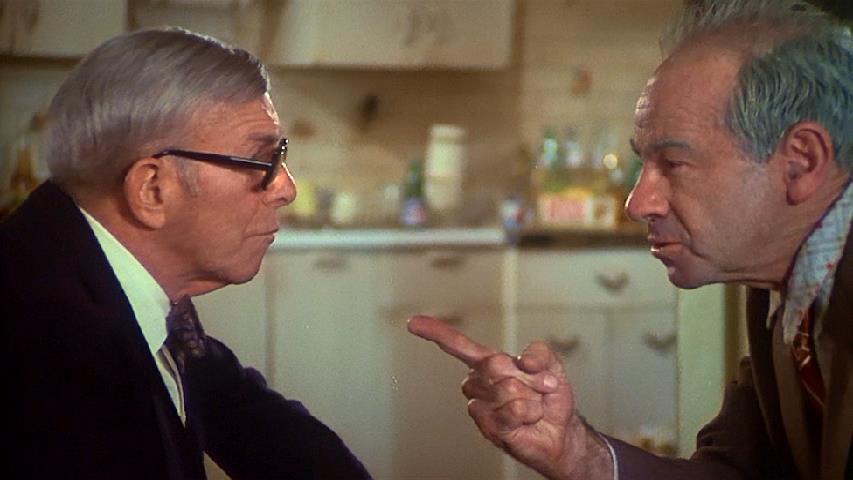
THE SUNSHINE BOYS—WILLY: “You don’t know the first thing that’s going on today. Did you ever hear the expression ‘This is where it’s at’? Well, this is where it’s at, and that’s where I am!” AL: “I see. Did you ever hear the expression ‘You don’t what the hell you’re talking about’? It comes right before the other expression ‘You never knew what the hell you were taking about.'”
Neil Simon strikes again. His 12th play ran 538 performances on stage before he adapted it into screenplay form for the 1975 film, directed by Herbert Ross, starring Walter Matthau and George Burns. The third of six Simon sallies for Matthau, 54, it was the first feature film in 36 years for Burns, who was 79 (and sharper than ever). George made one heck of comeback, walking off with the Oscar as Supporting Actor, late date resuscitating his screen career. Matthau was nominated in the Best Actor category; the Screenplay and Art Direction went up as well. Box offices tallied $21,800,000, ranking 31st, no smash but more than enough to banish the $3,500,000 cost. It did do three times better than the year’s other Simon entry, The Prisoner Of Second Avenue, with Walter’s buddy Jack Lemmon. Both are set in New York City (duh) and each involve a good deal of kvetching and yelling (Simon staples). Matthau replaced original pick Red Skelton, who apparently bailed over money, and Burns stepped into his role after his dearest friend Jack Benny became too ill to continue.
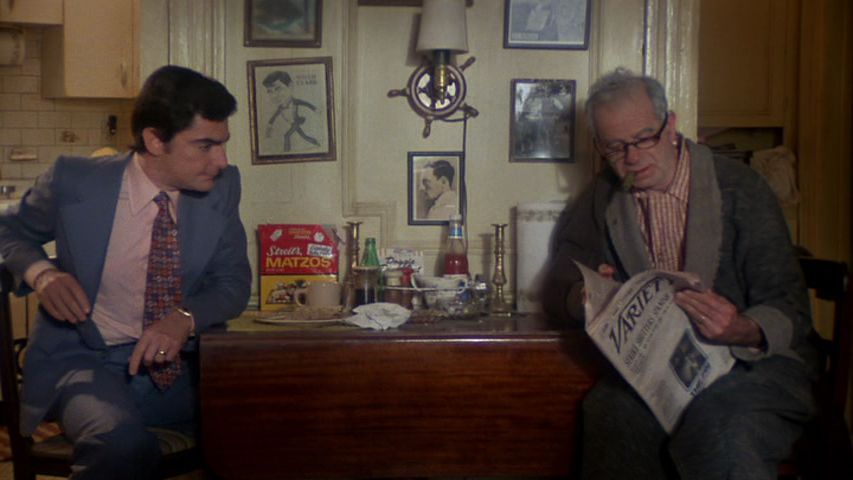
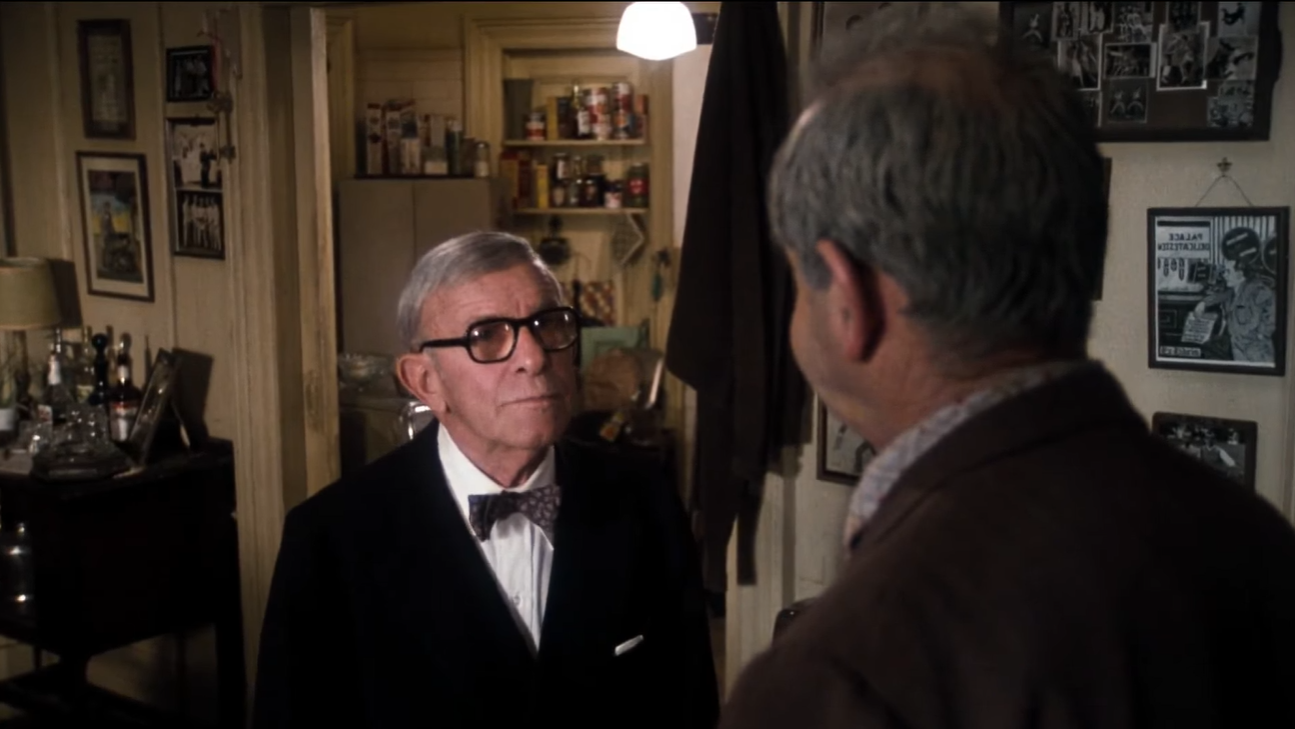
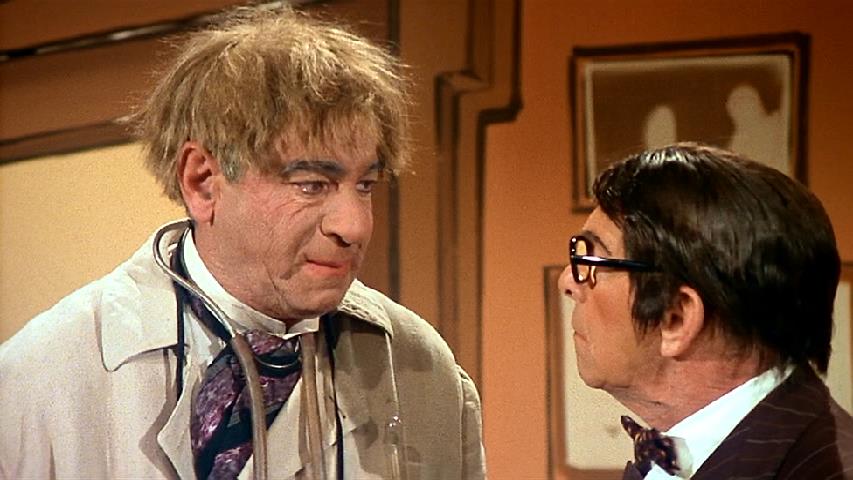
Back when vaudeville was a big deal, so were ‘Lewis and Clark’, but after doing their ‘bits’ for forty-seven years ‘Willy Clark’ (Matthau) and ‘Al Lewis’ (Burns) called it quits, not just because their performing form was outdated: they couldn’t stand each other. It’s been eleven years since they’ve even spoken, and Willy’s nephew ‘Ben’ (Richard Benjamin), who is also his agent, exasperated by trying to get his perpetually cranky uncle gigs (like in a ‘Frumpies’ potato chip commercial) makes one last, heroic effort when ABC mounts a TV special on the history of comedy. If he can get the failing memories of the two old men to focus, if he can get them together, and if they can keep from arguing long enough to get thru a skit being taped, then their public contribution to entertainment and humor can be honored and their bitter private hatchets can be buried, and not in each other’s skulls. Maybe. It could all depend on words that begin with ‘t’ and those things on your hand that you point with.
“The finger! The finger!”
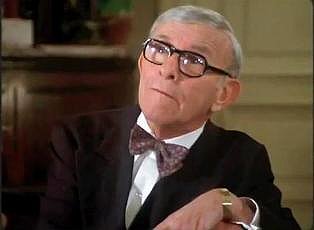
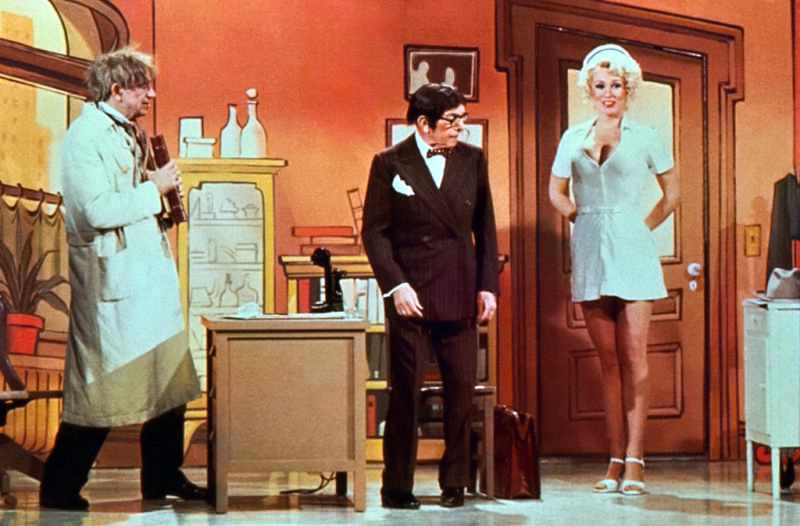
Benjamin, 36, adroitly does his patented flustered-to-despair number, and as eye-and-button popping ‘Nurse McIntosh’ in the boys ‘Doctor sketch’, Lee Meredith, 26, brightly sashays as a blonde from bombshell heaven, her knowing delivery making the baldly prurient wiggle & ogle shtick more bearable. Matthau, with aging makeup, takes his honed sourpuss angle to a level of testiness that soon becomes as wearying as a jerk like Willie would be; pieces are amusing, much is too much—did Simon think that under the carping Willie was somehow endearing? The real winner is George, whose deadpan dryness is so sly it could stand as a classroom model: humor as subversion. His/Al’s calmness makes a thankful antidote to the ceaseless haranguing from Willie/Walter. That Burns pulled off this hat-rabbit just a few weeks after triple bypass heart surgery makes the performance even more laudatory. Maybe cigars really are a good thing…
Phyllis Diller and Steve Allen do cameos as themselves. With Carol Arthur, Rosetta LeNoire (as Willie’s snap-back caregiver), Howard Hesseman, Ron Rifkin, Fritz Feld (74, with 191 credits down and 24 more to go), F. Murray Abraham and Santos Morales. 111 minutes.
 Movies ala Mark