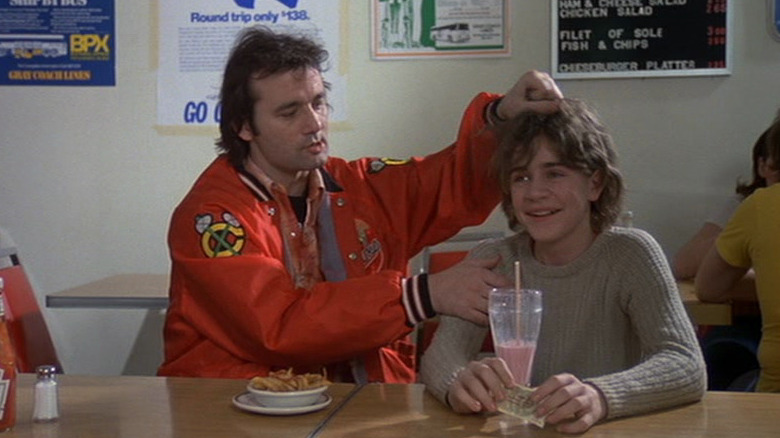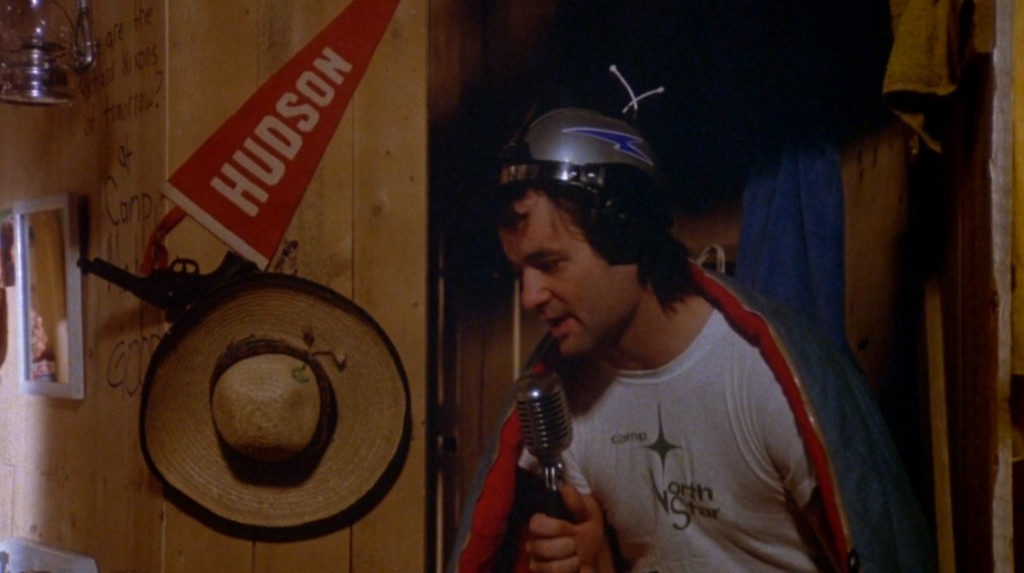
MEATBALLS, a silly junior-league Animal Hous’y comedy from Canada, became a surprise hit in 1979, breaking records up in The Great Wild North and conquering the States (see, they want to invade us) with a gross of $43,000,000, 19th place in the 1979 lineup, the take part of a worldwide snare of $70,000,000. The cost of only $1,400,000 made for a smash success in & of its own, but the results also scooted several careers into the big leagues.
“But, the real excitement of course is going to come at the end of the summer, during Sexual Awareness week. We import two hundred hookers from around the world, and each camper, armed with only a thermos of coffee and two thousand dollars cash, tries to visit as many countries as he can. The winner of course is named King of Sexual Awareness week and is allowed to rape and pillage the neighboring towns until camp ends.”
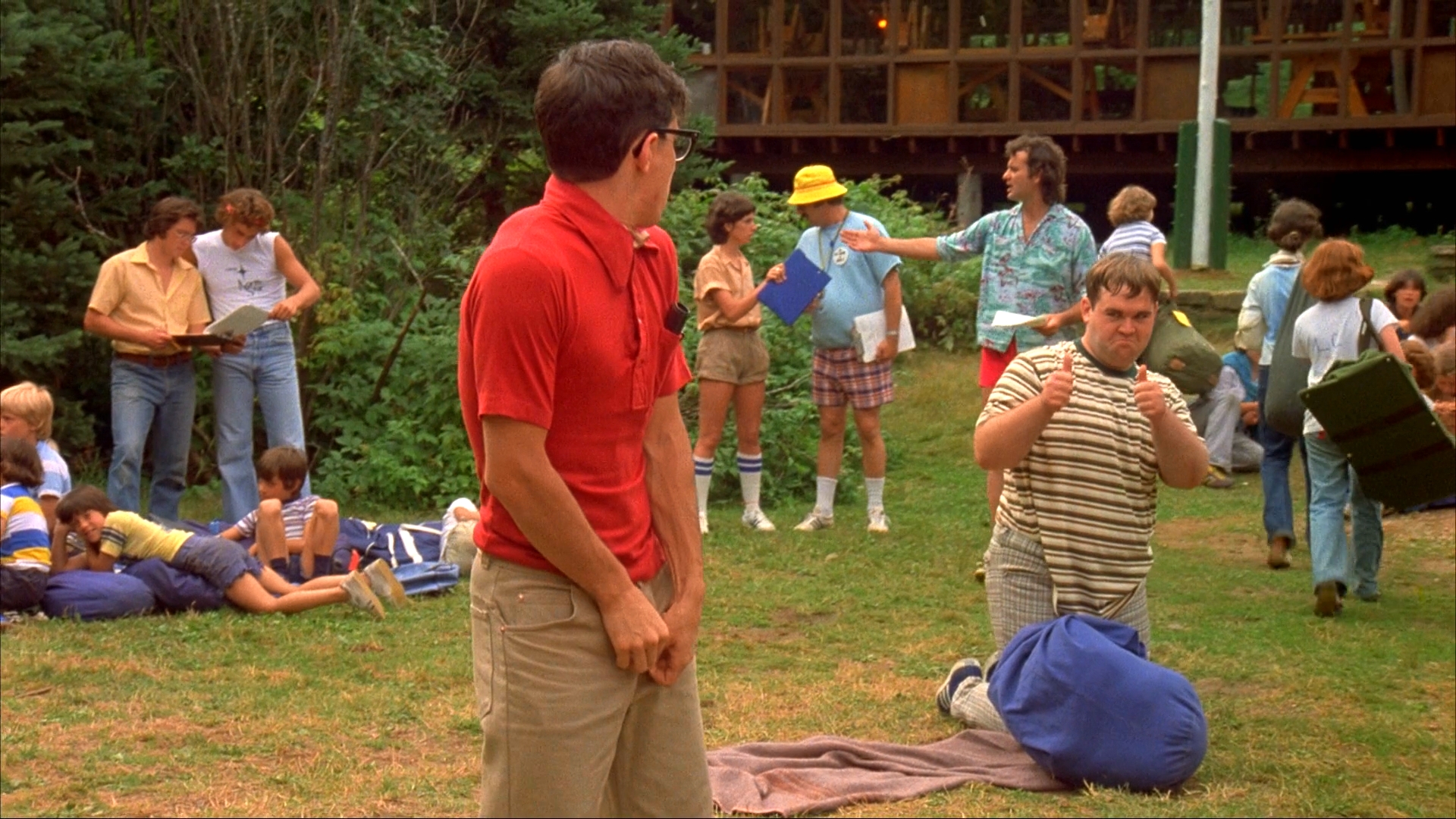
Summer in Ontario. ‘Camp North Star’ is a second-tier outfit competing with the more prestigious (and wallet-backed) ‘Camp Mohawk’. Lead advisor for the young counselors is ‘Tripper Harrison’ (Bill Murray) whose grounded-in-anarchy approach makes headaches for facility director ‘Morty Melnick’, gives free rein to the hormone-driven CIT’s (counselors-in-training), delights the crop of kids and pre-teens and bolsters the confidence of attendee ‘Rudy Gerner’, a shy and bullied outsider.
“Is that a bra you’re wearing, or are you expecting an assassination attempt?”
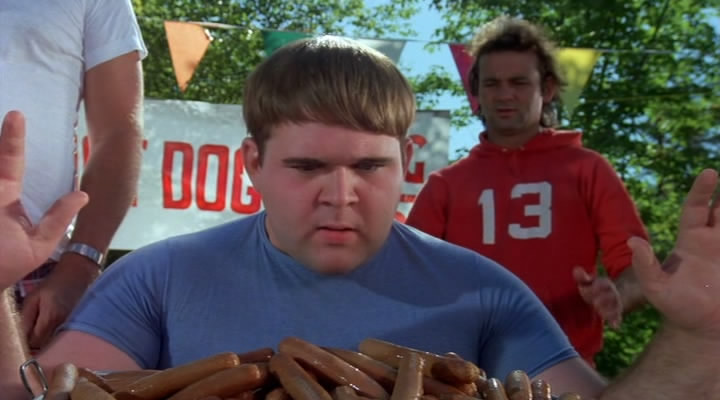
Re-watching this from a distance of 46 years fell into the ‘chore zone’, as it becomes achingly obvious early on that it was intended for two audience demographics; kids, from say six to sixteen (including the subset who had summer camp experience) and young adults, say eighteen to thirty, who may have fortified their attention spanning with beers and/or bong-loads. Back then, we’d plead Guilty as Charged, and in company with like-fried friends it made for a dumb but harmless time passer with some attached giggles. That, as they say, was then. The odds of sitting thru it a third time are as slim as its screenplay.
The writers were Len Blum, Daniel Goldberg, Janis Allen and Harold Ramis: ponder that it took a foursome to come up with a nerd character named ‘Spaz’. Ivan Reitman directed; years earlier he’d piloted two basement budget farces: Foxy Lady and Cannibal Girls, the latter having achieved a degree of cult status. Murray, 28, known for his seasons on Saturday Night Live, had done an uncredited bit four years earlier in Paul Mazurky’s Next Stop, Greenwich Village; this was debut in a lead. It was also the big screen bow for likable Chris Makepeace, 14, who adeptly plays loser-turned-champ Rudy.
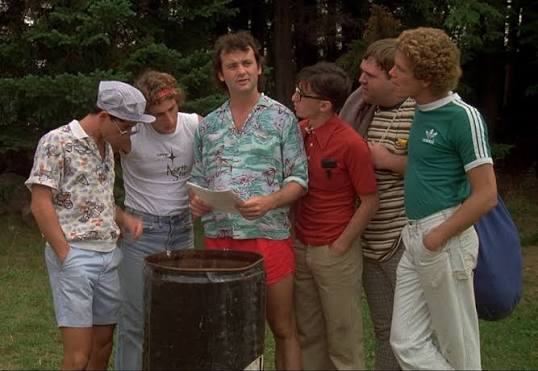
It doesn’t get too raunchy (parents were attending with their kids), and most of the jokes are Police Academy feeble; Murray improvises the majority of his stuff and scores 50-50. Seems like everyone had a good time making it, shooting on location in central Ontario at Camp White Pine next to Hurricane Lake. Murray, Reitman and Ramis went onward and upward: Murray and Ramis teaming up five more times, Reitman with them on three. Makepeace scored a win the following year with My Bodyguard. *
“And even if we win, if we win, HAH! Even if we win! Even if we play so far above our heads that our noses bleed for a week to ten days; even if God in Heaven above comes down and points his hand at our side of the field; even if every man woman and child held hands together and prayed for us to win, it just wouldn’t matter because all the really good looking girls would still go out with the guys from Mohawk because they’ve got all the money! It just doesn’t matter if we win or we lose. IT JUST DOESN’T MATTER!”
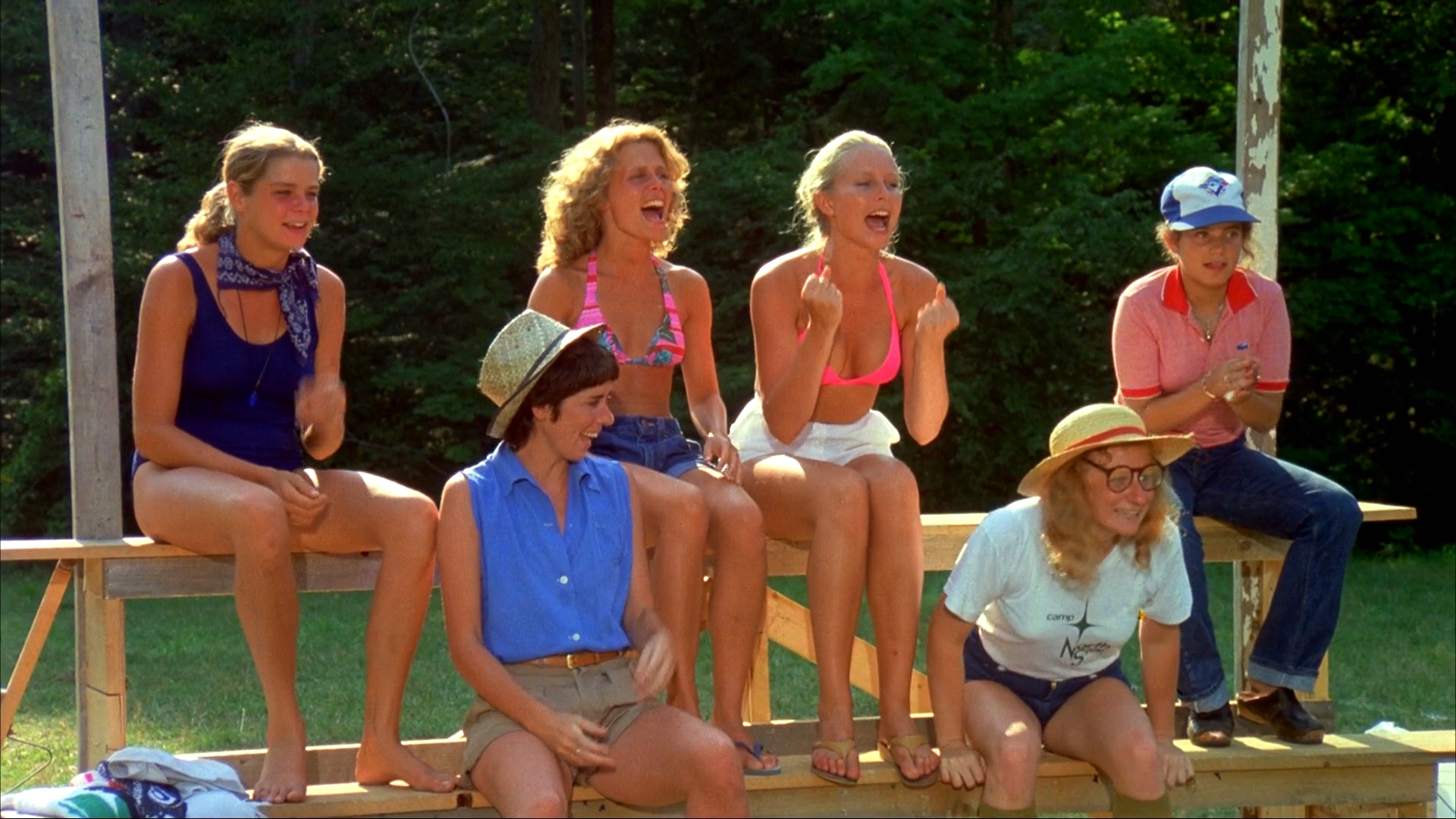
94 minutes, with Harvey Atkin (‘Morty’), Kate Lynch, Russ Banham, Kristin DeBell, Jack Blum, Keith Knight and Matt Craven (22, feature debut). Elmer Bernstein scored—didn’t take much effort to knock this one off. There were three insipid sequels: maybe if you’re in prison.
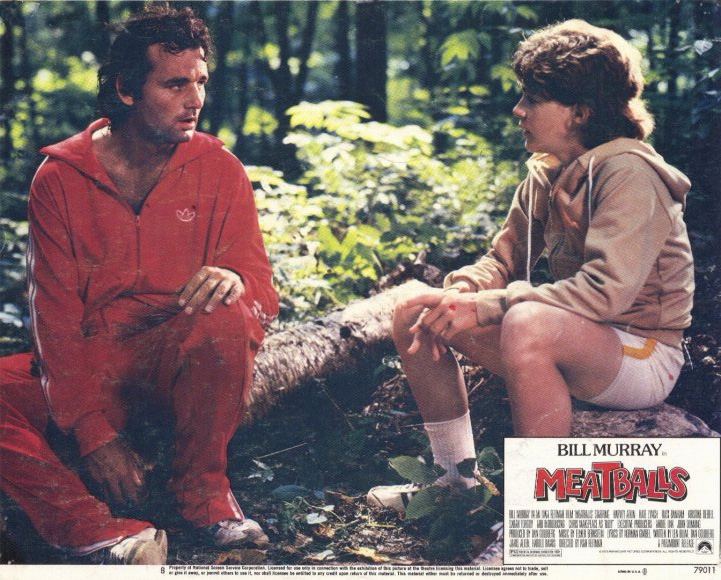
* Ramis on Murray: “He was one of the most amazing street performers you’ve ever seen. He was funny and bold and said things no one else would say. The prevailing Woody Allen–type heroes at the time were losers, nebbishes, schlemiels. Bill’s character wasn’t a loser; he was a rebel. He was an outcast by choice. He had confidence and power.”