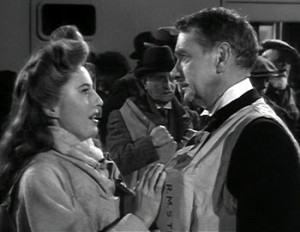
TITANIC, launched by 20th Century Fox in 1953, arrived 41 years after history’s most famous ship met its match and was the seventh time the April 15, 1912 disaster had figured in a film. Handsomely produced for $1,805,000, it was moderately successful, $6,900,000 docking 39th at the box office. Eight years later a much larger audience saw it free on TV, the third entry on the new series NBC’s Saturday Njght At The Movies. This lifetime fan caught that October 7th, 1961 broadcast at the age of six, and, like a number of movies beheld at a highly impressionable age it made an emotional impact that’s lasted a lifetime. The drama and its stunning conclusion sparked a fascination with the story, furthered by Walter Lord’s classic non-fiction book “A Night To Remember”(published in 1955—I wore out my paperback copy) and its excellent 1958 film version (shown as the CBS Thursday Night Movie on March 28, 1968). That detailed telling is more accurate, and 1997’s planet-capturing Titanic is a truly immersive spectacle but the ’53 oldie still more than holds its own in the heartstrings department—and happens to be a very good show. *
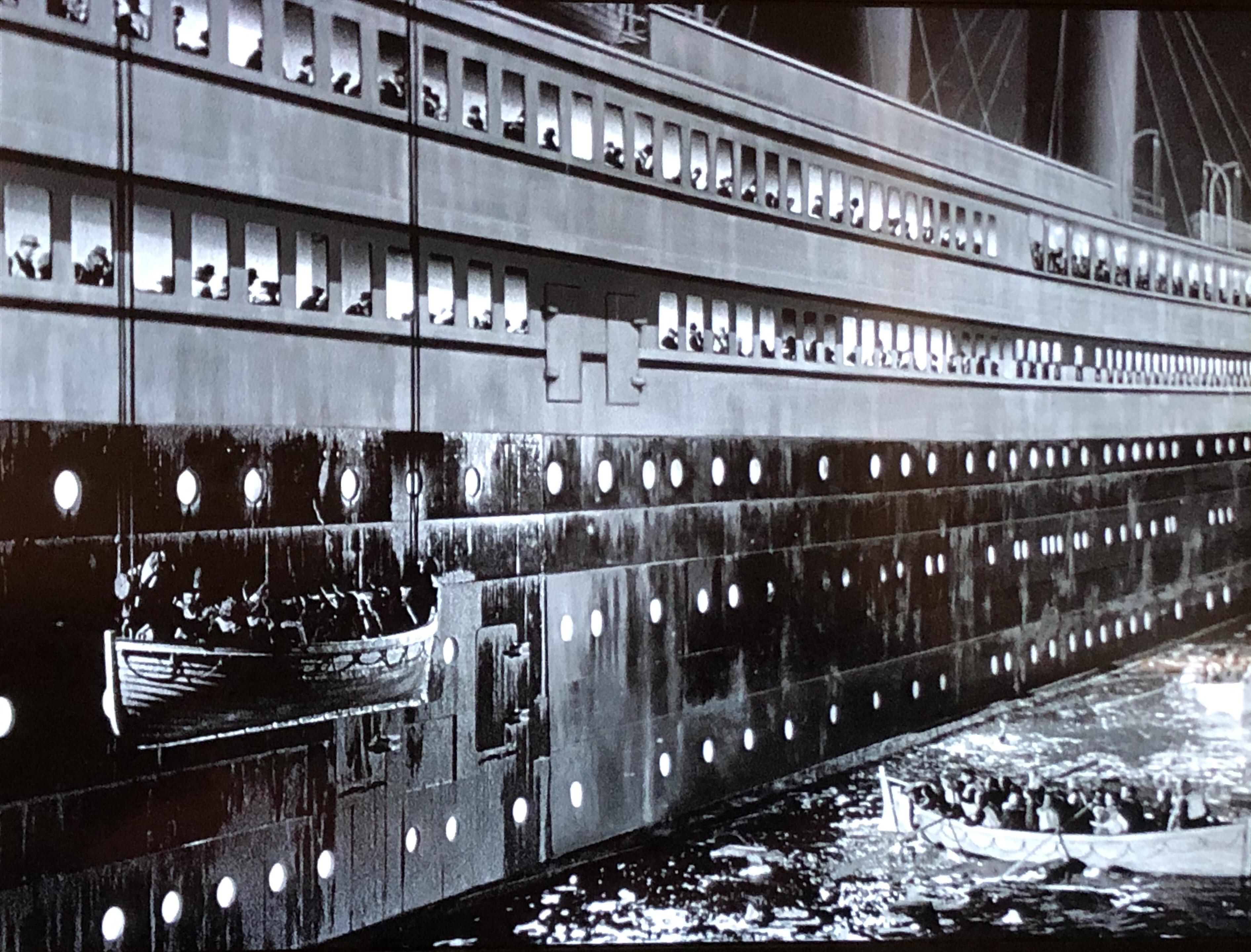
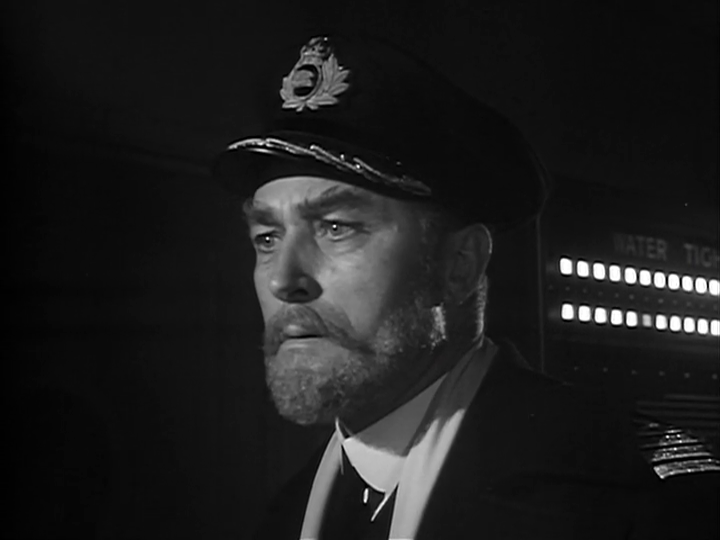
As the luxurious new marvel RMS Titanic sets off on her maiden voyage from Europe to New York City, wealthy American sophisticate ‘Richard Sturgess’ (Clifton Webb) hastily buys a 3rd-class ticket from the father of a Basque immigrant family. Sturgess needs to catch up with his estranged wife ‘Julia’ (Barbara Stanwyck) who is taking their daughter ‘Annette’ (Audrey Dalton, 18) and son ‘Norman’ (Harper Carter, 13) back to her Michigan home town, away from Richard’s elitist lifestyle and cronies. During the voyage the couple spar bitterly over choices and children, while spoiled Annette at first snootily rebuffs then shyly accepts the interest shown by a genial college fella (Robert Wagner, 22). Other passengers they encounter include an earthy heiress (Thelma Ritter), a depressed, brandy-buffeted priest (Richard Basehart) and a smarmy social climber (Allyn Joslyn). But the ship is grand, the sea is smooth and veteran Capt. Edward Smith (Brian Aherne) is an old hand at crossing the ice-cold North Atlantic.
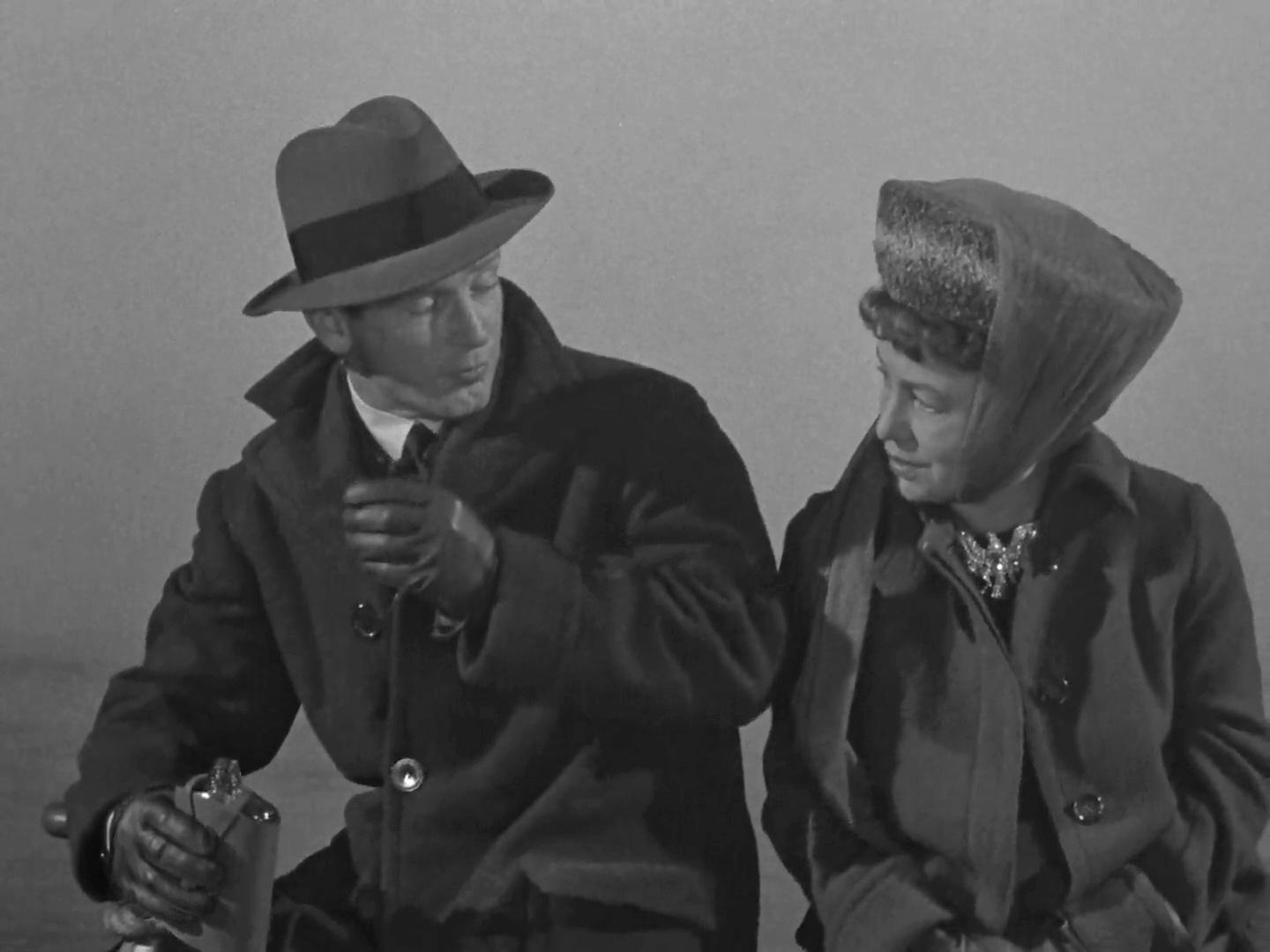
Fox overlord Darryl F. Zanuck told a trio of top writers—Charles Brackett, Richard L. Breen and Walter Reisch—that he wanted to showcase Webb, who’d been a gold mine in comedy, in a dramatic role; though Webb, 63, came from modest means in Indiana (dad a ticket clerk, mom daughter of a train conductor), his self-cultivated aristocratic bearing mien and the Titanic’s display of noblesse oblige during a tragic emergency was a glove fit. Stanwyck, 45, knocked back four other pictures that year—Jeopardy, All I Desire, Blowing Wild and The Moonlighter, her free-form naturalness brought strength, vigor and perception to any part she took. Brackett (who also acted as producer), Reisch and Breen tuned the screenplay to mix the basic outline of the real event and historical personages with the fictional characters; there are inaccuracies of course, later versions benefited from updated research. Jean Negulesco was assigned direction; one of three he captained that year; How To Marry A Millionaire a big hit with a sensation named Monroe, and the underrated Scandal at Scourie, the last of eight pairings with Greer Garson and Walter Pidgeon.
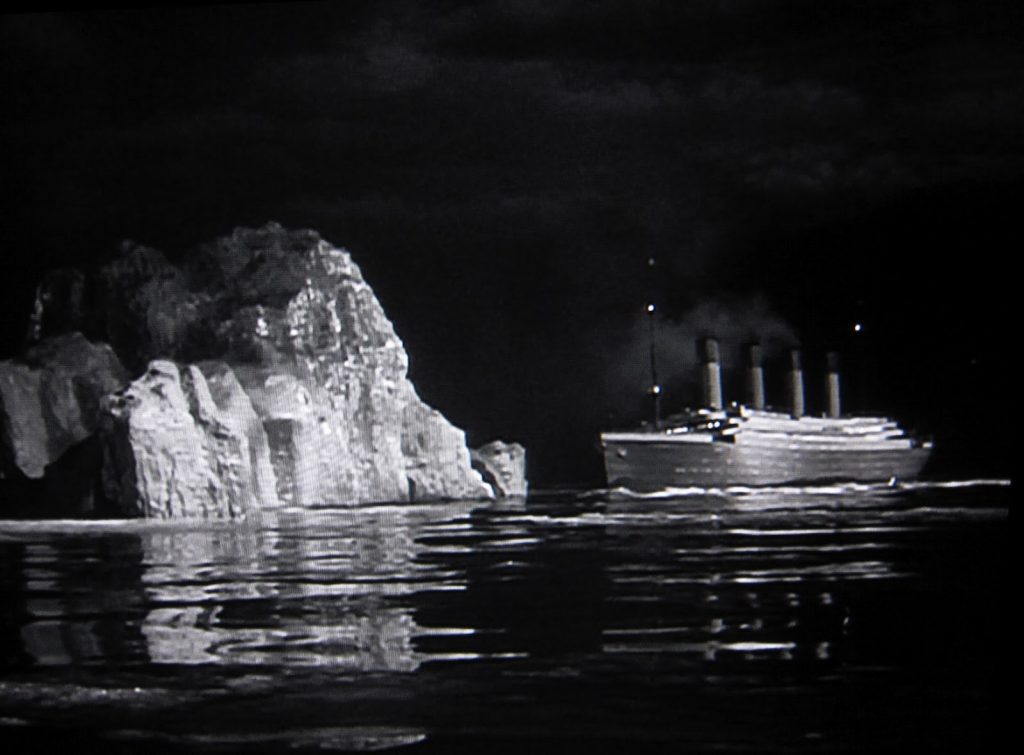
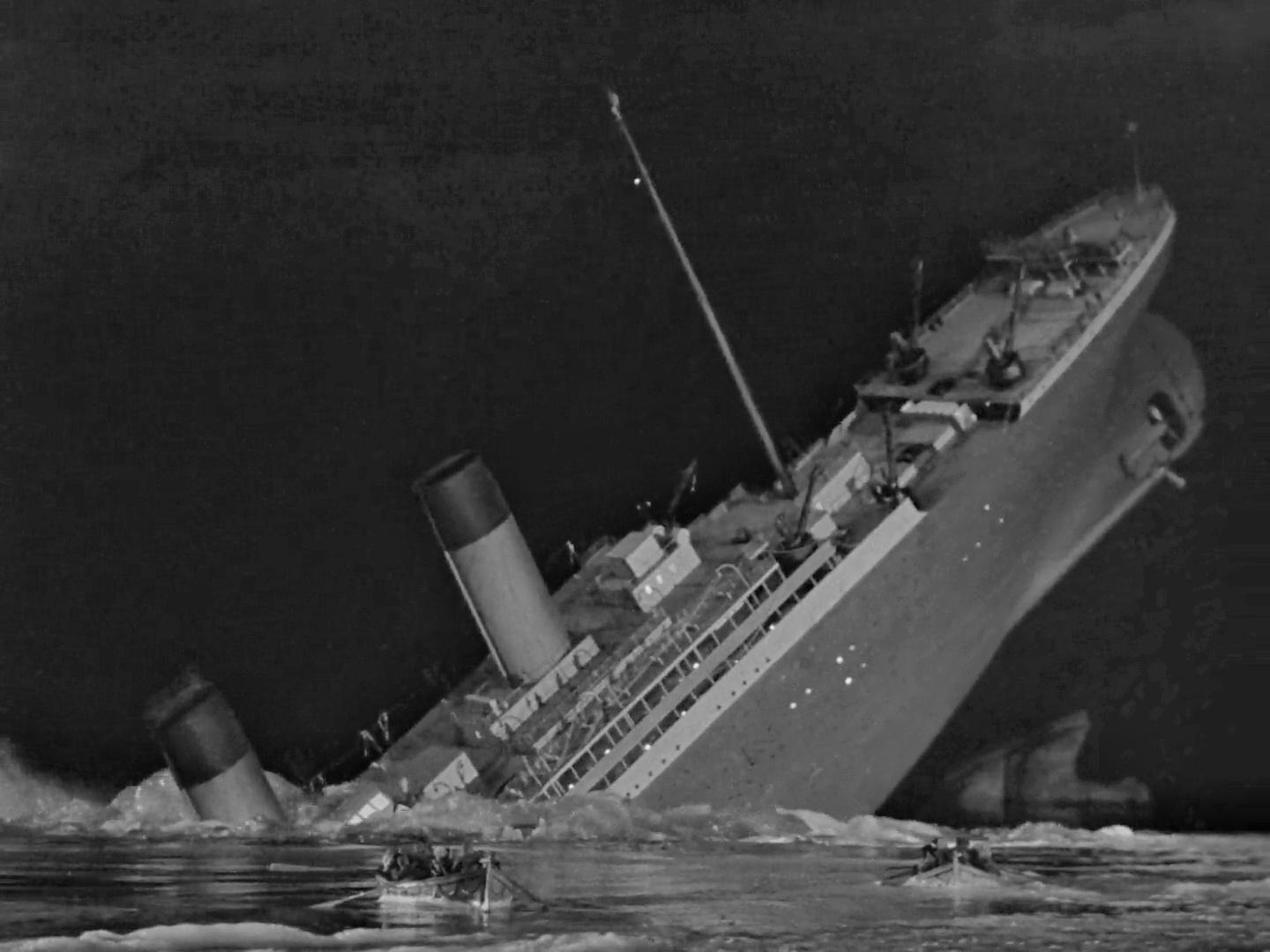
The startling opening introduces the iceberg, thunderously breaking off from some faraway glacier (Greenland likely) and commencing its southward drift to destiny, both beautiful and majestic as a fragment of nature and as silent and deadly as a submarine. Joseph MacDonald’s clean b&w cinematography compliments the dramatic interactions and the external sequences of comfort, collision and catastrophe. The art department created plush interior sets and a large-scale side exterior and the special effects crew used a 28-foot model to fine effect. **
“Did we hit it?”—-“No, it hit us.”
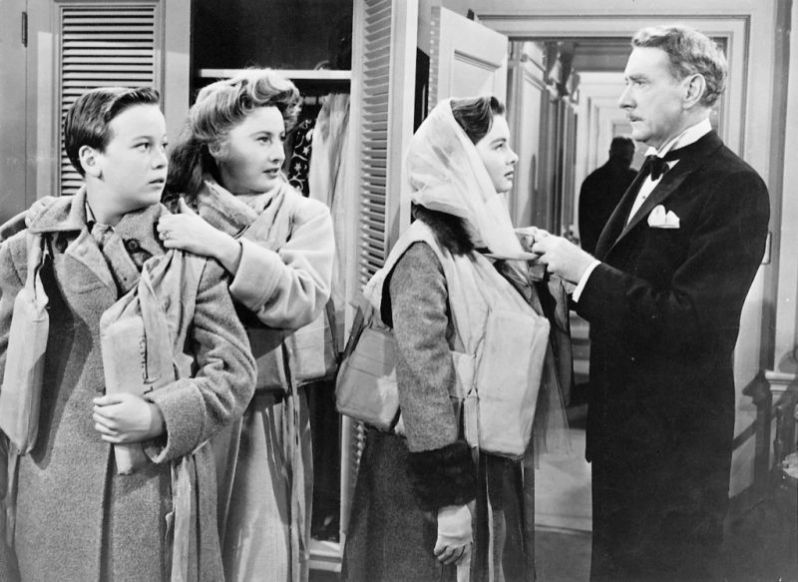
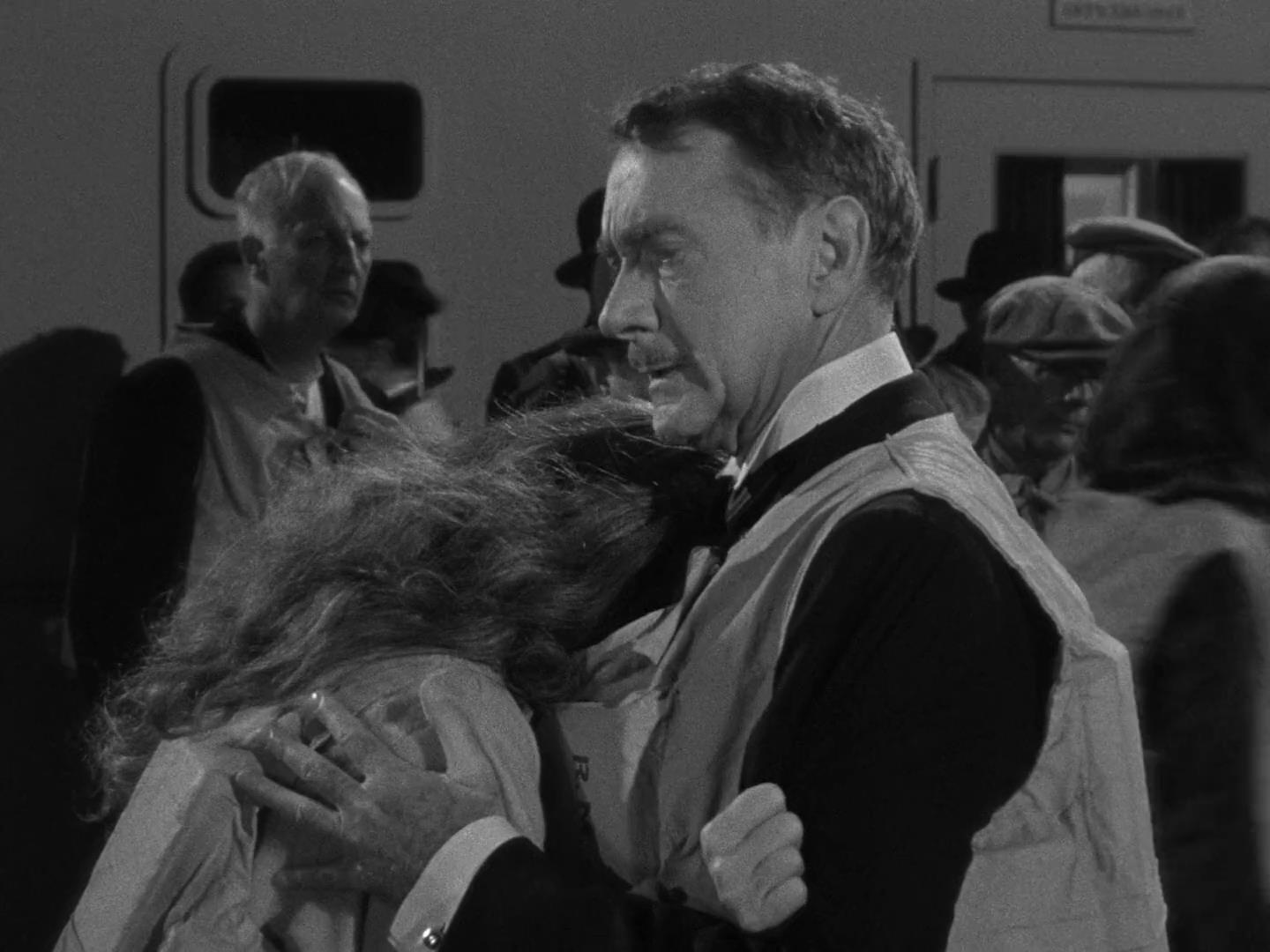
98 minutes allows time for the assorted vivid character sketches to develop their own degrees of tension before the ship meets the berg and the inevitable trauma plays out. Poised and assured, Aherne makes a great fit for Capt. Smith, and the always welcome Ritter gets the relief valve role as a fictional version of ‘The Unsinkable’ Molly Brown’. Basehart excels as the tormented priest, who exits on a grace note of courage and calling. New kids on the lot Dalton (demure look, lovely eyes, adeptly disguising her Irish accent) and Wagner (vying for parts with Jeffrey Hunter, who had a solid nautical job that year in Sailor Of The King) do quite well, as does young Carter (he only did a few films, going on to make a fortune in real estate sales). Stanwyck and Webb interplay beautifully—for my ticket’s worth (as either a steerage passenger or a coal stoker) this was Webb’s finest performance, and is Stanwyck’s best in what was the midsection of her three stage career. They cinch it with their hurried but deeply heartfelt farewell scene, poignant and wrenching enough to serve as a stand-in for countless goodbyes that took place as the full reality of the situation dawned. Add a stirring rendition of “Nearer My God, To Thee”. The story of the Titanic involves hubris, timing and folly, enough metaphoric content to cover the century it took place in and the current insane one we’re crossing fingers in, but it also carries enough pure, honest, primal emotion to have soaked millions of handkerchiefs, unashamedly. ***
The writers earned an Academy Award for Story & Screenplay and the Art Direction was nominated (should’ve won, losing to the blah sets for Julius Caesar). Both Stanwyck and Webb were worthy of nominations as were the Cinematography and Costume Design.
With Edmund Purdom (28, debut, as Officer Lightoller), William Johnstone (as John Jacob Astor), Frances Bergen (Candice’s mom, as Madeleine Astor), Marta Mitrovich, Harry Cording and Mae Marsh.
* “Iceberg! Dead ahead!”—-there were three silent versions, all released in 1912. The ten-minute Save the Titanic sailed just 29 days after the sinking. Not only that, it was co-written by & starred 22-year-old survivor Dorothy Gibson. Three months later came the 35 minute In Nacht und Eis/In Night and Ice, made in Germany. France followed two months afterward with La hantise/The Obsession, 24 minutes in length. The first sound version arrived from Britain in 1929, a fictional take called Atlantic. In 1933 the Oscar-winning hit Cavalcade had a sequence about the disaster. Ten years went by before the first sound feature with the title of Titanic steamed out, but it came from Nazi Germany in 1943 and was a 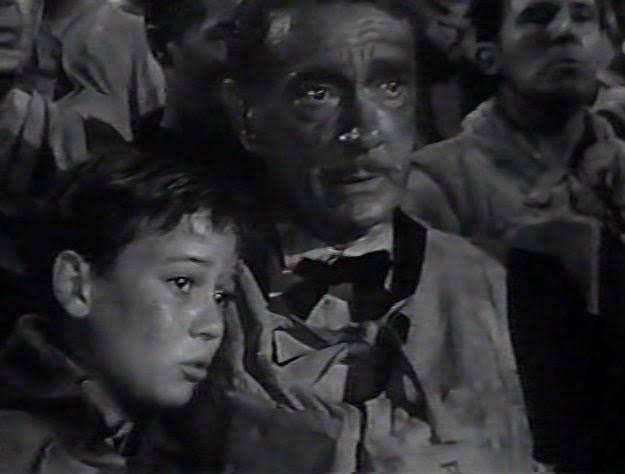 Reich propaganda opus so accuracy went down with the ship. The liner used in the production, SS Cap Arcona, was sunk in 1945 by the Royal Air Force, and the human loss dwarfed what nature, poor judgment and bad luck had done with ice: what the British air crews did not know was that the ship was filled with 5,000 concentration camp prisoners being moved to the Reich. Only 350 made it out alive, while 420 members of the SS lived thru the attack.
** It wasn’t until 32 years later when submersibles found the wreck, 12,500 feet below, and discovered that the ship broke in half before the final plunge. This version, Lord’s book and the 1958 film showed what they believed happened and did so with the resources and tools available at the time. Besides his extraordinary technical skill, James Cameron had updated info on his side—and $200,000,000 (with inflation adjustment 48% more than the real vessel cost). As for 1980’s critical, financial and artistic disaster, Raise The Titanic, may it rust in pieces.
*** What hooked me as a child? Of course the spectacle of a huge ship going down (even on a 21 inch black & white TV) was a gee-whiz event, like the earthquake in San Francisco (also witnessed ia television—I wasn’t around in 1936, thank you), and— on big screens—the battle finale of The Alamo, the pirate fighting done by the Swiss Family Robinson and the dinosaurs confronted in The Lost World. Even though I grew up in the pop music nirvana of the 60s and came of age rocking in the 70s, I had early exposure at home to different types of music, and “Nearer My God, To Thee” got to the thee in me (still does, and I’m not religious). But key was that in this movie a message came thru: parents can die. I was a surprise third and final edition to the family, my sisters being twenty and fourteen years older, so my parents were middle-aged when I was little, and early on I realized that, while they might not be trapped on an ocean liner, they weren’t going to be around forever. I lost track of how many times I’ve watched this over the decades (once feigning sick to play hooky from school—third grade maybe?— in order to stay home and see it on a matinee: Mom gave me heck when she realized what was up. While we’re going full speed ahead, emotion also figures in A Night To Remember, and allow me to throw out that while I’m aware enough to see the weaknesses in the screenplay for the 1997 epic—I loved it, too, and saw it a number of times, despite not being a “chick”. I think the whole tiresome refrain of calling it a “chick flick” not only lazily sloughs off one of the most successful movies ever made (all over the, uh, y’know, World) but is a snarky insult to women. “Rose! You’re so stupid Rose!”


Great review, Mark. I think the main reason I like this one is due to Stany and Clifton Webb. It’s one of the better Titanic films for sure. A Night To Remember will always be my favourite.
Thanks, Maddy. Now that I’ve added this to ‘Night’, I’ll eventually get around to the ’97 titan.
What a lovely tribute to this film! I love seeing Brian Aherne in this (I always enjoy his work).
I received your lovely message about my ISLAND IN THE SUN write-up, and it made my heart smile to read your comment. Thank you so much. Wow, to live on St. Thomas. What an incredible memory/experience to have.
(Because my site only lets me respond separately and not directly to individual comments, I respond to the comment on my site and hope the commenter returns to see my comment along with responding on their blog as well, to make sure they know I received the message and how grateful I am for their response.)
Appreciate you reading my piece and commenting.
Best,
Dominique (of DOMINIQUE REVUE)