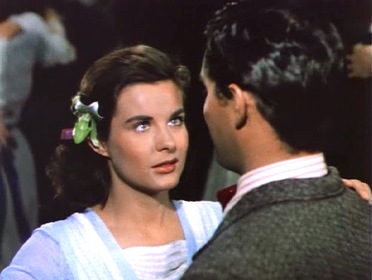
LURE OF THE WILDERNESS drew sufficient audiences to make it 1952′ 48th most attended picture, a gross of $5,600,000 ensured by attractive young stars, a grizzled older pro and a solid storyline, remaking 1941’s Swamp Water, making some non-hurtful alterations to the plot and adding Technicolor. Like the excellent original, most of the shooting was on location in Georgia and Florida, chiefly in the Okefenokee Swamp. Like the earlier script done by Dudley Nichols, this new version from Louis Lantz was based on Vereen Bell’s novel. Walter Brennan repeated his role from before, and the fresh faces who figured in ’41 (Dana Andrews and Gene Tierney) were now belonging to Jeffrey Hunter and Jean Peters. Romanian-American director Jean Negulesco may not have won over critics as much as temporary French exile Jean Renoir, but his background as a painter gave a stylistic imprint to his work: it’s interesting that such an evocative slice of Americana was so well captured by artisans who came from abroad. Perspective played to win. *
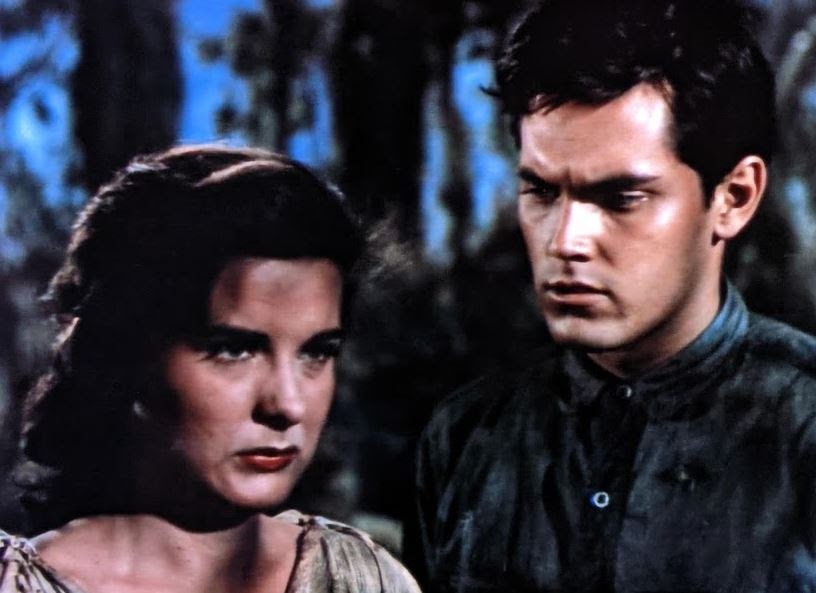
Somewhere around 1910, near’bout Fargo, Georgia. ‘Ben Tyler’ (Hunter), who’d been searching the outskirts of the nearby swamp for a pair of vanished trappers, goes missing himself, knocked unconscious while chasing his dog. Coming to, Ben finds he’s been taken captive by ‘Jim Harper’ (Brennan, 58) who’s been living in the depths of the swamp for eight years, framed for a murder he didn’t commit. Jim and his now-teenage daughter ‘Laurie’ (Peters) have figured out how to exist in the exotic and dangerous region and are fearful Ben, if freed, will inform the town and authorities. Ben believes Jim’s story and gradually the honest young man and the isolated pair come to trust each other. Ben promises to find a lawyer, after making enough money on otter pelts, the animals caught by himself, Jim and Laurie, who’s expert with a bow & arrow. When Ben begins to deliver a passel of valuable skins (supposedly taken alone, and in record time), suspicion turns to resentment, both from the scurvy brothers who did the deed Jim was accused of and from ‘Noreen’ (Constance Smith, 23), a local lass who has a teasing interest in Ben. The trust built between the isolated refugees and their earnest discoverer/savior may be shattered.
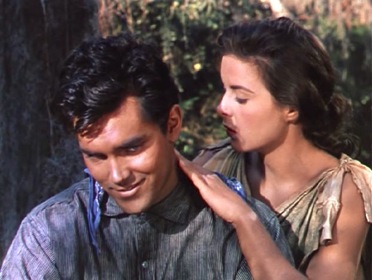
Renoir’s Swamp Water, beautifully shot in black & white, is more detailed, rather darker in tone, and differs in the amount of attention focused on some of the characters (the running times are only only a few minutes apart). It also cost more to make and was not as successful when it came out (a strong rep came later). Negulesco’s version has more of an adventure vibe and the slow-budding attraction element between the glowing Peters and handsome, likable Hunter is more pronounced. The two, both 25, were each on three more marquees that year, Peters in the sleeper Wait Till The Sunshine, Nellie, the omnibus O. Henry’s Full House and the great biopic Viva Zapata!, Hunter in Red Skies Of Montana, Belles On Their Toes and Dreamboat. As usual, ever reliable Brennan is in fine form.
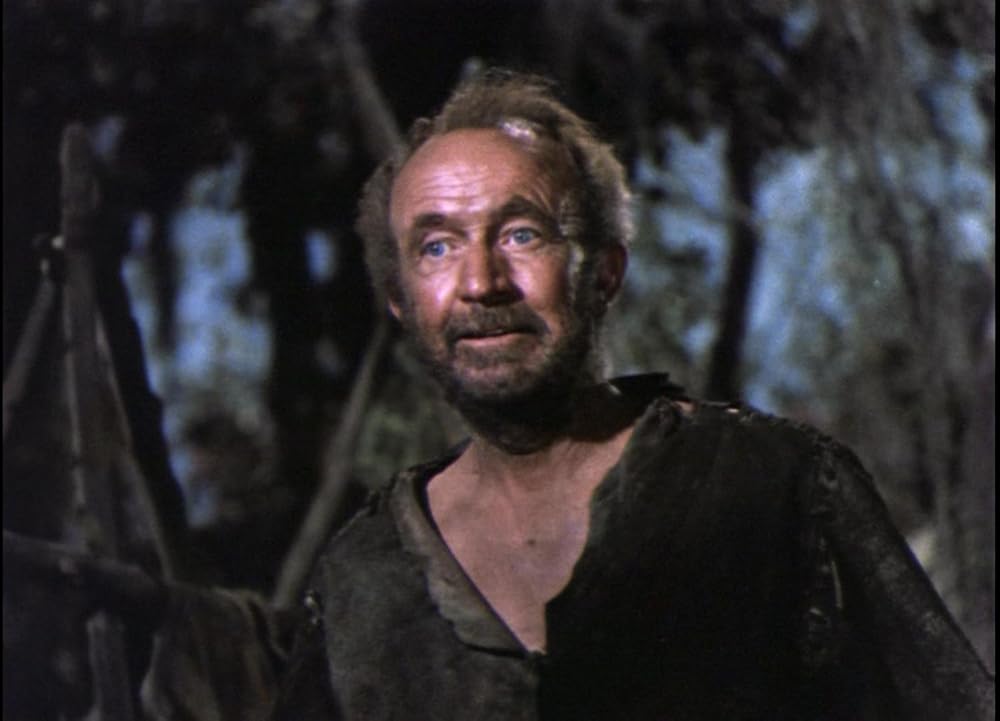
The Technicolor is an obvious bonus, and the dense waterscapes are loaded with critters: big gators, venomous snakes, a panther, a bear, a rogue bull. Robert D. Webb was the uncredited 2nd unit/location boss, Edward Cronjager (Heaven Can Wait, Canyon Passage) the cinematographer. A real plus is the outstanding music score from Franz Waxman, contributing greatly to the mysterious and dreamlike atmosphere of the swamp and the folksy feel in the town scenes.
With Tom Tully, Harry Shannon, Will Wright, Jack Elam, Pat Hogan, Dub Taylor. 93 minutes.
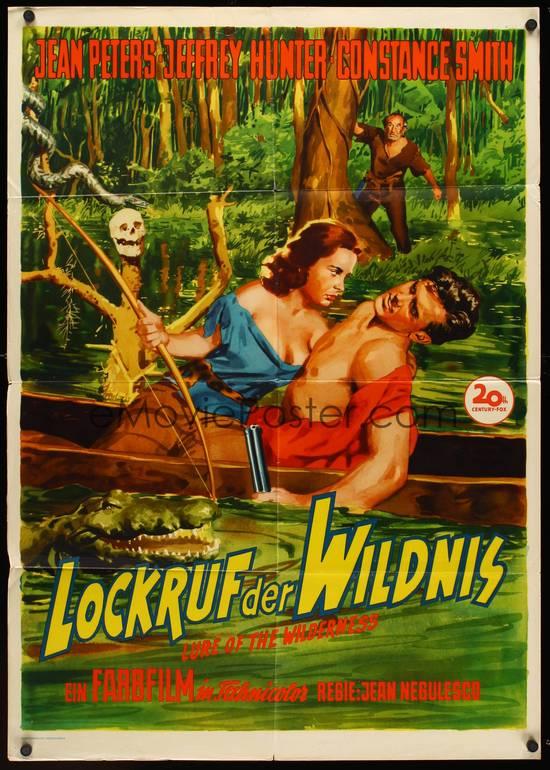
Achtung! Ad art for the German release goes over the Rhine with suggestion. Nothing like this is on the screen.
* For further comment on director Negulesco, we suggest an insightful piece done by Sarah Berry for the site Contrappasso Magazine: International Writing—-https://contrappassomag.wordpress.com/2015/05/12/writers-at-the-movies-sarah-berry-on-jean-negulesco/
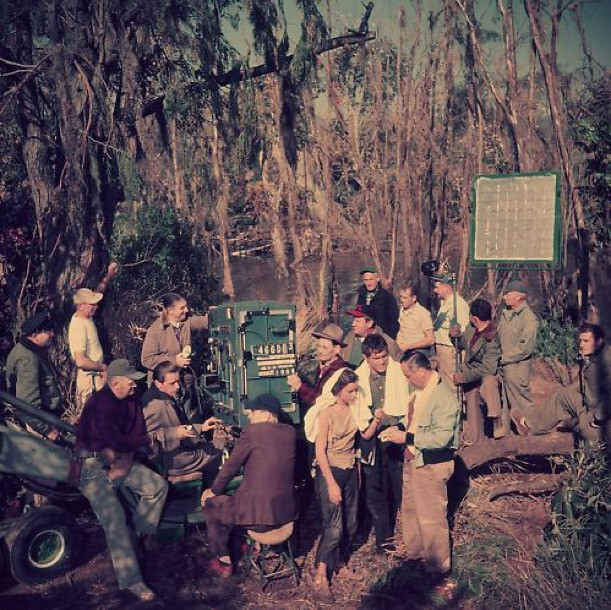
On location—looks like Jeff and Jean got dunked
 Movies ala Mark