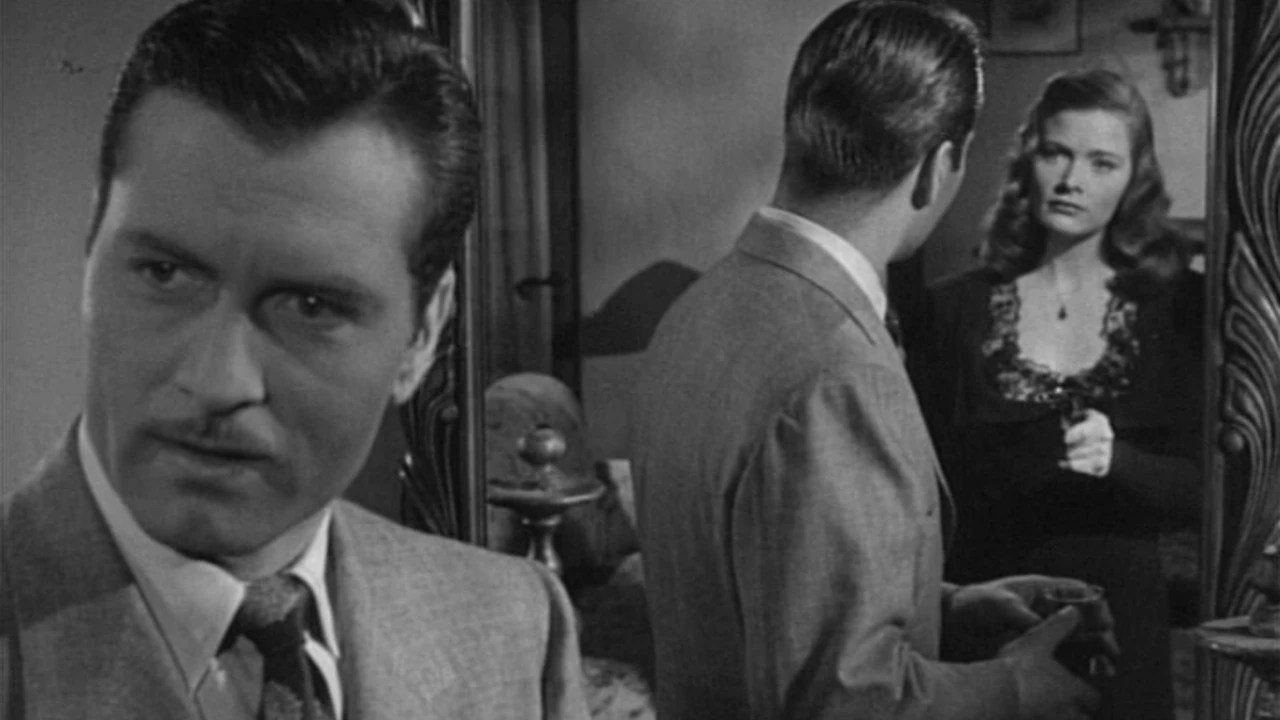
THE BRASHER DOUBLOON contains a loaded line of self-owning dialogue when private eye ‘Philip Marlowe’ relates “I had a bad taste in my mouth all the way back to my office in Hollywood.” Considering the flak that star George Montgomery got/gets for his portrayal of the sardonic snoop it could well have been the actor putting an extra bite of sinking realization to the words. Certainly, vetted producer Robert Bessler (The Black Swan, The Snake Pit, Halls Of Montezuma) and/or his 20th Century-Fox overlord Darryl F. Zanuck would grit cigar-clenched teeth in agreement when, after the reviews, box office results came in—except they didn’t. The roll call for 1947, when this was shoved out among a host of noir winners, didn’t even mention this one. Montgomery’s Marlowe used a silencer at the ticket booths. *
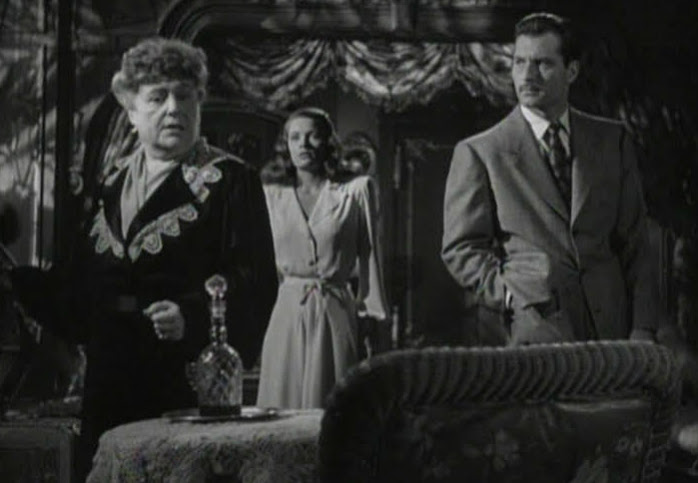
Solo confidential investigator Marlowe is hired by a widow ‘Elizabeth Murdock’, wealthy and especially snooty who wants him to locate a rare cold coin nipped from a safe at her Pasadena estate. The old doubloon is worth some mean green, but does it really justify the bodies that Marllowe keeps tripping over? And what’s with the yes-no-yes-no behavior of the old bat’s polite, evasive secretary ‘Merle Davis’ (Nancy Guild) a neurotic hottie with a repressed-waiting-to-be-unleashed appeal that ever-on-the-prowl Marlowe immediately decides to that—he really comes off as a private ‘dick’ in this interpretation.
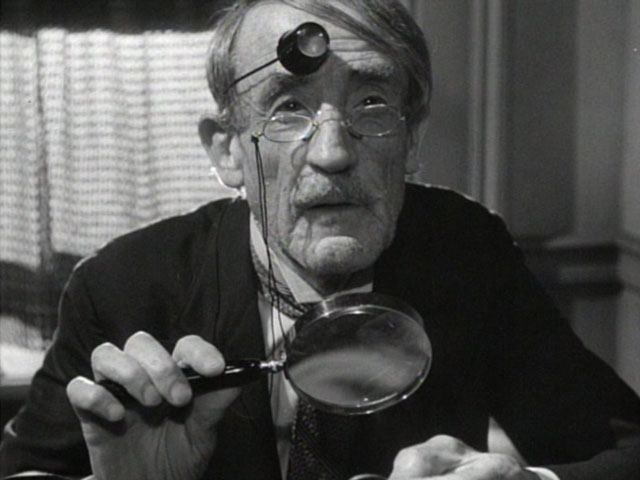
Credit due: Houseley Stevenson
The script by Dorothy Bennett is a revamp of author Raymond Chandler’s “The High Window”. which had already been filmed in 1942 as Time To Kill with Lloyd Nolan, which had changed Chandler’s Philip Marlowe to ‘Michael Shayne’, who Lloyd had played in six B-pictures. In the interim Marlowe had been cine-sculped by Dick Powell (Murder, My Sweet), Robert Montgomery (The Lady In The Lake) and Humphrey Bogart (The Big Sleep), the latter a big success the year before The Brasher Doubloon entered the rally. Four actors were announced for the part before Montgomery got the gig—Fred MacMurray, John Payne, Victor Mature and Dana Andrews. Though he made a game try, each would have made a better choice for the role. He’s not terrible, but is a bit too forced-slick (let alone handsome) to make the case—and the instant come-on jazz with the Merle girl is off-putting (he did the same icky you-want-it biz with Gene Tierney in China, an agitprop nonsense back in ’42). Guild—pronounced ‘Gylde’ was 21, a pretty but blank flash-in-the-pan who didn’t last long. Sort of Ellen Drew without the sizzle.
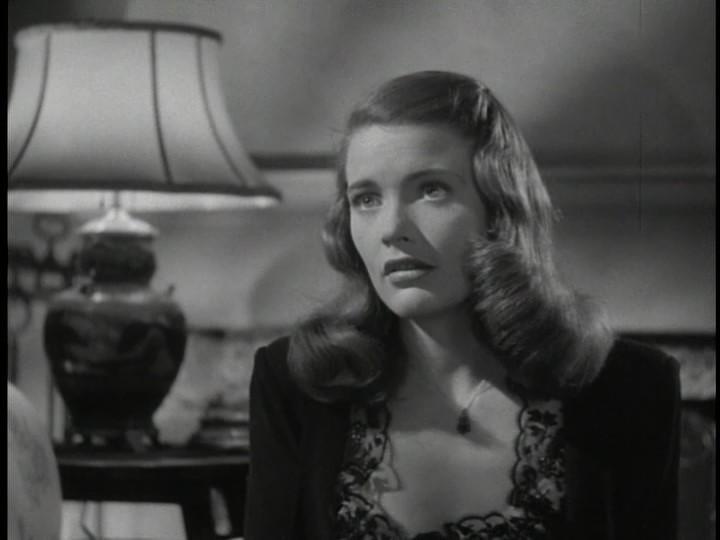
Nancy Guild, 1925-1999—-“I never realized how much there is to acting, and for the first time in my life I really want to make good at something to justify everyone’s faith in me.”
But saving graces are in evidence. Having shown mood skill with The Lodger and Hangover Square director John Brahm, with the aid of cinematographer Lloyd Ahern, does a decent job on a low budget and draws some nifty work out of the supporting cast—though we wonder why someone made the choice to have Pasadena look as windy as the coast of Ireland. The bossy mama Murdock is done with relish by Florence Bates and newcomer Conrad Janis, 19, makes a proper weasel of her pampered son. Roy Roberts is typically solid as a police lieutenant at odds with Marlowe—do cops ever respect private eyes and vice versa? Nah. Creepy types are sketched to effect by Fritz Kortner, Marvin Miller, Jack Overman and especially by bit players Houseley Stevenson and Alfred Linder (shamefully, neither were allowed screen credit). Running time clocks 72 minutes.
“Now I know this is going to sound kind of radical, but did it ever occur to you that it might make things easier if you told the truth occasionally?”
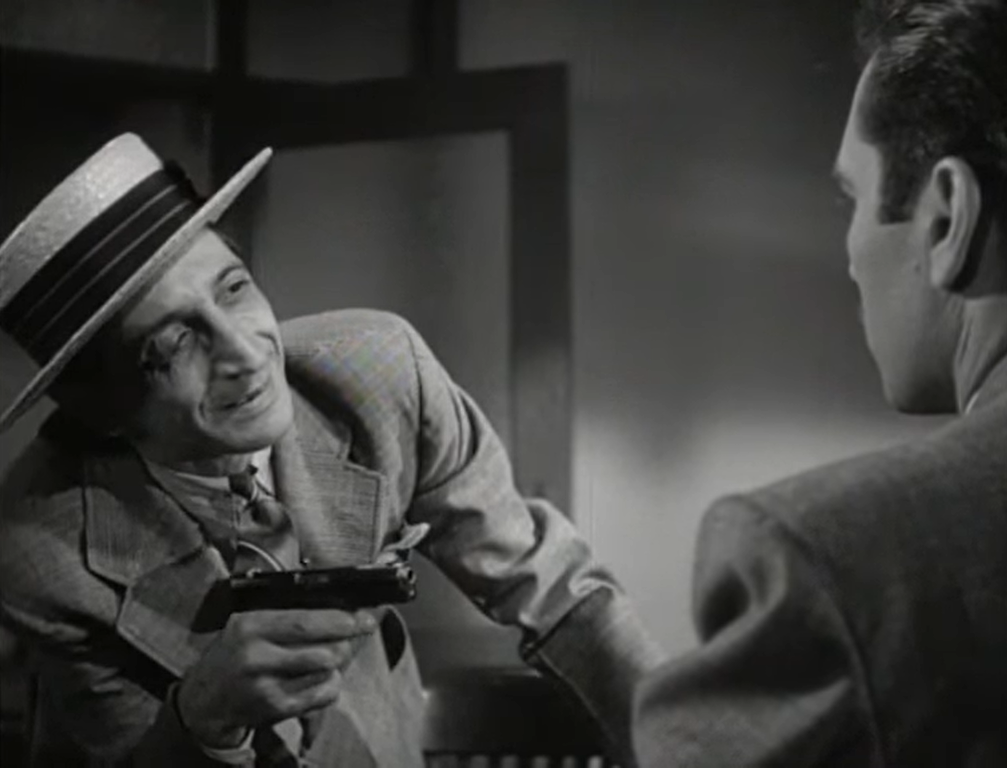
Credit due: Alfred Linder channeling his inner Peter Lorre
* Let George do something else it? Four actors were announced for the part before Montgomery got the gig—Fred MacMurray, John Payne, Victor Mature and Dana Andrews. Though he made a game try, each would have made a better choice for the role. Montgomery broke into leads in 1942 but then was interrupted by the war. When he returned from military service and resumed his career in 1946, none of his first four films clicked. Soon he concentrated on churning out comfort-fodder B-westerns, twenty-five over a decade before switching to cheap WW2 actioners shot in the Philippines, fodder he also wrote, produced and directed.
Shamus gamus—fans pick their own fave Marlowe’s. Besides those mentioned (we vote for Bogey and Powell) L.A.’s most iconic sleuth would be done by Philip Carey, James Garner, Elliott Gould, Robert Mitchum, Liam Neeson, Powers Boothe, James Caan and Danny Glover.
 Movies ala Mark