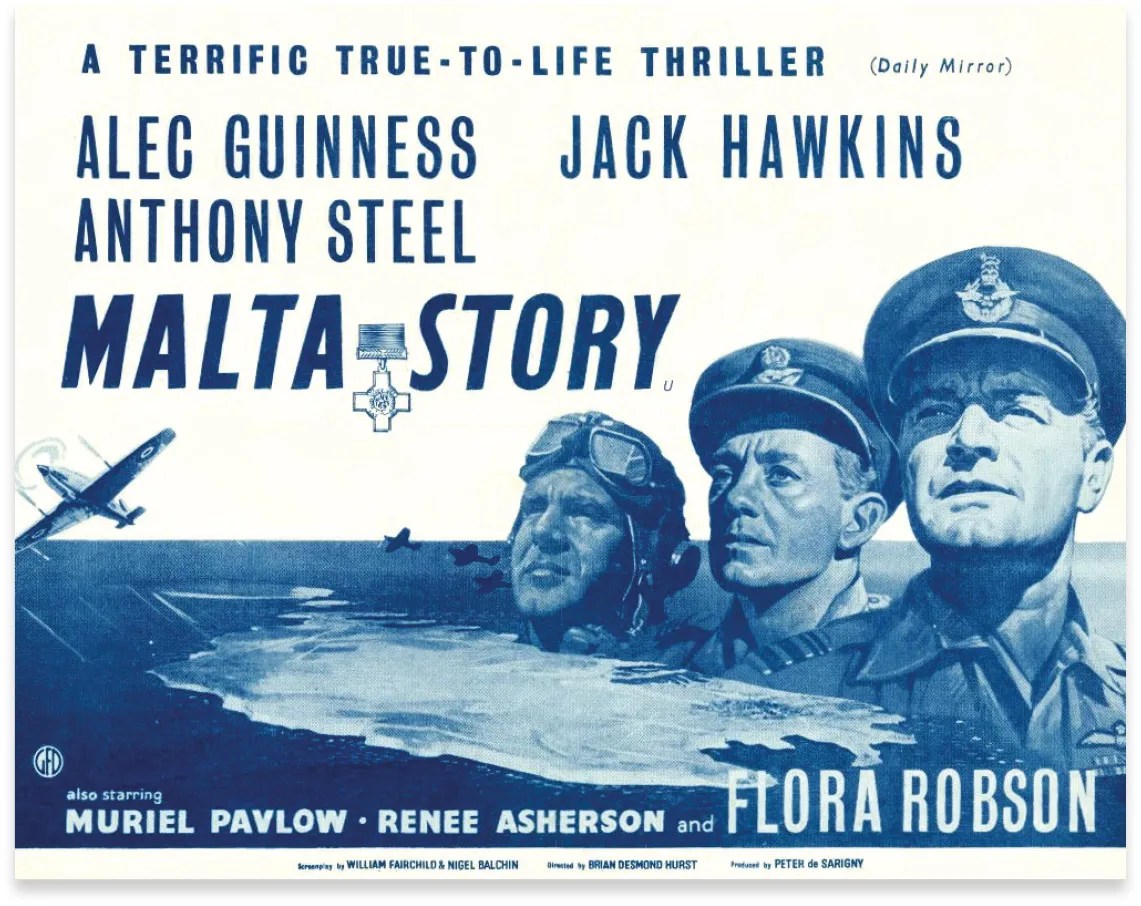
MALTA STORY, a stiff-upper-lip war flick from Britain in 1953, takes on the desperate WW2 siege of Malta, where British forces and the local population endured pummeling from their German and Italian enemies for twenty-nine months, June 1940 until November 1942. Directed on the actual locations by Brian Desmond Hurst (the 1951 A Christmas Carol, Simba, The Playboy Of The Western World) the ‘good show’ does a dutiful job on the historical action basics, but some miscasting and a blah script from William Fairchild (Outcast Of The Islands) and Nigel Balchin (The Man Who Never Was) fight it to a draw.
“We are short of food, water, clothes and fuel, but let us remember that the most glorious sieges in history have always involved hardships, and without hardships there would be little Glory.” Right, lads: now remember that long-term comforter when Adolf’s Luftwaffe and Benito’s Regia Aeronautica paste you with one of the 3,000 air raids they unleashed on the island.

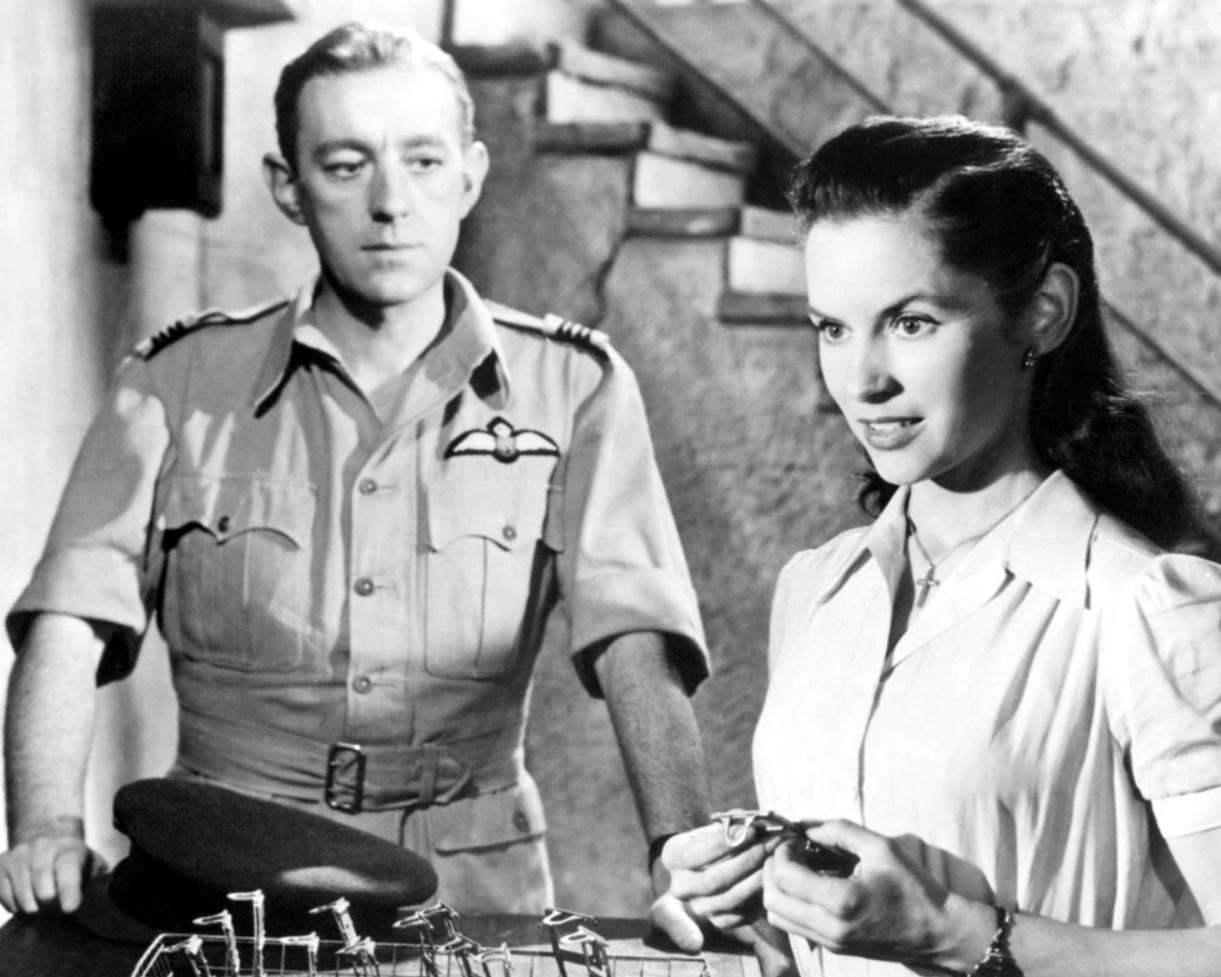
1942. En route to Egypt, ‘Flight Lieutenant Peter Ross’ (Alec Guinness) is stranded in Malta when his plane is blasted during a refuel stop. ‘Air Vice Marshal Frank’ (Jack Hawkins) makes use of Ross as a photo reconnaissance pilot. In down time between his skillful missions filming enemy convoys and troop movements, Ross meets and instantly falls for ‘Maria Gonzar’ (Muriel Pavlow, 31), a local who serves in the RAF operations room. While their romance blossoms and he gets to know her family, Axis attacks continue, and Malta’s situation remains dire.
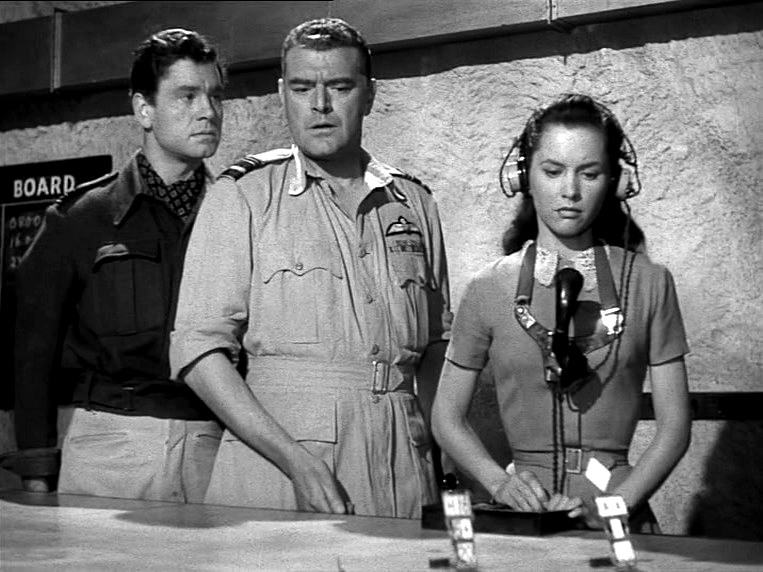
On the plus side, there is excellent meshing of actual battle photography from the siege that is deftly intercut with staged recreations employing a variety of vintage equipment (dig those four Spitfires) on the atmosphere-redolent locations; the numerous combat sequences are augmented by a fair amount of decent special effects including very good matte work (credit Albert Whitlock). Emerging as a major star, Hawkins is solid: he also scored that year in the big WW2 hit The Cruel Sea.
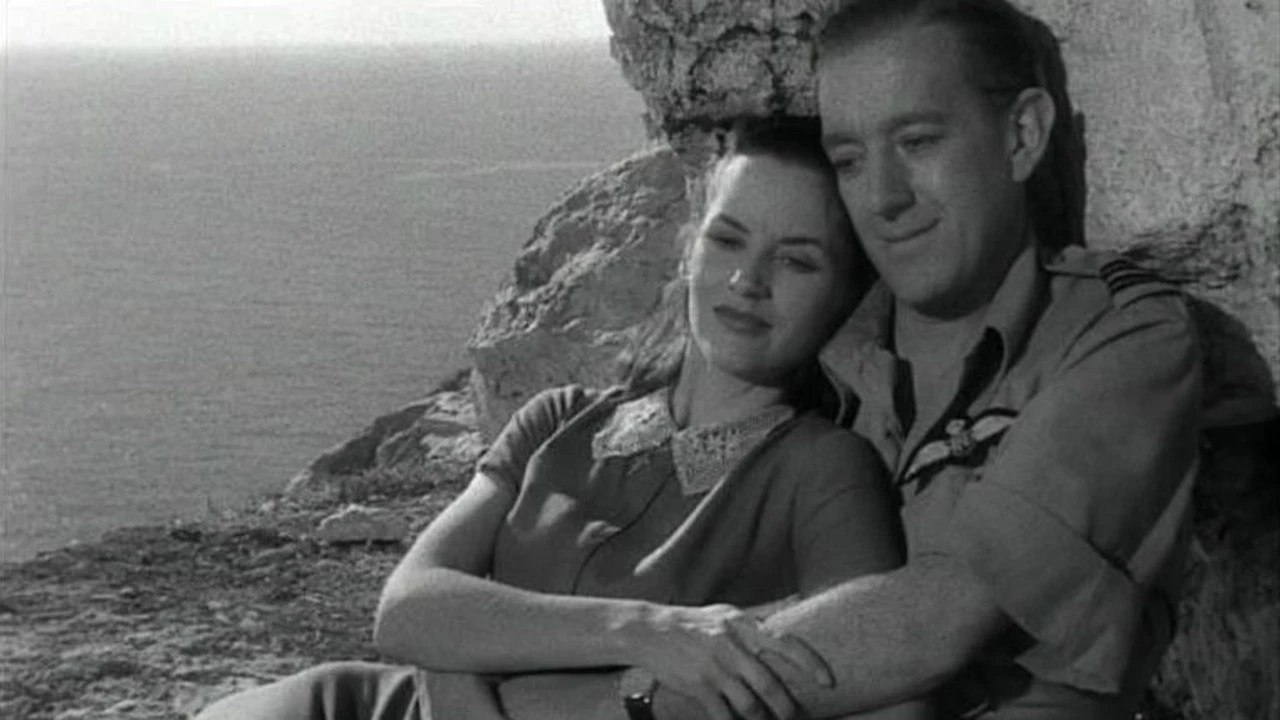
Unfortunately, the miscast Guinness simply doesn’t convince in the tacked-on romance with Pavlow (their chemistry rates about a 2.0) and there’s also a second sappy love subplot with Anthony Steel and Renée Asherson that fails to ignite more than a trip to the fridge. The vapid goo-goo insertions and successive bombardment episodes drag out so that the 103 minutes of running time eventually gets to feel like a siege—on your patience.
Throughout Robert Krasker’s cinematography is laudable and William Alwyn (England’s hardest working composer) was recruited for an acceptable scoring assignment. The durable leads and dragooned ladies are backed by a Who’s Whom of Great Britain’s character actors—look for Flora Robson, Nigel Stock, Peter Bull, Michael Craig, Gordon Jackson, Maurice Denham, Rosalie Crutchley, Geoffrey Keen, Victor Maddern and Michael Medwin.
This was the 4th most-seen film in England in 1953 and it also did well in Australia but when it reached the States the following year it flamed out with a take of just $1,300,000: Cogerson pegs it 192nd for/from the ’53 lot.
* Though too timorous, Guinness’s character was modeled after the RAF’s real-life Superchap known as Adrian Warburton, 1918-1944. An astounding bloke, ten times more exciting than the fictional swipe. https://en.wikipedia.org/wiki/Adrian_Warburton
Stalwart service in real-life doesn’t necessarily transfer in make-believe. Though Guinness was a superb actor, this is possibly his most wan performance. Meanwhile, back in WW2, Sir Alec was a lieutenant in the Royal Navy, and skippered large landing craft at the invasion of Sicily. He also ferried agents and supplies to Yugoslav partisans.
 Movies ala Mark