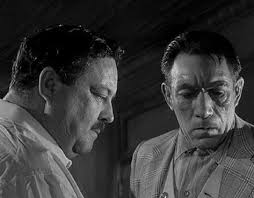
REQUIEM FOR A HEAVYWEIGHT isn’t a cheerful 95 minutes by any stretch but the superlative performances in the 1962 drama place it in the top tier of boxing movies, a ranked contender in the division that could be dubbed ‘Why NOT to Become a Prizefighter’. Rod Serling’s script was taken from his teleplay, and marked the feature debut from TV director Ralph Nelson, who had first done the property on the small screen back in 1956 for Playhouse 90. Acclaimed, the live broadcast won numerous Emmy’s and starred Jack Palance, Keenan Wynn, Kim Hunter and Ed Wynn. The film version is darker, with a more downbeat (and effective) finale and the casting was geared to a stronger box office echelon: Anthony Quinn, Jackie Gleason, Mickey Rooney and Julie Harris.
“In 1952 they ranked me number five!”
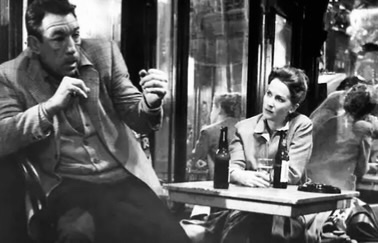
‘Luis “Mountain” Rivera’ (Quinn) had a run at the big time, but that was one-too-many matches ago, and long years in the ring have resulted in his being pummeled into Palookaville; he’s certain to lose an eye if he doesn’t hang up the gloves. But school stopped at 6th grade; fighting is all he knows. Loyal cutman ‘Army’ (Rooney) understands the jig is up, and pushes Mountain to get some kind of work. Social worker ‘Grace Mitchell’ (Harris), who shows genuine sympathetic interest in the battered, skill-challenged yet decent ‘could’a been’. Also in desperate—and more immediate—straits is ‘Maish Rennick’ (Gleason), Rivera’s longtime manager; he’s deep in hock to a gambling syndicate, the sort of opponents who are willing to go way past a ten-count.
“Do you know why I talk so funny? Because I’ve been hit a million times.”
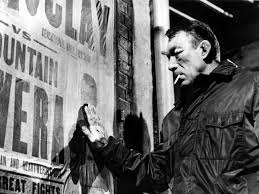
Serling’s humane and perceptive script joins Patterns and Seven Days In May as one of his finest, and for director Nelson (who either hit big or missed by miles), this, along with his next, the much lighter Lilies Of The Field, represents his best work. He’s given keen assist from cinematographer Arthur J. Ornitz (Serpico, Death Wish), especially in some great close-ups, and Laurence Rosenman contributes a nervy, jazz-accented score. Cudos to make-up artist Dick Smith, who did a terrific job giving Quinn the face of someone who didn’t know when–or how–to quit. Mountain’s mashed-up mug tells something about the fight ‘game’ but the real thrust of the story isn’t about boxing and some of its sordid blood-smelling co-conspirators (promoters, crooks, fans) but about inner moral decency and basic human dignity, who has them when they are needed and the unlikely places where they may be found.
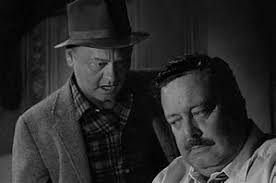
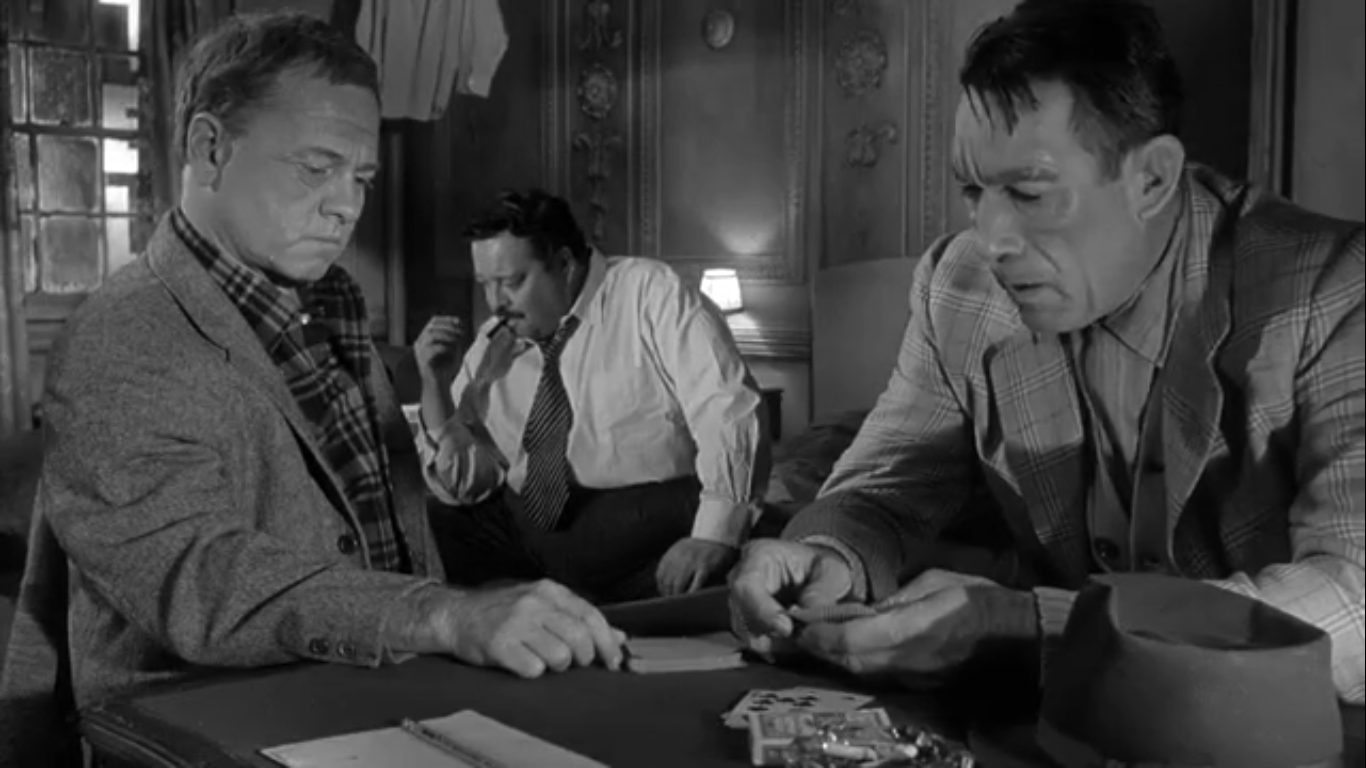
Harris, 36, shines as the hopeful social worker, a gentle outsider peeking into a closed circle of lost men; the role essentially sort of a surrogate witness for the audience. Quinn, Gleason and Rooney are simply outstanding. In the second half of his career, at 41 now a supporting character actor rather than a star, Rooney would deliver solidly as ever for another fifty-five years, in comedies and occasional dramas (Ambush Bay, The Comic, The Black Stallion); this role was his best among the dramas. Gleason, 46, had come back to movies after a long absence the year before with his ace contribution to The Hustler, but his multi-layered Maish is even better; it’s his top dramatic performance: the card game bit he and Rooney share is a classic, neither pro giving ground to the other but meshing in tandem brilliance. 1962 was very good for Quinn, 47, blessed not just with this tired and confused athlete-performer but by Lawrence of Arabia and an equally showy, decidedly more successful warrior. It would’ve been easy to go overboard with the pitiable Mountain, but he smartly doesn’t let either innate flamboyance or mawkish sentiment dominate and smother the characterization. It’s one of his finest pieces of work from the decade.
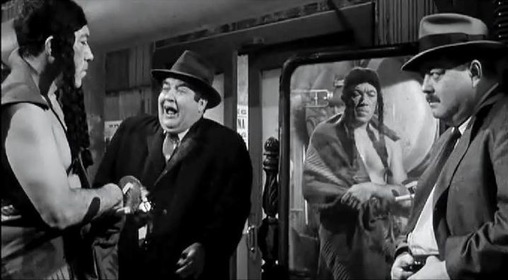
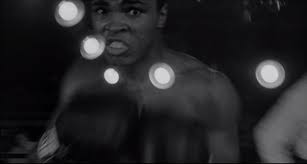
Appearing briefly for ring flavor are Muhammad Ali (20, when he was still Cassius Clay), legendary Jack Dempsey (67, a cameo in his Broadway restaurant), wrestler Haystacks Calhoun (27 and all 600 pounds worth), puncher Willie Pep, 39, and triple-threat battler Barney Ross, 53.
“You’re not a winner anymore, Mountain. There’s only one thing left. Let’s make some money from the losing.”
A bruiser, potent and painful. With Stanley Adams (going ‘big’ as a deplorably crass promoter), Madame Spivy (calmly chilling as hood queenpin ‘Ma Greeny’, a character added to the screenplay), Val Avery, Herbie Faye, Lou Gilbert and Michael Conrad. Made for a stripped-to-the-trunks essence at $1,100,000, hooking 75th in ’62 with a gate take $3,100,000.
“Sport? Are you kidding? If there was headroom, they’d hold these things in sewers.”
 Movies ala Mark