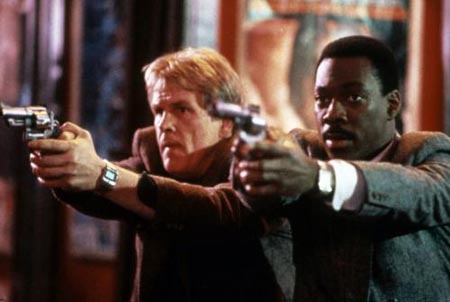
48 HOURS bosses the police squad—make that regiment—of ‘buddy cop’ movies that began in the 70’s, cascaded in the 80’s, and turned into a crime flick fixture, with enough recruits over the years to practically become a standalone genre. This 1982 entry crowned a run of hard-boiled, top quality action classics from director Walter Hill, further burnished the impressive resume of consistently surprising, dependably offbeat Nick Nolte, and made an instant movie superstar out of 21-year old comedian Eddie Murphy, his feature debut proof his timing was primed for the big time. *
“I want y’all to know somethin’… there’s a new sheriff in town…and his name is Reggie Hammond! Y’all be cool! Right on!”
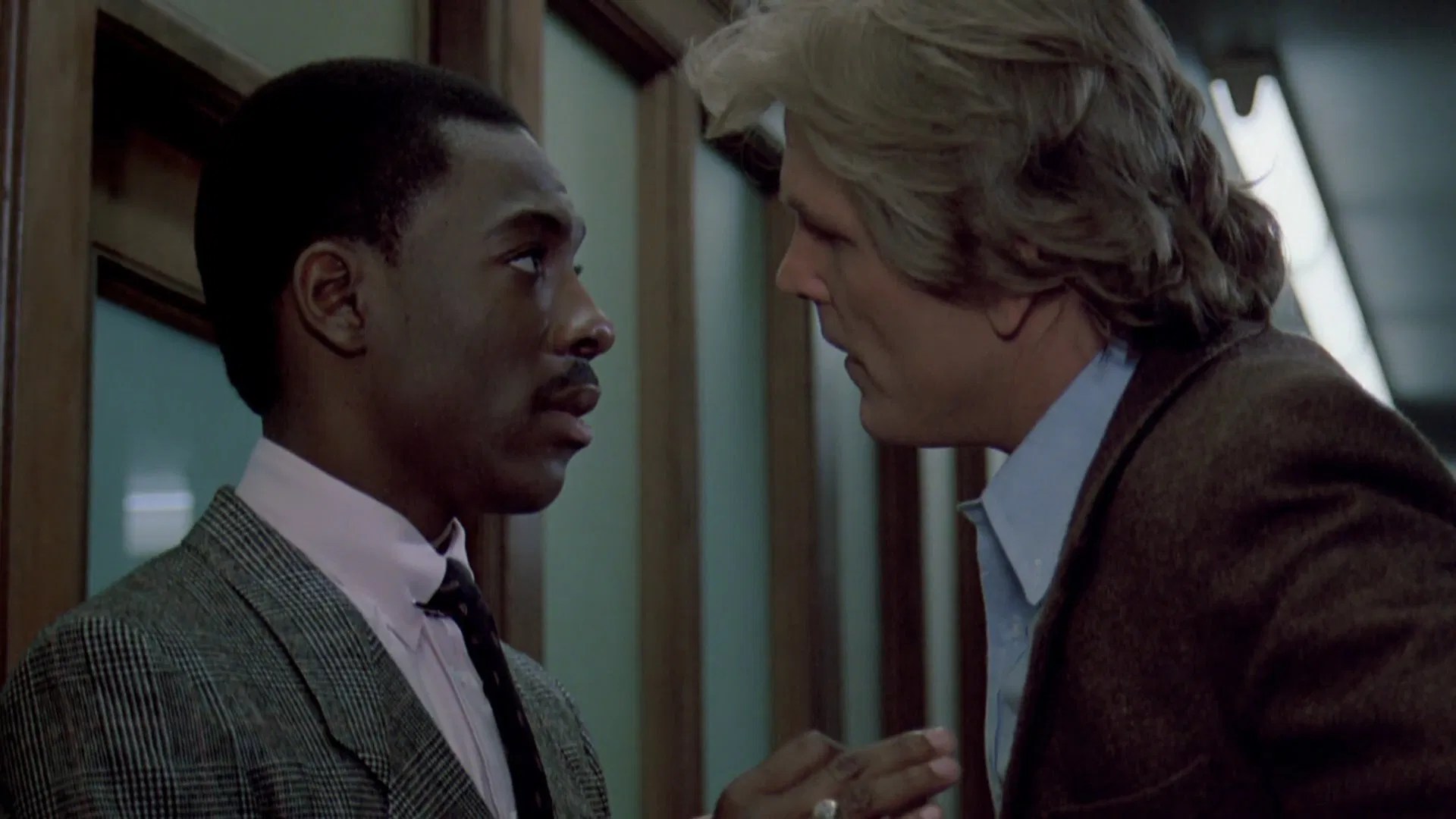
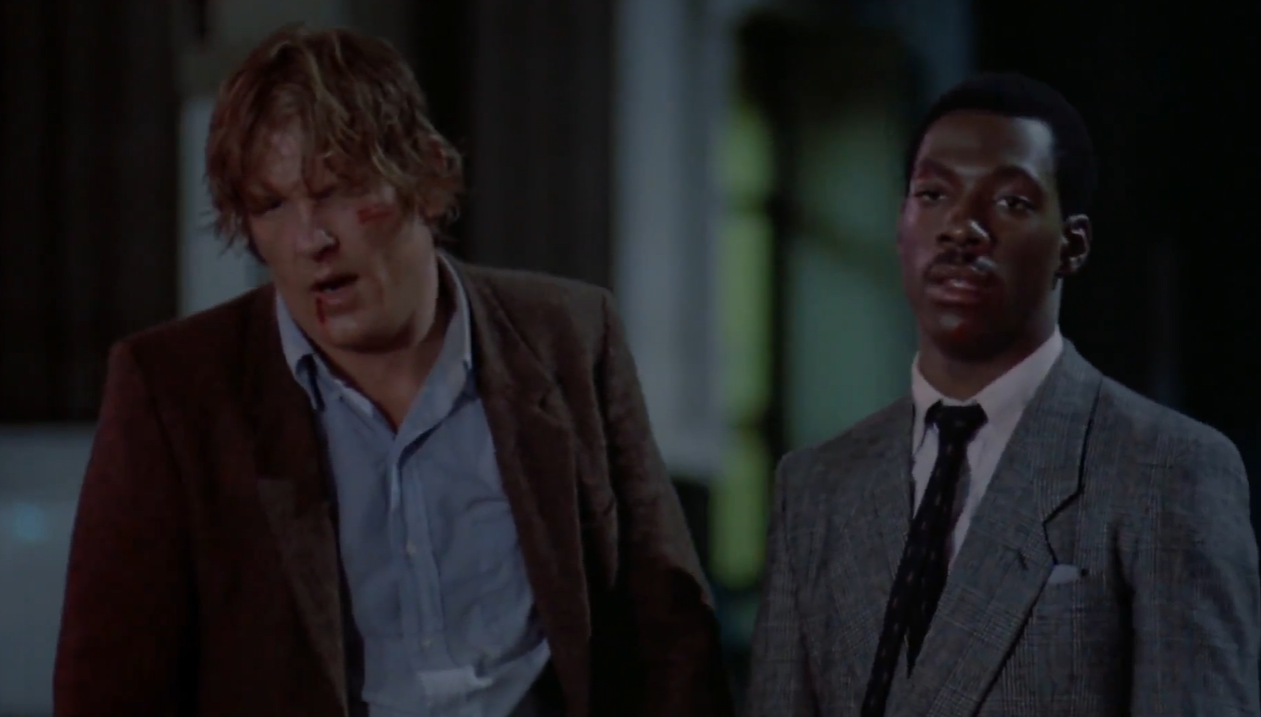
San Francisco. Hard-case SFPD Inspector ‘Jack Cates’ (Nolte, 43) has the proverbial hands-full situation. His fed-up girlfriend (Annette O’Toole) argues over his dedication to his job, his captain (Frank McRae) is mad at him for how he does his job, and he’s sour in general from dealing with lowlifes. Worse, his gun was stolen by two escaped cons during a shootout that left two other cops dead. Tracking down ultra-vicious ‘Albert Ganz’ (James Remar) and brutal ‘Billy Bear’ (Sonny Landham), Jack enlists help from inmate ‘Reggie Hammond’ (Murphy), a former member of the robbery crew run by Ganz. Gruff and jaded Jack and gabby hustler Reggie don’t exactly hit it off, but after a few rough patches (like when they beat each other to pulps in an alley) they manage to strike a truce and find a way to work together. Much hot lead will fly, along with an assaulting battery of wisecracks.
Pre-primed by Bullitt, Dirty Harry, Magnum Force, Freebie And The Bean, The Enforcer and The Laughing Policeman, audiences could be forgiven for thinking San Francisco was more dangerous than Stalingrad, but in Hill’s stylish shoot’em up, the furious action scenes are bracketed by a fusillade of funny exchanges between Nolte and Murphy; a just right balance of thrills and laughs is played to the hilt. Hill pitched in on the sharp-edged script banged out by Larry Gross (Geronimo: An American Legend),Roger Spottiswoode (Under Fire) and Larry Gross and Steven E. de Souza (Die Hard). **

Unless you want to be Dick Downer and kill fun by fussing over the unlikelihood factor inherent in action-comedies that break more police procedures than Presidents do promises and allow for urban gun battles bigger than D-Day, the only semi-debit in this surefire audience rouser is that the provocative Annette O’Toole, 31, doesn’t get more screen time. McRae bellows in the established tradition of exasperated police captains. Murphy’s famous bait-the-rednecks bar scene was a crowd-pleaser, even if there is the nagging question: a place like that in downtown San Francisco? Convenience whiffs not research but a writers huddle.
Hill ensures it moves like a panther from the start, diamond-backed with Ric Waite’s rippling cinematography—particularly effective in the night scenes (bring on the neon)—booming sound effects in the gunfights and a score from James Horner that lays down a vibe of here-comes-trouble. Remar (veteran of Hill’s The Warriors and The Long Riders) makes a great irredeemable threat, and Landham (a decidedly less-than-positive individual in real life) is markedly imposing. The chemistry between bruiser Nolte and cocky Murphy was the crucial element needed to sell the tale, and they click beautifully, bluntly adversarial and taunting turned warily acceptable, then mutually dependent, ultimately respectful, and thankfully not sappy.

REGGIE: “You got a lady, Cates?” JACK: “Yeah.” REGGIE: “You know, the generosity of women never ceases to amaze me.”
96 minutes, just enough to close the case and send crowds out having gotten their money’s worth. The $12,000,000 investment returned $78,869,000 domestically, 1982’s 7th most popular.
With David Patrick Kelly (Hill alumnus punk from The Warriors), Brion James, Jonathan Banks, Greta Blackburn, Denise Crosby, Peter Jason, Olivia Brown, Chris Mulkey and Ola Ray.
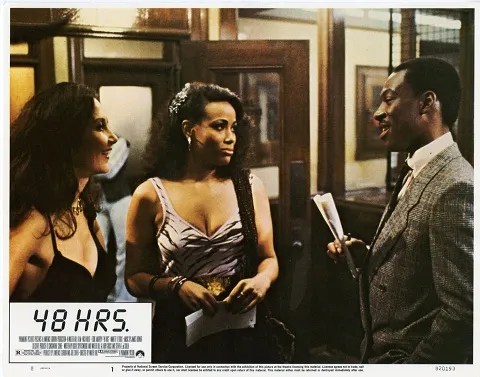
* Eight years later Nolte, Murphy and Hill went at it again in Another 48 Hours, four times as costly, ¼ as good. By that time Eddie was a big gun. The $200,000 he got back in ’82 had mutated into $12,000,000 for the sequel, a percentage increase of a mere 5900 percent.
** Cliche, anyone? Are police captains in the movies ever calm? And according to Screenwriting 101, starting around the mid 70’s, 90% of them were not just prone to yelling but were presumed to be black; the Irish having moved up to doing governor-placating mayors. Thus the likable lug Frank McRae joins the estimable company of Paul Winfield, Yaphet Kotto, Louis Gossett Jr., Bernie Casey, Laurence Fishburne, Bill Duke, Forest Whitaker—and that doesn’t count TV. Good actors all, in mostly thankless and interchangeable roles, and always, always pissed off.
 Movies ala Mark