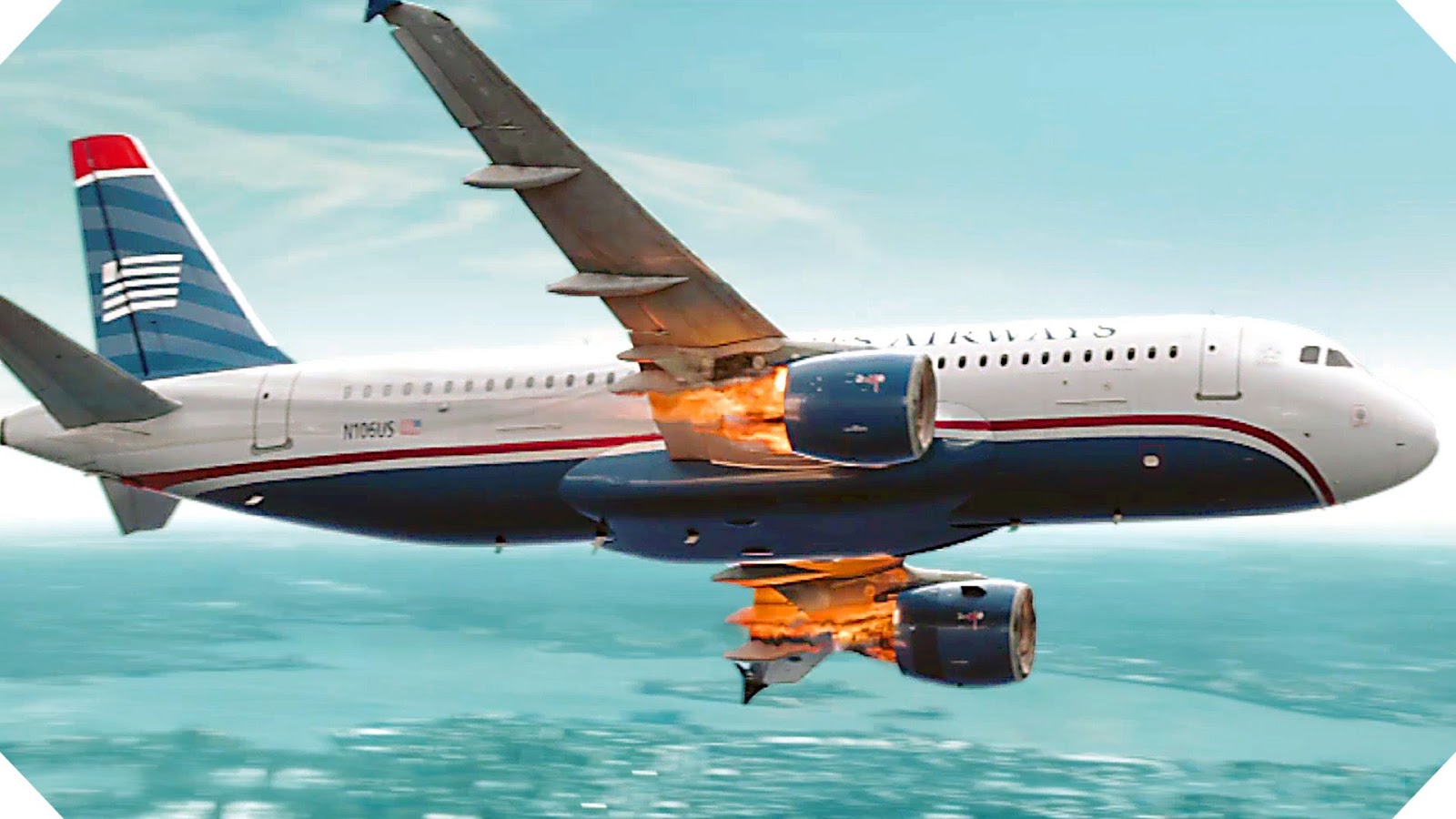
SULLY, 2016 biodrama directed by Clint Eastwood, front & center stars Tom Hanks as ‘Chesley Sullenberger, the captain of an airliner that was forced to make an emergency water landing, the most famous, and—luckily—the remarkably successful ever accomplished. Told over a lean, clutter-free 96 minutes, the screenplay by Todd Komarnicki was based on Sullenberger’s autobio “Highest Duty: My Search For What Really Matters”. Decades-long veteran pilot ‘Sully’ was a week shy of 58 when his maneuver caught the world’s attention. Hanks was one year older when he played him for Clint, eighty-five, piloting his 35th feature film.
“Everything is unprecedented until it happens for the first time.”

Jan.15, 2009. US Airlines Flight 1549 takes off from New York City’s LaGuardia Airport. Barely aloft, the aircraft hits a flock of birds, and both engines fail. Judging that they have no time to make the nearest airport, pilot Sullenberger and First Officer Jeff Skiles (Aaron Eckhart) make the literal do-or-die decision to bring the plane down on the Hudson River. The spectacular splashdown at 140mph is near perfect, with just a few injuries, the ensuing evacuation and rescue near miraculous. Sully is hailed as a hero, but there is still the post-event investigation. Data indicates there was enough engine power left to make a runway landing, and simulation run thru’s counter his decisions; if so, “pilot error” will ruin Sullenberger’s reputation and career. Fully backed by Skiles, the Captain challenges the computations.
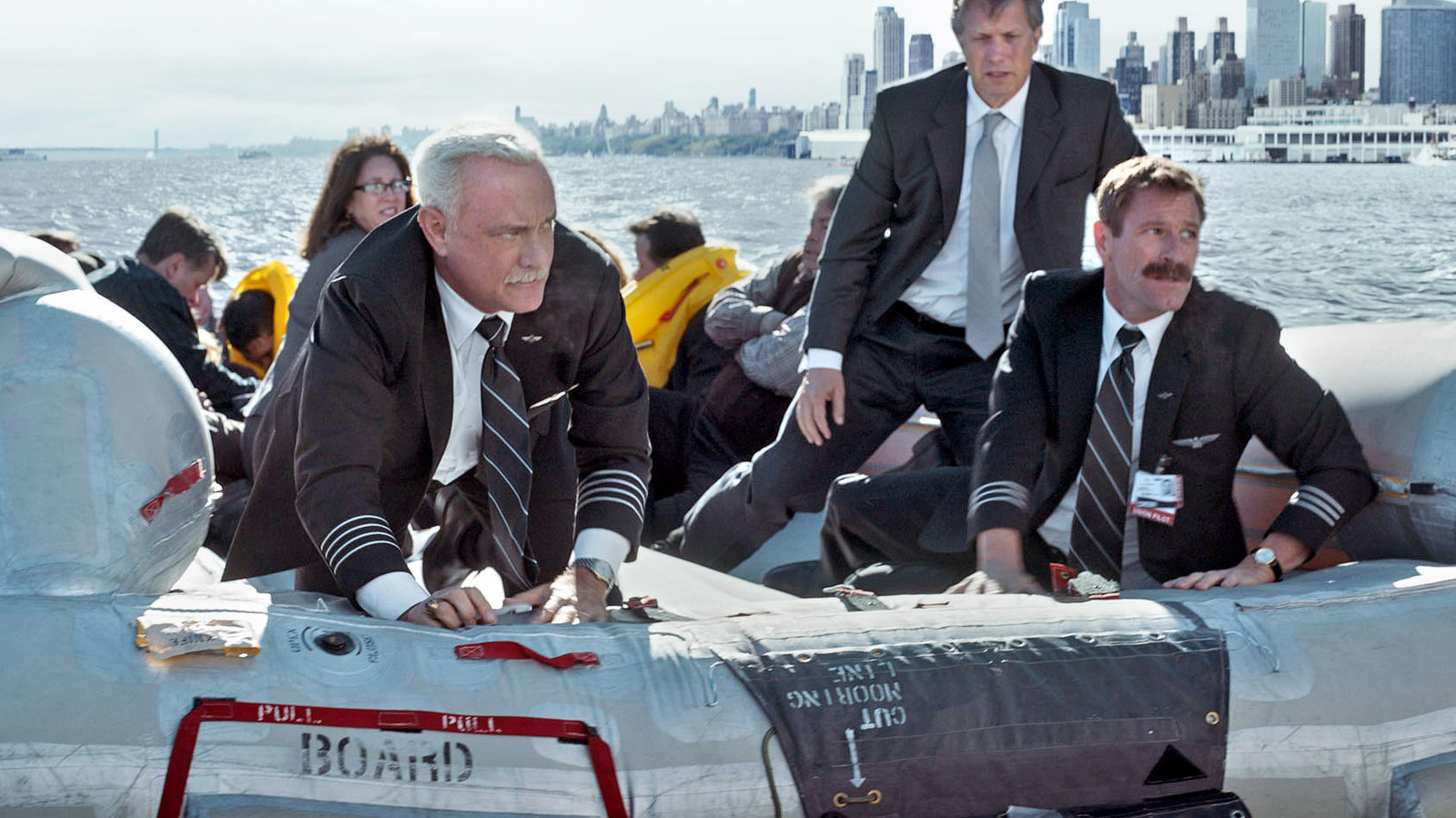
Other than taking dramatic license that some interpreted as casting a negative light on the review board (like the otherwise superb Cinderella Man’s shading boxer Max Baer more villain than opponent), Eastwood and company deliver a solid look at top notch professionalism so adept it amounted to heroism: a few seconds or one misjudgment could likely have killed not just all 155 aboard but possibly scores or hundreds of people on the ground. The CGI-augmented effects of the nerve-wracking landing and the imagined explosive alternatives are splendidly handed, much the way Eastwood’s twin Iwo Jima epics handled the background spectacle shots of mass combat. Eckhart is believable in any role he undertakes and Hanks batting average is one of the industry’s best. If nothing else the non-nonsense, exciting but non-melodramatic presentation reinforces that two sentences you never want to hear coming over an intercom are “This is the captain. Brace for impact.”

Positive critical reviews were outshone by domestic box office response of $125,100,000 that placed it 25th for ’16, which took care of the $60,000,000 production tab, the payday then burnished with a further $115,700,000 internationally. One Academy Award nomination came, for the Sound Editing.

Looking at this movie reveals that not only was Flight 1549 in the best of hands—a casual check of Sullenberger’s background shows a truly remarkable individual—but acts as a reminder of the dual hosts of historical people and events that Eastwood and Hanks have done fine screen portraits of. As of 2026 Hanks has played non-fiction characters in eight pictures, every one a winner: Apollo 13, Charlie Wilson’s War, Captain Phillips, Saving Mr. Banks, Bridge Of Spies, Sully, The Post, A Beautiful Day In The Neighborhood and Elvis. We presume more to come. Clint’s first turn directing non-fiction was Bird in 1988. Starting in 2006 he rolled out a regiment of real-life dramas: Flags Of Our Fathers, Letters From Iwo Jima, Changeling, Invictus, J. Edgar, Jersey Boys, American Sniper, The 15:17 To Paris, The Mule and Richard Jewell.
With Laura Linney, Mike O’ Malley, Anna Gunn, Jamey Sheridan, Ann Cusack, Autumn Reeser, Holt McCallany, Michael Rappaport and Katie Couric.

 Movies ala Mark