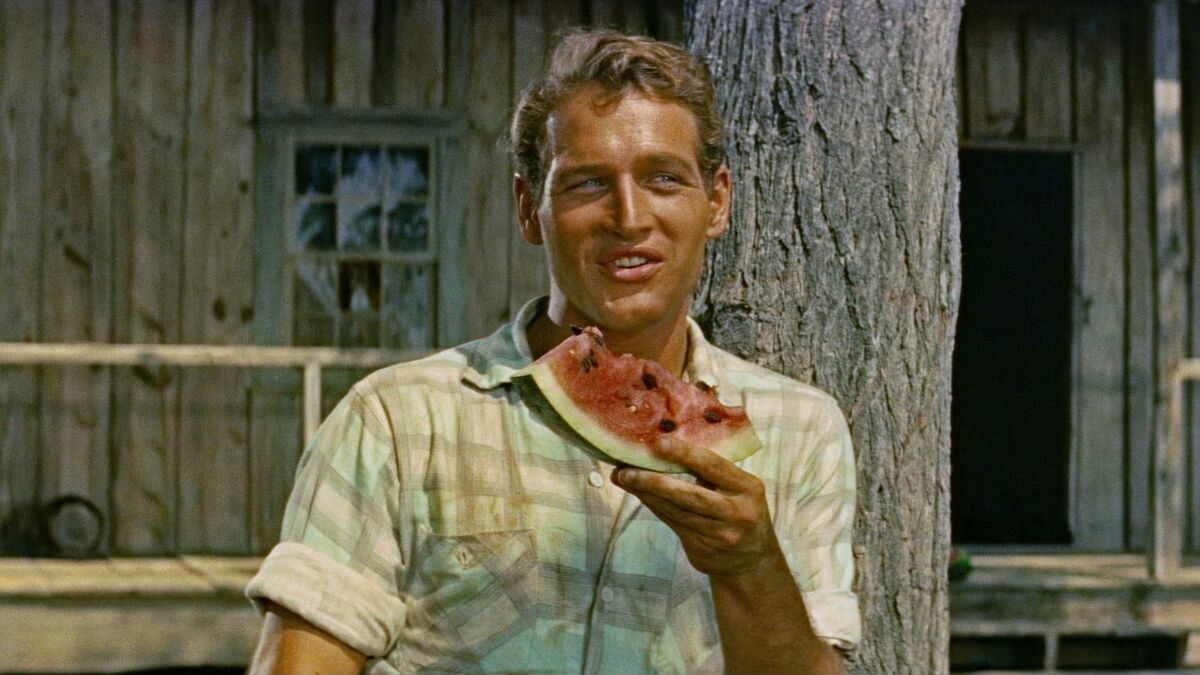
THE LONG, HOT SUMMER, one of 1958’s more ballyhooed dramas, was teased in ads tempting audiences already foreplayed by the yearnings & firmings of Picnic and Peyton Place that “NOTHING – BUT NOTHING !…WILL BE WITHHELD!…when this searing expose of this Southern family comes boldly to the screen!” The seared tribe in this hard-breathing dollop of julep juice and DEE-zire had plenty of sweaty company that year, with the nether regions of Dixie visited by no less than ten movies probing one hot zone or another, with results that were mostly mutually satisfying for both crews and crowds. This overwrought but entertaining entry didn’t scoop awards, but drew good notices, boosted profiles, launched collaborations and made enough at the box office to rank #14 when the all-important greenback dollars were tallied up by them damn Yankees. *
“A barn-burner’s the meanest, lowest creature there is.”

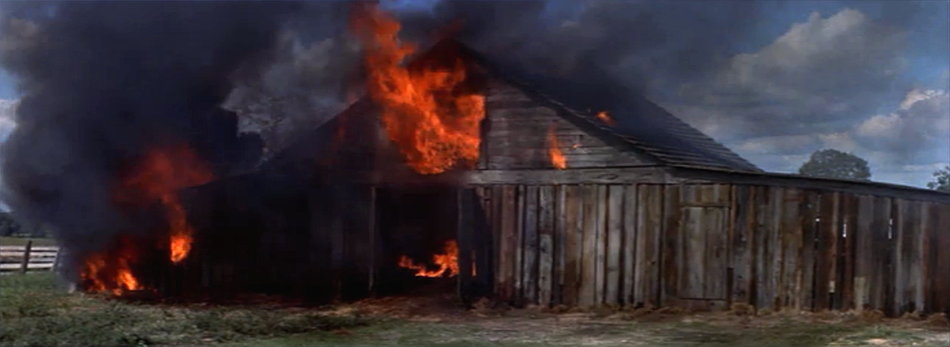
‘Frenchman’s Bend’, Mississippi is prodded out of indolent riverine lassitude when a prickly new stud hoofs into town, and in short order arrogant drifter ‘Ben Quick’ (Paul Newman) raises hackles, hopes, hormones and hostility, mostly among the ‘Varner’ clan, who half-own and pretty much control the town. He-bull daddy ‘Will’ (Orson Welles), fond of throwing his considerable weight around, takes a conspiratorial shine to blithely slick Quick, who, though he’s shadowed by a reputation as a “barn burner“, has the clanking cojones that Will’s son ‘Jody’ (Anthony Franciosa) seems to lack. Jody’s married to flagrant p-tease ‘Eula’ (Lee Remick) yet their conjugal romps haven’t sired anything beyond resentment and he’s browbeaten by Will who wants his bloodline to carry some stallion seed. Jody’s smart but snippy sister ‘Clara’ (Joanne Woodward) is only 23 but seems consigned to sexless spinsterhood. Ben sees ‘what she needs’, if only the waitin’ta’splode gal would stop wasting time on limpnoodle mama’s boy ‘Alan Stewart’ (Richard Anderson). As randy-ready Ben intends to rise to the occasion, manless Clara frets and unmanned Jody seethes. Meantime, Will’s mistress, local hussy ‘Minnie Littlejohn’ (Angela Lansbury) aims to get her well-worn wagon hitched to Will’s, since Mama Varner has Gone to Glory. Hellfire, boy, just about time for a ruined picnic, a blazing barn and a good ol’ necktie party.

Directed by Martin Ritt, the script contrived by Irving Ravetch and Harriet Frank Jr. was skimmed from a trio of William Faulkner works as well as sniffing a whiff of Tennessee Williams, chiefly his play “Cat On A Hot Tin Roof”, which coincidentally was one of the year’s other flicker distills of Dixiana, also starring Newman. Ace producer Jerry Wald’s $1,645,000 budget was not used in Mississippi but next door in Louisiana, in & around the town of Clinton, near Baton Rouge. The packaging looks authentic, and watching the cast clash is amusing, though the overly rapid incident’s spiral, excessive attitudes, ‘lusty’ chatter and flagrantly emotive confrontations are more than a mite forced.
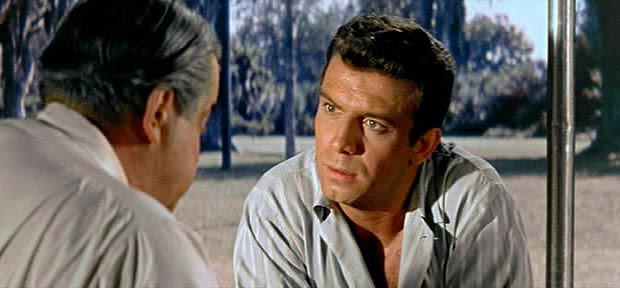
Showcased in three other properties that year (Cat On A Hot Tin Roof, Rally Round The Flag, Boys! and The Left Handed Gun), Newman, 32, is certainly confident and brash (Quick’s about as charming as a Water Moccasin) and clicks well in his first and fortuitous matchup with Woodward, 27, fresh from breaking big as The Three Faces Of Eve. Franciosa, 31, adds another sketch in nervous intensity to his A-run of A Face In The Crowd, A Hatful Of Rain and Wild Is The Wind. Knockout pretty Remick, 21, in her second film role (she’d also been in A Face In The Crowd) scores brightly, open and unaffected; Lansbury, 31 but an old pro compared to the others, having started when she was 18 (Gaslight, 1944), has just a few brief scenes, peeling them off with ease; Anderson’s washed out Blue Blood is another Ashley Wilkes type: he was busy that year, parts in three features and eight TV series. **

Welles, 42, made up to look twenty years older, overacts like a house afire (or barn, as it were, and is almost as big); he’s amusing but so over-the-top it’s ridiculous. Orson was a man-mountain of trouble on the set, fighting with Ritt, irked by the Actors Studio upstarts, mush-mouthing his dialogue enough you need subtitles, making himself as much of a pain as the blowhard ogre he was portraying. On the outs with Hollywood for a decade, after a great 1956 cameo for John Huston in Moby Dick, he’d returned (for back tax issues) in a throwaway 1957 western (Man In The Shadow), which inadvertently opened the door to his ill-fated, eventually lauded Touch Of Evil, made before but released after this in ’58, followed by another broad cameo in pal Huston’s unsung African saga The Roots Of Heaven.
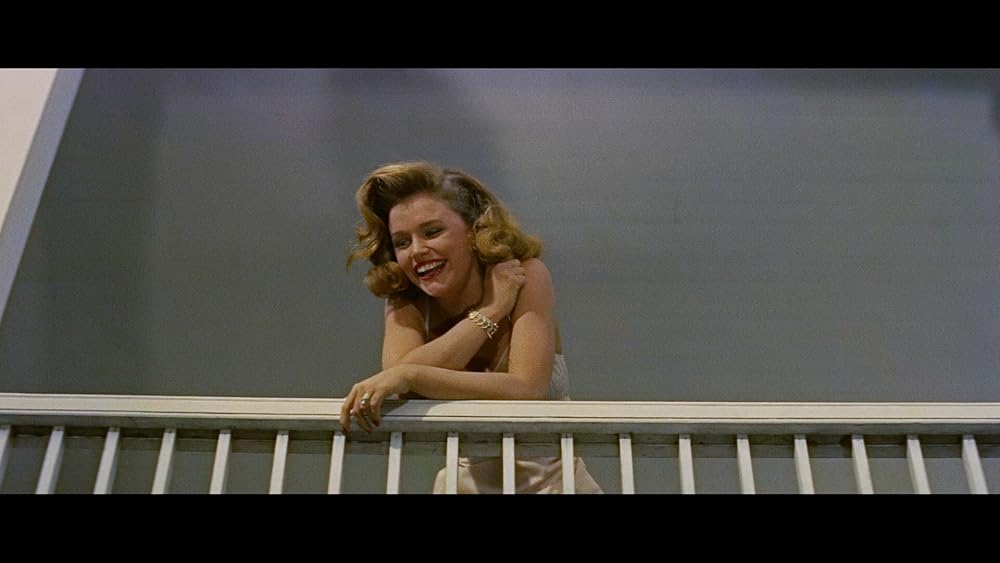
Joseph La Shelle’s glossy cinematography does nicely capturing the steam-heated locales. Alex North’s okay score commences with the pleasantly languorous title tune sung by Jimmie Rodgers, popular at the time from his crossover hits “Honeycomb” and “Kisses Sweeter Than Wine.” Cued by the star combo, by the year’s battalion of South-set pictures, and for the relative few who’d waded thru Faulkner, by the chance to see if his Southern Gothic lit steamed up on screen, ticket buyers plunked down $10,000,000.
115 minutes, with Sarah Marshall, J.Pat O’Malley, Mabel Albertson, William Walker, Val Avery and Byron Foulger. It was briefly done as a TV series in 1965-66, then again as a made-for-TV movie in 1985.
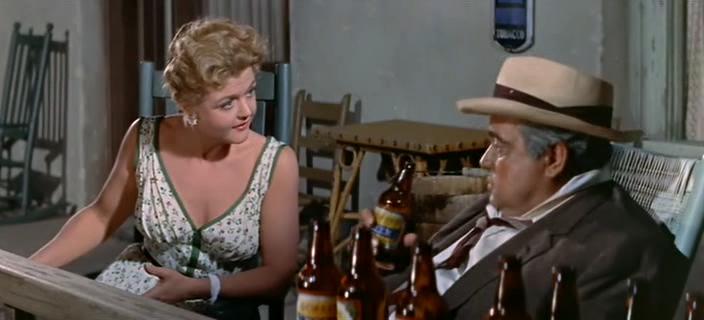
* Southern frying—rebel yells in 1958 were hollered–in order of box office results—from Cat On A Hot Tin Roof (troubled family), No Time For Sergeants (hit hayseed humor), God’s Little Acre (troubled family), The Long Hot Summer, The Defiant Ones (race relations crime drama), King Creole (crime drama), Thunder Road (moonshiner classic), Hot Spell (troubled family), Mardi Gras (musical comedy) and Wind Across The Everglades (adventure drama).
** doors—Ritt and Woodward would try Faulkner again a year later only to thud out with The Sound And The Fury. The Long, Hot Summer was the first of six times Ritt and Newman teamed, followed by Paris Blues, Hemingway’s Adventures Of A Young Man, Hud, The Outrage and Hombre. The more important and longer lasting pairing would be Paul and Joanne, who married six weeks before the show premiered and stayed together for fifty years, co-starring in another nine movies, with Newman directing her in a further four, including the superb Rachel, Rachel. For married screenwriters Irving Ravetch and Harriet Frank Jr., this script was their first shared job; they’d do seven more for Ritt as well as crafting solid wins on The Dark At The Top Of The Stairs, Home From The Hill, The Reivers and The Cowboys.
Orsonic opine: “I hated making Long Hot Summer. I’ve seldom been as unhappy in a picture.”

 Movies ala Mark