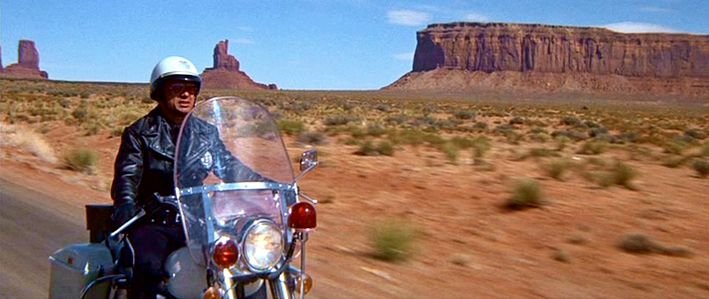
ELECTRA GLIDE IN BLUE rolled up in 1973, a year choked not only with crime-related movies but those about unpleasant subjects and unhappy people in general; even comedies (The Sting, American Graffiti, Paper Moon, Class Of ’44) favored earlier days that were perceived, accurately or not, as more innocent or less harsh. In this one, a status-stuck motorcycle cop tries to ‘find himself’ while dog paddling in a whirlpool of coarse, miserable, self-deceiving colleagues and civilians. Done on a low budget of $1,000,000 by an inexperienced director, it’s a mishmash of excellence & excess, insight & indulgence.
“Attention! Dress right. Dress! Parade rest! Good morning, pigs. Good morning, you fascists! Honkies! You killers! You bigots! You fags! You pinkos. You creeps! You bastards! Fuzz. This indoctrination of vocal harassment was compiled by our own Juvenile Division in preparation for the concert this weekend. Now men, I’m going to talk to you this morning about self-control and law enforcement.”

Saddled on a Harley-Davidson Shovelhead FL Electra Glide, patrolling the desert roadways of Arizona, overlooked officer ‘John Wintergreen’ (Robert Blake) desperately wants to prove his worth and move up to detective. That chance comes when his prying shows that the death of an aged hermit, ruled a suicide, was actually a murder. Amiable, duty-conscious, somewhat dim, John’s diligent if clumsy actions provoke surprising and disturbing reactions from an arrogant supervisor, his reckless, goofball partner and from an occasional bedmate, who coincidentally also plays fast & loose with his boss.
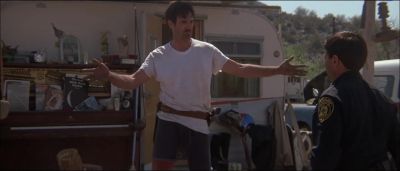
On the one hand this is a forcefully-acted, smartly photographed, well-intended meditation on loneliness, mangled spirits, elusive dreams and a fractured America forced to look itself in the face. Yet the downside to the ‘statement’ mirrors its messed-up subject by being sloppy and meandering, with ‘heavy’ writing that hammers the obvious, and unsubtle direction that switches tones back & forth from black comedy to jarring meanness, often getting nearly operatic with pretense.

In his first and only go at directing, 28-year-old music producer James William Guercio tried to learn on the job, not always advisable when you intend to share the results in public. He was also the producer—he managed the band Chicago (several members appear in the movie); Blake later claimed that he and cinematographer Conrad Hall did much of the directing, but taking flaky Blake’s word on something is like trusting a politician. Hall’s work is solid, with some great captures of the wide open Arizona landscapes and coverage of the motorcycle action, especially of the gnarly stunts in a absurd chase sequence. That violent, casualty counting insertion was done in Victorville, California, with most of the rest of the film shot around towns near Phoenix. But for the sake of dramatic license, message’y portent and as a nod to John Ford westerns, Monument Valley is prominently showcased: never mind that it’s over 300 miles away from Phoenix. Guercio also wrote a gawdawful song that closes out the movie, bleating a full seven minutes in the longest draw-back-the-camera-slow-ly-and-feel-the-meaning shot this side of Andy Warhol’s ode to the Empire State Building. The screenplay came from Robert Boris (Doctor Detroit, retch) and Rupert Hitzig; it shares blame for the drama-class speeches and clubfooted attempts at humor.

On the definite plus side, besides Hall’s visuals, there are vital performances from the actors. Though Guercio and the writers stick the cast with gobbledygook that verges on embarrassment, the game players come thru primed and eager. Flanking the mercurial Blake are two wily old pros, two emergent talents and one more who’d been around for a decade without a decent chance to shine. Dependably quirky Royal Dano, 50, gets a nifty scene as an exasperated coroner, and Elisha Cook Jr., 69 and odd as ever, pulls out the stops as a brain-baked shack dweller who’s been up one too many parched arroyos. Rock-visaged Mitchell Ryan, 39, boils with repressed rage as the supervisor; he was busy that year in Magnum Force, The Friends Of Eddie Coyle, High Plains Drifter and a one-season TV cop show called Chase. Memorable from Five Easy Pieces, Monte Walsh and The Culpepper Cattle Co., Billy Green Bush, 37, cuts up and melts down as John’s dopey partner. As the sex-bomb barkeep who plays the macho men like disposable boytoys, Jeannine Riley, 32, best known for TV silliness (Petticoat Junction, Hee-Haw) gets to vent years of waste in a lacerating screed on the cost of missing the proverbial bus. As to Mr. Blake, 39 here, this role gave him ample room to flex the twin sides of his acting persona, a compelling yet frustrating blend of sincerity and showboating. After his career-salvaging turn in 1967’s In Cold Blood, this is one of his better pieces of work; he’s in nearly every scene. *

Like everyone else at one time or another, critics miss the boat, sometimes even the dock. When this came out, many lambasted it as a “fascist Easy Rider“, a ridiculous misread considering that every cop in the show other than Wintergreen comes off as a brute or buffoon, and he’s not exactly the fastest tortoise in the sagebrush. Left in the memory attic for decades, this earnest exercise in emotional displacement now gets praised as a ‘cult classic’. Time for some ice cream.
$1,600,000 is the figure given for box office rentals, indicating the gross may have been over $5,000,000. Cogerson (https://www.ultimatemovierankings.com/1973-movies/) pegs it at 136th place.
114 minutes, with Joe Samsil (moronic redneck sergeant), Jason Clarke (jerk L.A. detective) and uncredited in his second part is Nick Nolte, 31, as a hippie. Besides the guys from Chicago, a gaggle of scruffy locals were rounded up as extras.

* Previously impressed by In Cold Blood, when yours truly first saw this at age 18, Blake and the movie’s ‘realness’ won me over: dragging my mom along, I went back and saw it again a week later. Like a lot of people, I enjoyed him as TV’s Baretta, at least for the first season. Soon enough, though, his strutting ego, manifested on talk show appearances, revealed him as a bigger blowhard than another pugnacious posturer named Bob, the insufferable Robert Conrad. We’ll leave off discussing his eventual legal crises. Reviewers should play fair, or at least try to, even when they may not care for the particular off-screen behavior of an artist, their politics, scandals, rumor v. fact, etc. Watching Electra Glide In Blue again after a fifty-five year hiatus and an ocean of water thru the bilge under the bridge revealed its strengths and weaknesses—at least IMHO, and we have to cop that included tasking my sense of fairness regarding its talented but trying star. Half the time he comes off with precision sensitivity, then that damn smug hamminess cuts in line.
At least America fixed its identity issues and now there’s not a thing to worry about…speaking of Grates Again, Guercio as movie director was a one-off. He did produce 1981’s Second Hand Hearts, also starring Blake. It was a disaster. In the late 70’s he was accused of ripping off Chicago for millions of dollars in royalties. His later financial interests spread beyond music to cattle ranching, ‘property development’, oil & gas exploration, drilling & production, including wells of coalbed methane. How patriotic can ya get?
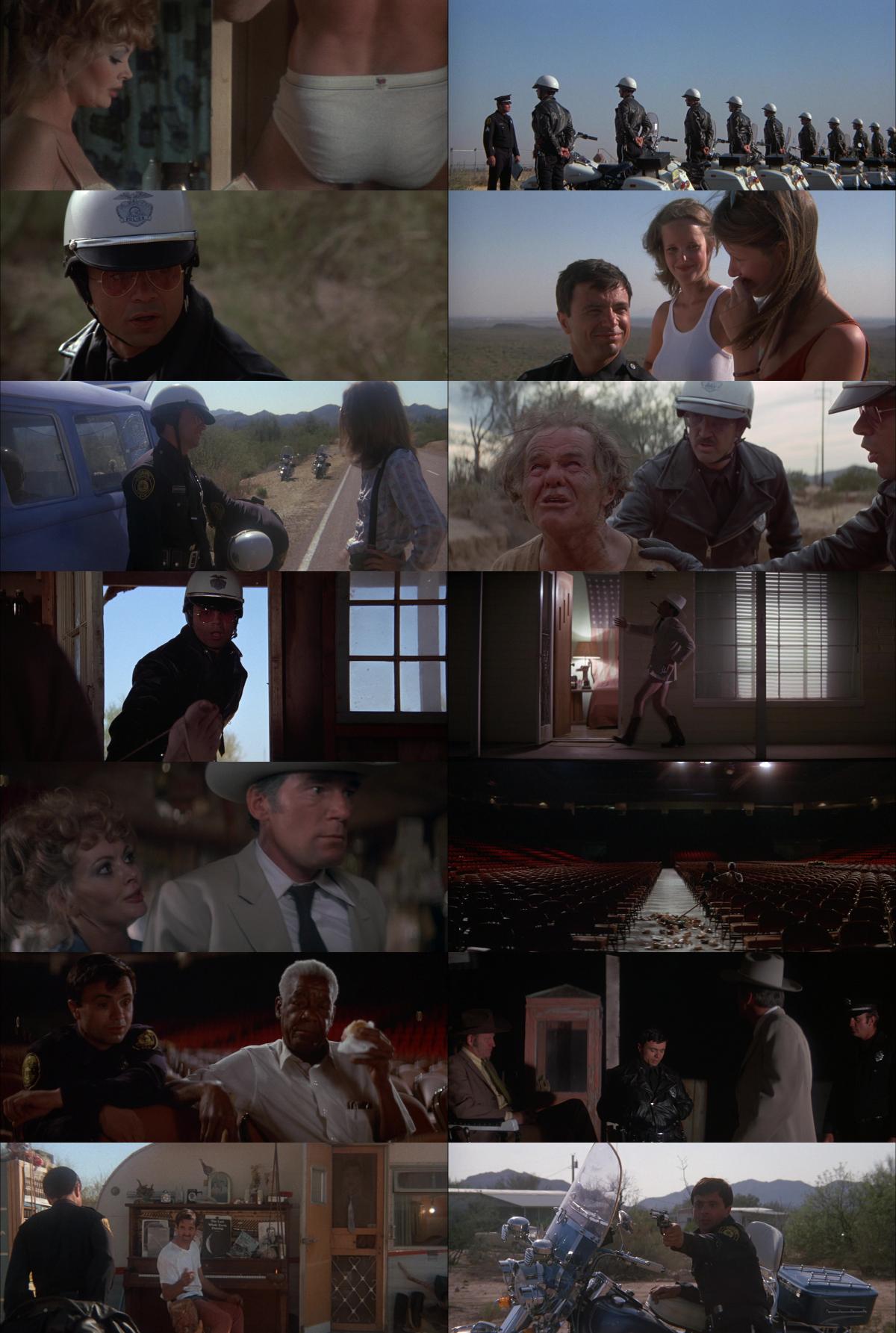
Click to enlarge for clarity
 Movies ala Mark