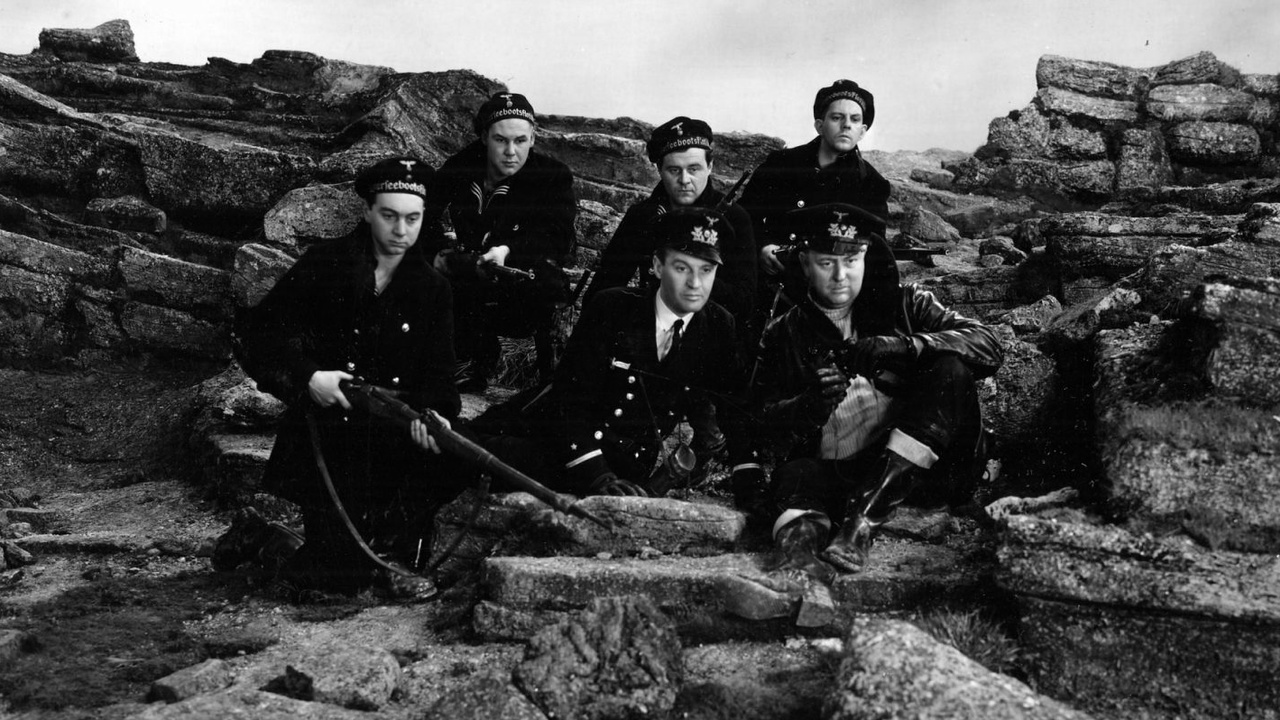
49th PARALLEL, a superb WW2 propaganda rouser from Britain in 1941, directed by Michael Powell, written by Emeric Pressburger, was an Oscar winner for Best Story, and a nominee for Best Picture and for Screenplay. Edited by David Lean, it was photographed by Freddie Young, with location shooting in British Columbia (Banff Natl. Park), Quebec, Newfoundland, Ontario (Niagara Falls) and Manitoba. Renowned composer Ralph Vaughan Williams did the stirring music score; his fame and respect was such that he was accorded equal billing with the lead actors. An exciting adventure, it was not only a salute to Canadian participation in the war but was also intended to prime the neutral United States toward coming in. By the time it made to the US in the spring of 1942, Hitler’s ally across the Pacific sealed the Allied compact in fire and blood. *
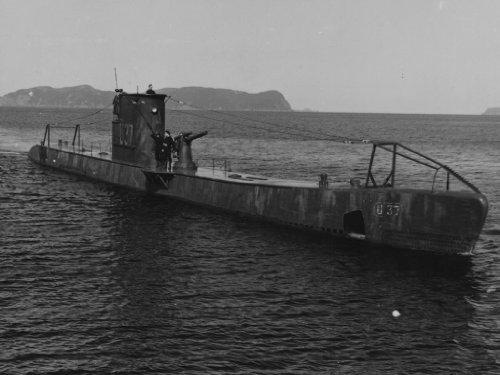
When their U-boat is blown apart in Hudson’s Bay, a small shore party of six crewmen make their way to an isolated Inuit trading post. Capturing and/or subduing (murdering) the inhabitants, they commandeer a small seaplane with the idea of escaping to the neutral United States. When the plane ditches in a lake, the surviving four, led by ‘Lt. Hirth’ (Eric Portman) begin an epic trek on foot that takes them thru various sections of the vast landscape, and into encounters with a variety of its diverse populace. The country is alerted to their presence, but Canada is big place to hide in and the ideologically rigid Kriegsmariners are as determined as they are desperate.
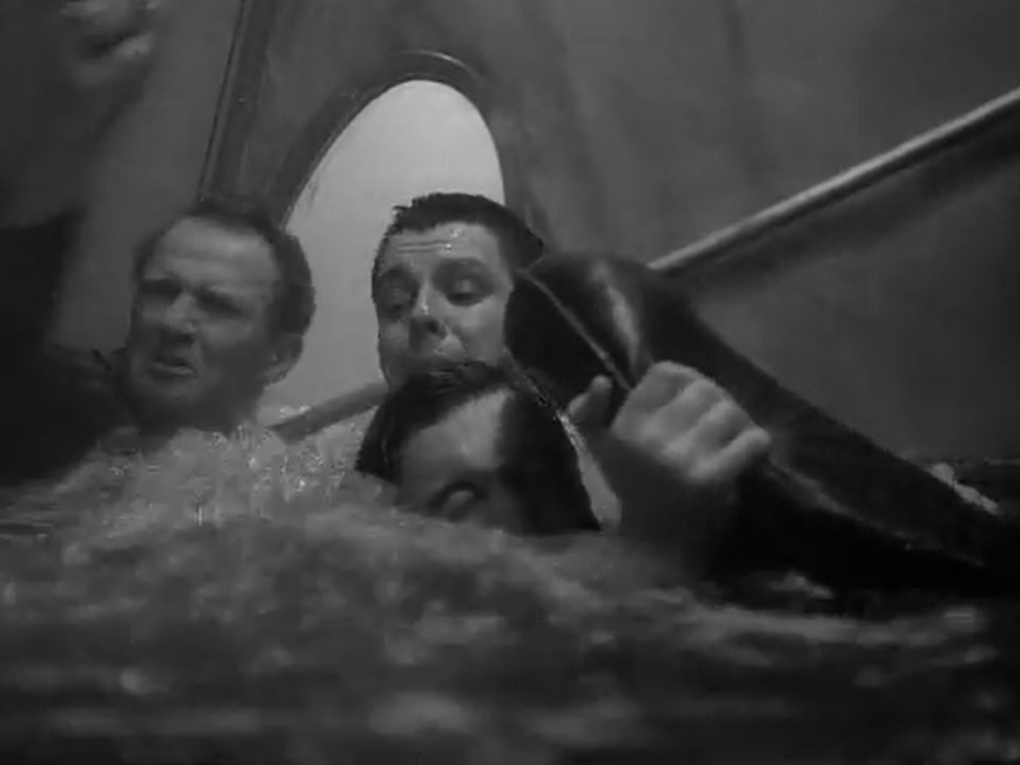
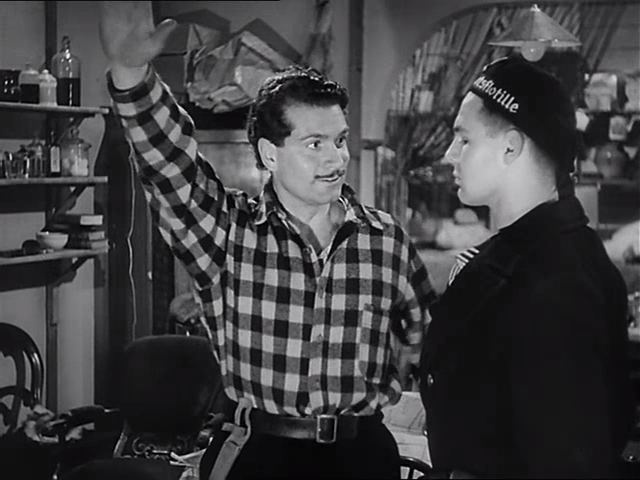
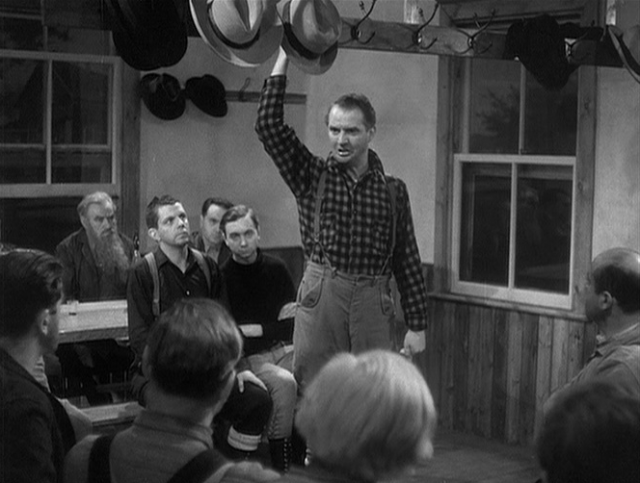
Gripping all the way, with vivid characterizations, dramatic action moments (the spectacular bombing of the U-boat, the nerve-wracking plane crash, deadly fights with surprised civilians), pictorial sweep (never mind some handy-for-storytelling-drama geographical condensation of distances) and smartly tuned parrying of twain-never-meet philosophies. Among the locals the men engage are a hearty French-Canadian trapper (Laurence Olivier), a gentlemanly author vacationing at a lake (Leslie Howard), the leader of a peaceful settlement of German Hutterite farmers (Anton Diffring) and a garrulous conscripted soldier (Raymond Massey). As the fanatic Nazi leader, shrewd, practical and ruthless, Portman, though billed fifth, has the largest and most important role; the others, all colorful representatives of ‘types’, are essentially cameos in excellently mounted and staged vignettes of varying duration. The most affecting is the segment with the Hutterites, with the best-written and delivered speeches (one from Portman, the other from Diffring) and a touching subplot between the one crewman who hasn’t lost his soul to Nazism, ably played by Niall MacGinnis, and a sweet farm girl in the person of a glowing 17-year-old Glynis Johns. Olivier draws some cirques for his rowdy Quebecois accent but we think he’s fine and it’s refreshing to see him go playful rascal rather than chilly reserved. **

Made for £132,000 (in 2025 around £9,443,074), it was 1941’s most popular film in Britain. Arriving in the States, retitled THE INVADERS, with 15% edited out to avoid unduly riling segregationists (not wanting to be reminded of sharing racism with the Nazis) it grossed $3,900,000 with another $1,100,000 in Canada. This was the third of eleven feature films Powell & Pressburger made during and after WW2 that dealt with it either directly or tangentially.***

With Finlay Currie, Raymond Lovell, John Chandos, Peter Moore and Basil Appleby. Young hopeful Peter Cushing, 28, made some of the props. 123 minutes.

Niall MacGinnis, 1913-1977
* Who will tell the President?—The prologue, spoken by Raymond Massey’s older brother Vincent, a Canadian diplomat and statesman: “I see a long, straight line athwart a continent. No chain of forts, or deep flowing river, or mountain range, but a line drawn by men upon a map, nearly a century ago, accepted with a handshake, and kept ever since. A boundary which divides two nations, yet marks their friendly meeting ground. The 49th parallel: the only undefended frontier in the world.”
1,159,000 Canadians served in WW2. 45,400 lost their lives fighting the Axis, 55,000 were wounded.
** Leave off Larry, lads, unless you’ve been there—those who fuss about Olivier’s flamboyance in this also ding him for his Sudanese Mahdi in Khartoum—like they ever knew, met or heard anyone from Quebec or the Sudan.
*** Mild-mannered men mastering martial material—49th Parallel was preceded by The Spy In Black and Contraband, followed by One Of Our Aircraft Is Missing, The Life And Death Of Colonel Blimp, A Canterbury Tale, I Know Where I’m Going (tangential), A Matter Of Life And Death, The Small Back Room, The Battle Of The River Plate and Ill Met By Moonlight. P&P also produced The Silver Fleet, which makes a dozen.

 Movies ala Mark