
BUS RILEY’S BACK IN TOWN, but not too many people cared back in 1965, when this hid out at position #104 on the revenue roster. William Inge wrote it seven years earlier as a one-act play, but alterations to his eventual film script, choices made to suit the studio and hopefully goose the box office, upset him enough that he removed his name from the credits, nursing ire and ducking flak under the pseudonym William Gage. Harvey Hart (Shoot) directed, and he may as well have taken his name off, too. Slight drama with some awkward light touches isn’t terrible, just bland and boring for the greater part of its 93 minute running time. Worth a sideways look for fans of Michael Parks, to see how much his acting would (have to) improve later on, and Ann-Margret, just to gawk at how hot-damn gorgeous she was. If there are Kim Darby followers out there, this is a chance to see her love’em or hate’em range of ‘quirky cutes’ at 17, four years before stepping into True Grit.
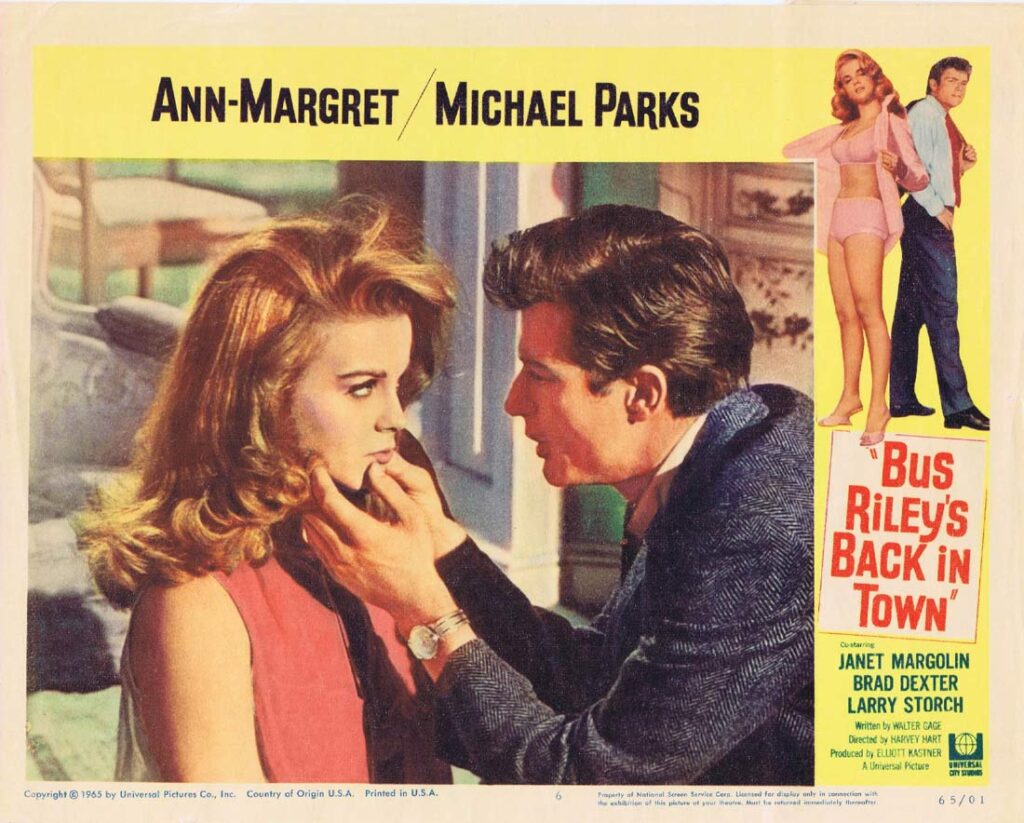
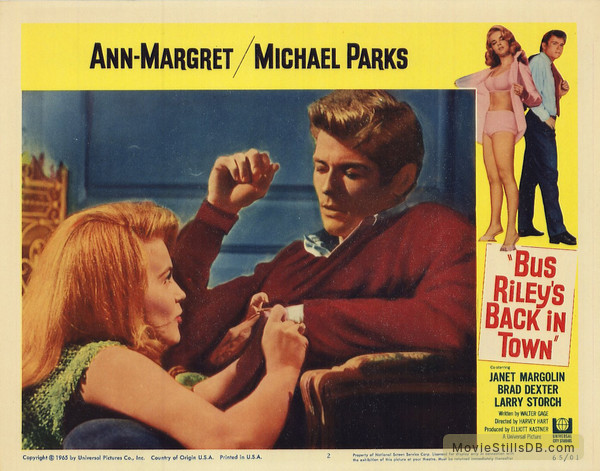
His hitch in the Navy over, ‘Bus Riley’ (Parks) comes home to figure out what he wants to do with his life. Staying with his mom (Jocelyn Brando) and sisters (Darby, whose ‘Gussie’ is CWAZY! about Bus, and Mimsy Farmer, as ‘Paula’, who thinks he’s a jerk), Bus meets up with the old gang, gets hired for this & that (at least some bed benefits accrue) and has an emotional tug-of-war with ex-squeeze ‘Laurel’ (Ann-Margret), now unhappily married to a rich dip who doesn’t satisfy her non-monetary needs. Poor, mixed-up Bus.

One good line: “Why did he want to get a tattoo for?” Most straight-faced idiotic exchange: LAUREL: “Come here.” BUS: “Now, we make love all over and over again.” LAUREL: “Yeah!” BUS: “And it never gets us anywhere.” Mind you, this complaint is lodged against a come-and-get-me Ann-Margret, so someone boarded the wrong Greyhound way back down the road.
Mark says “Click for clarity”
Parks, 24, had five years worth of credits in two dozen TV series before this feature debut. One of the era’s raft of “the next sensation” candidates who either came off or were perceived as sullen, mumble & shrug James Dean interpreters (Alex Cord, Christopher Jones, Robert Forster) he’s too mannered here to carry much gravitas or charm; like Forster, he came back with a vengeance later in his career.
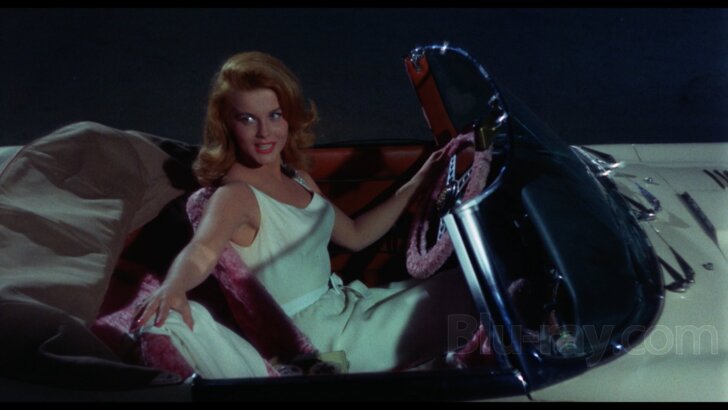
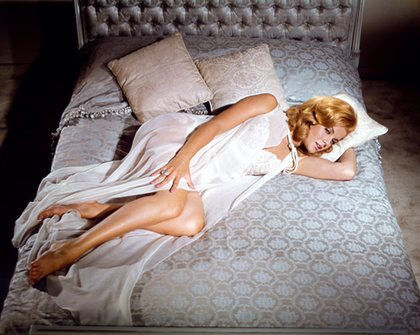
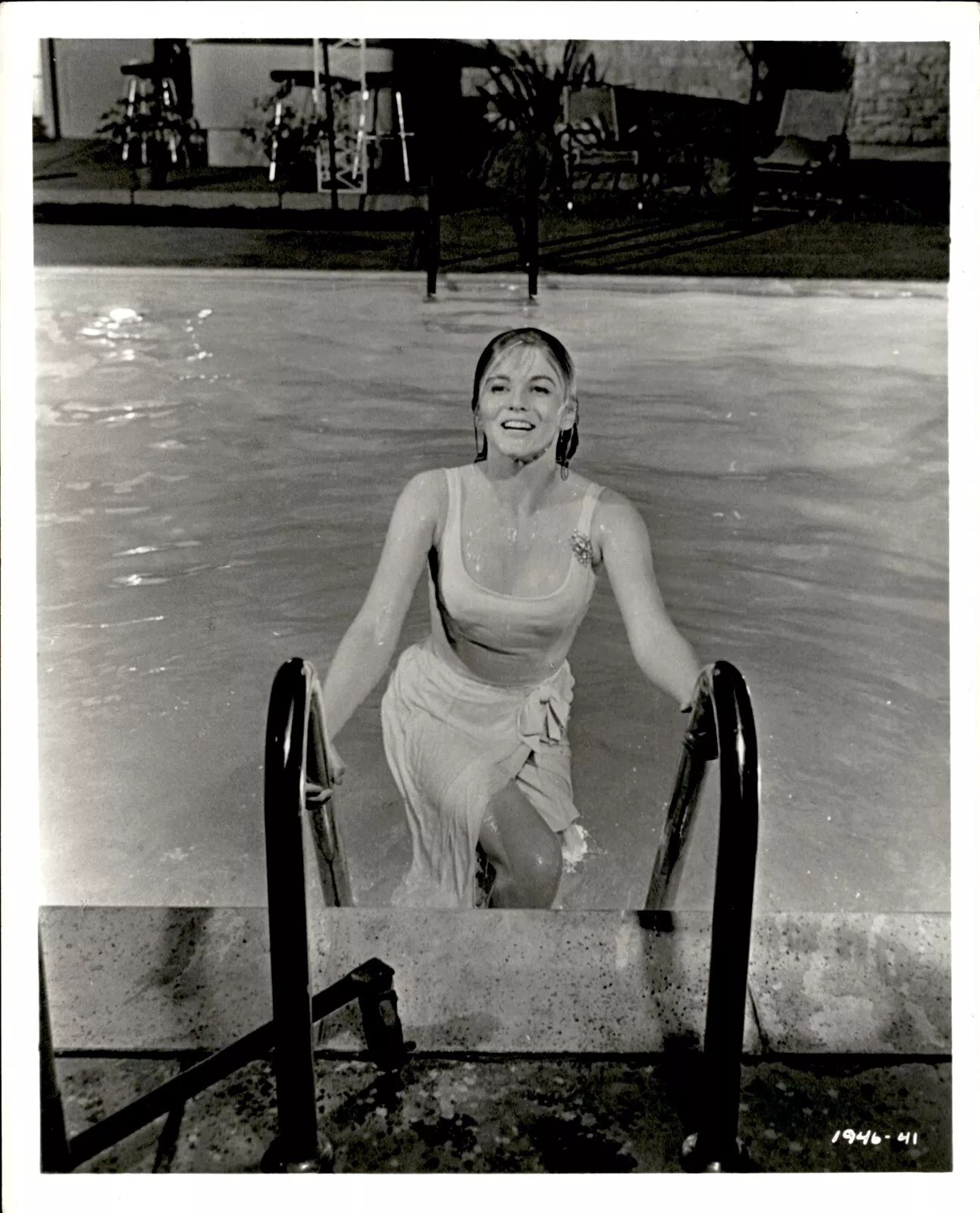
At 23, Ann-Margret had knocked back a few wins (Bye Bye Birdie, Viva Las Vegas, The Cincinnati Kid) but typecasting and weak choices (Kitten With A Whip, The Pleasure Seekers, Once A Thief, Made In Paris, The Swinger, Stagecoach, Murderers’ Row, R.P.M., C.C. & Company) dogged her until 1971 and Carnal Knowledge. She’s fine in this movie (the script and direction are poor) and looks fantastic. She comes off better than everyone else. *
Box office was $1,900,000. With Janet Margolin, Brad Dexter (pretty good, as a slick salesman), Larry Storch (non-comic, as a bartender), Brett Somers, Crahan Denton, Nan Martin, Lisabeth Hush, Alice Pearce, Ethel Griffies, Parley Baer, David Carradine (27, as ‘Stretch’) and James Doohan (44, acting since 1950, just about to start Star Trek.)
* Ann-Margret’s version: “”You should have seen the film we originally shot. After the alterations were made William Inge had his name taken off of it. His screenplay had been wonderful. So brutally honest. And the woman Laurel, as he wrote her, was mean…and he made that very sad. But the studio at that time didn’t want me to have that kind of an image for the young people of America. They thought it was too brutal a portrayal. It had been filmed entirely, using William Inge’s script, but a year after it was completed they got another writer in, and another director. They wanted me to re-do five key scenes. And those scenes changed the story. That’s when Inge took his name off. There were two of those scenes that I just refused to do. The other three…I did, but I was upset and angry. They’d altered the whole life of the story and made the character I played another person altogether. To put it mildly, they’d softened the blow that Inge had delivered. If only everyone could have seen that film the way he wrote it.”

 Movies ala Mark