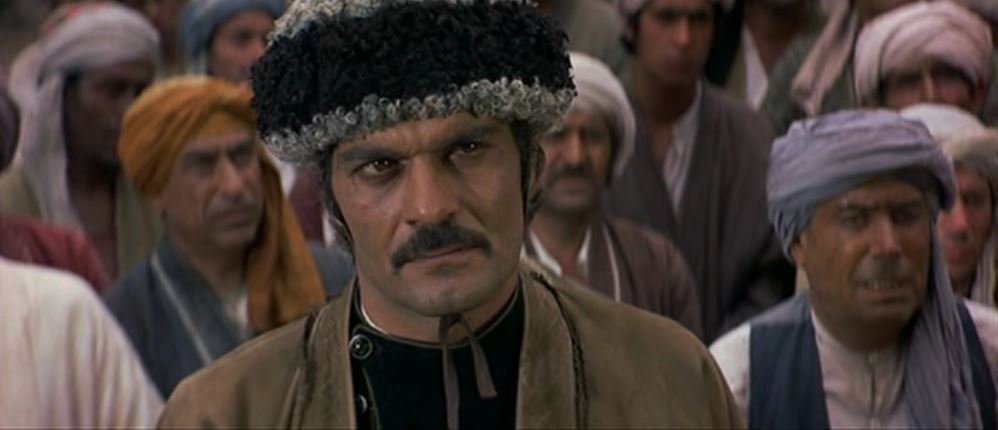
THE HORSEMEN galloped into a box office crevasse in 1971, finding little audience appeal for its 109 grim minutes of ‘culture code of masculinity’ issues, especially when the archaic outlooks and actions involved animal abuse as a pastime. Throw in time-honored inbred misogyny. Toiled over for more than two years by director John Frankenheimer, it was intended to be a 3½ hour 70mm roadshow epic, but studio demands cut back on the already strained budget, forced drastic editing, dropped the process to 35mm and gave the results a perfunctory release in the States. After expending $6,000,000, critical shrugs and—worse—receipts of only $1,000,000, landed it a ignominious rank of 159th for the year. It did better abroad, but not enough to salvage the outlay. For Frankenheimer it went down as the fifth of nine duds in a row, a dismal total bested by its lucky/luckless star, the intense and charismatic Omar Sharif. *

Afghanistan—before the Soviet/Taliban/American/Taliban catastrophes. Tribal, feudal, tradition-bound, the ancient national sport is as rugged as the landscapes: buskashi, polo with a goat carcass as the object to clash over. Riding ‘Jahil’, his father’s prize white stallion, ‘Uraz’ (Sharif, 37) suffers a badly broken leg during a crucial match in the capital Kabul. Discarding the cast ‘modern’ doctors applied to his injury, a festering boil of pride, bitterness and unbending will sends him trekking home on a dangerous track thru the Hindu Kush. On the journey Uraz and his loyal servant ‘Mokkhi’ (Srinanda De) encounter the ‘unclean’ nomad outcast ‘Zareh’ (Leigh Taylor-Young, 19), and after some sparring adjustment the three forge ahead, the worth of the stallion binding them. In the rural northern province that is their destination waits ‘Tursen’ (Jack Palance), the father of Uraz and leader of their clan, a man who in his youth was a legendary buskashi champion.

Dalton Trumbo’s script was based on “Les Cavaliers”, a 472-page French novel written by Joseph Kessel; perhaps the book delves more clearly into the motivations of these characters but they remain murky in the film version and while Sharif conveys subtle undercurrents to the relentlessly grim protagonist, Uraz is so consistently unpleasant he’s next to impossible to relate to or feel sympathy for. The only human character who raises any audience consideration is the scorned girl; this is the best performance Taylor-Young ever gave.
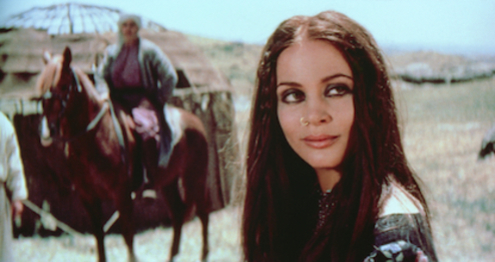
While the story and characters remain obtuse and opaque, the look of the film and the novelty of the setting holds attention. The sense of time and place are so palpable that the atmosphere feels not just exotic and informative but unique: given the horrors that befell the country in the years that followed the filming this drama is an anthropologically invaluable look into a vanished past. Frankenheimer and his 2nd-unit captured much footage in Afghanistan, then locations in Spain sufficed to flesh it out under the cinematography of Claude Renoir. Georges Delerue provides a quietly dramatic score.
The horses and the crippling falls they take, and scenes of rams bashing each other to death for sport are not all that much fun to watch. As for buskashi—with a crowd of desperate men driving their mounts to the limit while viciously lashing each other with quirts and whips as they grab at a dead goat, suffice to say it makes rugby, bull riding or MMA cage fights look like 6th grader girl’s badminton. No wonder no one has ever been able to conquer these people.
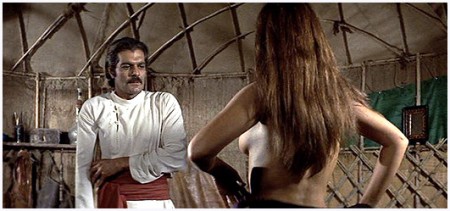
Sharif and Palance are reteamed after 1969’s much ridiculed Che!; age makeup aids Jack, who was only 13 years older than Omar. With Peter Jeffrey, Eric Pohlmann, Vernon Dobtcheff, George Murcell, Saeed Jaffrey, Salman Perseeda, Alan Webb, Milton Reid and in his last work as an actor—good luck spotting him in an uncredited bit—Tom Tryon.

* Frankenheimer flailing—a slate of successes concluding with the box office hit of Grand Prix was followed by one dogged downer after another: The Fixer, The Extraordinary Seaman, The Gypsy Moths, I Walk The Line, The Horsemen, Story Of A Love Story, The Iceman Cometh, 99 and 44/100 % Dead and French Connection II. He finally drew a winner again in 1977’s Black Sunday.
Everybody liked Omar Sharif (fans anyway, critics can go fish) but after Lawrence Of Arabia and Doctor Zhivago, only Funny Girl drew substantial crowds. The same year as The Horsemen he had The Burglars (which you’d have to burgle to see anywhere) and the excellent The Last Valley, which deserved a better fate than it received.

 Movies ala Mark