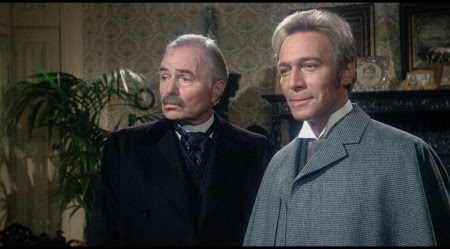
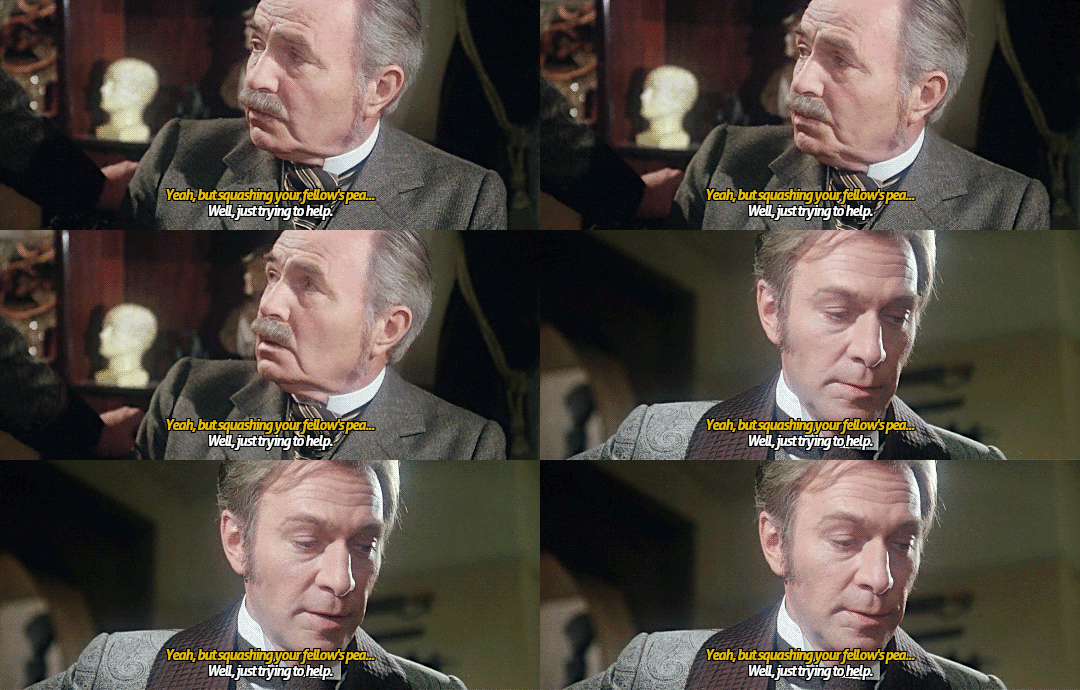
MURDER BY DECREE—HOLMES: “Watson, what are you doing?” WATSON: “I’m trying to corner the last pea on my plate….You squashed my pea.” HOLMES: “Well, now you’ve got it cornered.” WATSON: “Yes, but squashing a fellow’s pea.” HOLMES: “Just trying to help.” WATSON: “I didn’t want it squashed, I don’t like it that way – I like it whole so that you can feel it pop when you bite down on it.” HOLMES: “Sorry, I wasn’t thinking.”
The legendary peafight exchange is just one of the things that fans of 1979’s Sherlock vs. Jack (the Ripper) thriller enjoy, along with the great actors playing the leads, a sterling silver supporting cast, handsome production values, and a script marked by humor and heart to go with the mystery and mayhem.

London, 1888. The city is in thrall to whomever is committing the horrific murders of women in the city’s lower-class Whitechapel area. Stymied and taunted by someone dubbed ‘Jack the Ripper’, the authorities accept the help of ‘amateur’ sleuth Sherlock Holmes and his companion-in-harm’s way Dr. John Watson. The discerning is complicated by stonewalling from people in positions of power, from a spiritualist and medium who ‘sees’ Jack, by cross-motives within the police attached to the case, and in locating other ‘fallen’ but still living women who have links to the victims, the deed pattern clock ticking toward them with malice aforethought.

The screenplay by John Hopkins (Thunderball, The Virgin Soldiers) was based on the novel “The Ripper File” by Elwyn Jones and John Lloyd, and owes at least a nod to A Study In Terror, the underrated Holmes-Ripper item from 1965.
More than plot, it is casting and atmosphere that are keys to the Holmes cinematic canon, with picky aficionados, longtime fans and casual viewers sparring over changing interpretations of the iconic characters, extolling or scolding the players and grading the productions on how well they ‘take you back’ a century and a half, to fog-shrouded nights when offering “Good evening” to the wrong stranger might be one of the last things you’d ever be heard saying. Unhurried clip-clops on cobblestones: your cue to fast find an alley that isn’t a dead end.

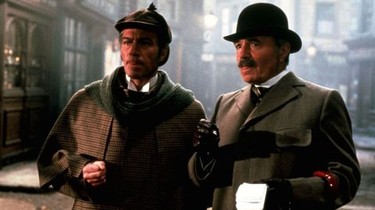
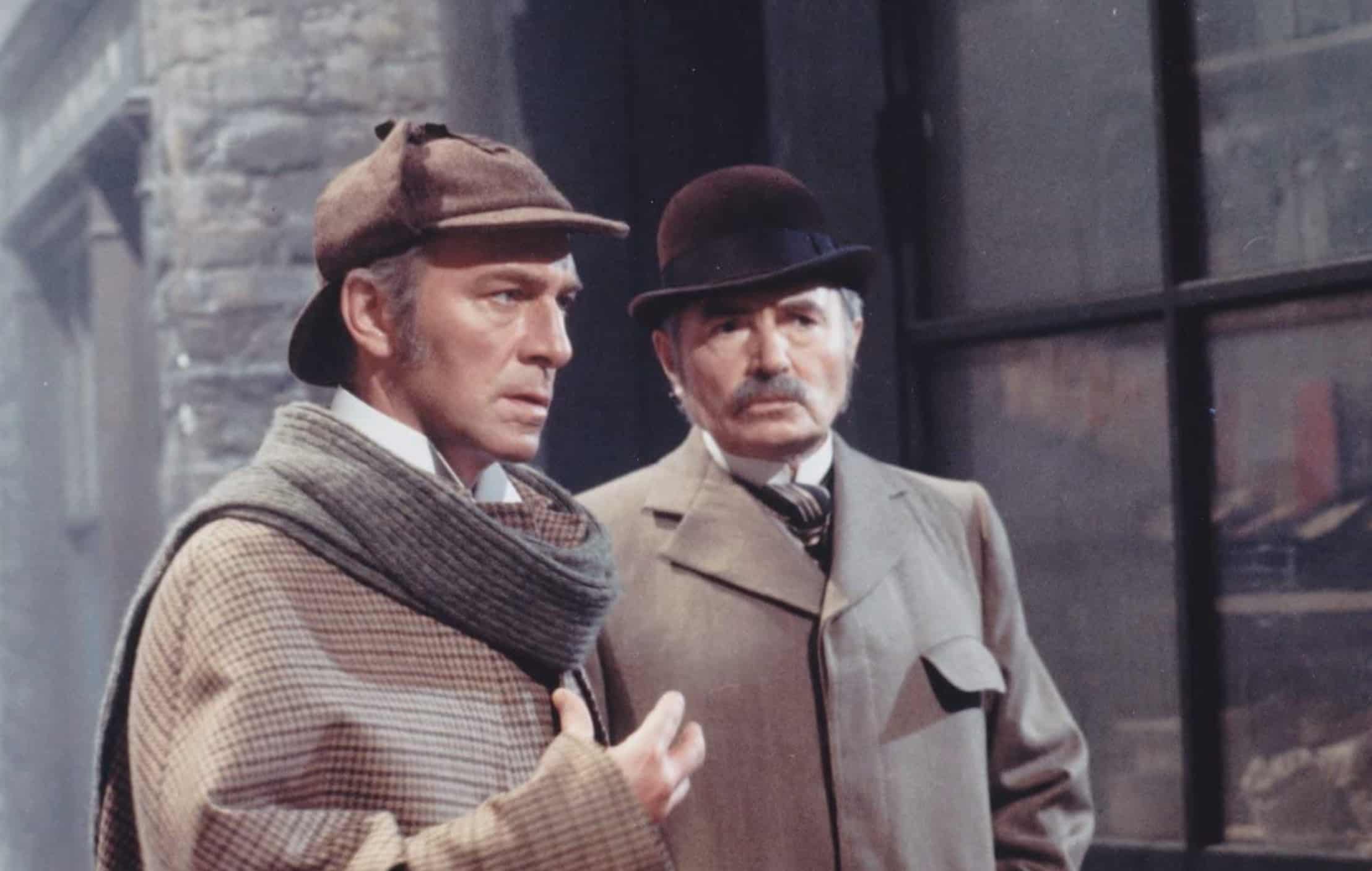
Director Bob Clark (more famous later for polar opposites Porky’s and A Christmas Story) handles the numerous plot threads well and as co-producer made sure those hired for art direction, costuming, camerawork and scoring collectively conveyed a rich, lived-in sense of time and place. Fortunately, the cast is exemplary, with standout supporting work all round, notably highlighted in scenes with Donald Sutherland as spooked seer Robert Lees and the great Geneviève Bujold as the cruelly penalized ‘Annie Crook’. All for naught if the wrong hands hold the deerstalker caps, calabash pipes, pointed canes and Webley revolvers of the original ‘dynamic duo’. Christopher Plummer, 49, is Holmes, James Mason, 69, is Watson. Plummer’s Holmes has him degrees less severe and austere than previous interpretations, and more fallible in violent confrontations, he doesn’t do Sherlock as Superman. He’s also easier on Watson, their deep and trusted friendship felt in the back & forth quip-swaps, remonstrances and cautions. Mason’s delightful turn as the good Doctor rates as the best (with apologies and doffed bowler to Nigel Bruce) for that figure to date; warmer and keener, nearly equal in screen time to Holmes/Plummer. The chemistry between the two irreplaceable actors is a treat after Nicol Williamson’s jittery drug-wracked Sherlock and Robert Duvall’s cold cod Watson in The Seven-Per-Cent Solution. “IIt gives Holmes the opportunity to be human. It’seasy to play him o play him as but that’s o what I 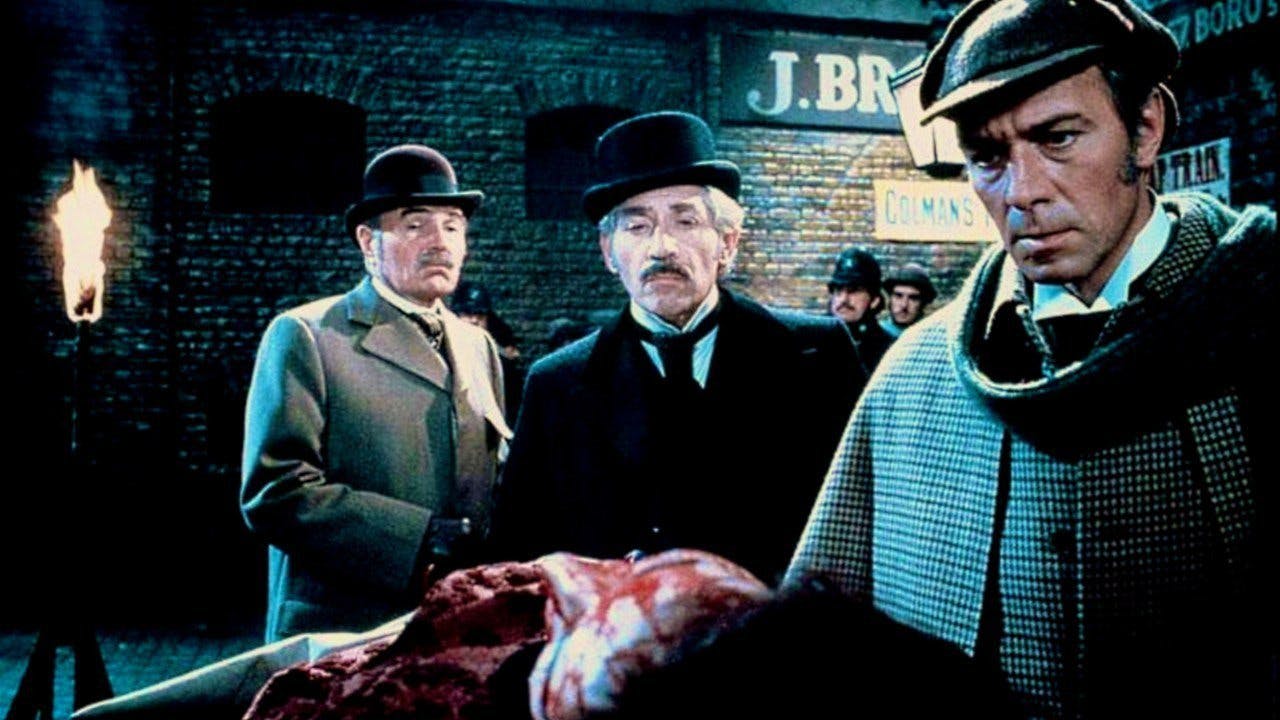
Done up for $5,000,000, it drew mostly positive reviews (many critics favor The Seven-Per-Cent Solution: we prefer this one) and $8,200,000 in the States (73rd for ’79), with $1,900,000 in Canada. Shot in London, it was a Canadian-British project, with 60% of the budget provided by Canada, along with neighborly natives Plummer, Bujold and Sutherland.
With David Hemmings (a radical in the police department anxious to bring down the nabob overlords who run the grossly unequal society), Anthony Quayle (as the controversial Sir Charles Warren–quite an interesting and controversial fellow), Susan Clark (as ill-fated Mary Kelly), Frank Finlay ‘(Inspector Lestrade’), John Gielgud (essaying certainty-of-place in a prestige cameo as Lord Salisbury) and Peter Jonfield (as one very wicked individual). 124 minutes.
 Movies ala Mark