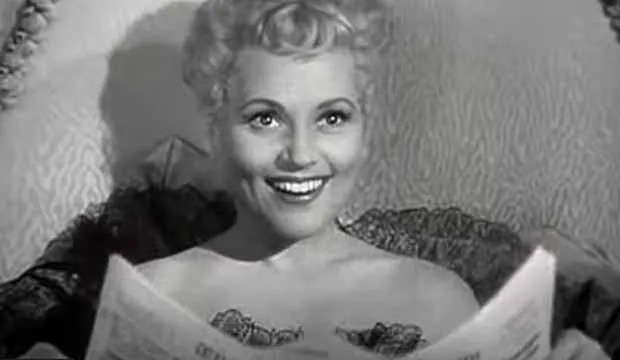
BORN YESTERDAY gave entertainment posterity a treasured gift in the one-of-a-kind Judy Holliday, delighting critics and convulsing audiences in 1950 when they slapped down $11,800,000 to make it the year’s 5th most popular movie. The 28-year-old from Queens had been on nightclub stages since she was 17, got a small part in the 1944 flick Winged Victory, then went to Broadway in 1946 to take the role in Garson Kanin’s play “Born Yesterday”, which ran for nearly two years. Proof of her film viability came from a swell role in the 1949 hit Adam’s Rib, enough to put her front & center in director George Cukor’s film version of ‘Born‘, sharing the screen with—and taking it away from—co-stars Broderick Crawford and William Holden. *
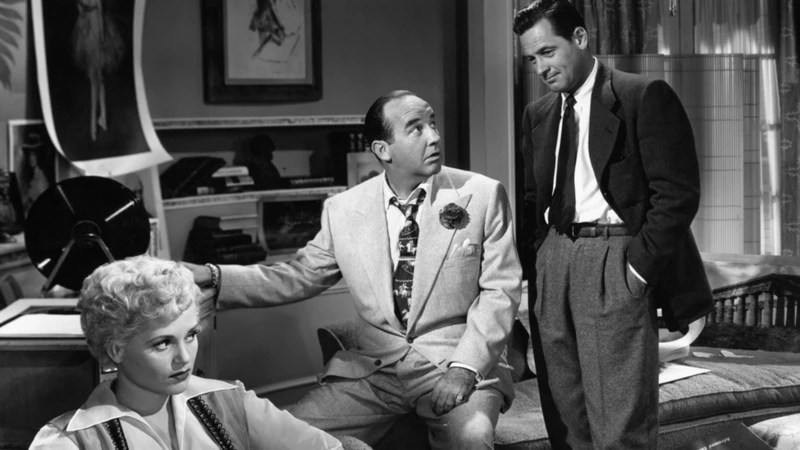
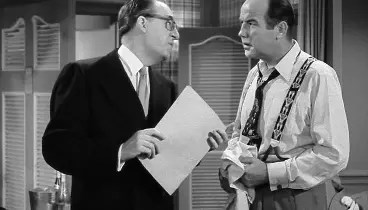
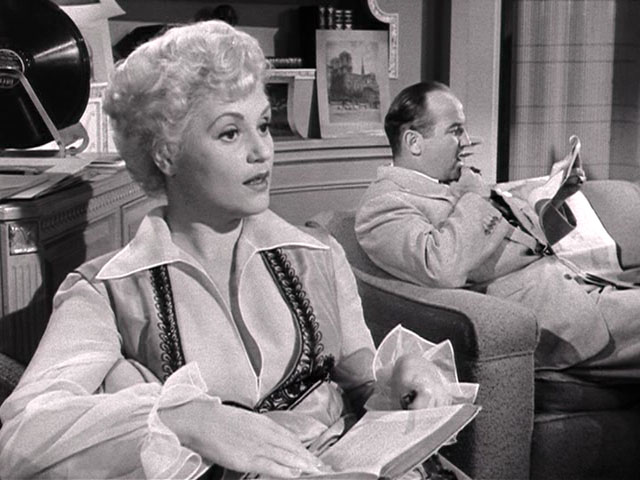
Washington, D.C. When self-made millionaire junkyard mogul ‘Harry Brock’ (Crawford) comes to the capitol he means business, which entails bribing a congressman (what are the odds?) or three. He’s aided by his well-connected, well-corrupted lawyer ‘Jim Devery’ (Howard St. John) who stays soused, partly to quiet what’s left of his conscience, partly to drown out Brock’s ceaseless browbeating and bullying. The crude tycoon also drags along his fiancée ‘Billie Dawn’ (Holliday), a former chorus girl with zip education and no social polish. To ‘wise’ her up, Brock hires journalist ‘Paul Verrall’ (Holden) to brush up Billie’s brainpower enough that she can not embarrass him in power circles. Harry and Paul are opposites in every way, but Harry respect’s Paul’s nerve and Paul’s reporter nose is intrigued enough by the lout and the seemingly witless ‘broad’. But Billie turns out to have more than meets the eye (and ear), blossoming under gentlemanly treatment and exposure to ideas more valuable than greed.
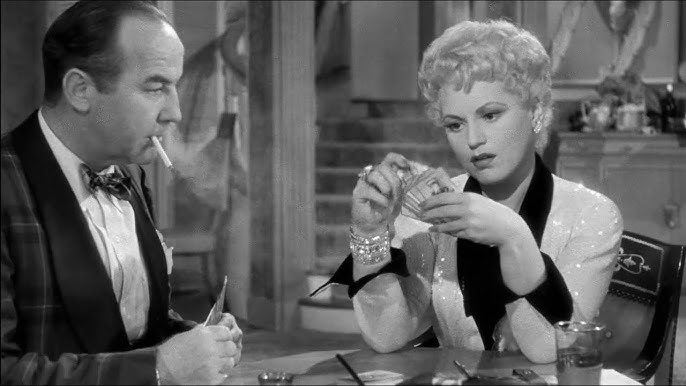
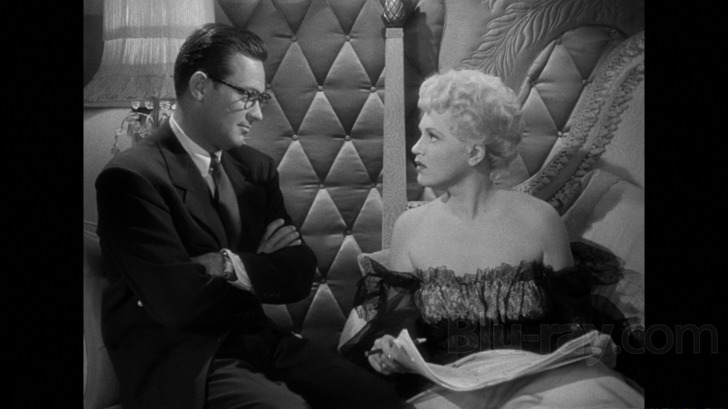 On the stage with Holliday, Paul Douglas was Brock with Gary Merrill as Paul. Right for the stage, wrong for the screen. Crawford, 38, boosted by his Oscar win for All The King’s Men, was a more viable box office choice, as was the more attractive audience draw Holden, who held a winning hand that year with Sunset Boulevard (a classic), Union Station (solid noir) and Father Is A Bachelor (uh, just skip that one). Albert Mannheimer handled the screenplay, then Cukor got Kanin to revise it, sans credit. Crawford’s yelling pushes patience, Holden is charming. But the plot belongs to Billie, the show to Holliday. She’s hilarious, fresh, touching and real, her smallest gestures, expressions, quavers registering as fully honest to the character. Watching Billie awaken and transform is a treat. It’s a formidably funny and shrewd performance. The card game scene is iconic.
Judy’s perfection as Billie (honed by 1,642 performances of the play) walked off with the Oscar for Best Actress against the formidable competition of Bette Davis in All About Eve and Gloria Swanson in Sunset Boulevard. Nominations came for Best Picture, Director, Screenplay and Costume Design (Jean Louis strikes again, giving Judy’s Billie thirteen elaborate getups).
With all of its laughs, the script got in a lesson, delivered to Billie, but designed and destined for the rest of us: “All that’s bad around us is bred by selfishness. Sometimes selfishness can even get to be a – a cause, an organized force, even a government. And then it’s called fascism. Can you understand that?”
103 minutes, with Frank Oliver, Larry Otto, Grandon Rhodes, Barbara Brown and Claire Carleton. Remade in 1993 with Melanie Griffith, Don Johnson and John Goodman but lightning didn’t strike; 81st place, poor reviews, zip trophies.
* Columbia Studio’s foul-mannered ogre Harry Cohn, after buying the rights to the play for a $750,000 ($10,685,000 in 2025) initially dismissed Holliday with his customary crudeness as a “fat Jewish broad.” He wanted Columbia’s resident siren Rita Hayworth for the part. The leading lady from Adam’s Rib, Katherine Hepburn, scribe Kanin (who co-wrote it) and Cukor (who directed it) pushed Holliday with enough sly press acumen that Cohn wised up and relented. Judy Holliday only lived to be 43, dying of cancer in 1965, and only made six more movies, lighting up the screen in each and every one.
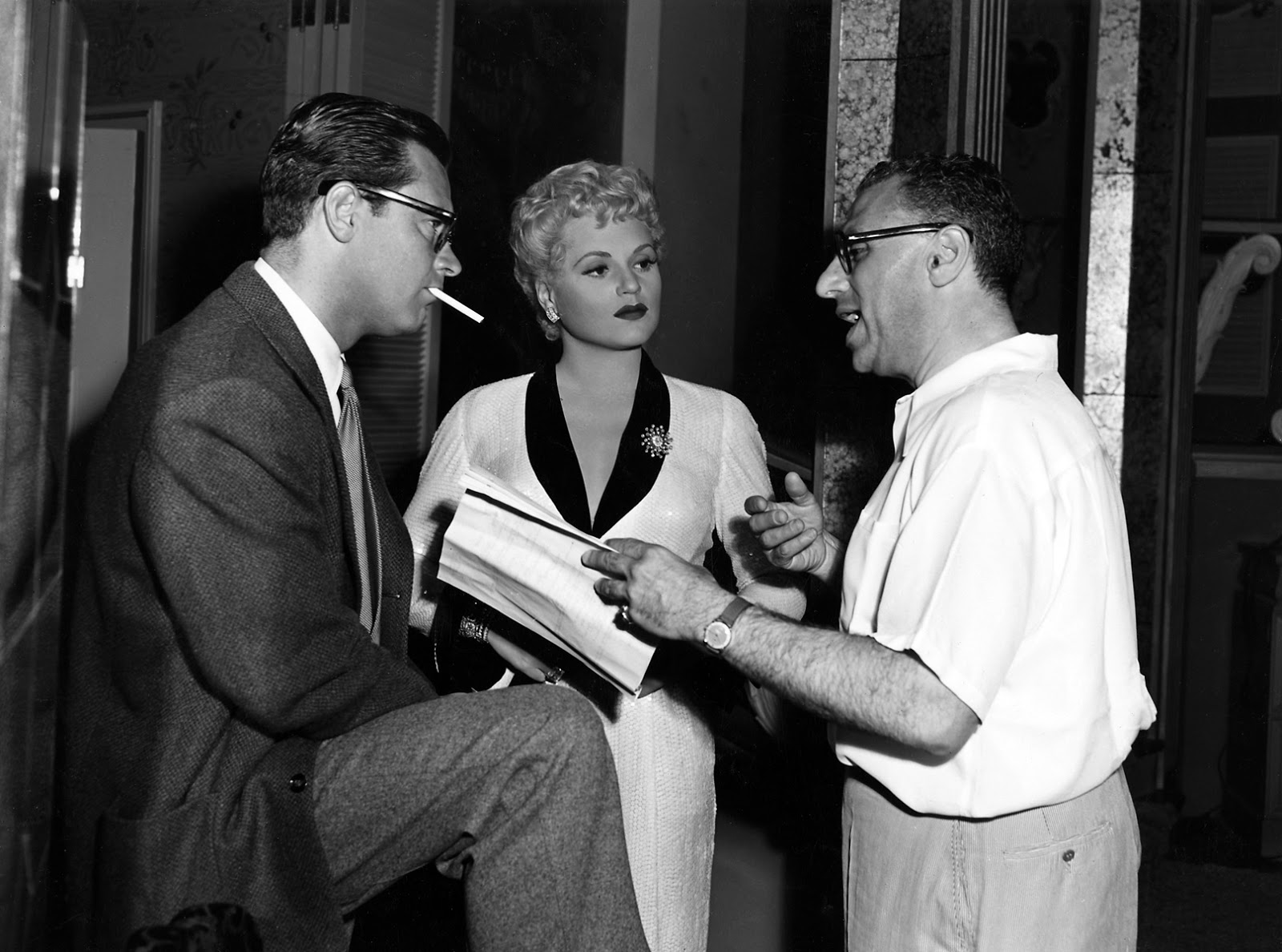
Guidance from Cukor
Cukor, on why he didn’t use Paul Douglas: ”Because he was very foolish. He turned it down. He knew the play very well, and when the script was sent to him, it had been changed a lot and he didn’t want to do it…..he would have been wonderful because he and Judy Holliday were so funny together.” Cohn insisted on Crawford, believing the less overbearing Douglas would have played “too sympathetically”, plus Cohn was understandably keen on Brod after All The King’s Men. Ego enough for a general, Harry Cohn would not have missed that Kanin used him as a model for Harry Brock.
One scene that was cut had Billie in the Library of Congress, so overwhelmed by the number of books it holds that she starts to cry.
They should have kept it in.
1950 was a banner year for comedies—Annie Get Your Gun, Cheaper By The Dozen, Father Of The Bride, Francis (the first of seven about a talking mule), At War With The Army, Fancy Pants, Harvey.
“WHAAAT?!“—smart ‘dumb blondes’—Jean Harlow, Penny Singleton, Marilyn Monroe, Jayne Mansfield, Joi Lansing, Goldie Hawn, Suzanne Sommers, Teri Garr, Heather Graham, Alicia Silverstone, Anna Faris, Reese Witherspoon, Melanie Griffith, Lisa Kudrow, Margot Robbie…
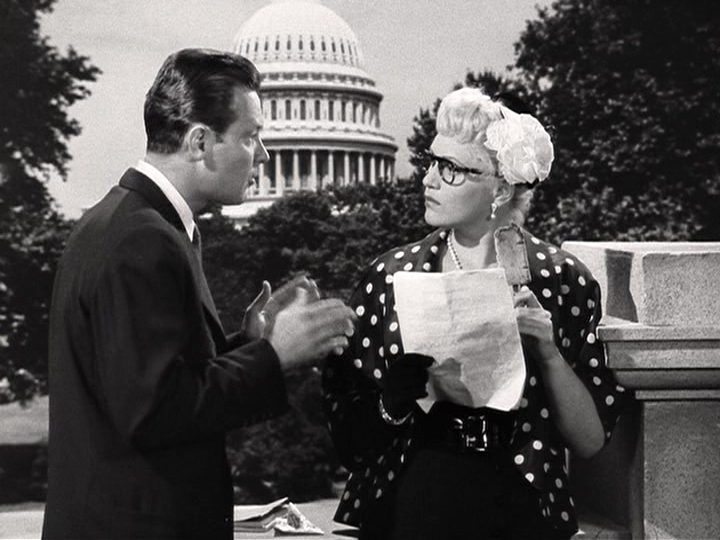
“Sometimes selfishness can even get to be a – a cause, an organized force, even a government. And then it’s called fascism. Can you understand that?”
 Movies ala Mark