
THE WALKING HILLS, a trim item from 1949, typically gets lumped in with westerns because (a) it stars Randolph Scott, (b) it’s set in a western (Mexican) desert and involves horses and (c) it was directed by John Sturges, who’d later drop some classics into the genre. But Randy, critters and the outdoors are just components of a treasure hunt adventure with some crime themes attached, a beware-your-partners suspenser that happens to be set in the modern West, south of the border, post-war. It did fairly well when it came out, making $4,100,000, placing 89th, besting Scott’s three other sagebrush sagas that year, Canadian Pacific, Fighting Man Of The Plains and The Doolins Of Oklahoma. It makes for a neat and surprising find.
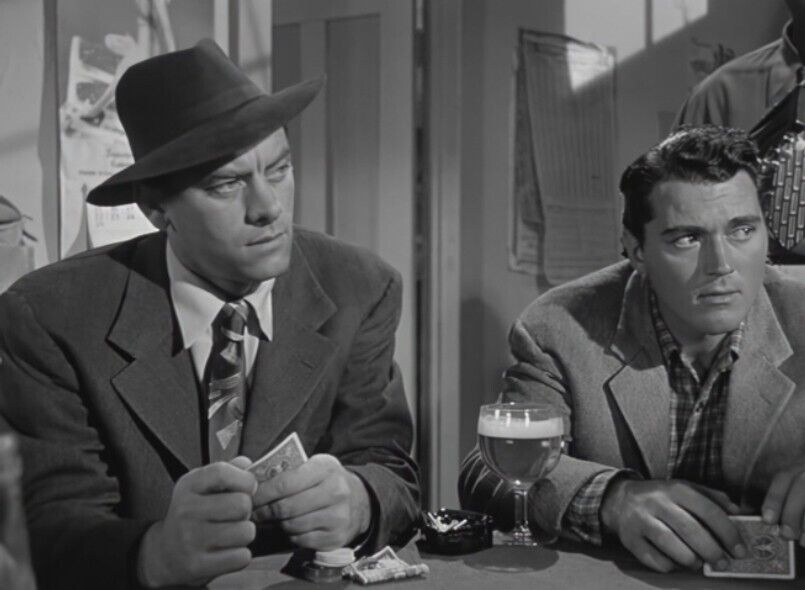
A bar in Mexicali, California. A conversation during a card game piques the immediate keen interest of a few friends and several strangers. Across the border in Mexico a wagonload of abandoned gold may be there for the taking, with some physical effort—and hopefully a little cooperation. The lure of millions of dollars sends nine men on horseback into the “walking hills” of sand. Once they locate the site, they’re joined by a woman, who is linked—present and past—with two of the men.

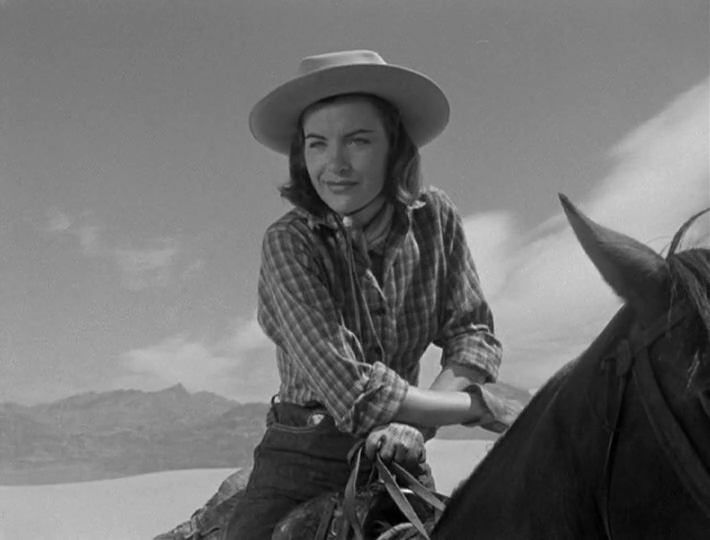
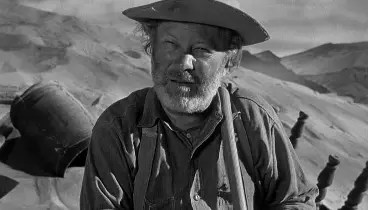
Besides calm-seeming horse breeder ‘Jim’ (Scott) and his spirited ex ‘Chris’ (Ella Raines), there’s her current flame ‘Dave’ (William Bishop), in trouble with the law, caustic cop ‘Frazee’ (John Ireland), packing heat and attitude, surly drifter ‘Chalk’ (Arthur Kennedy), garrulous prospector ‘Old Willy’ (Edgar Buchanan), young cowboy ‘Johnny’ (Jerome Courtland), barman “Bibbs’ (Russell Collins), guitar playing blue singer ‘Josh’ (Josh White) and ‘Cleve’ (Charles Stevens), Jim’s ranching amigo. Temperaments tell as desire, loyalty and self-preservation are tested by natural elements like a violent sandstorm.
The 78 minute trial-by-greed doesn’t waste time getting going into effective location shooting (Charles Lawton Jr., cinematographer) in California’s Alabama Hills and Death Valley National Monument mixed with decent studio sets. The script by Alan Le May, with additional dialogue contributed by Virginia Roddick, has some tart exchanges between the nicely delineated characters and Sturges stages the action well: mano y mano fights with shovels and eventually guns, and a whopper of a sandstorm: the wind machines obviously cranked full-bore (the horses look spooked for real) and the sound effects crew earning their salaries. Arthur Morton contributes a taut music score.

Everyone scores. Scott is laid back but deceptively so, in a different sort of role for him, hero business downplayed to fit the situation. Raines is once again alluring and just a little shady. It’s a nifty distrust competition between vaunted sneer-experts Ireland and Kennedy, while Courtland, 22, often sounds quite a bit like Henry Fonda and dependable cuss Edgar Buchanan growl-croaks like he’s doing an Edgar Buchanan impression. Renowned bluesman White, 34, adds offbeat counterpoint with his guitar riffs (right after this he was blacklisted by the McCarthy ghouls) and Stevens—who was cavalierly unbilled, among his 240 credits between 1915-1961 usually consigned to tiny parts as a desperado of some sort—has a fairly good, equal-footing role for a change.

A welcome addition to the John Sturges scrapbook (it was his 7th picture), early work years before immortals Bad Day At Black Rock, Gunfight At The O.K. Corral, The Magnificent Seven and The Great Escape. To which we add The Satan Bug and Hour Of The Gun.
 Movies ala Mark