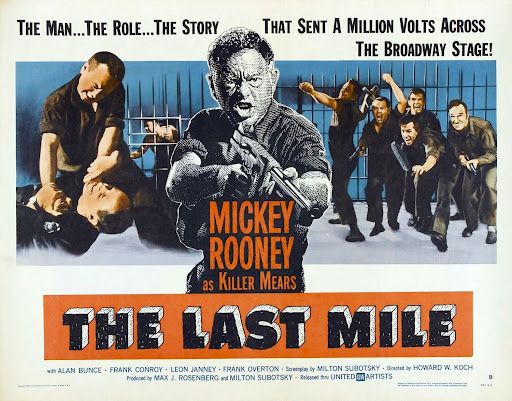
THE LAST MILE puts us on Death Row with ‘Killer Mears’ and a lineup of cons, waiting their turn on the chair. “You know it’s funny, I never had much to do with electricity before.”
John Hexley’s 1930 play clipped 289 performances on Broadway. In the lead was a young guy named Spencer Tracy. Then out in Los Angeles, the play toured with another hopeful named Clark Gable. A 1932 movie version starred Preston Foster, and the property was deemed viable enough to remake 27 years later with Mickey Rooney in the lead. *
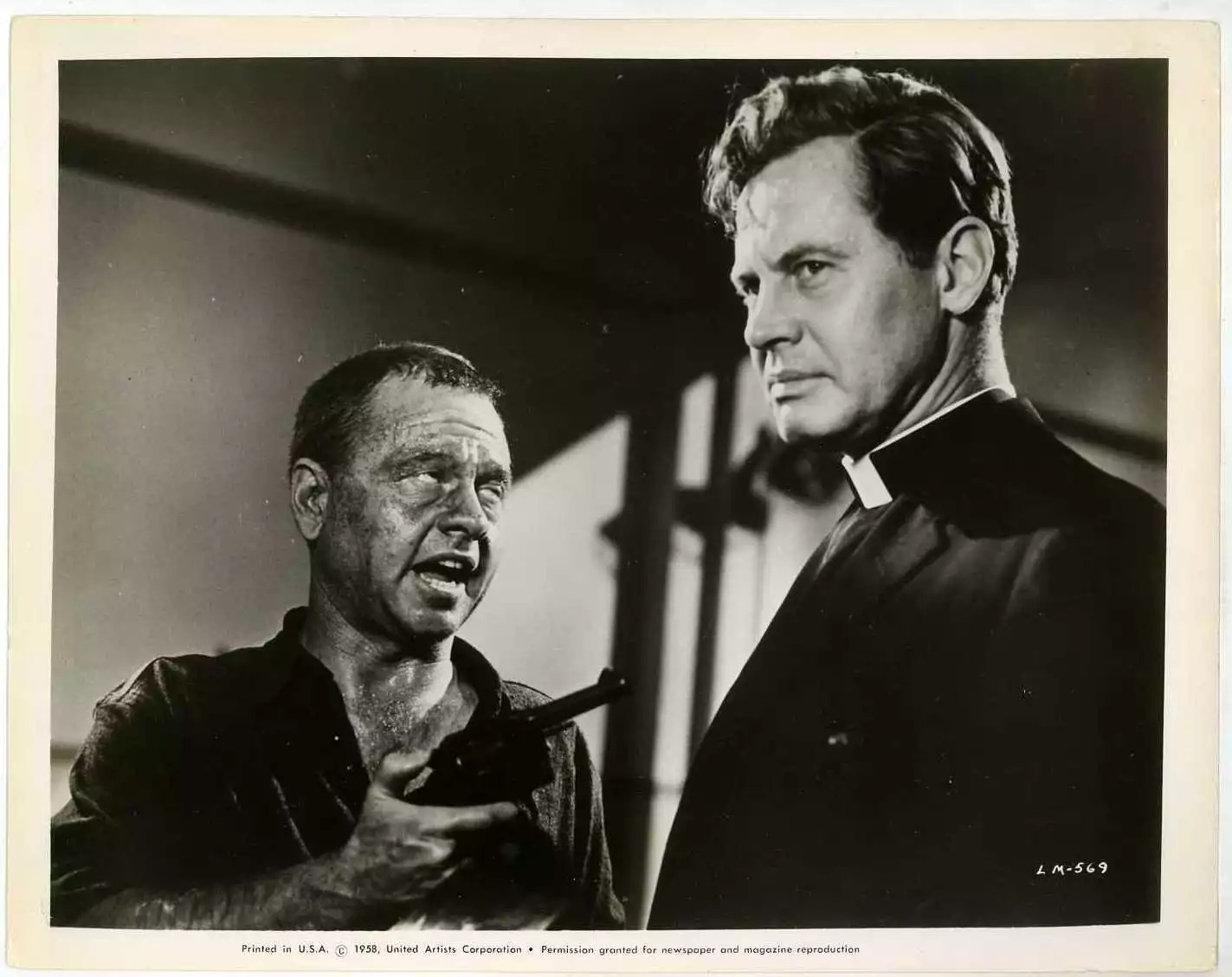
In some un-named state prison, inmates on Death Row await their respective dates of execution. The prison guards taunt them, solace from a priest offers little. When a chance at striking back arises, the cell block’s most hardened denizen, ‘Mears’, nicknamed “Killer”, captures a guard and frees the other men. They surprise five more guards and seize their weapons. But the victory is Pyrrhic; they’re stuck in their section of the prison. The desperate bargaining chip is the clutch of frightened captives, but the warden won’t give in. Mears, nothing to lose, will go the limit. The battle is joined.
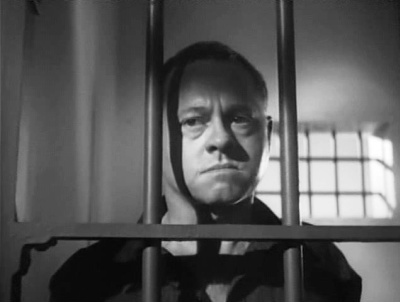
The overcooked script was written by Milton Subotsky (Dr. Who and the Daleks) and veteran Seton I. Miller (he did the ’32 version as well); Howard W. Koch (Big House U.S.A., The Gun Of Zangara) directed. The first two thirds of the 81 minutes are devoted to the back & forth among the convicts and a few of the captors, with everyone getting a ‘your moment’ chance to ruminate, fulminate and agitate over their fates. The last act jumps into full-steam-ahead action; quite violent for a 1959 film. The writing is too on the nose and in directing Koch pitches much into semi-hysteria. Plus (minus) the primitive sets undercut the sense of reality, reminding you you’re watching something best presented as a play (from a while back at that). Van Alexander, who did a feisty job scoring Baby Face Nelson, blows it here: his blaring jazz chords trample on the effect of every scene they barge in on. There’s enough ammo exchanged for a war movie, but the foley crew also drop the ball: the same weapons manage to make three or four different sounds. Sloppy. Rooney’s customary intensity and focus hold interest but that’s mitigated by having Mears constantly shouting, even at people six inches from his face; either the fault of director Koch coaching or maybe Mickey just not dialing back the rage enough.

Mears & Mick’s wrath & reckoning is aided & abetted by the sweaty emoting of Clifford David, Frank Overton (priest who needs to wise up), Donald Barry (sadistic guard asking for it), Ford Rainey, Johnny Seven, Clifton James, Frank Conroy (demoted from leading the lynch mob of The Ox-Bow Incident), Michael Constantine (debut) and Milton Selzer (debut).

* Passing on in 2014, Mickey Rooney had lived to be 93, going thru 344 credits as an actor (film debut, age six), eight wives, nine children and millions of dollars. He had more than nine lives as a performer, and among the ups & downs was his bracing ‘hoodlum’ period. After 1957’s low-budget hit Baby Face Nelson for a few years he plowed thru bad guy parts with relish; this one was followed by The Big Operator and King Of The Roaring 20s:The Story Of Arnold Rothstein.
Whew! Feel a lot better now.
 Movies ala Mark