
THE PRINCE AND THE PAUPER, Mark Twain’s 1881 children’s classic has been filmed several times for the big screen, and many versions have been done for stage and TV, in a number of countries. To date, the most enjoyable remains Warner Brothers 1937 treat. In the un-merry Olde England of 1547, nine year-old Edward Tudor became Edward VI when he was made King after the death of his bearish papa Henry VIII. That’s the historical basis. The young Edward only lived to be 15, so this tall tale was one instance where fiction and filmdom bested brutal fact. As the on-screen forward tells us “This is not a history, but a tale of once upon a time. It may have happened. It may not have happened. But it could have happened.” *
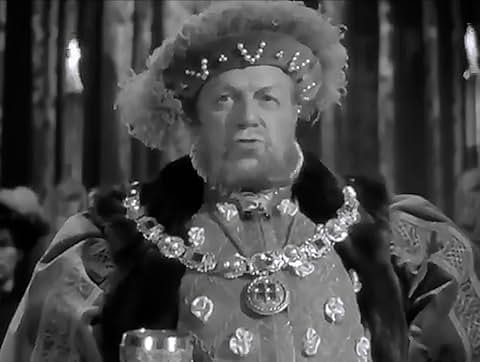
London, 1547. When boisterous (sounds nicer than murderous) Henry VIII passes on to the great scaffold in the sky, boy child Edward assumes the throne (older sisters Mary and Elizabeth stewing in the wings). As this Royal re-arrangement is handled (with nefarious aims from the Earl of Hertford), downtown, as it were, peasant beggar boy ‘Tom Canty’, born on the same day as Edward, has to deal with his own family trouble; lowly station and dire poverty worsened by his vicious criminal father. Chance intervenes when the two lads meet; misfortune becomes fortune and vice versa. Enter a roguish hero, stage left: Errol Flynn. **

Warner’s tapped craftsman William Keighley to direct; at one point he fell ill and equally able William Dieterle pitched in: the studio’s production line of ace cameramen (Sol Polito and George Barnes) and editors (great work from Ralph Dawson) disguise any stylistic difference between the dual William’s. A budget of $858,000 saw the recreation of Tudor times well-appointed as far as sets, costumes and crowd scenes go, and Erich Wolfgang Korngold anoints the pomp, suspense and action with a ripe symphonic score. Laird Doyle’s fine screenplay plays fair with Twain’s tale, turning his 252 pages into 118 minutes of running time.
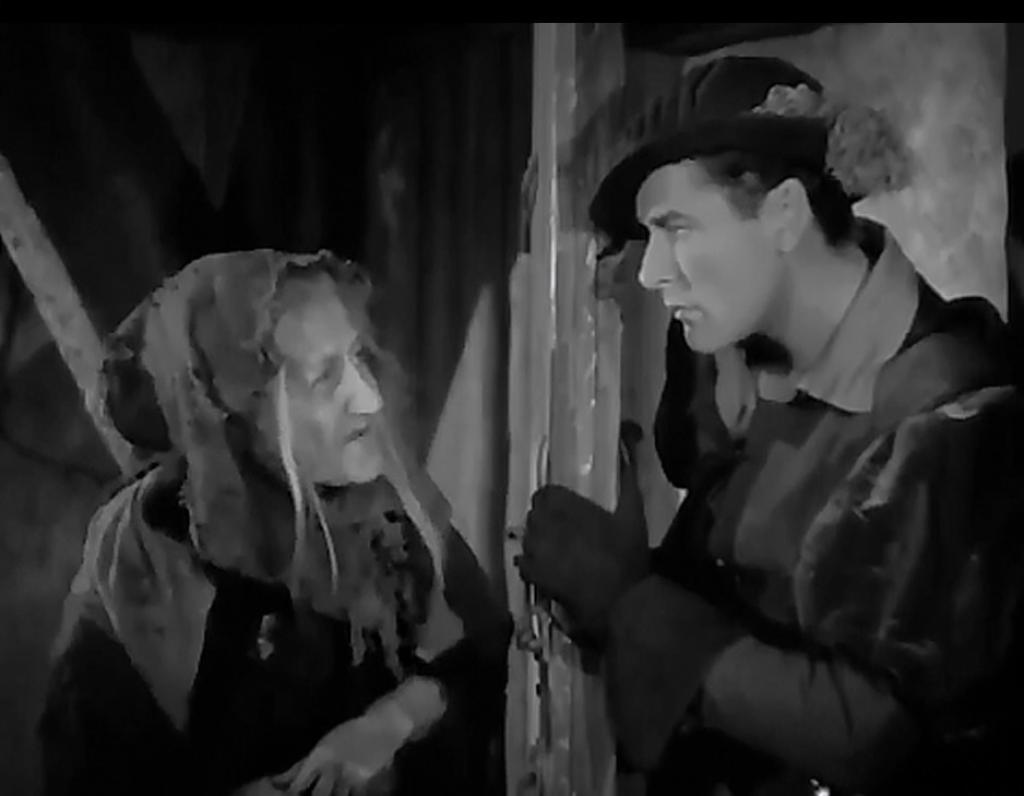
EDWARD: “Soldier of fortune. Strange profession.” MILES: “Well, of the three of them for a gentleman without means I think it’s the most amusing. Cheating at cards means associating with dull people. Preaching the gospel means wearing one of those funny hats.”
Like his yarn spins of Tom Sawyer and Huckleberry Finn, Twain’s yore story was something kids enjoyed but it also worked for adults, the hide & seek element entrancing the young audience, the social observations and satiric scolds goosing any semi-aware grownup. Luckily, along with its technical embellishments and craft professionalism, this telling worked smoothly and holds up beautifully. Notwithstanding the above contributors, that’s due in large part to the casting. Errol Flynn, 27, got lead billing (as dashing hero ‘Miles Hendon’) but it’s really a secondary part as his character doesn’t appear until 53 minutes in. Having having found a Golden Goose with the devilish Tasmanian in Captain Blood and The Charge Of The Light Brigade, Warner’s jammed him into four pictures in 1937; his presence ensured this one would pull in fans who might not give a shilling about Brit business from four centuries back. The studio wisely timed the release to coincide with the big to-do coronation of King George VI & Queen Elizabeth, Hollywood continuing its lionizing of The Mother Country and dragging the Yankee peasantry public along for the indoctrination. Errol is lithe, dapper and charming.

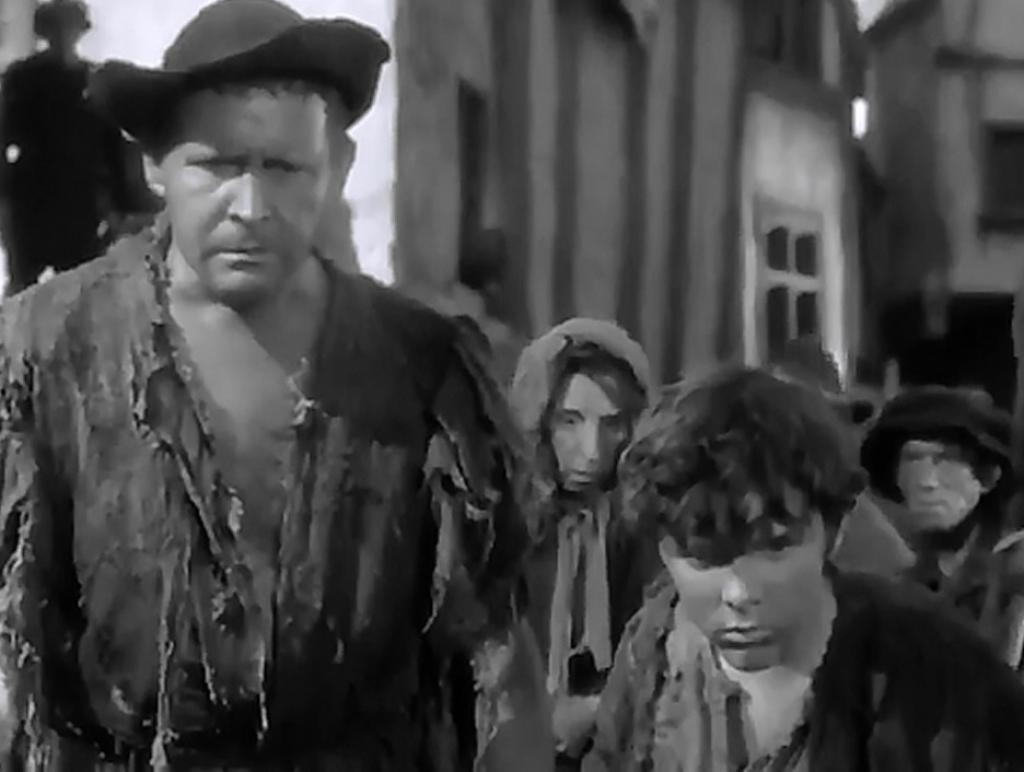
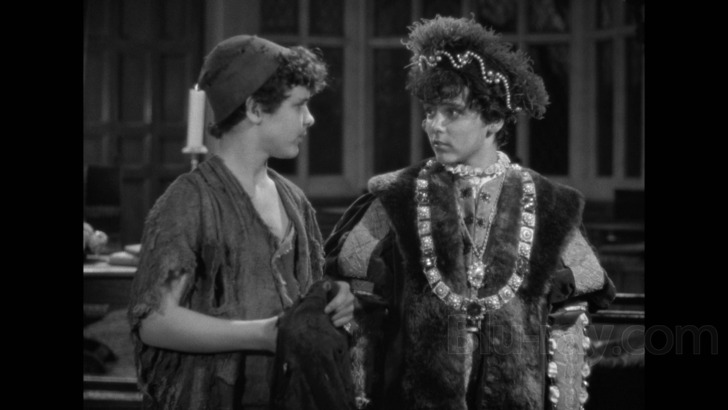
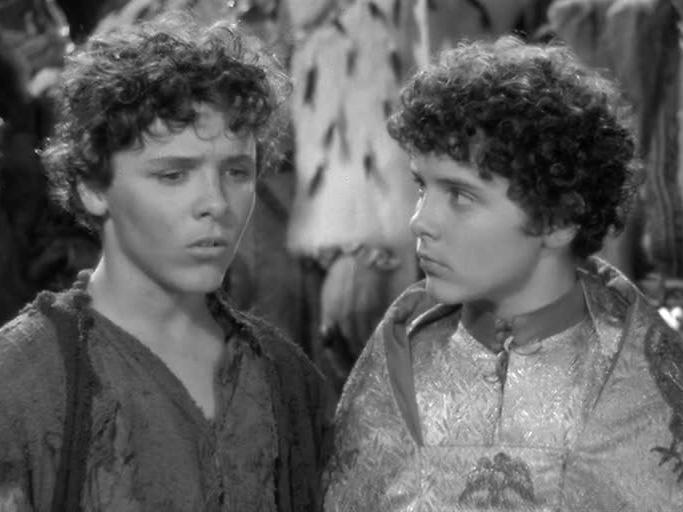
Nocking their own arrows to target are Claude Rains, oozing sophisticated treachery as Hertford; Barton MacLane, mad-bull on two legs as the nightmare father ‘John Canty; Alan Hale, dropping heartiness for heartlessness as ‘The Captain Of The Guard’, in the first of 14 times he would work with Flynn; and Montagu Love, growling with arrogant certainty as Henry VIII, a turn not dimmed by the lauded interpretation hammed to a fare-thee-well four years earlier by Charles Laughton. Yet the good work from the grownups wouldn’t have counted much without the right choices to play the central roles of Edward and Tom. The show lucked out with the boys, put across with pluck and a welcome lack of ‘child actor’ affect by 15-year old twins Billy and Bobby Mauch. Only a handful of the youthful performers of the day (say, Freddie Bartholomew, 13, or Mickey Rooney, 16) leapt the cringe bar, and even though the Mauch (pronounced ‘Mock’) lads don’t conceal their birthright (Peoria, Illinois to London a good 4,075 miles) their openness, sincerity and winsome natures more than make up for any diction friction. ***
Also in the cast are Henry Stephenson, Halliwell Hobbes, Eric Portman, Fritz Leiber, Elspeth Dudgeon and a horde of well-picked but players and extras who look lifted directly from the slums and mud of the late Middle Ages. Grosses of $4,100,000 took spot #39 in ’37. The following year Warner’s let fly the classic The Adventures Of Robin Hood, reteaming race horses Flynn, Rains, Hale and Love with patient trainers Keighley, Polito, Korngold and Dawson.
* There was a silent version done in Austria in 1920: good luck excavating. Thanks to our Uncle Walt, Walt Disney’s Wonderful World Of Color did a 3-part, 150 minute TV version which aired in 1962, then trimmed a whopping 57 minutes for theatrical release. Guy Williams and a strong British cast backed up Sean Scully as the kids. In 1977 came the lavish Crossed Swords with Mark Lester and an all-star cast, including, in the words of critic Paul Mavis “the beautifully (if totally anachronistically) tanned breasts of Raquel Welch, who somehow gets second billing for about ten minutes worth of screen time.” Time to rewatch those that one.
** Flynn’s salary soared five times over from 1935’s introduction as Captain Blood and perishing heroically in 1936’s The Charge Of The Light Brigade. In 1937 he was getting $2,500 a week, roughly $55,000 in 2024. His other ’37 affairs (those on film, anyway) were a love triangle/adventure opus Another Dawn (103rd place), an okay comedy The Perfect Specimen (69th) and the turgid medical drama Green Light which outperformed them all at 21st.
*** Billy Mauch (1921-2006) dropped acting after 1951 and became a sound editor: his credits include Them! (!), Bullitt (!!) and The Wild Bunch (!!!) . Younger (by ten minutes) brother Bobby (Robert J., 1921-2007) left acting in 1939; after jointly serving with Billy in the Air Corps in the Philippines during WW2 he also later became an editor, working on TV shows like Dragnet and Cheyenne.
As to properly prepping a ‘property’ (story, script, production, results) casting can be key, and with a piece like Twain’s, what could work to a tee in the luxury of written description (granted, from a master) would be essential when visualized right in front of you. That was a hamstringer in the critical & box office drubbing of Crossed Swords, which was sumptuously mounted ($8mil) and boasted—besides Raquel’s frontly-centered talents—Oliver Reed, Cbarlton Heston, Ernest Borgnine, George C. Scott, Rex Harrison and David Hemmings. Cast as the boys was Mark Lester, who’d been perfect nine years earlier in Oliver!, but at the ripe old age of 20 it was a farthing too far to accept him as a kid half that age. He called it quits after that and became an osteopath.
 Movies ala Mark
Never read the book. Will add it to the list:)