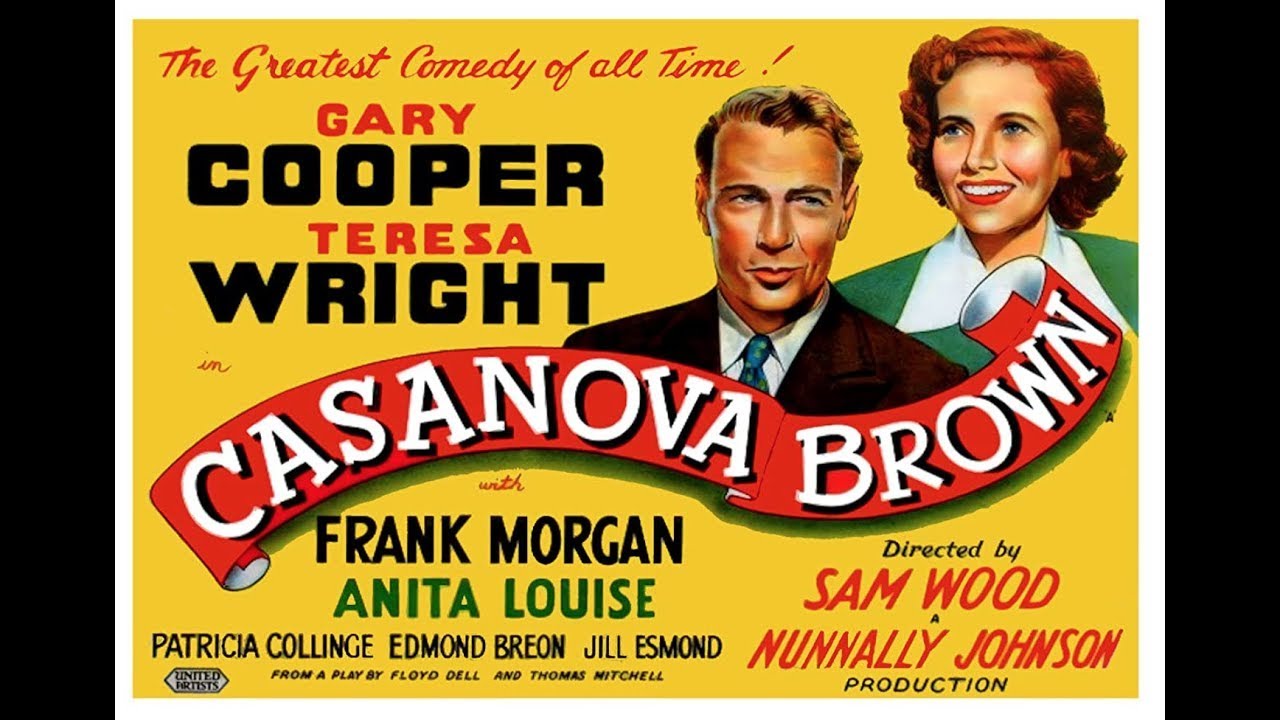
“The Greatest Comedy Of All Time!” ? Maybe if you’ve never seen one.
CASANOVA BROWN is an off-kilter, fitfully amusing 1944 comedy with Gary Cooper, one of his lesser efforts. Sam Wood, who’d just directed the durable star in a huge hit—the Spanish Civil War/Hemingway epic For Whom The Bell Tolls—reunited Cooper with his co-star from The Pride Of The Yankees, another Wood-driven home run. Vetted screenwriter Nunnally Johnson (Jesse James, The Grapes Of Wrath) had medium pedigree material to work with, based on Floyd Dell’s 1927 novel “An Unmarried Father”. The following year Dell and Thomas Mitchell (the character actor) turned that into a play, “Little Accident”, running 303 performances. It was then filmed in 1930 as The Little Accident with Douglas Fairbanks Jr., then again in 1939 as just plain Little Accident, a programmer with Hugh Herbert. Neither flick scored, the first 143rd place, the second not even registering, but Cooper’s popularity served to bring this third go into ’44’s spot #26. First shown to GI’s in liberated areas of France, back home it ended up taking $7,700,000. Cooper’s other project that year, the lavish bio-drama The Story Of Dr. Wassell, fared a few million better at the boxoffice. Critics didn’t care for either, and neither rate much attention from fans of the star. *
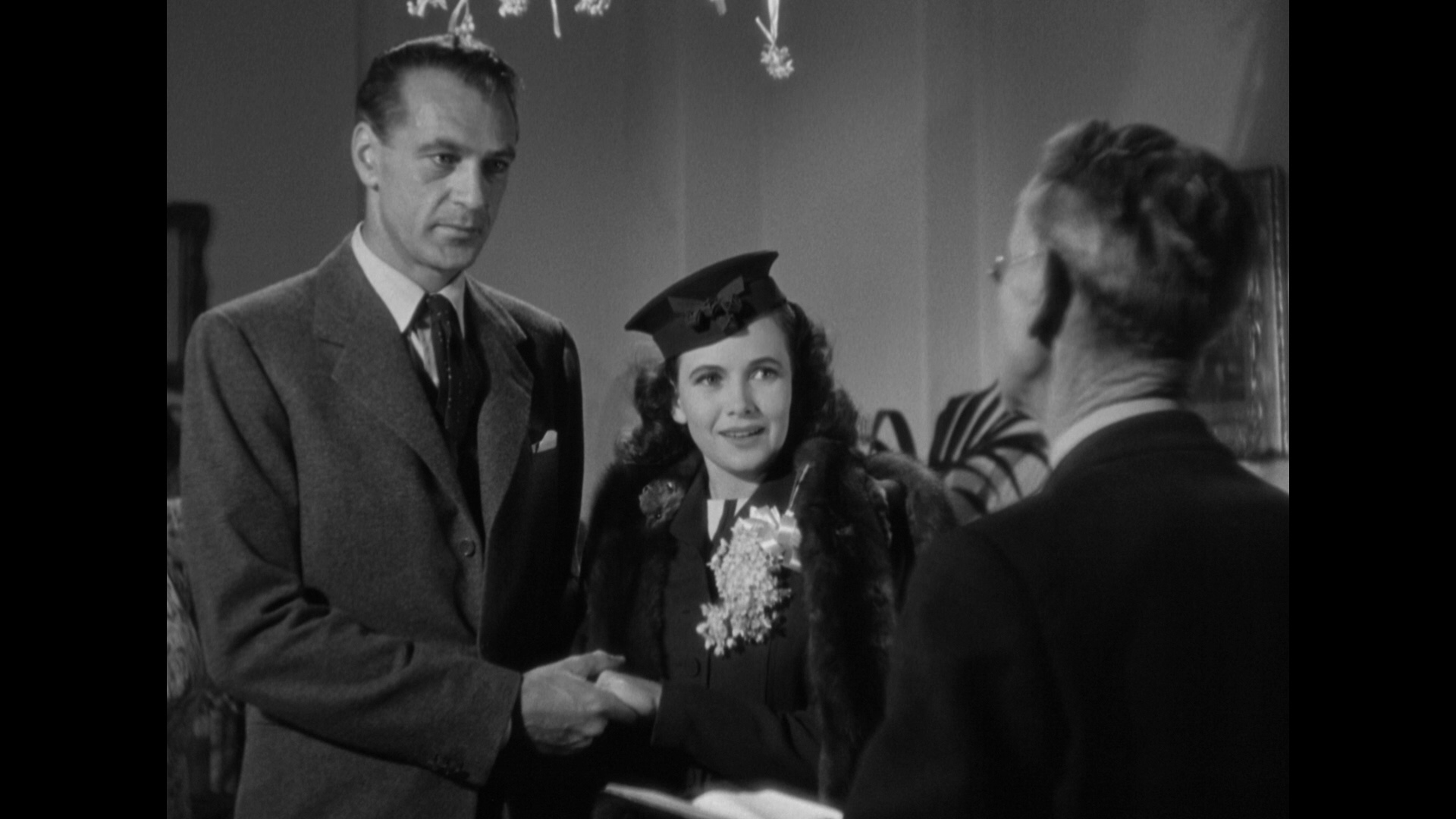
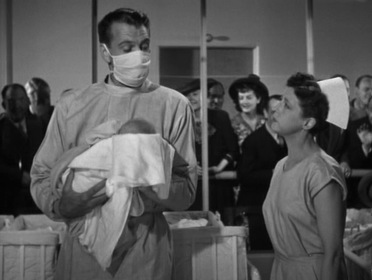
In ‘Rossmore’, Illinois, college professor ‘Casanova Brown’ (Cooper, 41) abruptly leaves socialite fiancee ‘Madge Ferris’ (Anita Louise, 29) at the altar in order to beeline to Chicago where it seems his annulled wife ‘Isabel Drury’ (Wright, 25) has had a child and put the baby up for adoption. Swiping the totling from the hospital, the babe-befuddled yet paternally proud Cas desperately (per the demands of farce) proposes to helpful chambermaid ‘Monica’ (Mary Treen) in order that ‘his’ baby girl won’t be adopted. Isabel, Madge, and others caught in the Casanovial marriage-go-round show up to make it all end peacefully. The GI’s, watching between barrages, finally realize what it was they really landed in Normandy for.
The actors are fine—and include typical polished work from Frank Morgan (Madge’s cynical rich pop) and Patricia Collinge (Isabel’s astrology-captured mama) but while the surprised-dad-with-multiple-mates scenario may have had playgoers convulsing back in the late 20s it seems trite and labored in the middle of the Second World War. Screwball comedies depend in large part on pace and this one tends to lollygag. And since two of the hopeful brides-to-be get casually dumped and spiriting a baby out of a hospital teeters on, well, kidnapping, tone factors in; both script and direction don’t mix pace and tone deftly enough.
A trio of Academy Award nominations came up: Art Direction, Music Score and Sound. 91 minutes, with Jill Esmond, Halliwell Hobbes, Emory Parnell, Isobel Elsom, Irving Bacon, Byron Foulger, Grady Sutton and Billy Chapin.

* Floyd Dell (1887-1969), who wrote the book that became a play and three movies, was an influential ‘man of letters’ in the first third of the 20th Century. Social radical, poet, novelist, magazine and newspaper editor, playwright, literary critic, he created a dozen novels, at least ten non-fiction works, numerous essays, twelve plays and plentiful poetry.
 Movies ala Mark