
PARK ROW, a street in Manhattan’s financial district, was where the city’s newspapers operated during the 19th century and writer-producer-director Samuel Fuller, who’d been a crime reporter fr the ‘New York Evening Graphic’ (1924-32), commemorated the place in his 1952 salute to the vocation of journalism and its crucial role in society. It was his 5th film as a director, coming on the heels of gritty hits The Steel Helmet and Fixed Bayonets! and was his personal favorite among the 24 he’d eventually direct. The impassioned and punchy 83-minute saga kicks off displaying the mastheads (titles) of the 1,772 daily American newspapers that were available in 1952.

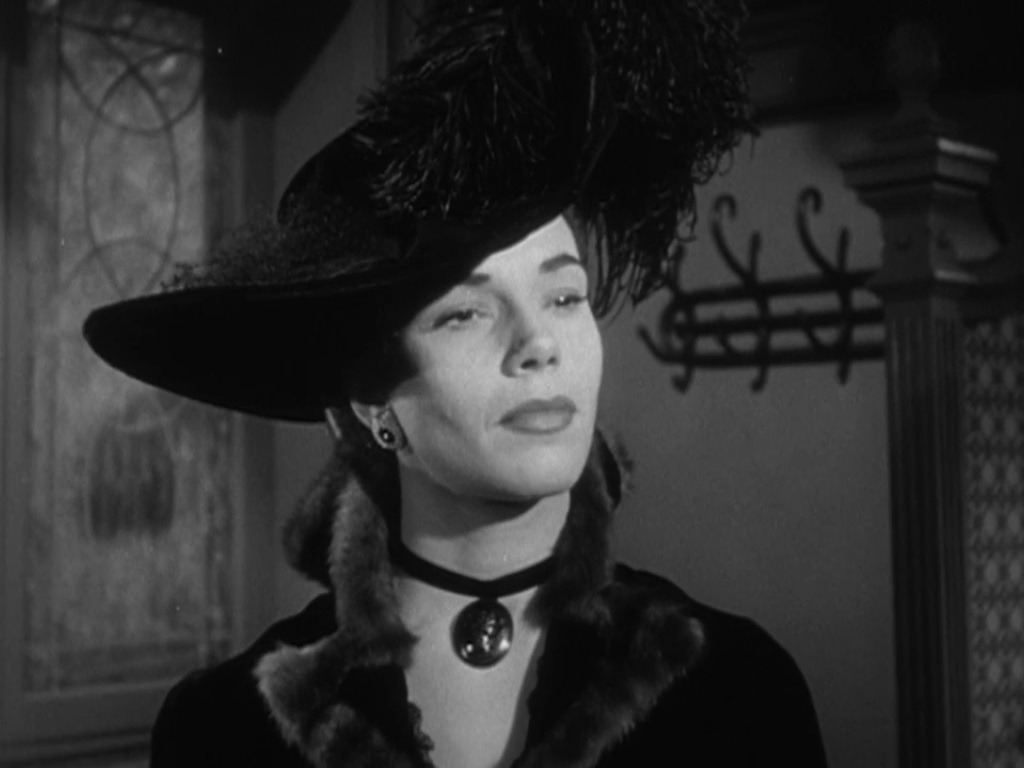
Manhattan, 1886. Fired from the powerful ‘The Star’ for criticizing it, reporter ‘Phineas Mitchell’ (Gene Evans), a tough-minded idealist, is inspired to start his own paper. ‘The Globe’ launches from from next-to-scratch, signing up like-minded hopefuls and using the story of Steve Brodie’s jump from the Brooklyn Bridge as a lead-in. Bright, rich and ruthless, ‘Charity Hackett’ (Mary Welch), owner of The Star, tries every hook & crook method to cripple The Globe, even though she and Mitchell have a grudging admiration for and attraction to, each other. One of the stories The Globe champions is the securing of funding to mount the newly gifted Statue of Liberty.
Fuller believed in his project so much he invested all his savings into producing. He used $200,000, leaving just $1000 left for himself, and had a fairly impressive set constructed to recreate the street as it was in the 1880s. An ad campaign centered around the press drew notice but box office failed to follow. Two other newspaper flicks hit the streets that year: Deadline-U.S.A. made it to 102nd place thanks to star Humphrey Bogart and Scandal Sheet (based Fuller’s novel ‘The Dark Page”) with Broderick Crawford ranked 137th, but the intense and detailed Park Row landed on the back page when it came to ticket sales. Later, when Fuller achieved cult status for his styling and daring, the neat little ode to a Free Press finally got the recognition it deserved.
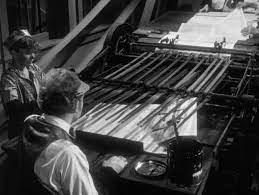
Real people and events (Brodie’s jump, the Statue to & fro, the invention of the Linotype) are mixed in with fictional folk, and the script loads up with name-dropping famous and influential icons of info gathering and dispersal. Details of the old-time printing processes are covered and done in a way that’s involving rather than coming off as dry documenting, and the cast is animated. This was the only film appearance of Mary Welch, 30, who did some stage and TV work before her untimely death in childbirth in 1958. Gene Evans, 30—later familiar to a generation of kids from playing the dad on TVs My Friend Flicka (one season and endless Saturday afternoon repeats) and then a character actor for decades—got one of his few lead roles (Fuller’s The Steel Helmet, the fun monster rampage The Giant Behemoth) and does an excellent job.

Paul Dunlap’s overbearing score gets in the way occasionally and a few of the mini-speeches tap a bit too hard on-the-nose—but that’s Fuller, part of the deal. Otherwise it’s an admirable effort, and all the more telling given how the newspaper business—and news in general—has declined and gone for the quick kill of money from ads and ratings. When people get little information, or are bombarded with bull that’s just plain wrong, too many can fall prey to the story-telling skills of those whose interests don’t align with lofty but vital ideas like truth, fair play, justice, common sense or even basic civility. Where We Are can morph into Who We Are.
With Bela Kovacs, Herbert Hayes, J.M. Kerrigan, Joe O’Hanlon, Forrest Taylor, Dick Elliott, Stuart Randall, Dee Pollock.
 Movies ala Mark