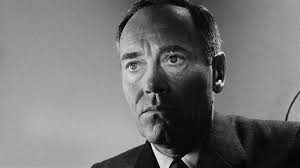
FAIL-SAFE saves its (failed?) warning about annihilation-thru-accident six decades after launching a nail-biting mission of no return into the election autumn of 1964. The payload of dead-ahead dread secured by the powerful acting, Sidney Lumet’s relentlessly tense direction and the impassioned writing may be slightly marred by the ironic mimicking of plot points, technical and wistful. Those forgivable blips register as minor when measured against the triggered jolt and lingering fallout of a 112-minute sneak attack on senses and sensibilities. *
“This isn’t some damn football game! Remember that!”

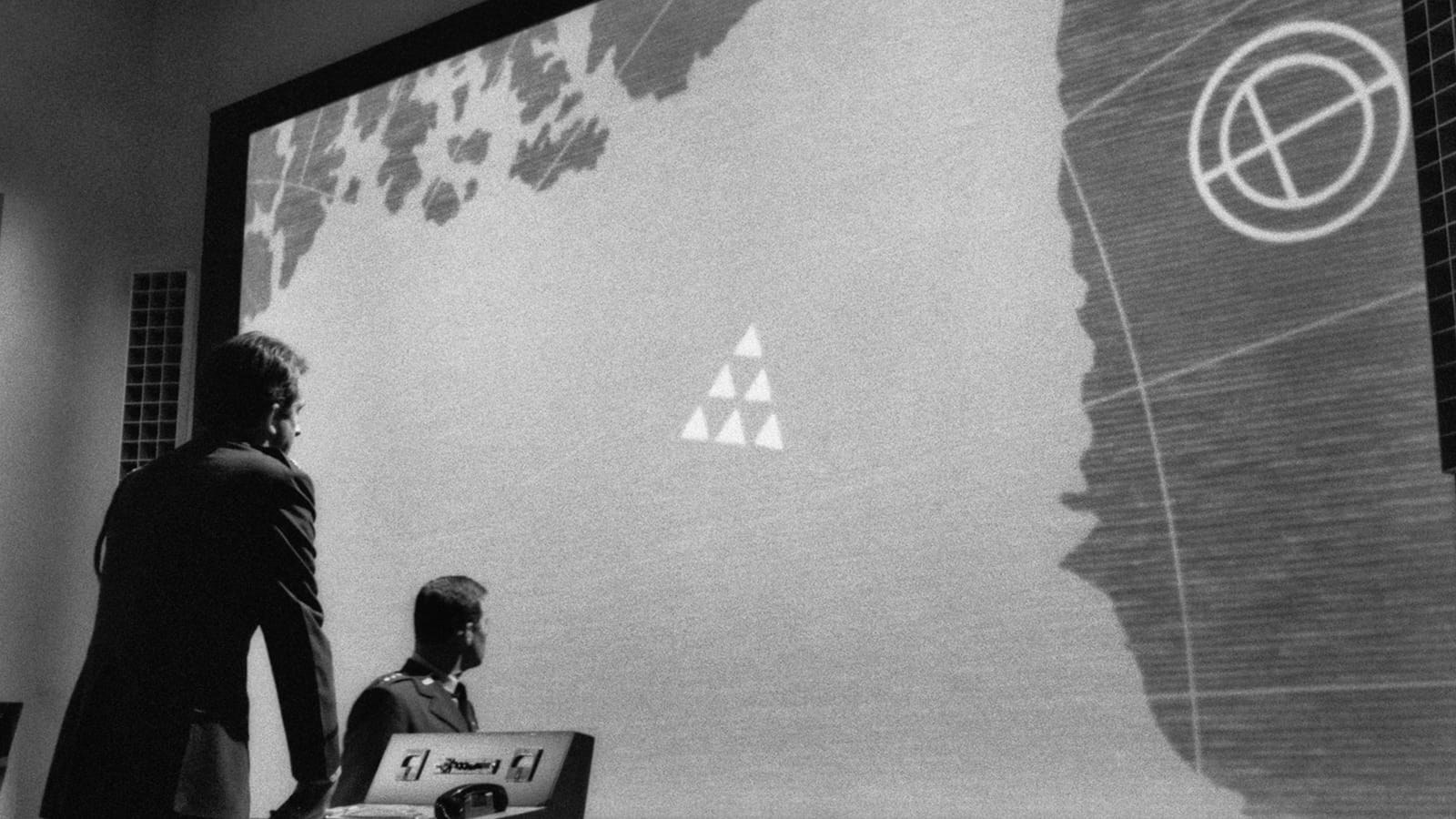
A computer error results in a U.S. Air Force bomber squadron racing over the Arctic to attack the Soviet Union. It’s a mistake, complicated by further communications problems, from the stunned USSR and with the US command team trying desperately to recall the aircraft. The American President (Henry Fonda), aided by interpreter ‘Buck’ (Larry Hagman) gets on the hotline with the Soviet Premiere; ‘General Bogan’ (Frank Overton) tries to manage the situation at headquarters, with differences of opinion and temperament from other officers (Dan O’Herlihy, Fritz Weaver); nuke guru scientist and rabid anti-Commie ‘Dr. Groeteschele’ (Walter Matthau) pushes for a full-scale strike. All the while, resolute ‘Col. Grady’ (Edward Binns) and his squadron press on with their misguided ‘mission’.
The apocalypse specter had risen on big screens before, most memorably in On The Beach, but the Cuban Missile Crisis and JFK’s assassination Def-conned already primed paranoia—1964 launched preemptive strikes on intercontinental madness with Dr. Strangelove (January) and Seven Days In May (February), then just one week before this salvo premiered in September millions saw the infamous ‘Daisy Girl’ commercial LBJ deployed at rival Barry Goldwater. While Lumet & Company’s jacking ripper drew critic’s praise, the others—one scary but hilarious, the other spooky yet hopeful—did likewise, along with reaping awards notice and box-office success (11th & 26th, respectively), leaving the bleak mission-crept of Fail-Safe to tread heavy water (radioactive?) at 57th place and $5,700,000.

“You learned too well, Professor. You learned so well that now there’s no difference between you and what you want to kill.”
This jaded Boomer vividly recall first seeing this as an 11 year-old when it hit TV via the ‘CBS Thursday Night Movie’ on November 3, 1966. Under Lumet’s superb direction (he dealt another diamond in ’64 with The Pawnbroker) this retains most of its power long years later, especially in view of the current ratcheting up of battle stations with the two nations it would be uh, insane to pick a fight with. There’s a mild caveat over technical details (and anyway they’ve been replaced by new ways to screw things up) and that we’d be heaven-sent lucky to have a leader with the decency and brainpower of Fonda’s President (or Fonda as President, he’d be a better choice than the clowns, phonies and bastards we’ve been made to take since Nov.22, 1963). The quid-pro-quo city swap brought up makes for good drama, but real-life likelihood is fanciful. Those quibbles aside, it’s an up-close tension workout for the exemplary cast, all of them in top form, with the taut editing (Ralph Rosenblum) and the sterling b&w cinematography from Gerald Hirschfeld (later to ace Young Frankenstein), hooking attention from the startling opener (O’Herlihy’s revolting dream of a barbaric bullfight) to the “we’re toast” climax.

“Who would survive? That’s an interesting question. I would predict…convicts and file clerks. The worst convicts – those deep down in solitary confinement – and the most ordinary file clerks, probably for large insurance companies, because they would be in fire-proof rooms, protected by tons of the best insulator in the world: paper. And imagine what will happen. The small group of vicious criminals will fight the army of file clerks for the remaining means of life. The convicts will know violence, but the file clerks will know…organization. Who do you think will win? It’s all hypotheses of course, but fun to play around with.”
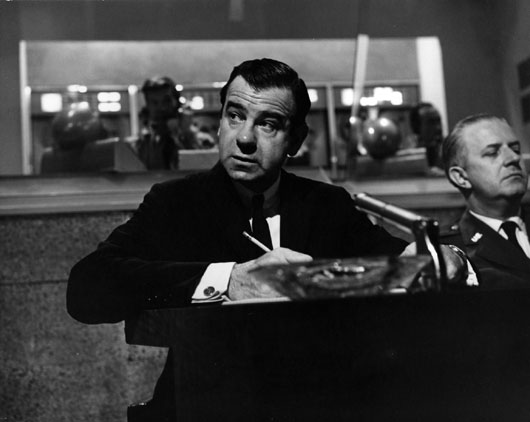
Based on the novel by Eugene Burdick (“The Ugly American”) and Harvey Wheeler, the screenplay was written by Walter Bernstein and the uncredited Peter George (who shared script duty on Dr. Strangelove, based on his novel “Red Alert”). With William Hansen, Russell Collins, Sorrell Brooke, Dana Elcar, Dom DeLuise (30, feature debut), Geri Miller (go-go dancer, Warhol groupie and ‘actress’) and Will Wright.

* “If there are enough shovels…”—we’re goners, prior to ’64—Five, The World The Flesh and The Devil, On The Beach, Panic In Year Zero, Ladybug Ladybug. While the PentagramPentagon & Pals refused cooperation for this (and mocker Strangelove), essentially scoffing that They Would Never Screw Up, Fail-Safe (novel & film) goofs-by-assumption on some technical aspects in making its greater point about the built-in risk of awesome weapons in the hands of fallible mortals. The wishful thinking element lies in the then still-hopeful mindset of 50s-60s lib-think as translated to (usually excellent) ‘message movies’: it was possible back then to hope, even believe, that we might produce a leader with the gravitas of Fonda’s fella or Fredric March’s ‘President Lyman’ in Seven Days In May. What do you think our chances are now? Uh huh. What does seem certain is that the type of pathological policy creeps played to perfection here by Matthau are alive and unwell.
“I’ve been making a few rough calculations based on the effect of two 20-megaton bombs dropped on New York City in the middle of a normal workday. I estimate the immediate dead at about three million. I include in that figure those buried beneath the collapsed buildings. It would make no difference, Admiral Wilcox, whether they reached a shelter or not. They would die just the same. Add another million or two who will die within about five weeks. Now our immediate problem will be the joint one of fire control and excavation. Excavation not of the dead, the effort would be wasted there. But even though there are no irreplaceable government documents in the city, many of our largest corporations keep their records there. It will be necessary to… rescue as many of those records as we can. Our economy depends on this.” Yep, no matter how many of us fry to a crisp, let’s make sure the precious money survives. And a Bible, of course. For comfort.
 Movies ala Mark