
CHRISTOPHER COLUMBUS, a British-made production from 1949, is one of just a handful of films made about the famed/defamed explorer, oddly ignored by moviemakers despite his prominent place in history and exploration. Preceded by an obscure French-Spanish silent from 1916, this one, starring Fredric March, had much the same critical and box office fate as the big-budget duo that foundered in 1992, released to coincide with the quincentenary of his voyage to The New World, the epochal expedition that provided glory to Spain and Genoa, an extra holiday for the United States and a centuries-long nightmare for the indigenous peoples of the Americas.
The screenplay by Muriel & Sydney Box and Cyril Roberts retooled Rafael Sabatini’s 1941 novel from a swashbuckler (like the author’s “Captain Blood” and “The Sea Hawk”, which made rousing movies) to a ponderous and talky plodder. The basic plot points shared by the other Columbus pictures are here: pleading his case to get backing from royalty for a trip that promised either riches or ruin; the journey itself, dealing with a rebellious crew; success begetting failure, with legend waiting for posterity. *

Two replica ships—Santa Maria and Nina—-were built (Pinta left to a model) and considerable pains were taken with art direction, costuming and color camerawork. Mimicking history, the shoot was plagued by mishaps. March fell ill, twice, and in the Caribbean (location work in Barbados and Dominica) a squall blew in: the Santa Maria broke loose from its moorings, drifting (with people on board) for two nights before it was rescued. Saved, only to have a fire burn it down. Rebuilding added a 20% chunk to the already swollen cost, which ballooned to some £500,000/$1,845,000, at the time a huge amount for a British film.

But the real problem was uninteresting dialogue in the stately but stiff tableaux scenes at the Spanish court, a dull pace, lackluster direction from David MacDonald and a dogged but dour hero who comes off as a blustery grump. March, initially enthusiastic, wasn’t a happy sailor camper with the results. The rushed scenes of the landfall lack any excitement, and the finale trails off into a “well, that’s over” sigh. The critic for unfailingly acerbic The New Yorker raked claws with “it takes so long to get…under way that by the time they put to sea one half expects him to meet Lindbergh coming in the other direction.”
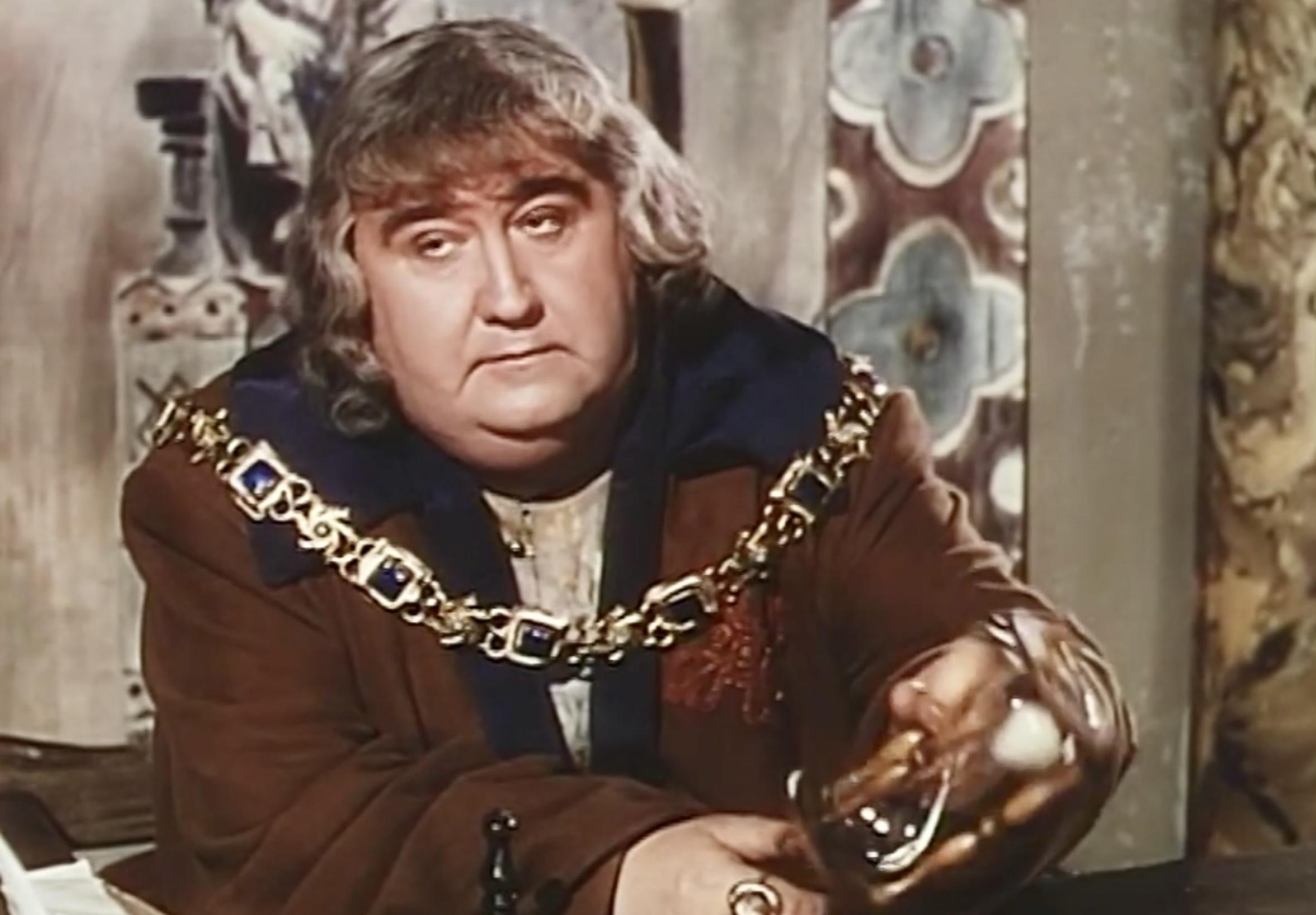
Francis L. Sullivan as swinish Bobadilla
In the States, receipts of $3,500,000 placed a wan 106th, ironically presaging the future pair that ran aground in ’92 at 104th and 108th.
Reciting ‘it’s folly, I say’ babble are Florence Eldridge (March’s wife, as Queen Isabella), Francis L. Sullivan (in devious mode), Derek Bond, Linden Travers ( a bit of spice as a 15th century version of a ‘cougar’), Nora Swinburne, Kathleen Ryan, Abraham Sofaer, Felix Aylmer, Edward Rigby, James Robertson Justice, Niall MacGinnis. 104 minutes.

* For whatever reasons, movies about keynote American exploration sagas usually end up almost as dull as high school history books (back when it was actually taught). The Columbus flicks mostly flicker, Plymouth Adventure has a great storm and not much else and The Far Horizons revealed that Lewis & Clark’s peaceful passage needed fictitious Indian attacks to wake up the kids (though at least Charlton Heston shot my late brother-in-law out of a tree). Though many consider it a slog, we’re among those impressed by Terrence Malick’s atmospheric, meditative beauty The New World. It also languished at the box office.
 Movies ala Mark