
THE READER—“Societies think they operate by something called morality, but they don’t. They operate by something called law. 8,000 people worked at Auschwitz. Precisely nineteen have been convicted, and only six of murder.”
German lawyer, judge and professor Bernhard Schlink’s 1995 bestseller “Der Vorleser”, adapted into a screenplay by David Hare (Damage, The Hours), directed by Stephen Daldry, became a successful (and controversial) 2008 drama that earned Kate Winslet an Oscar for Best Actress, as well as being nominated for Best Picture, Director, Screenplay and Cinematography (Roger Deakins). In the States it placed 82nd at the box office with $34,194,000, but international earnings were more than twice that, $74,708,000, the total enough to cover the $32,000,000 cost. It was produced by Sydney Pollack and Anthony Minghella, both of whom passed away before it was released. *

“You don’t have the power to upset me. You don’t matter enough to upset me.”
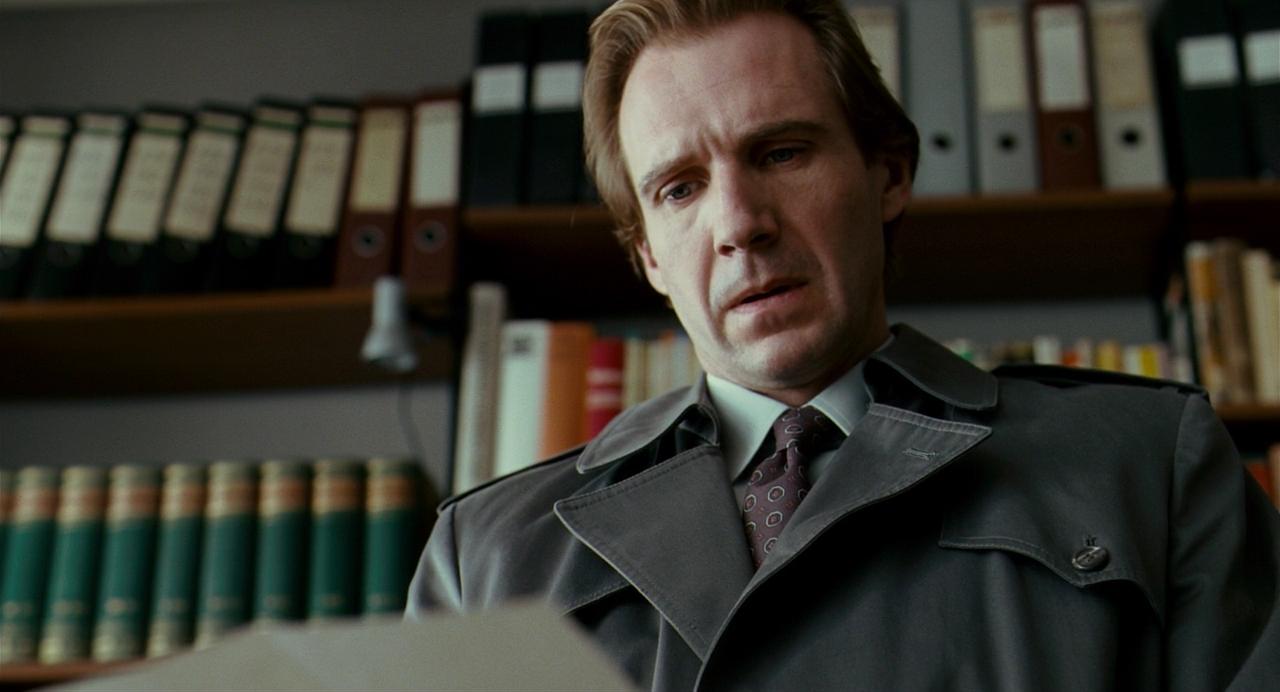
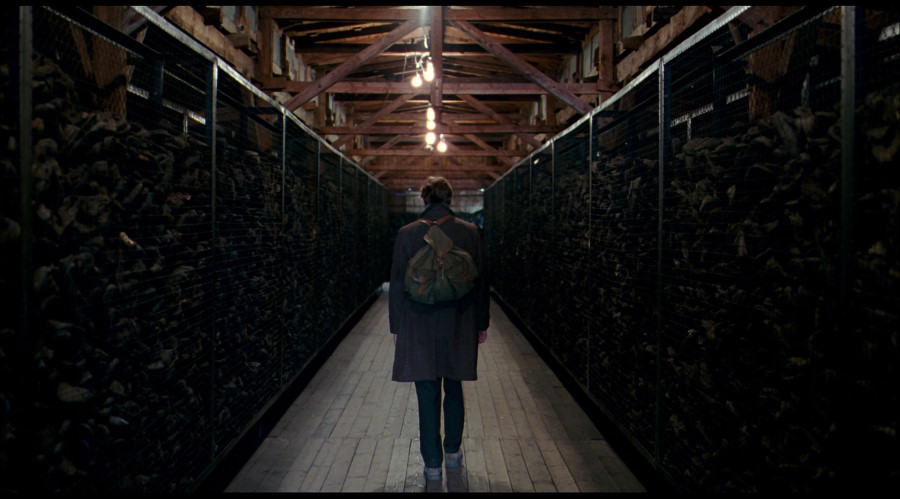
The storyline takes place in four post-WW2 decades in the lives of its characters and Germany (West and then reunited)—1958, 1966, 1988, 1995—a study of societal guilt in microcosm, focusing on two people, one who played a clockwork part in Hitlerian Germany’s foulest manifestation, another, an innocent who unavoidably inherited a private piece of the aftermath. In 1958, teenage Berliner schoolboy ‘Michael Berg’ (David Kross, 17) becomes involved with ‘Hanna Schmitz’ (Winslet, 32), a 36-year-old tram conductor. For him their sexual liaisons turn into love, for her it appears to be a way to pass the time, and she dotes on having him read to her. A decade on, law student Michael discovers that Hanna’s “part” in the war was serving as a concentration camp guard, sharing responsibility for hundreds of murders. Later the adult Michael (Ralph Fiennes) struggles with his memories of and attachment to the (literally hard to read) long-imprisoned Hanna.

Initial critical approval (and subsequent awards placement) over its exceedingly polished production design and beautifully calibrated performances was sidelined by levels of backlash, part snide, part scornful. While not set during the war, wags—weary of ceaseless film industry reminders—tagged it as “this year’s Holocaust movie”, but more pointed and embittered flak came from a number of Holocaust scholars, including those from the Simon Wiesenthal Center, blasting the film (as they had the book before it) as revisionist, shallow masquerading as sensitive, softening the horrors of genocide by making Hanna’s character sympathetic. We’ll pass stepping on a live wire (how damn many are there at present?) about intent, and stick to offering that the various period recreations are exemplary and so is the acting. You do have to accept a good degree of implausibility built into the Hanna character. We’d argue that Winslet, good as she (always) is, better deserved an award for her other superb turn that year, in a different, arguably as compelling, certainly safer look at fractured relationships, Revolutionary Road. Young Kross, who had previously appeared in a handful of German films, is remarkably fine. **

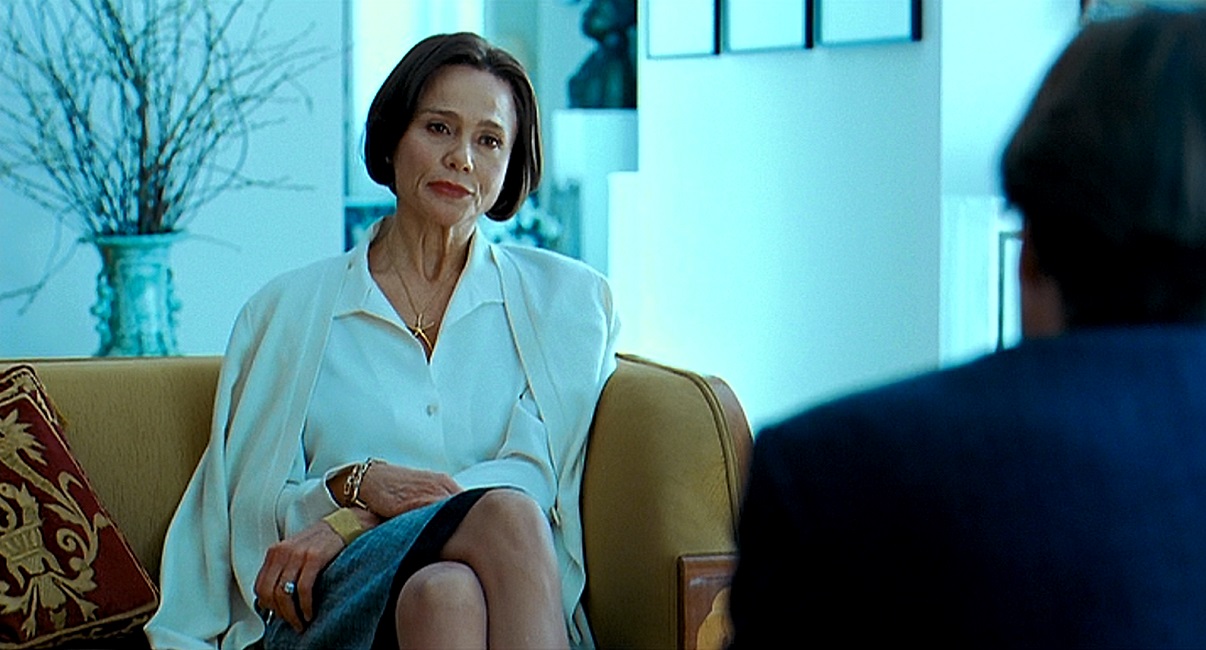
In dual roles, Lena Olin has two brief, telling scenes. The huge cast of first-rate German actors include Bruno Ganz (thoughtful professor), Karoline Herfurth (sly ‘Martha’), Burghart Klaußner (the judge), Vijessna Ferkic (sweet ‘Sophie’), Susanne Lothar, Alexandra Maria Lara, Matthias Habich (Michael’s haunted father), Volker Bruch (later to score in the stellar Babylon Berlin) and Margarita Broich (silent yet icily vicious as one of Hanna’s fellow guards). 124 minutes.
* WW2 in 2008, ceaselessly echoing 58 years after the fact—Valkyrie, Defiance, Miracle At St. Anna, Flame & Citron, The Boy In The Striped Pajamas.
** As for stepping on live wires, there are an ever-increasing number that you don’t even have to trod on: merely maybe begin to suggest that possibly there might be some alternate way of considering a subject or even part of one (pick your own: be honest) and— sure as race/ religion/men/women/height/weight/zoo animals made a guilt factor—you’ll piss somebody off. All while the very planet burns right in front of our pathetic disbelieving eyes. Maybe ‘Will Munny’ had it right: “We all have it coming, kid.”

 Movies ala Mark