
MILLER’S CROSSING, the third time at bat for The Coen Brothers (following Blood Simple and Raising Arizona) saw the New Kids on the Lot once more up to their sassy tricks in crime territory, this time harkening back to the golden days of gangsterdom, the halcyon nights of speakeasies, easy speakin’ and chatter from Tommy guns. Critic swells were impressed by their moxie, but the Joe Blows didn’t bite: it flamed out with a $5,100,000 rake on a production ransom of $14,000,000. Some attributed the dive to release-bracketing between the dueling capo-de-tuti-capis of The Godfather: Part III and Goodfellas. Maybe. While admiring much of the brothers homage/sendup, we think it misfired a cylinder or three, enough to keep it out of ‘great’, but hitting sufficiently to register as ‘very good’. Some of the see-no-failure Coen devotees (at least as fierce as the Tarantino/Malick/enter-current-idol-here cultists) consider Miller’s Crossing a masterpiece. One thing’s for sure: not until a dude named Quentin burst from his video sac and start typing like a nerd possessed did hoodlums blab so much.
“Nobody knows anybody. Not that well.”
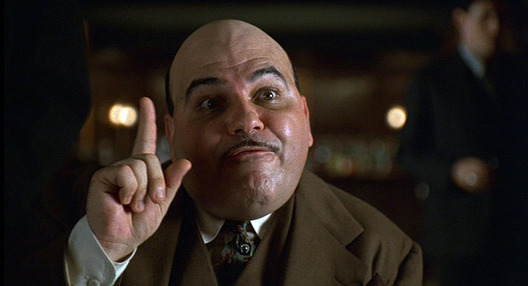
Prohibition Era. Big city crime czar ‘Leo O’Bannon’ (Albert Finney) ignores counsel of his trusted advisor, steely ‘Tom Reagan’ (Gabriel Byrne) and, blinded by infatuation with a moll (named ‘Verna’, because dames with names that begin with ‘V’ are trouble from the ‘v’ on) sets off a gang war. Despite his fealty to Leo, Tom’s two-timing with Verna. Rivalries of all sorts mingle with debts, financial and personal. Even hoods have ethics (at least in the movies). Since it’s a major American burg, the cops and politicians are in for a cut. The duds are spiffy, the autos vintage, everyone cracks wise and the ‘choppers’ never run out of ammo. We wouldn’t have it any other way.
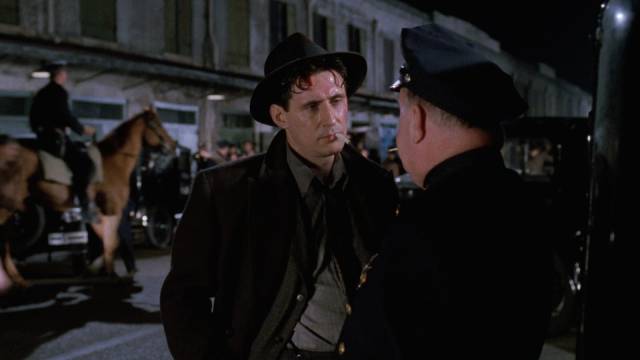
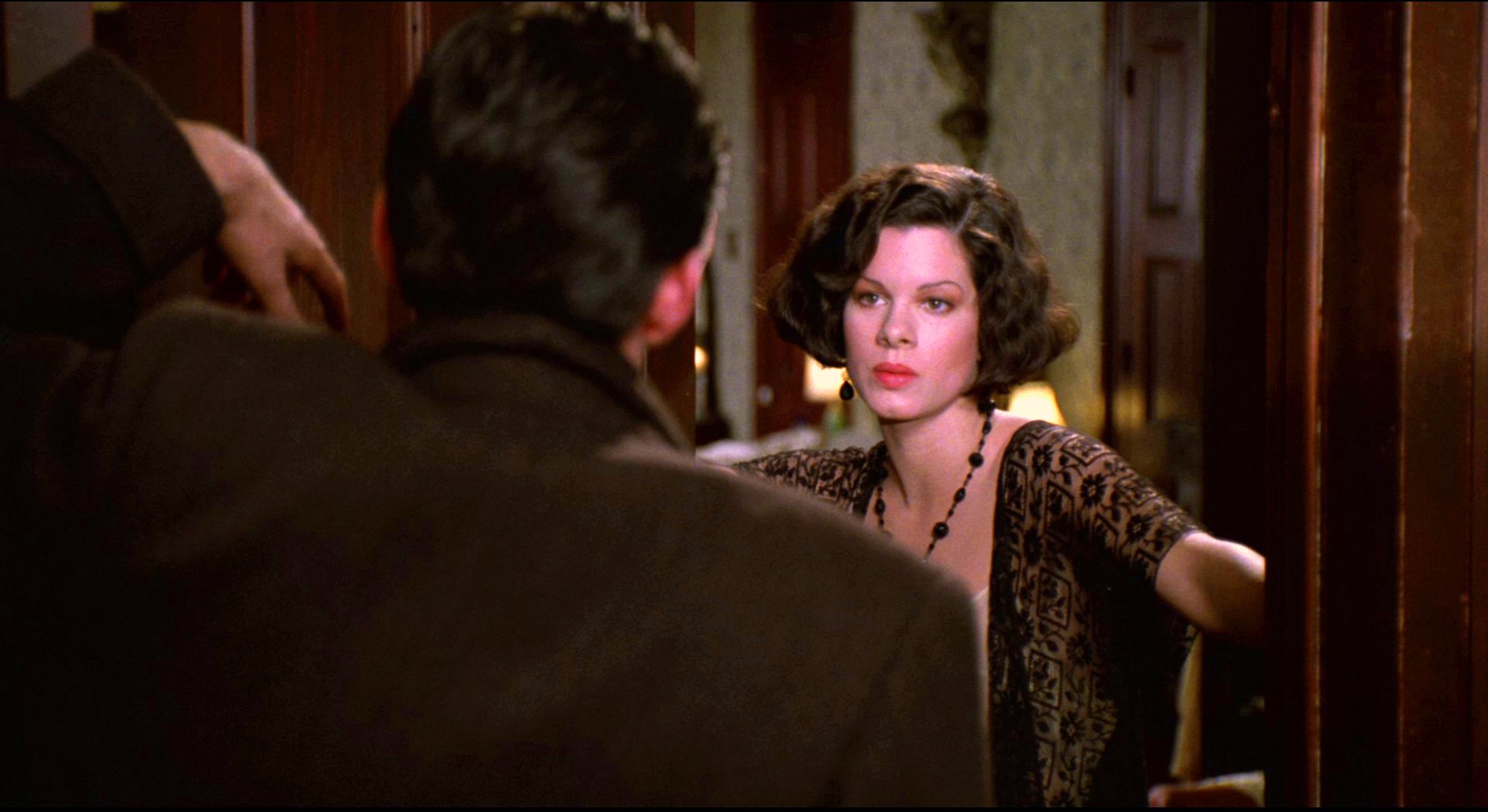
TOM: “Rug Daniels is dead.” VERNA: “Gee, that’s tough.” TOM: “Don’t get hysterical.”
The labyrinthine plot includes copious borrowings from earlier genre books and films and doesn’t have much hold in and of itself other than as a framework for the Coen’s to stage flashy set pieces and ladle on cagey dialogue, and each of those facets, as in nearly all Coen puzzles, are duly impressive and amusing. The chilly and remote character of Tom Reagan lacks sufficient identification to be compelling, and Byrne doesn’t provide enough charisma. Everyone else does, though, and it’s a field day for flinty Harden (making a major impression with this role), rambunctiously effusive Jon Polito (‘Johnny Caspar’), and especially John Turturro, brilliantly pulling out all stops with scuzzball ‘Bernie Bernbaum’, highlighted by one of the best ‘pleading scenes’ in movie history, and guaranteeing future placement in Coen classics.
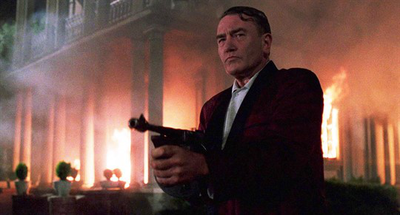
Dennis Gassner’s production design is sumptuous, Barry Sonnenfeld aced cinematography, Carter Burwell the grandly plaintive score, quietly epic. Joel Coen directed, co-writing the script with brother Ethan, who took producer credit.
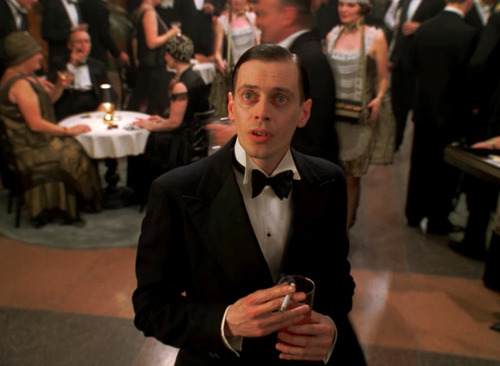
In fedoras and/or packing heat: J.E. Freeman, Steve Buscemi (talking faster than a hummingbird flaps), Michael Jeter, Mike Starr (“Jesus, Tom!”), Olek Krupa and Al Mancini (one of The Dirty Dozen). Popping in briefly are Frances McDormand and Sam Raimi. Running time: 115 minutes.
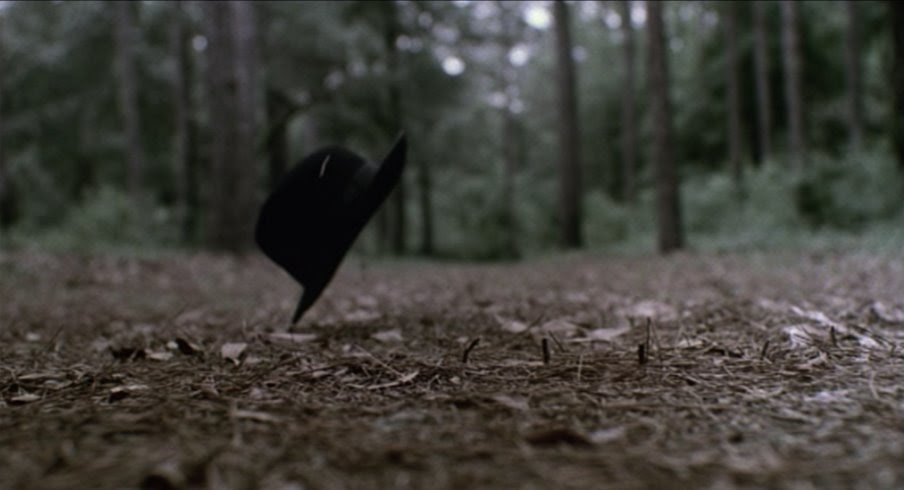
* While not in the league of Coppola’s familia or Marty’s made guys, the Coen mob fared better than the year’s other thuggees: King Of New York, The Krays and State Of Grace. The brothers next roust, the wacky, genre-hopping Barton Fink, suffered the same fate: critical approval, public apathy. Then after surviving the plotz of The Hudsucker Proxy, the dynamic duo bounced back big with Fargo.


 Movies ala Mark