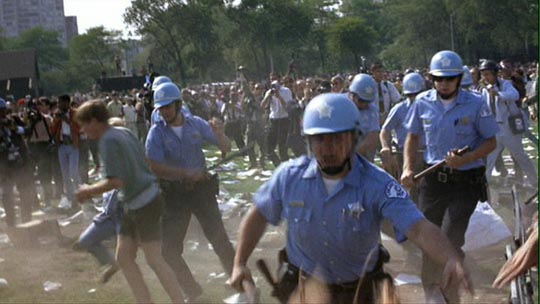
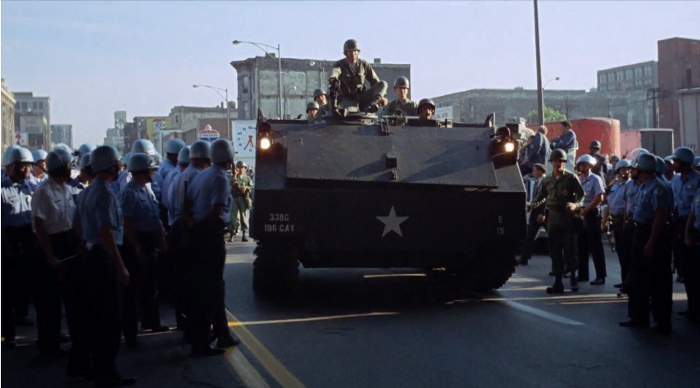
MEDIUM COOL went boiling hot in 1969, taking America’s racing pulse with a bold look at symptoms of the country’s nervous breakdown through the unblinking lens of one of the previous year’s many catastrophes. For his first feature film as a director, Haskell Wexler, lauded cinematographer (America America, Who’s Afraid Of Virginia Woolf, In The Heat Of The Night) and vetted activist documentarian, merged fictional characters and cross-weaved storylines into you’re-there-with-’em documenting of actual places, conditions and events festering in the unraveling ‘Great Society’. The discourse, dismay and awareness culminates in the infamous ‘police riot’ during the Democratic National Convention. As well as directing, Wexler co-produced, wrote the free-flowing script (allowing for extensive improvisation) and manned his camera’s cinéma vérité front row eye-view. *
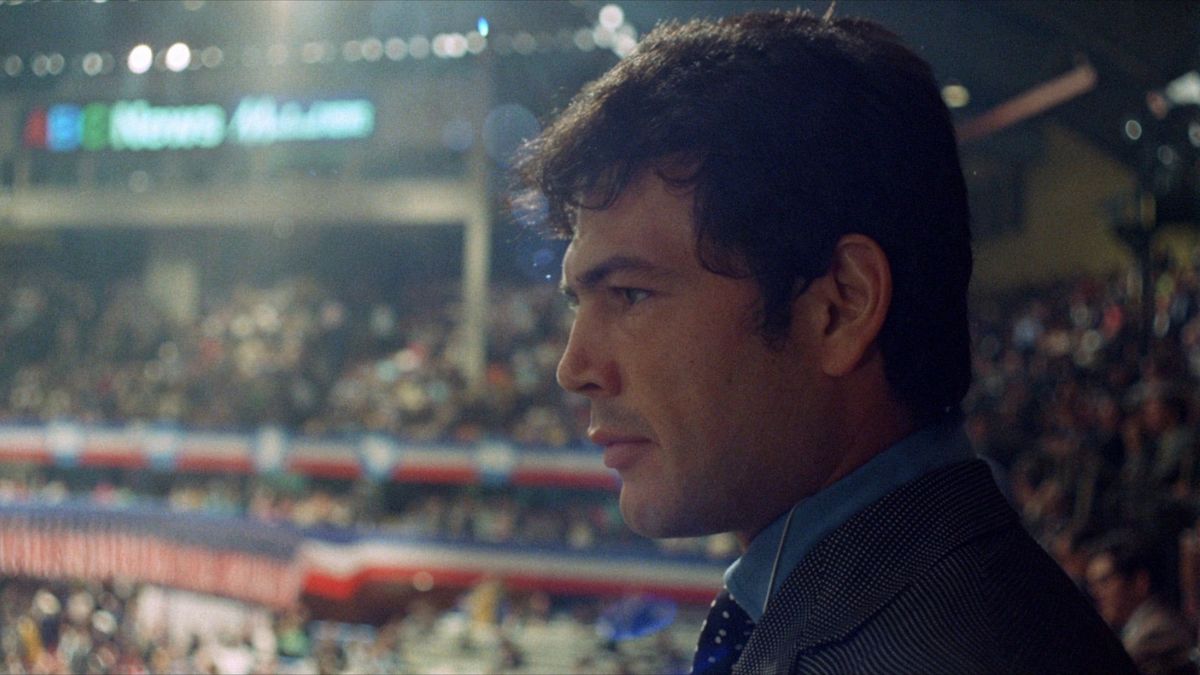
The fictional element has an emotions-distancing, self & ‘shot’ focused TV news cameraman (Robert Forster) caught in an ethical quandary professionally (his footage is being passed on to the FBI) and personally (becoming involved with one of his ‘human interest subjects’), each dilemma reaching a fateful flash point during a violent demonstration-reaction melee. The authenticity approach puts the actors in real-time-and-place situations: the ‘Resurrection City’ camp in D.C., a National Guard crowd-control exercise, Chicago slums (increasingly militant African-American sections & the unacknowledged ‘Appalachian Ghetto’ of rural refugee poor whites) and finally the raucous convention and corresponding battle in the streets with “the whole world watching!”
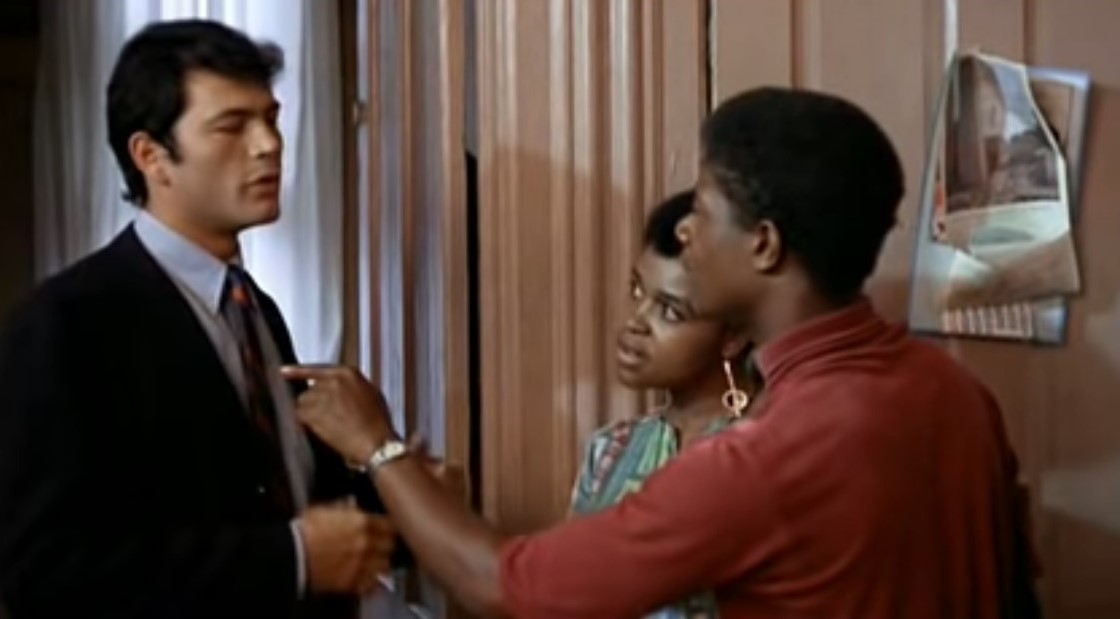
The fictional end of it is less compelling than the real world milieu around the characters, played by fresh new actors and some non-professionals. Other than one remarkable young boy, the performance awkwardness seems more like it’s coming from the actors rather than their thinly-written characters. Forster, 27, was one a raft of young guys suggestive of the Brando-Dean mode who made the scene at the time (Christopher Jones, Michael Sarrazin, Alex Cord, Michael Parks) and didn’t click as a star. Like Parks, later in life he delivered top notch character work but he’s on the raw side here. Making her debut, Verna Bloom has an interesting, offbeat look, but her delivery is hesitant. The knife twist finale seems overly harsh.
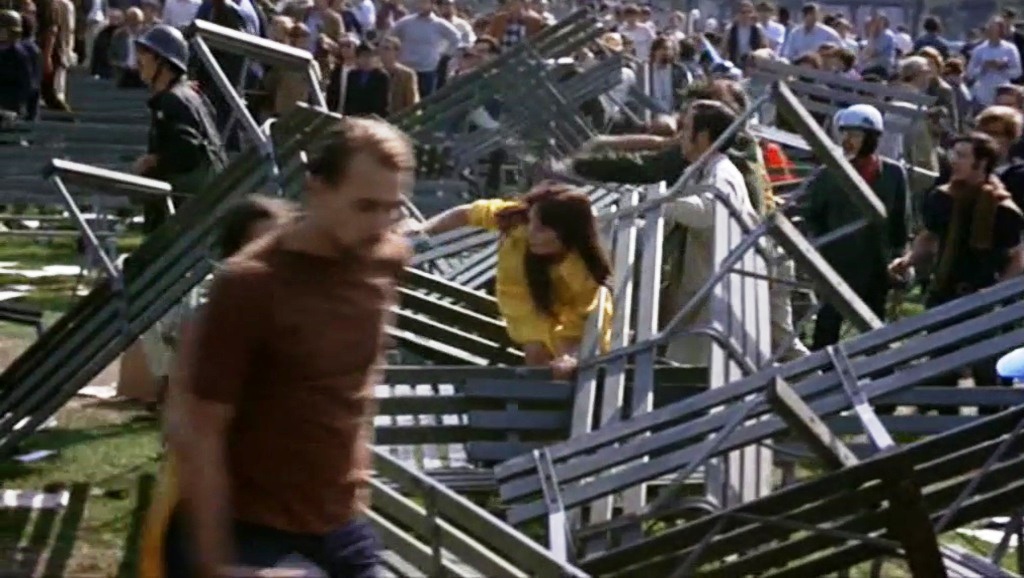
Those minor debits are subsumed by the propulsive narrative sweep, the camera work and editing, the jagged immediacy of the settings and ultimately the unnerving dislocation of the riot; watching Bloom try to escape the crush is riveting. The most telling ‘acting’ comes from non-actor Harold Blankenship, a bright, unschooled 13-year-old from Welch, West Virginia, basically ‘playing’ himself, one of the nation’s countless country castaways. In terms of a social document, snapshot of a time and revealing critique of “the Establishment” and a nation’s torn fabric, Medium Cool runs the stoned smugness of Easy Rider into a ditch. Wake up and smell the tear gas.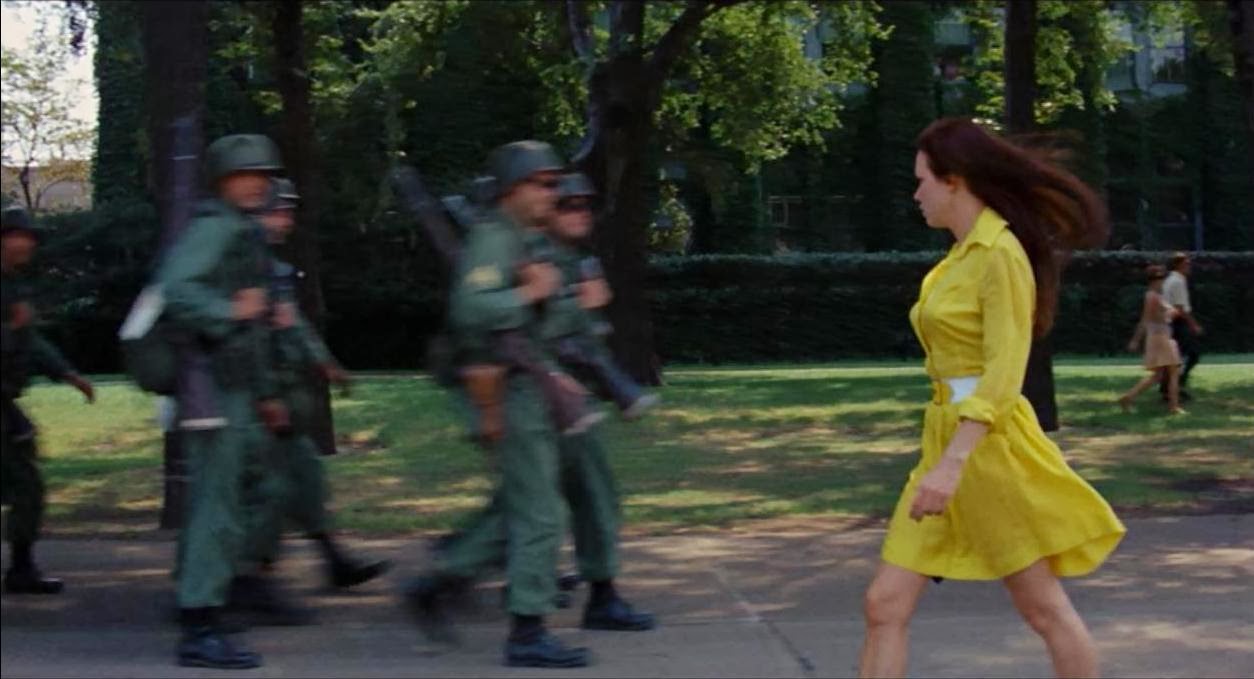
Edited by Verna Fields (American Graffiti, Jaws). With Peter Bonerz, fearless fox Marianna Hill (breaking the flesh ban treaty with a full-on nude scene), Charles Geary, Sid McCoy (good as a case of decency rewarded by disbelief), Peter Boyle (weird-dorky in one of his first parts), Felton Perry (‘angry black power activist’; a few years later he’s cop backing ‘Harry Callahan’ in Magnum Force), China Lee (former Playboy Playmate married to the immortal Mort Sahl). 110 piercing minutes.
* Done on a low budget ($800,000); figures about the response vary. Cogerson gives domestic gross as $2,900,000 (71st for the year), which dovetails with the oft-mentioned meme that it failed to click with audiences. Yet another source has the showbiz bible “Variety” listing rentals (vs. gross) of $5.5mil which would indicate a gross north of $12,000,000. Just like ‘The Man’, eternally bumming our scene…
1969—the center does not hold; societal anomie, homegrown and worldwide, was reflected in scads of releases, dramas and satires ranging from Easy Rider, Z, and Burn! to Alice’s Restaurant and The Magic Christian. Non-political shakes of the status quo included Midnight Cowboy, The Wild Bunch, Bob & Carol & Ted & Alice and Last Summer.
 Movies ala Mark