
MAD MAX: FURY ROAD —wow, action spectacles don’t get much more dazzling than this 2015 epic, an instant from director George Miller, the ingenious fiend behind the first three Max-outs. Finally unleashed after years of ‘development hell’, the wait paid off; if anything Miller at 70 had more and higher octane in his tank than when he first started Max on his road to glory back in 1979.
One element puts Miller’s sci-fi death races miles ahead in the pack. It’s not merely the obvious marvel of crazed stunts, blizzard editing and audacious design. It’s passion, for his story and characters, however twisted many of them are. Crucial in make-believe as it real life, passion allows us to suspend everyday logic and be swept along into visions of the wildest imaginings, letting them make sense within the banzai story we’re accepting .*
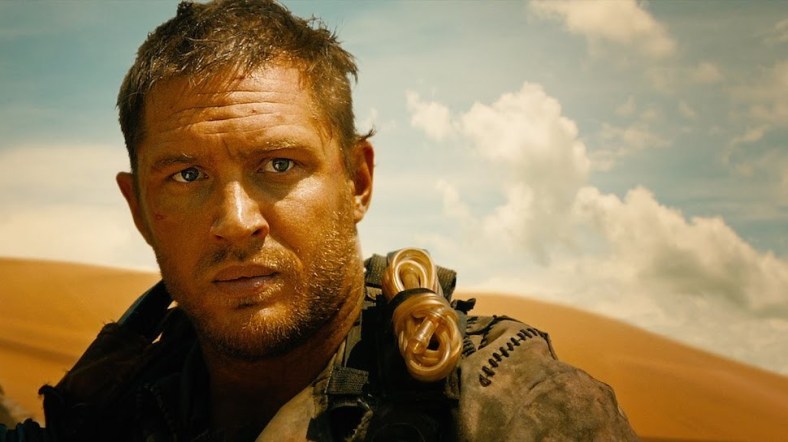
Miller’s Max Movies move, as in moving pictures, seizing upon the primal charge we get from running to or away from something. That links back to super-great-grandpa trying to get away from saber-toothed tigers on the plains of Gondwanaland. The horses in westerns (a seminal freedom-of-movement part of that genre’s attraction) are here replaced with the horsepower of a power-junkied modern age. Yeah, that.
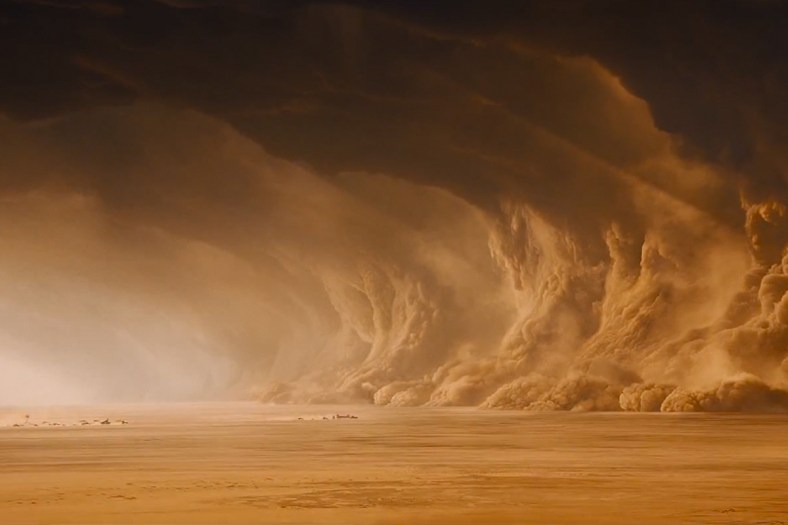
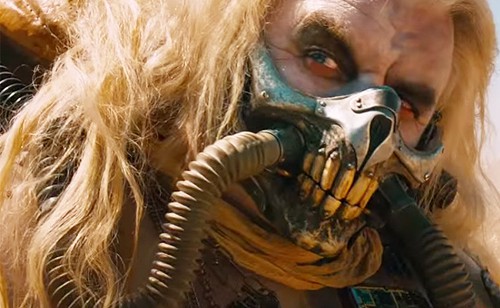
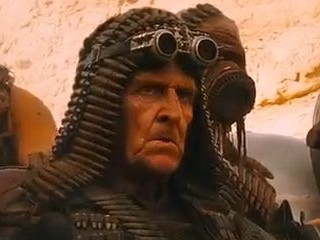
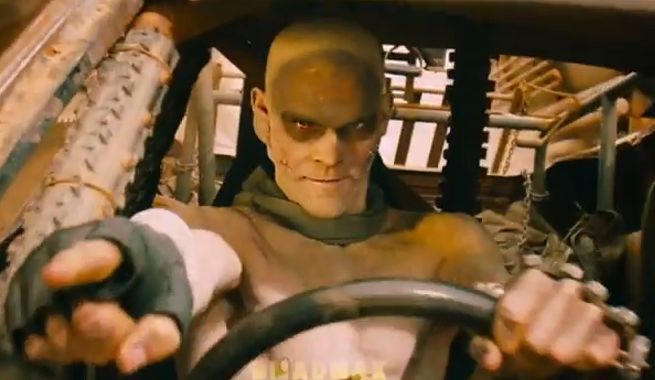
Throw in the fear-rush of adrenaline, and our collective dread of what a looming dystopia holds: count the hopeful futuristic films, and don’t say Star Wars: consider the title for a second. Add anxiety over the barbarous who walk among us. Miller’s design & makeup crew go full-maniac with the villains horrid appearances and worse behaviors.
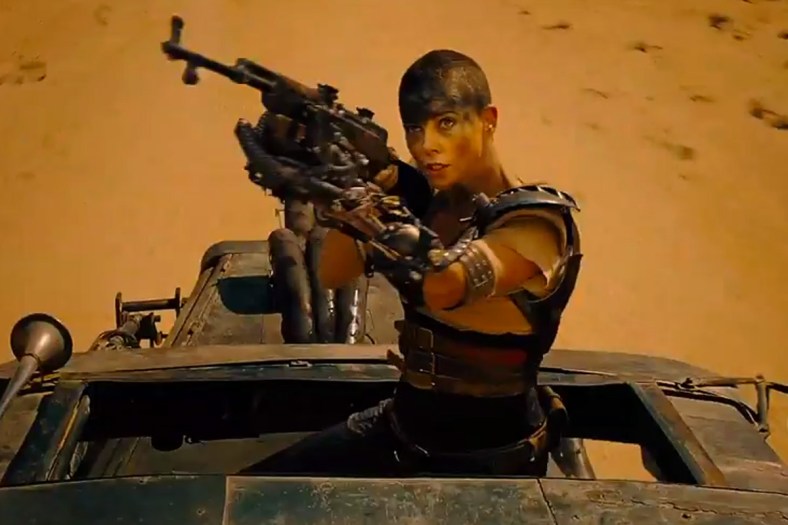
Running two hours (subtract seven minutes for the obligatory credit crawl), this meteor doesn’t pause for a breath in the first half-hour, and every frame of is packed with bravura technical excellence: the cinematography (John Seale shot on stunning locations in Namibia), art direction, costumes, props, invented slang, invented everything. Another facet that works to splendid advantage: even with the violence and desperation of the post-apocalyptic setting, the bright color palette engages, a welcome break from the done-to-death dull-dirty brown visual motifs that make so many futuristic sagas hard to even look at.

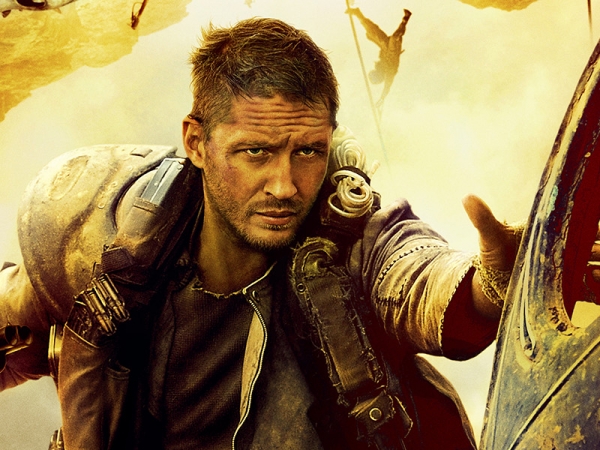
The stunt work is, in a word, insane. Cast is select, with Tom Hardy a sturdy replacement for Mel Gibson, and the always-intriguing Charlize Theron as ‘Imperator Furiosa’ giving killer competition to rival Amazonian action queens Sigourney Weaver and Jennifer Lawrence. Ace support from Nicholas Hoult and a bevy of suitably attired (as in, ‘with little’) stunners Zoe Kravitz, Riley Keough and Abbey Lee. The bad guy lineup makes the motley wretches from the earlier adventures look like Girl Scouts. Pounding music score from Tom Holkenborg; love those kettle drummers and that lunatic on the guitar!

Costing an astronomical $200,000,000, it brought in $378,000,000 and whip-lashed genre snobs by earning universal critical raves and ten richly deserved Oscar nominations. Though losing Best Picture, Director, Cinematography and Visual Effects, it thundered away with wins for Film Editing, Costume Design, Makeup, Sound Editing, Sound Mixing and Production Design.
With Hugh Keays-Byrne, Josh Heiman, Nathan Jones, Rosie Huntington-Whiteley, Courtney Eaton, John Howard, Richard Carter and Megan Gale. A triumph, but not for the faint of heart or the tiresome unmoved sourpuss. “Schlanger!”
* Passion. It can flare for a moment or burn for a lifetime. The genetic base for all drama, and Drama’s uncle, Comedy. You’re asked to step out of your known, fixed world (happy or sad) and into an alternate one (uplifting or unsettling, perilous or hilarious) and accept it as real, possible—for the thirty seconds it takes to hear a joke or the three weeks required to read Shogun. Along with what we hope is passion from the storyteller, it helps for the audience to muster up a little. You have to be willing to forget about the phone bill and the neighbor’s yapping dachshund and pretend those pyramid-sized skyscrapers in Blade Runner could be constructed, that you could take a Journey To The Center Of The Earth, that super-villains would not stick around to make sure Bond was in fact dead, or that John Wayne was ducking real bullets. If you can’t accept a knock-knock premise in the first place—an Eskimo talking to a chicken about chili—then “who’s there?” becomes irrelevant.
 Movies ala Mark