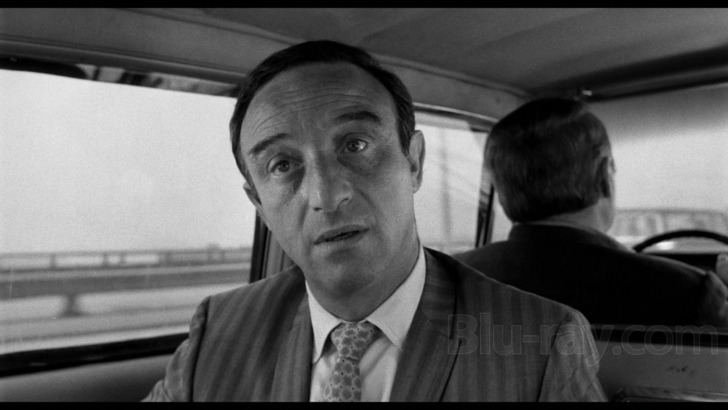
THE PLOT AGAINST HARRY premiered in January of 1971 at a single theater in Seattle. Premiered, ignored, then unceremoniously yanked out of circulation. Considered lost, it made a Hail Mary reappearance at film festivals in 1990, and the hailing was a blessing: awards came in and the word—“How did we miss this—or never even heard of it?”—began to spread. ‘You are there’ for 81 minutes written, produced & directed by Michael Roemer with the camera chores taken by co-producer Robert M. Young. The two had worked together on the terrific 1964 drama Nothing But A Man. Like that serious and painful study of people trapped by their assumed roles in an all-consuming social order, this low-budget look at another piece of America is shot in an unvarnished, documentary-ish, cinema-verite style. But here, a probe into the life choices and class & creed circumstances that encircle its outnumbered, can’t win protagonist, while played straight, is deadpan droll, slow burn clever and frequently laugh-out-loud funny. Try being an honest crook: find out who your friends are. Stand-up guys aren’t immune to getting knocked down. It’s a question of being able to get back up again.
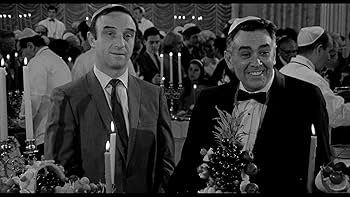
“He said ‘Give it to the kids, I don’t need it where I’m going’.
Low-level mobster ‘Harry Plotnick’ spent a “deuce” in stir. Now that’s he’s sprung, trying to resume his numbers racket shtick he runs into a changed environment. His old neighborhood has new ethnic demographics, and he’s yesterday’s news. Trying to reconcile with his ex-wife is useless, and he finds out he has two grown children: he only knew of one, and he hasn’t seen her since she was three. He arranges to buy a business (catering) with his saved stash, partnering with his ex-brother-in-law, but then it looks like the Feds might blow that up. Plus his dim longtime bookkeeper idiotically kept the records too accurately—noting in detail all the payoffs and who they went to. Clobbered from every corner, Harry is convinced he has a heart condition. It’s enough to make a guy do something nice for other people and see if that provides a way out–or at least relief from his constipation.
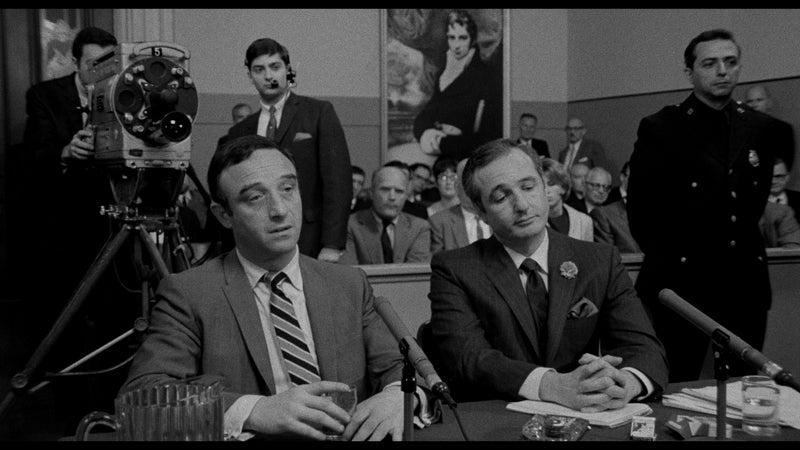
Martin Priest plays Harry. Forty-two when this was made, he’d done bits in a half-dozen TV series and had made his feature debut playing a slimy redneck racist mill worker in Nothing But A Man. It’s a real shame that this gem was thrown away, his superbly pitched performance, while not something that necessarily would have made him a star, is good enough that it ought to have secured him a steady run of character roles. Instead, in the two decades after this came out (or didn’t) he logged just eight episodes in five TV series and a small part in one indie feature (1992’s Zebrahead). He passed away at 81 in 2009, so at least he got to see the movie and his performance finally receive long overdue recognition. The same praise for great work and the regret that it was snubbed goes for almost everyone in the cast: just a handful went on to some success. *
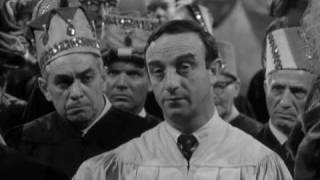
The show creeps up on you—it takes (or at least it took me) maybe fifteen minutes or so before you get with the ultra-dry vibe; it gets better and better as it goes along. By the time it’s over you feel like you’ve discovered the social observance comedy version of a diamond, hidden under a pile of wood and rusted buckets behind the garage. Among the scores of characters standouts include Ben Lang as ‘Leo’, the ever-smiling business partner who convinces Harry to join a nutty fraternal order; Henry Nemo as ‘Max’, bumbling driver/bookkeeper; Maxine Woods as ‘Kay’, dismissive ex-wife; and Ellen Herbert as ‘Mae’, Harry’s clucking sister who has a smothering instinct.
The bulging cast of perfectly picked faces, forms and fortes includes Jacques Taylor, Jean Leslie, Sandra Kazan, Julius Harris (also in Nothing But A Man), Ronald Coralian, Christopher Cross (19, the future hit singer/songwriter) and Carmine Caridi (35, feature debut).
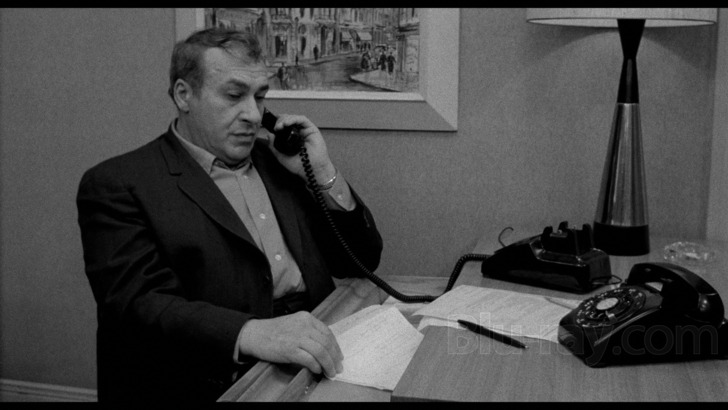
Henry Nemo, 1909-1999. Musician, songwriter, actor and credited with being the inspiration for Charlie the Tuna
*—-one you tell us—Julius Harris (1923-2004) would amass 96 credits, 37 in feature films, including Super Fly, The Taking Of Pelham One Two Three and Islands In The Stream. His most recognized part was playing ‘Tee Hee’, one of the sub-villains in Live And Let Die, one of the more fun things in that rather wan 007 entry. But his best ever was his very first, in Nothing But A Man. Carmine Caridi (1934-2019) went on to total 109 credits including pieces of the 2nd and third Godfather epics and Bugsy. We vouch for Carmine for his great moments in Prince Of The City. Finally here’s a link to the obituary for Martin Priest. https://www.parsellfuneralhomes.com/obituaries/martin-priest-21782/obituary
 Movies ala Mark