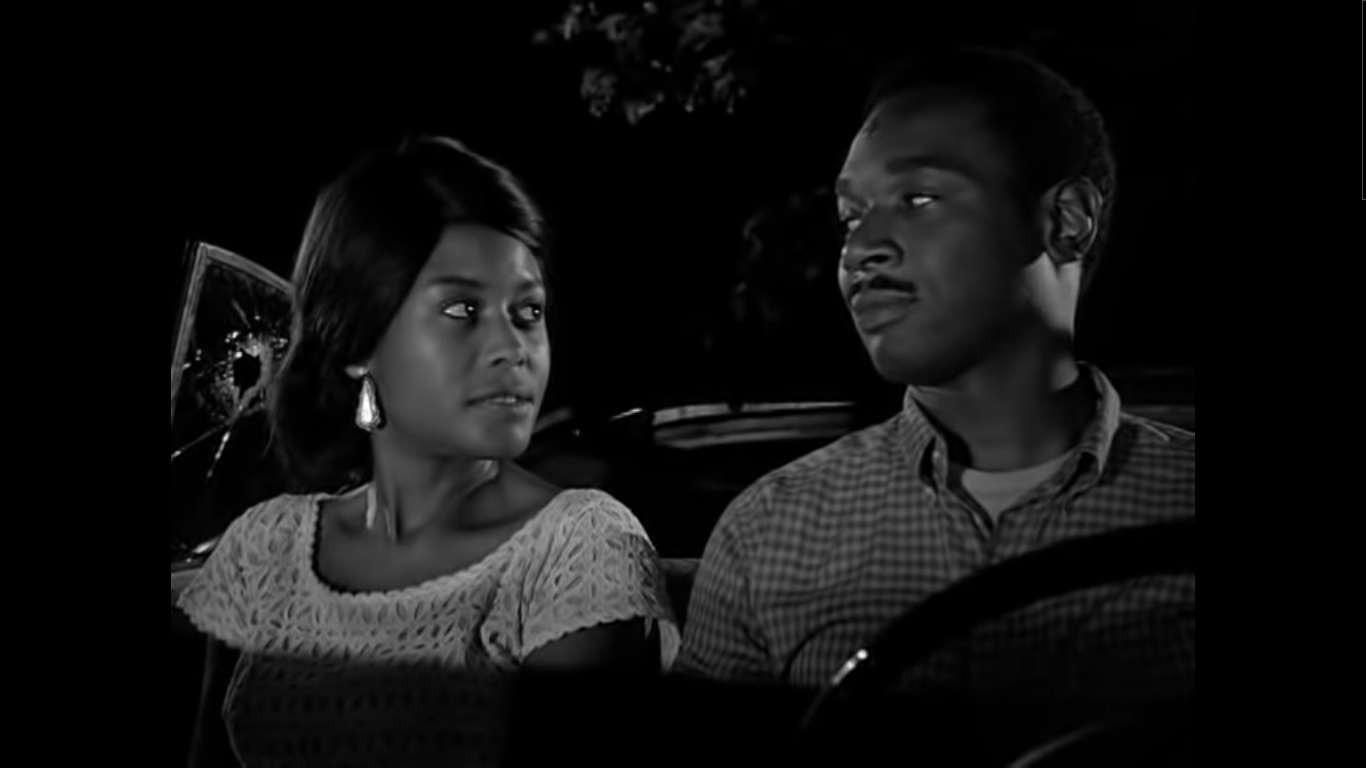
NOTHING BUT A MAN, an immediately arresting, starkly honest bare-budget drama from 1964, commands respect on a number of levels. That’s assuming you’re among those who’ve actually seen it. Hardly anyone did when it came out; a minuscule $200,000 gross was accounted in scattered art house showings. That it was even made (for a skeletal $300,000) is a triumph on its own. It certainly didn’t play south of the Mason-Dixon line, or in many supposedly more liberal parts of the country: when this came out the 1964 Civil Rights Act has just been passed, and when it was shot, in the Summer of ’63, filming was done in New Jersey, around Atlantic City and Cape May; granted, the chosen locales were not exactly shown, aptly, to be shining examples of much more than existential community despair. Director-producer Michael Roemer (The Plot Against Harry) and his co-scenarist/co-producer Robert M. Young (Alambrista!, Extremities, Dominick and Eugene) had ventured to Alabama to research African-American lives and conditions for the project and hopefully film there: it didn’t take long to realize that more than just their idea was in danger, thus a strategic withdrawal North.
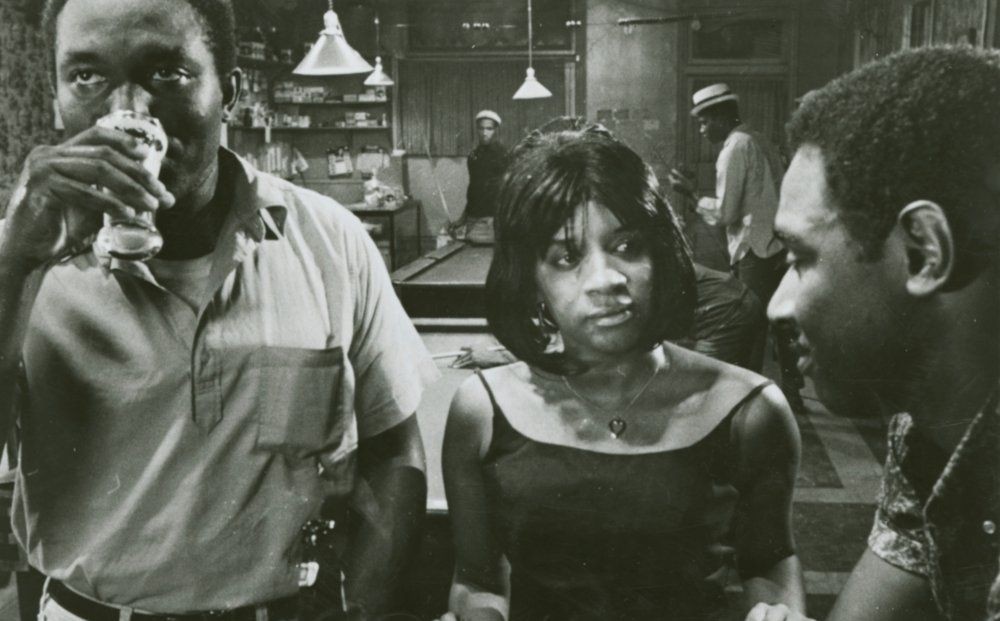
“Stop being so damn understanding.”
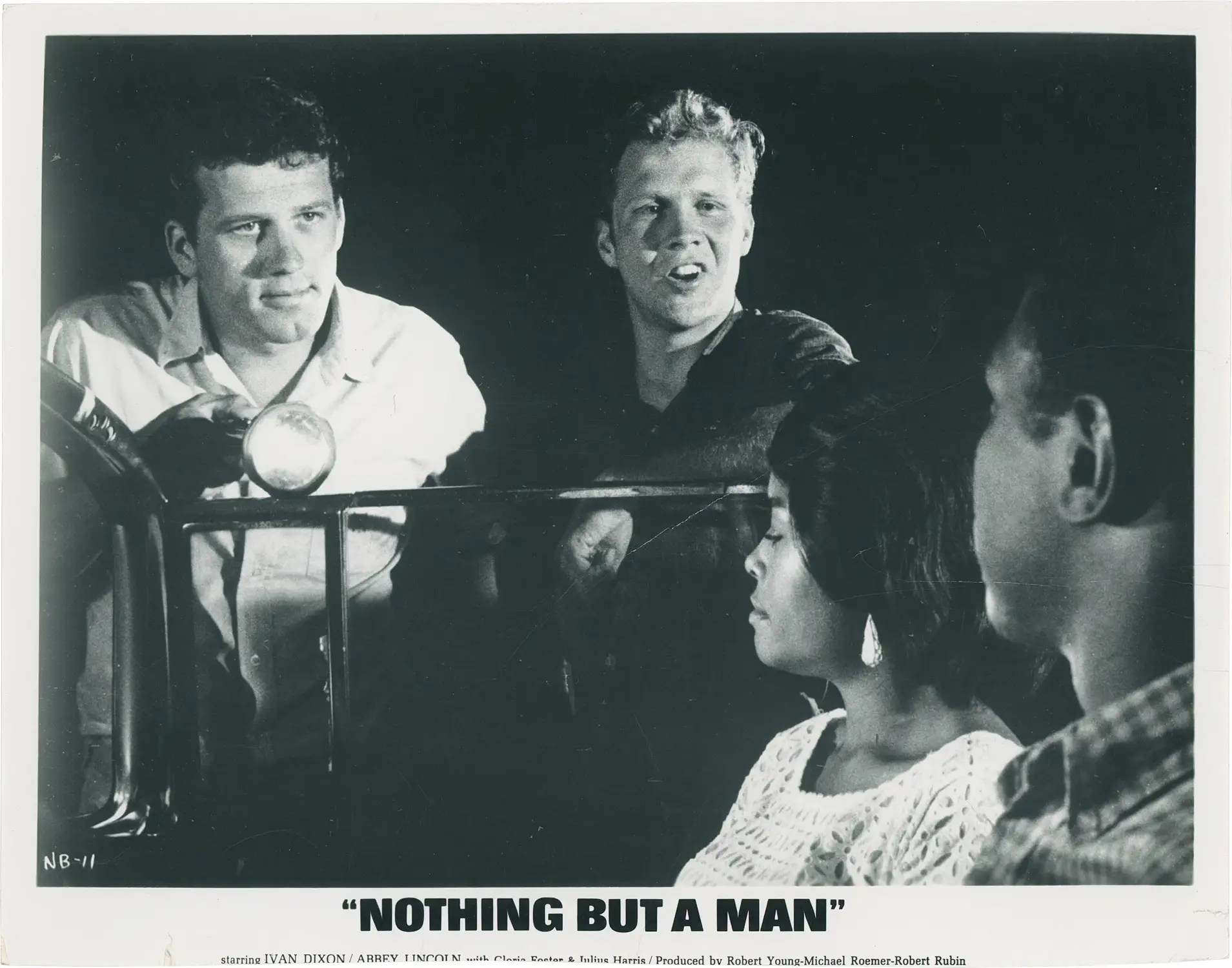
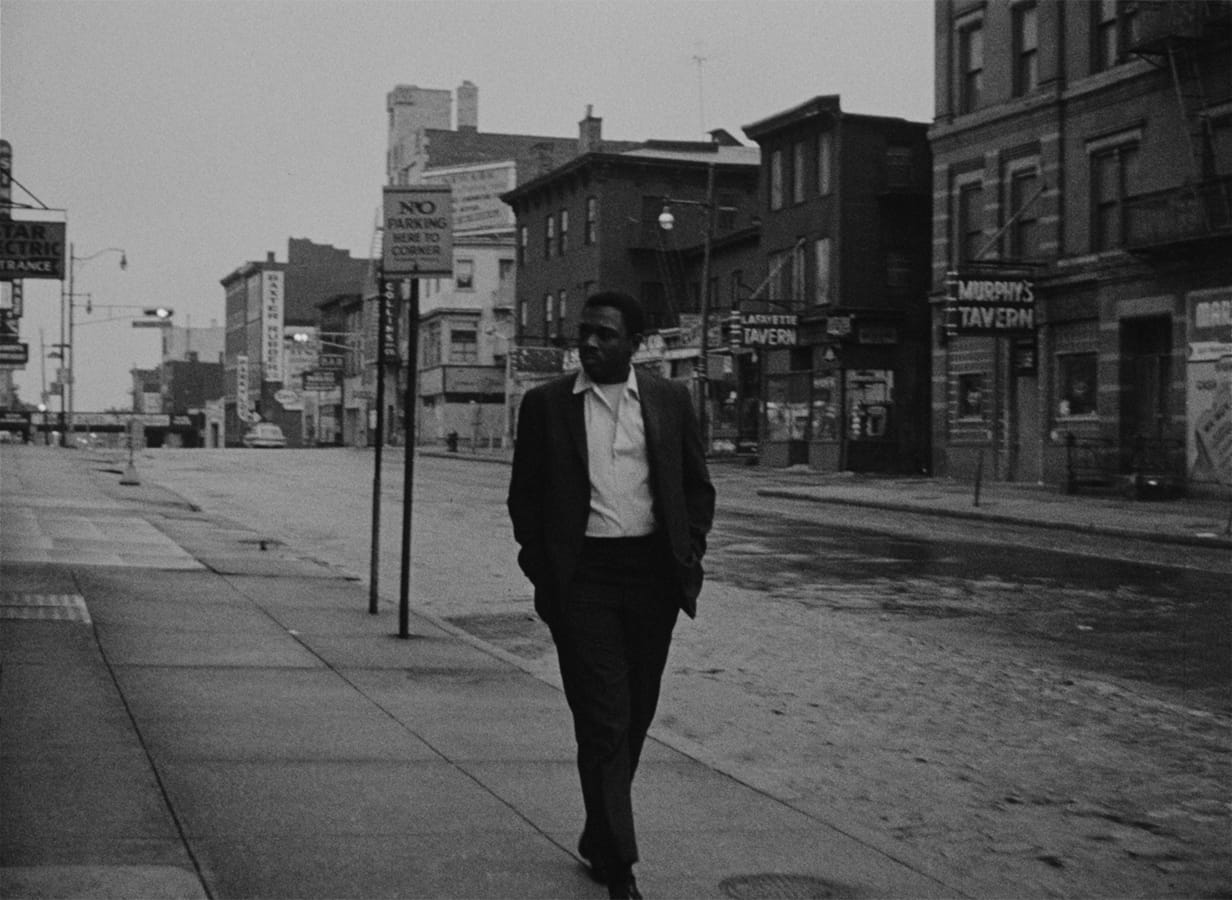
Alabama, the early 1960s. Taking a break from relatively lucrative but back-breaking and ultimately dead-end labor on a railroad section gang, ‘Duff Anderson’ (Ivan Dixon) leaves his boisterous pals to their drinking and hookers. He stops by a church meeting/picnic. There he encounters pretty and pleasant ‘Josie Dawson’ (Abbey Lincoln), and soon enough, despite their dissimilar backgrounds, circumstances, styles and attitudes, they hit it off. Duff’s a rootless, if amiable, drifter (fractured family life, stint in the Army); Josie has education, is a school teacher and her father is the local minister. The socially cowed dad doesn’t approve and the bigoted local whites aren’t about to let anyone with black skin—let alone someone who refuses to bow down in humiliation—get ahead. Choices are hard, chances are slim, obstacles all around, with threats behind them. Individuals, communities, entire generations are caught in a semi-feudal system that grinds them up. Love is one thing, harsh reality another.
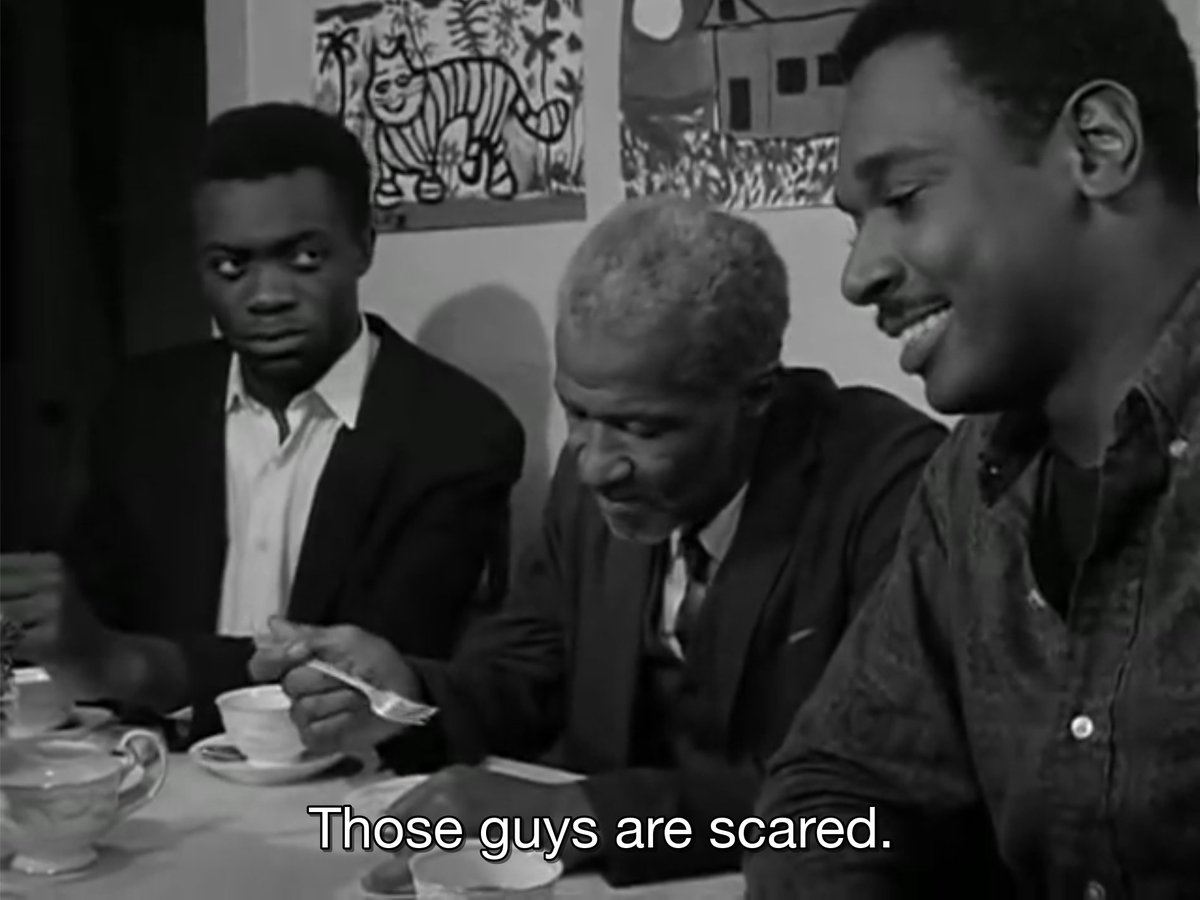
“Well, either we’re gonna hit the hay or get married. Now, you don’t want to hit the hay and I don’t want to get married.”
Done in a frank, bracingly intense neo-realist mode, the people, place and problems come across as painfully true, minute in detail, cumulative in effect, splendidly acted by an array of new or little-known talent. Dixon, 32, had done small parts in movies (Something Of Value, Porgy And Bess, A Raisin In The Sun) and TV for eight years before being picked for this lead. Irony doing its thing, this was the high point of his dramatic career. A year after this came out he ended up in Hogan’s Heroes for five seasons; that he achieved more public recognition for that tripe than this brave reveal in a remarkable film is truly regrettable. Fortunately, after he escaped that idiotic series he embarked upon a successful directing career.
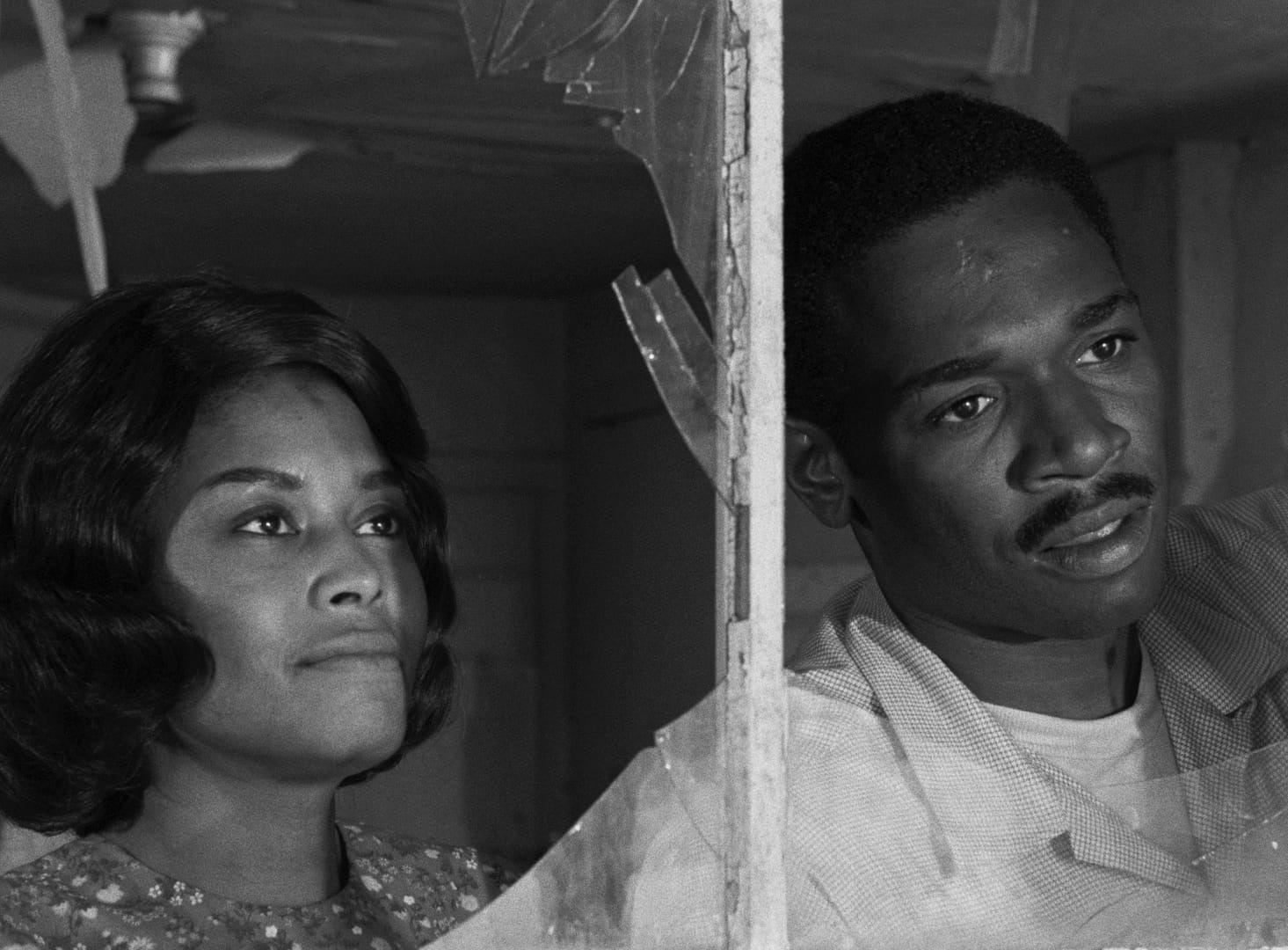
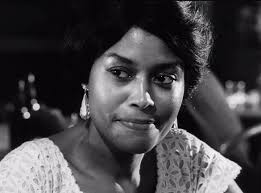
The instantly appealing Abbey Lincoln, 33, had a busy and notable vocation as a singer but had only appeared, briefly, in one movie, the rock ‘n’ roll comedy The Girl Can’t Help It, back in 1956, belting “Spread The Word” while filling out a hot red dress Marilyn Monroe had worn in Gentlemen Prefer Blondes. She made one more movie in 1968, stealing the screen from Sidney Poitier in the surprising For Love of Ivy, then did scattered TV gigs before a final feature bit in 1990’s ‘Mo Better Blues. She’s so unaffected and natural as the kind and hopeful Josie in Nothing But A Man that when she’s mistreated by Dixon’s frustrated, self-doubting Duff it actually makes you recoil like a slap in the face.
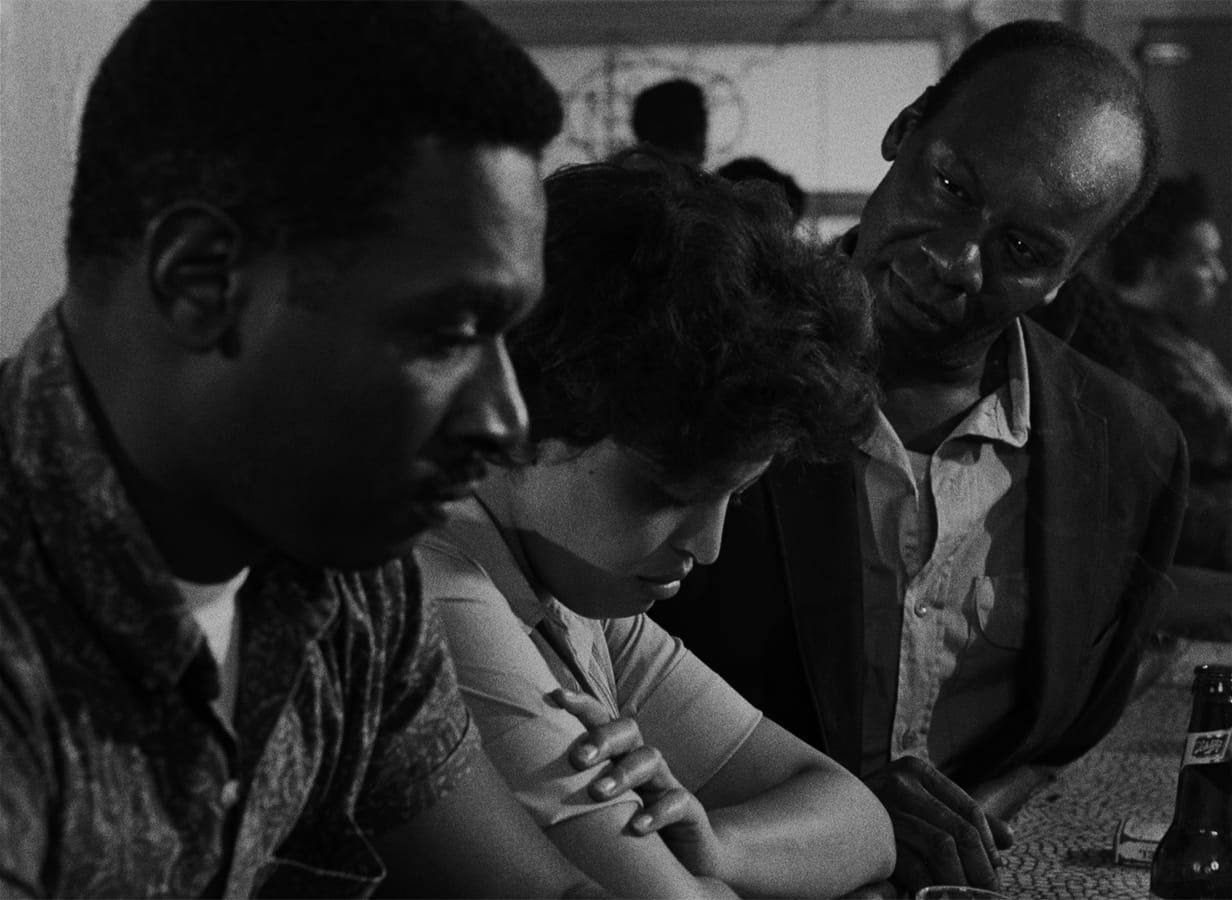
Along with the stellar leads there is exemplary work from Julius Harris (40, feature debut) as ‘Will’, Duff’s malignant, alcoholic father, and Gloria Foster (29, 2nd film role) as ‘Lee’, Will’s patient (make that exhausted), life-trampled caretaker/abuse taker. You don’t feel like you’re watching actors playing fictional characters, but eavesdropping on real people existing under continual strain. Also notable is Yaphet Kotto, 23, in his credited feature debut, as one of Duff’s co-workers on the railroad, and none too happy about his status. Unknown cast members playing the rednecks are so real in their inherited viciousness that you’ll want to morph into the screen and smash them in the head with a claw hammer.
The soundtrack is background pop tunes, including recognizable cuts from Martha & The Vandellas (“Heat Wave”), The Miracles (“You’ve Really Got A Hold On Me”) and Little Stevie Wonder (“Fingertips”).
“It’s just that, seems to me us colored folks do a whole lot of church-going, it’s the white folks that need it real bad.” That line, dryly delivered by non-thumper Duff, has extra bitter poignancy given the subsequent convulsive rise of berserk White Christian nationalism in the country, a warping of religion (and commerce—take care to fleece the flock, pastor) that owns—but hasn’t the guts to admit or the reasoning ability to grasp—a good deal of blame for the shit fix we now find ourselves drowning in. Wasn’t Jesus supposed to ‘save’ rather than rave? Must depend on which Bible you read—if you can read at all. If I offend them, good: they can choke on it.
After it originally came and went, garnering critical praise but no money due to obvious distribution issues, almost three decades elapsed before a limited national re-release in 1993; this finally made onto DVD eleven years later. The movie hits hard not just due to the acting, direction and photography but because while being supremely sensitive to human pain and social dilemmas, it’s intelligent enough not to play hooky with answers: there’s not cathartic action or phony piety, no white liberal shows up to ‘feel the pain’ and rescue anyone. Plus it’s not simply ‘blame honkies’; the black characters aren’t noble talking statues standing in for an entire race (via the American subset), and they’re not all warm and cuddly. In other words, it’s truthful about how people, solo or in groups, bend to accommodate wrong, how often they break in doing so and how some somehow manage to rise above weight that crushes others. There’s no easy way out. Millions of fellow citizens, descended from millions of others who lived in this country for hundreds of years have known that for a long time—and it appears as though a lot more of the populace will be figuring it out PDQ, to their surprise and discomfort. Never mind the rest of the f’d up world—throw a dart at the map and you’ll hit some place where ordinary men, women and children are getting—or have always gotten—the shaft. You might not be able to fix it, but you can at least wake up and smell the con.
Along with the early credits for Harris and Kotto, also making their debuts are Moses Gunn, 33, and Esther Rolle, 43. With Stanley Greene (Josie’s resigned father), Leonard Parker, Martin Priest and Tom Ligon. 95 minutes.
 Movies ala Mark