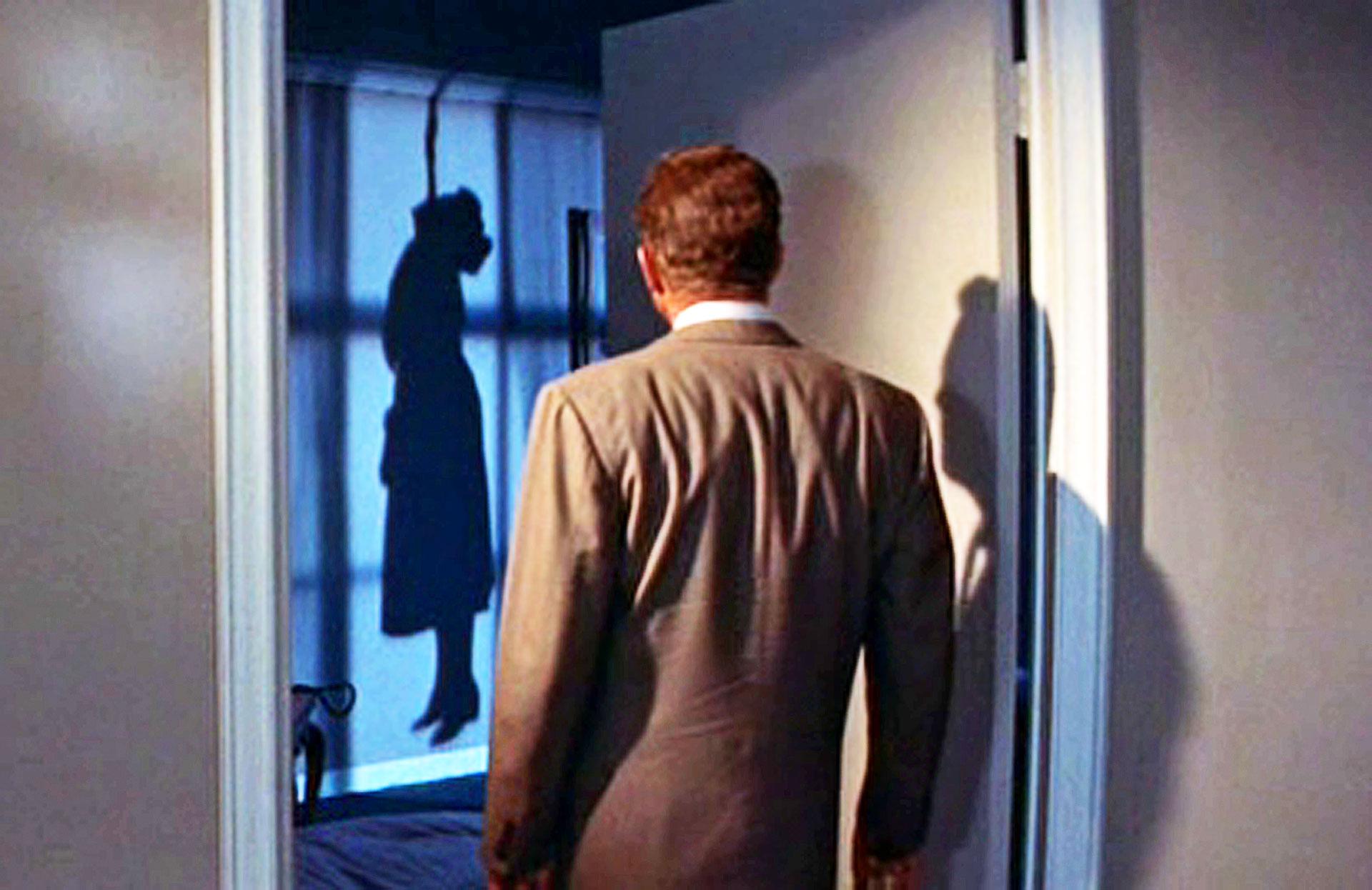
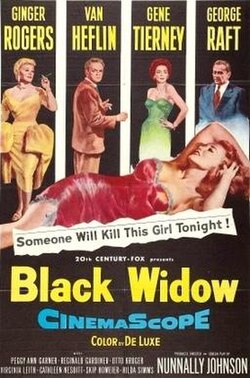
BLACK WIDOW was written, produced (for $1,000,000) and directed by Nunnally Johnson in 1954, in a go at marrying backstage theatrical cattiness to noir mystery, shot in CinemaScope when the widescreen process was still a learn-on-the-job experience. An ace at writing, Johnson was hit or miss as a director; this lands in the middle, casually entertaining without generating excitement, the performances a mix of very good and disappointing. Van Heflin saves the day.
Opener—“The Black Widow, deadliest of all spiders, earned its dark title through its deplorable practice of devouring its mate.”
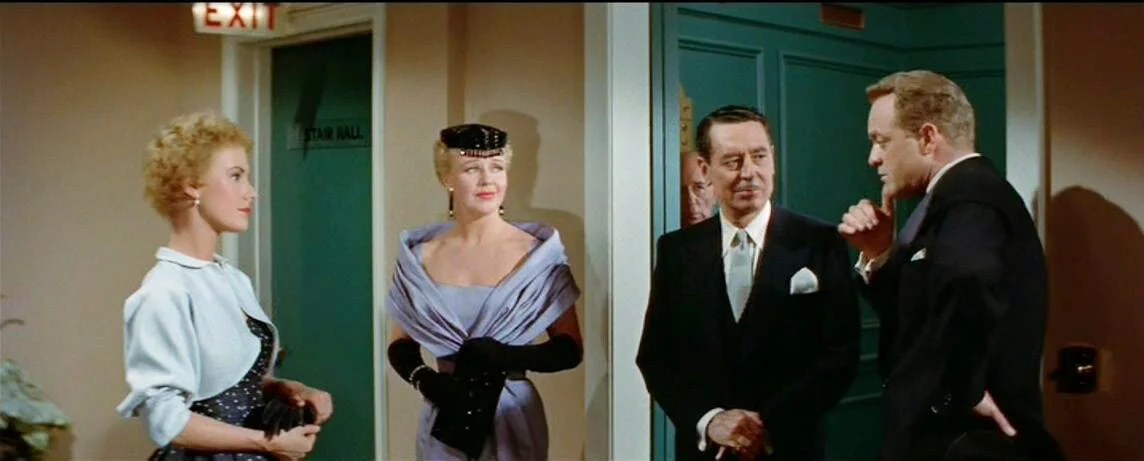
“NANNY: “The editor said it was all right to write like Somerset Maugham and it was all right to write like Truman Capote, but not at the same time.” PETER: “Why don’t you do like everybody else and write like Hemingway?”
Successful Broadway producer ‘Peter Denvers’ (Heflin) has a misfortune at a posh cocktail party held by diva actress ‘Carlotta Marin’ (Ginger Rogers); he meets wanna-be writer ‘Nanny Ordway’ (Peggy Ann Garner), a demure, rather mysterious young lady hoping to break into something bigger than the small town South. She needs a quiet place to ‘work’ in, and sells Peter on offering his apartment as a daytime place to write: his wife ‘Iris’ (Gene Tierney) away on a trip, okays the temporary assistance. But there’s more to Nanny than a dreamy/fatalistic attitude (and an unflattering hairdo): Peter and others who met or ‘knew’ her find out shortly and in the hard way. “Just hang it in the bathroom” normally has an innocent connotation, but as with blackmail, there’s always a first time.
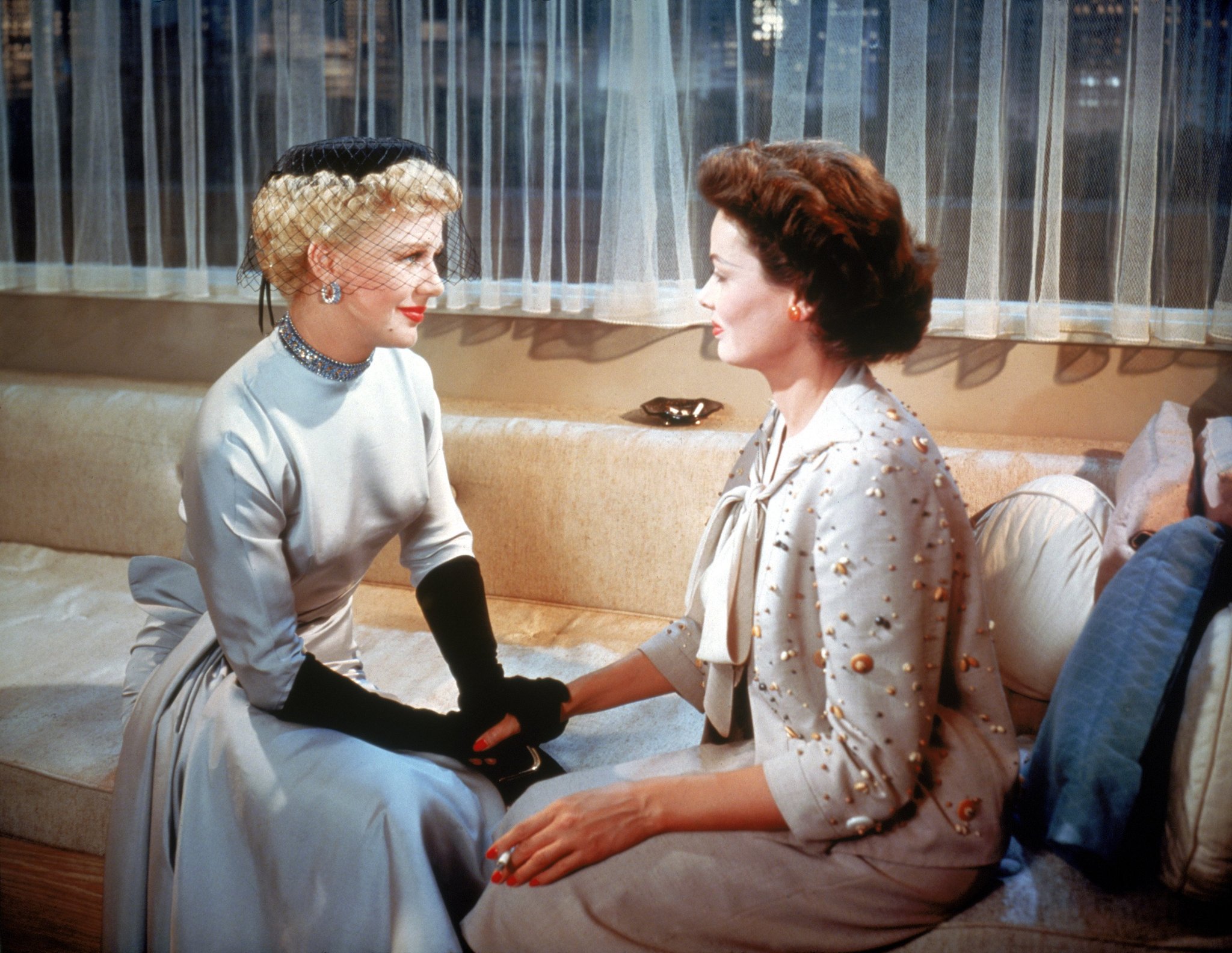
“Not even Peter, with all of his radiant innocence about women, could have been stirred for one instant by that dingy little creep.”
Johnson’s elegantly-tuned script—he hoped it might be the “All About Eve of suspense pictures”—was adapted from a 1952 novel co-written by Richard Wilson Webb and Hugh Wheeler under the pseudonym Patrick Quentin. The seeming sure-fire cast turns out to be variable. Top-billed Rogers nudges a wee much going for Bette Davis imperiousness, while Tierney’s character and interpretation is almost an afterthought: 33, she was having severe emotional distress at the time that soon took her off-screen for seven years. On the law’s side for a change, fading ‘hard guy’ George Raft tags along as a detective, not breaking much of a sweat. A weaker link is Garner, whose young charm from the classic A Tree Grows In Brooklyn was left back in 1945: at 22 she’s stilted, with whatever ‘hold’ the crucial Nanny character had on others being left to our assumption since it doesn’t show on screen.
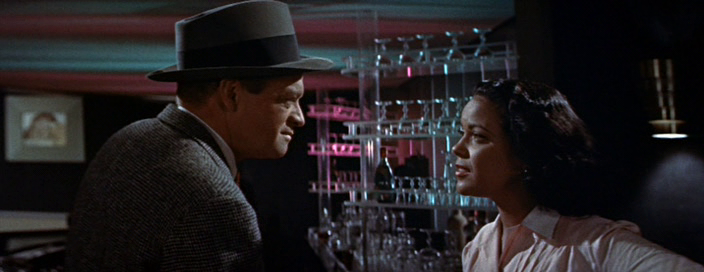
Reginald Gardiner does his well-practiced sardonic turn as Rogers ‘kept’ husband: marrying a bitchy diva named ‘Carlotta’ should have clued him in. Virginia Leith, 28, an attractive and under-utilized talent, brings tension to her part as someone who was a roommate of the plot spinner, and there’s a neat scene Heflin shares with Hilda Simms, a noted stage actress/educator/activist, playing a sympathetic nightclub hostess. This is a rare chance to see her on film, at 35 she was blacklisted the following year.
With the largest role and as the protagonist in greatest distress and jeopardy, it’s Heflin who really owns the show. At 45, he was in prime time with three more pix in 1954, all bracketed by the 1953 classic Shane and Battle Cry, a money smash in ’55. He was always excellent at conveying troubled characters, skillfully projecting beleaguered strength, common sense challenged in bleak situations, toughness and resolution harried by anguish and doubt.
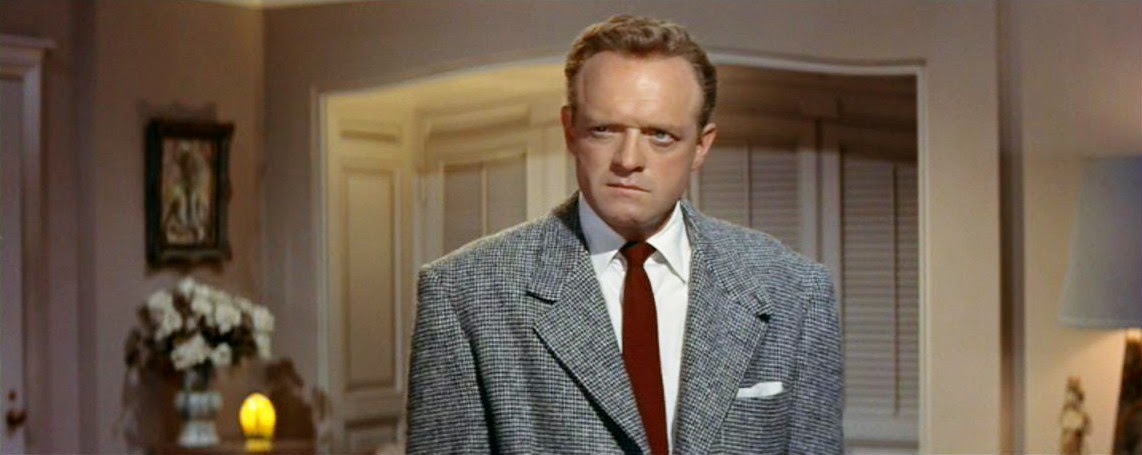
The box office gate of $7,100,000 placed #44 for the year, which had sturdy Our Man Van part of the ensemble for Woman’s World (pretty good, made more dough), leader of The Raid (well done, little seen Civil War saga) and the set-bound safari silliness of Tanganyika.
“Darling, how wonderful to see you without your wife.”
95 minutes, with Otto Kruger (smooth), Cathleen Nesbitt, Skip Homeier (not a bad guy for once, but with little to do), Mabel Albertson, Bea Benaderet and Aaron Spelling.
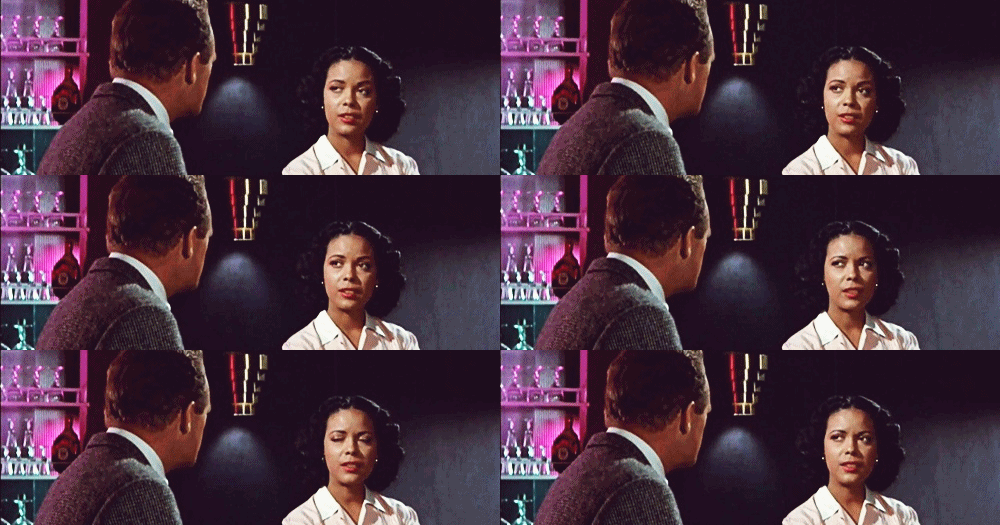
Hilda Simms, 1918-1994
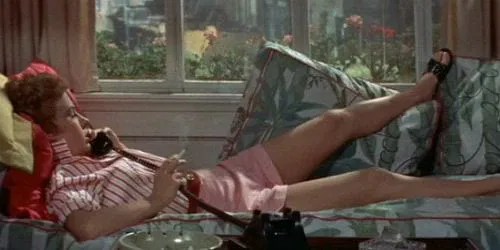
Rather a hint about how ‘nice’ this ‘girl’ really is.
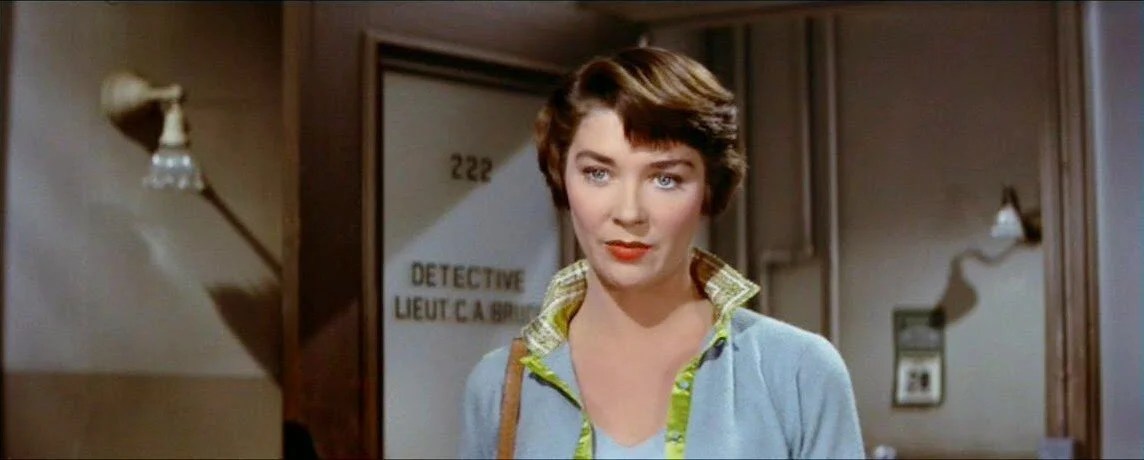
Virginia Leith, 1925-2019
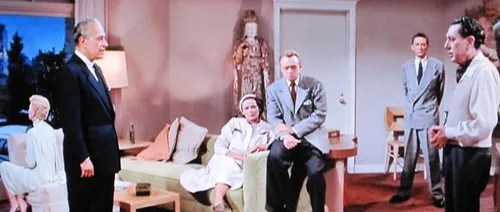
Spread out the stars to use up the CinemaScope
 Movies ala Mark