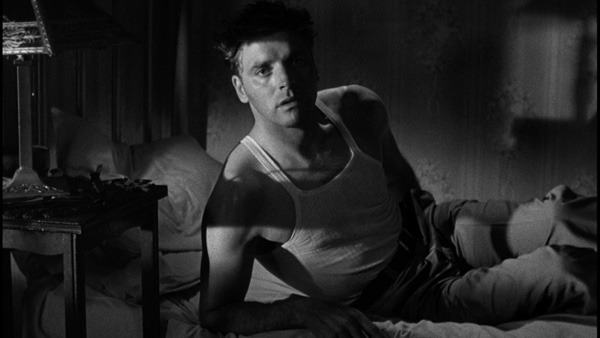
THE KILLERS is presented in the opening credits as ‘Ernest Hemingway’s The Killers’, but the classic 1946 film version uses only the launching segment from the author’s 1927 short story, which ran just 3,000 words. Faithful to the source, that starting gun (guns, in this case) runs 12½ minutes: the bulk of the movies 105 were imagined by three writers (Richard Brooks and John Huston, both uncredited, and Huston’s pal Anthony Veiller), producer Mark Hellinger and director Robert Siodmak. The truculent Hemingway actually liked this one; he usually disapproved (or downright hated) movies made from his work.
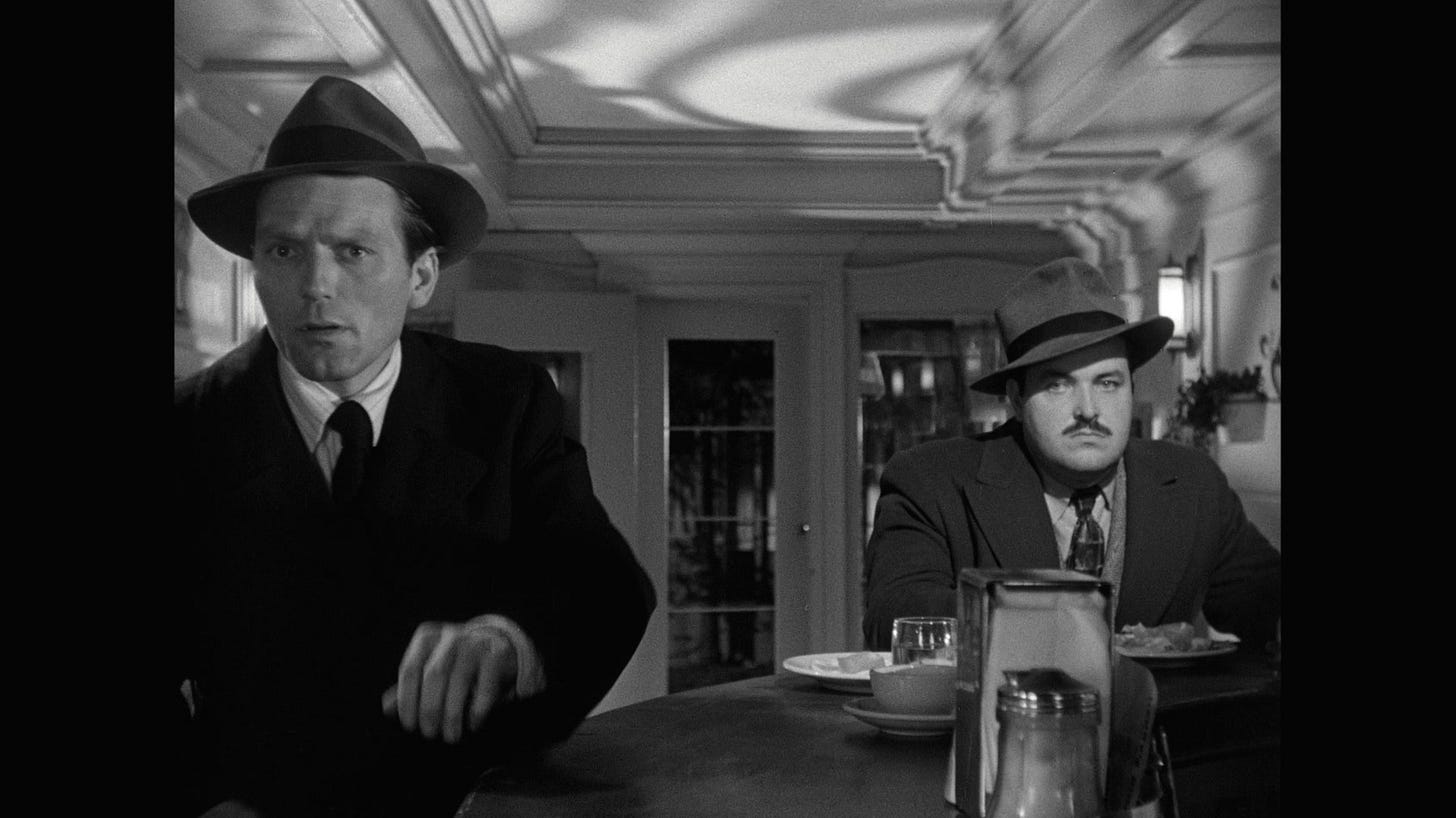
Bracing from frame one, the story launches off the arrival of a pair of surly hoods (William Conrad, 25, first credited part, and Charles McGraw) in the New Jersey nothingburg of Brentwood, amusing themselves by intimidating people at a diner as they seek out ‘Pete Lund’ aka “The Swede”, with intent as ominous as their attitude. Later, bloodhound insurance investigator ‘Jim Riordan’ (Edmond O’Brien), assigned to locate Swede’s beneficiary, begins to piece together clues about those who knew the departed and what it was they knew him for and over.
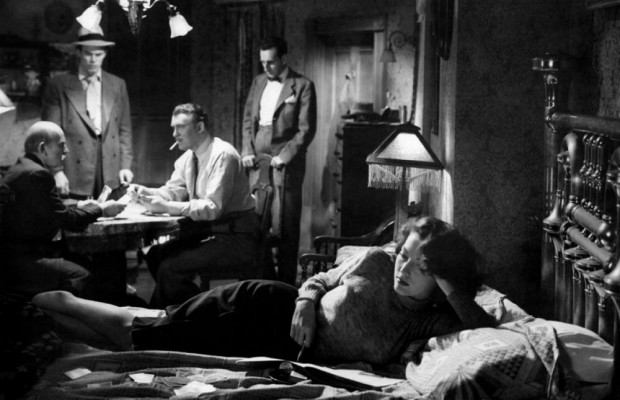
Prime post-war noir moves apace under Siodmak’s fluid direction, intricate writing with ample snap and a killer cast. The plotting, double-crossing and payoffs are framed in stunning b&w cinematography from Woody Bredell (editor George Amy said he could “light a football stadium with a single match”) and boosted by a dynamic score from Miklos Rozsa, a soundtrack that introduced the “dum-de-DUM DUM” cue that would be appropriated and made immortal by Dragnet. Box office was brisk, around $6,000,000, 52nd in ’46, and a quartet of Oscar nominations came about—Director, Writing, Film Editing and Music Score.
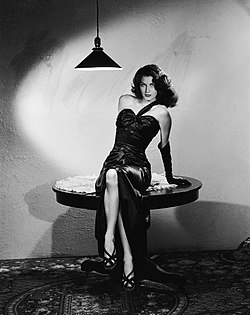
Beyond the overall excellence, the movie locks a fame claim as the one that introduced a brawny 33-year-old former acrobat named Burt Lancaster as the ill-fated Swede, prizefighter-turned-payroll robber-turned anonymous pump-jockey. You can’t blame the lug for getting in a jam over the movie’s second supernova, 23-year-old Ava Gardner, who had appeared mostly uncredited in 23 pictures since 1941. Both emanate raw electricity, and from then on weren’t casting gambles or wanna-be’s but bona fide Movie Stars.
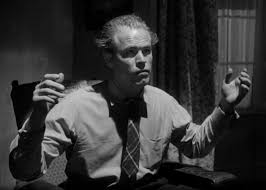
O’Brien, 30 and back from the service, entered a decade-long run as a forceful, offbeat lead. Albert Dekker once again serves ably as a smart villain, and assistant heavy Jack Lambert nails one of his meatiest parts. Also noteworthy are Sam Levene, who often overplayed but tones it down nicely here as a thoughtful cop, and Virginia Christine— the future ‘Mrs. Olsen’ of TV coffee commercial fame—back when she was 26, beaming, spunky and quite pretty as ‘Lilly Lubinski’, the swell ‘skirt’ that sex-poleaxed Swede casually throws over for Ava’s slinky ‘Kitty Collins’—Christine was almost cast in Gardner’s role.
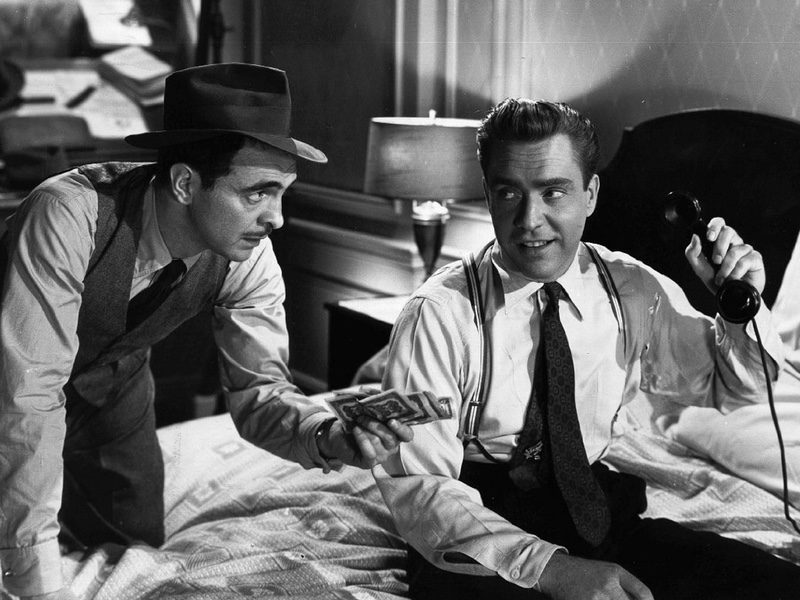
With Jeff Corey, Vince Barnette, Donald MacBride, Phil Brown (as Hemingway’s ‘Nick Adams’), Queenie Smith and Bill Walker. Remade, to good effect, in 1964.
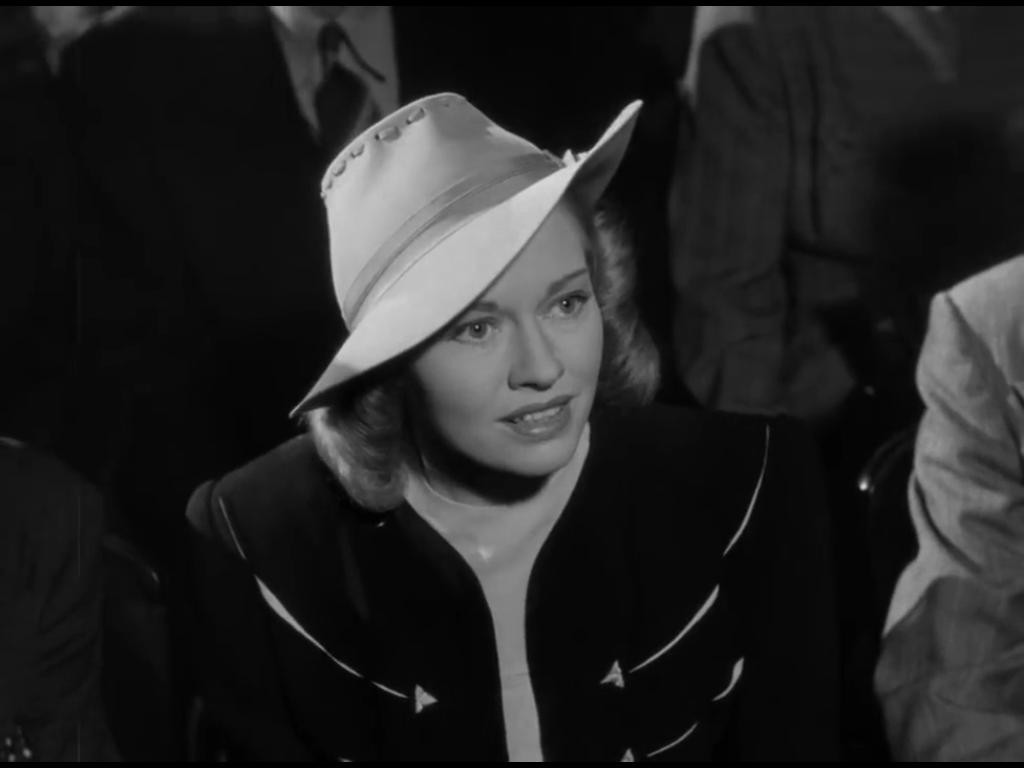
Virginia Christine, 1920-1996
 Movies ala Mark