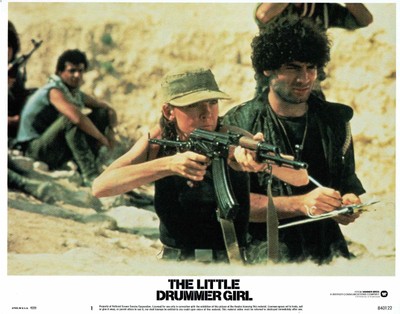
THE LITTLE DRUMMER GIRL gave Diane Keaton one of two serious roles in 1984, but both this and Mrs. Soffel failed to click with either public or critics. Mrs. Soffel, a fact-based period crime-romance with Mel Gibson, turned out to be a morose snore. This one, a fictional spy thriller lifted from a novel by John le Carré, has more action going for it, interesting characters and benefits from contemporary relevance since it deals with the never-ending misery in the Middle East.

‘Charlie’ (Diane), a self-pleased, casually amorous American actress working in England, takes a money gig doing a commercial in Greece. While there she meets an intriguing man named ‘Joseph’ (Yorgo Voyagis) who she believes is actually the mysterious ‘Michel’, who had spoken (under a mask) as a representative of the Palestine Liberation Organization at a meeting Charlie attended. At that event Charlie had been vocal with anti-Zionist opinions. What promises to be exotic romance (free-thinker Charlie is borderline promiscuous) turns into an elaborate coercion scheme of the Israeli intelligence agency Mossad, aiming to convert/coerce Charlie as an infiltration agent. They want her to work her way into the PLO to help them track down master-bomber ‘Khalil’, brother of Michel (who isn’t Michel). Worked over by experts, Charlie gives in and goes along. She knows that there will be danger, likely violence, but she’s not prepared for how much of both, and the cost for playing a part in it. Who to trust? Yourself? Them? Which them?
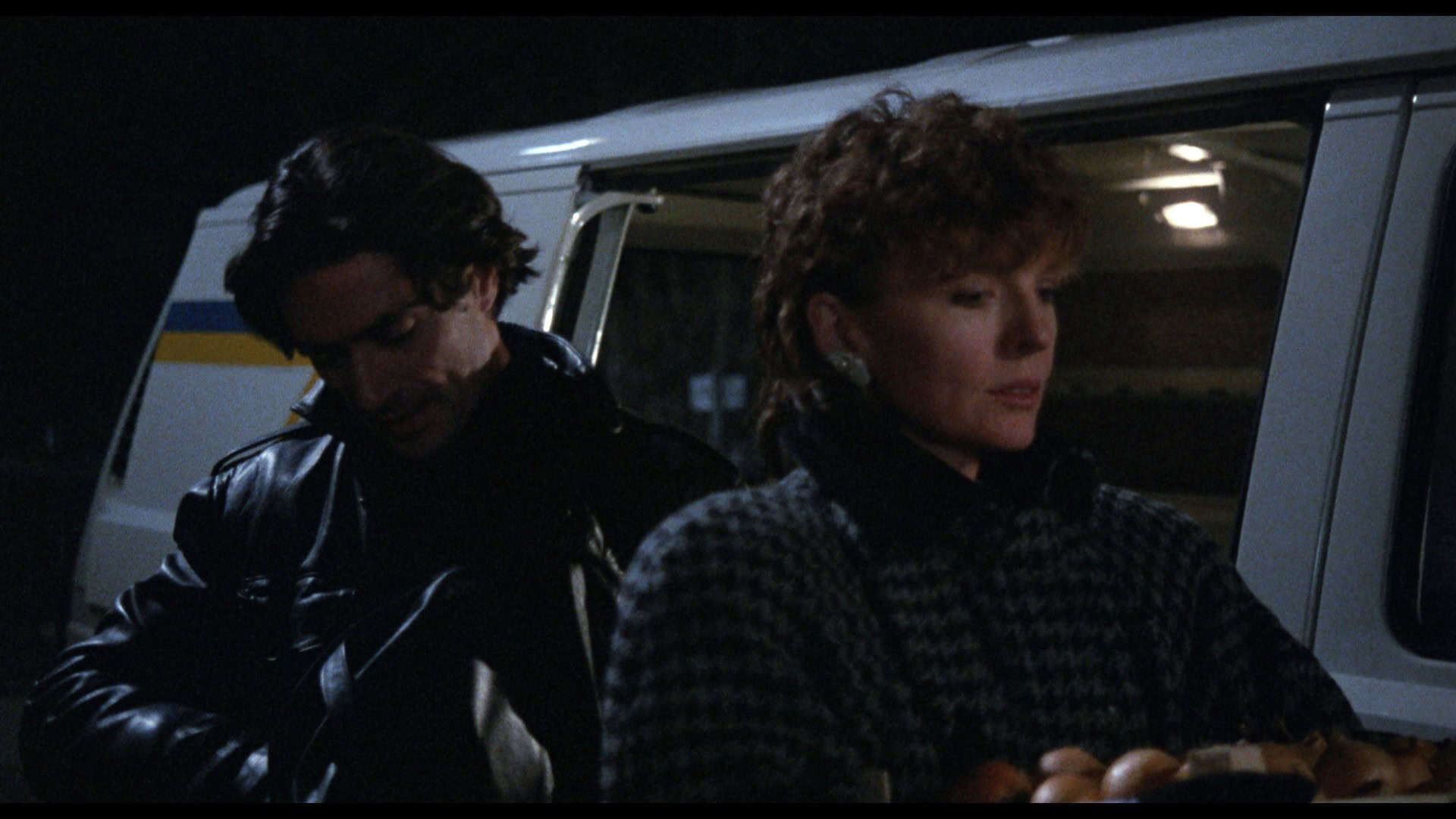
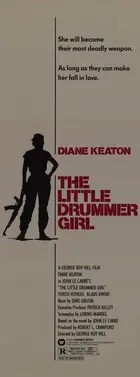
The book, a typical le Carré labyrinth, ran 430 pages. The movie distills (or deflates) that to 132 minutes of running time in the script by Loring Mandel, a longtime TV writer (including 426 episodes of Love of Life) with a few minor feature films (Countdown and Promises In The Dark) under his belt. George Roy Hill, whose previous tackle The World According To Garp was a successful adaptation of a dense novel, directed on location in Germany, Greece, Israel, Lebanon and England. One of the advertising tag lines went “She will become their most deadly weapon. As long as they can make her fall in love.” Catchy, unless maybe to a reasonably intelligent woman, in which case it could well be insulting. Then again, any movie—or for that matter just a calm, balanced, compassionate, non-agenda statement—made about the ceaseless fratricidal horror show in the Middle East will offend people on one side. Or both. Or all.

The results didn’t make the real estate statehood quagmire much clearer other than to show how relentlessly murky and murderous it is. Keaton had come off a quartet of excellent dramatic performances (Looking For Mr. Goodbar, Reds, Interiors and Shoot The Moon), but she doesn’t fare all that well here, and the writing isn’t much help: the way-too-quick “fall in love” (and bed) segues between Charlie’s tumbles thru alliances and liaisons may have been persuasively outlined in the novel but they mug credibility when raced past on screen. Fans of the book complained that its 26-year-old dupe seems more like a dope at 39 (Keaton’s age). Plus, that hairdo’s gotta go.
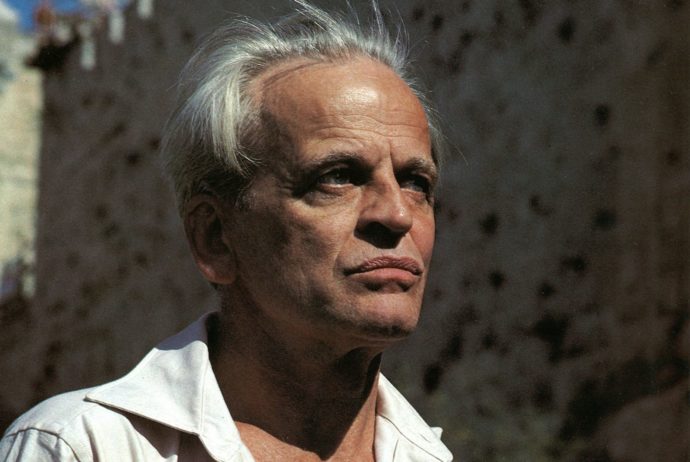
The bursts of violence are effectively staged, and there is sturdy work from Voyagis, Sami Frey as..? (we won’t spoil it) and especially Klaus Kinski, as cool cucumber ‘Martin Kurtz’, the Mossad team leader: the ordinarily out-to-lunch Klaus-Man is relaxed, personable, even within striking range of ‘normal’—other than being an architect of cold-blooded assassinations.
Interesting, reasonably tense, but regrettably more confusing than compelling, with a sort of “whatever?” feeling at the finish. Made a cost of $15,000,000: add in commensurate expenses for prints, advertising, etc. and the gross $7,830,000 amounted to a fiscal face plant, 91st place in the scrimmage for 1984. Now about that Peace Plan…
With Eli Danker, Michael Cristofer, David Suchet, Kerstin De Ahna, Bill Nighy (34, looking about 23), Anna Massey and Reinhard Kolldehoff. Remade as a mini-series in 2018. Starring Michael Shannon and Florence Pugh, it was better received; le Carré considered it superior. He appeared in small parts in Keaton’s film and the series. This movie at least gives the non-Israeli participants some semblance of humanity—before they’re wiped out, of course.
 Movies ala Mark