
DON’S PARTY got going ‘Down Under’ as a stage production back in August of 1971, David Williamson’s play set in Melbourne on the Australian federal election night October 25th, 1969. A hit, when eventually lined up as a film in 1976, Williamson wrote the screenplay, resetting the locale to Sydney, with the entire lean-budgeted 5-week shoot done not on sets but in a real home in a suburb, directed by Bruce Beresford, blessed—him and us—to get the job after the critical pasting of his first two films. *
“Don’t take this as an insult, fella. But you are a weak turd.”

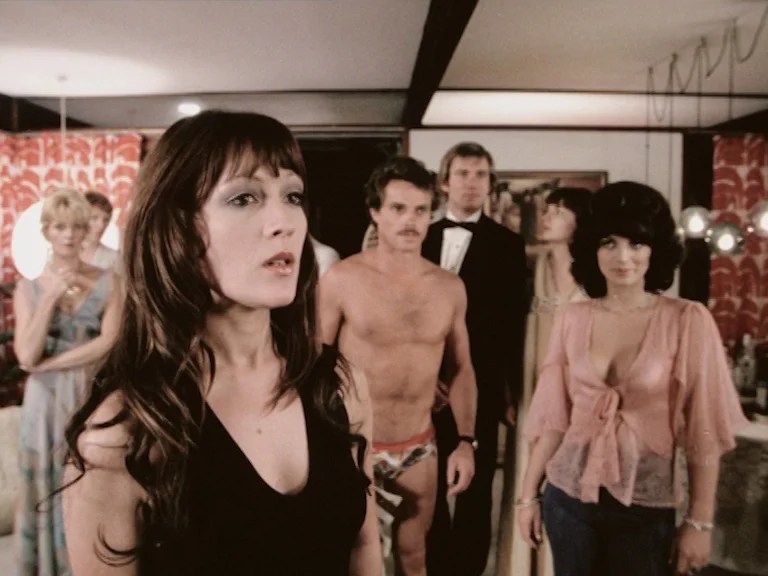
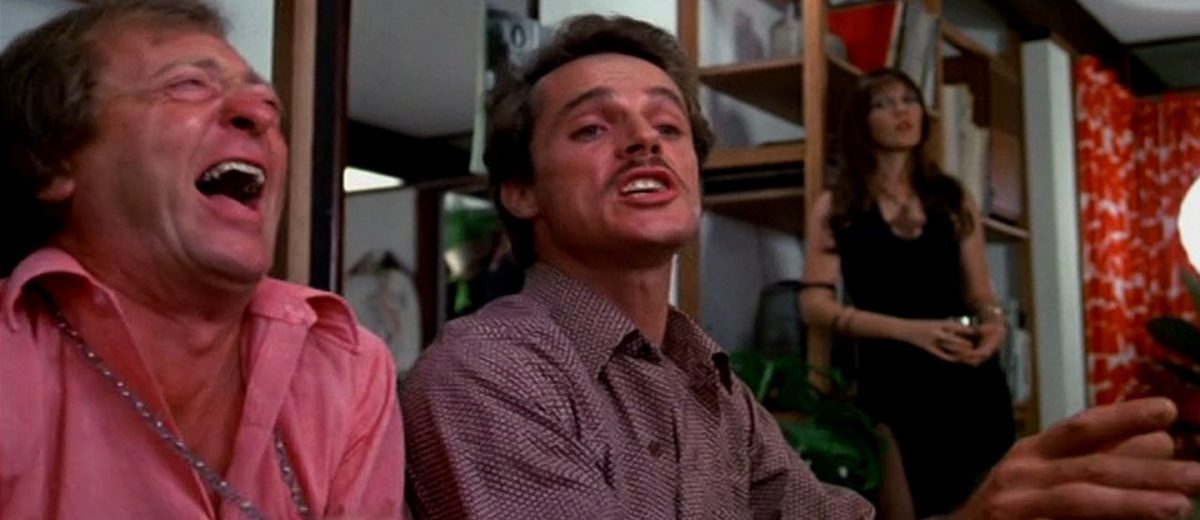
For an election night celebratory booze-up, schoolteacher ‘Don Henderson’ (John Hargreaves, 30) has invited some old college pals and a few other unconnected friends. Wife ‘Kath’ (Jeanie Drynan, 36) isn’t overjoyed at the prospect, her placid-looking exterior shielding pent-up anger. John’s closest mate, gleefully abrasive former psychologist ‘Mal’ ((Ray Barrett, 51) drags bitter, humorless spouse ‘Jenny’ (Pat Bishop, 30, feature debut) along, while carefree, perpetually randy lawyer ‘Grainger Cooley’ (Harold Hopkins, 32) shows up with teenage student/sex bomb ‘Susan’, (Claire Binney, 22, debut) his ‘shag for the night’, who from “hello” on lets Don know that one thing she isn’t is shy. Not shy, just a blithering dork, accountant ‘Simon’ (Graeme Blundell, 30) is the proverbial stick-in-the-mud, but his vivacious wife ‘Jody’ (Veronica Lang) is determined to cut loose and have fun. That may be good news for recently separated ‘Mack’ (Graham Kennedy, 42), hovering amiably with a beer chained around his neck while various spats and schemes unspool. He’s certainly more chipper than snide dentist ‘Evan’ (Kit Taylor, 34) set to regret that his sensual artist wife ‘Kerry’ (Candy Raymond, 25) was invited, her heady boldness not confined to her paintings. Mal oozes to her “You have what’s called a sought-after quality.” It won’t do him much good (neither will a dozen beers), but his perception is shared in one glance from Grainger. Cats don’t even have to be away for some rats mice to play. Mind the barbie, crank the music, yell at the TV as an expected Labor victory turns into a brutal rout, and if the snooty neighbors can afford to be away on a trip abroad “they can bloody well let us use their pool!”

Blisteringly funny black comedy makes a last act reveal as a biting drama, a snapshot of a period and clashing class attitudes. Its rollicking backslap to mateship is at the same time a sendup of offensive/defensive macho braggadocio and insecurity. The frank dissection of the casual, callous sexual objectification of women, even among the educated and supposedly enlightened, is pointed yet also shrewd enough to not let the distinctly different feminine contingent off scot-free from the neurosis tree: Williamson’s writing packs a lot of acuity into a you-are-there 90 minutes. Beresford’s fluid directing has vital assist from great up-close camerawork of Donald McAlpine (Predator, Medicine Man, Moulin Rouge!) and in the editing done by William M. Anderson (Breaker Morant, Gallipoli, The Year Of Living Dangerously). The ensemble acting is flat-out perfect, simultaneously broad and intimate, flawlessly attuned to characters recognizably real enough that while you might be wary of them in actuality are amusing as hell to observe from the safety zone of fiction. Wounds are earned and dispensed through a stream of laugh lines—subtle, crass, jolly, caustic, barbed, droll—that aren’t there simply for jokes sake but to tee up the scathing and sad truths beneath them, equal parts damning and compassionate.
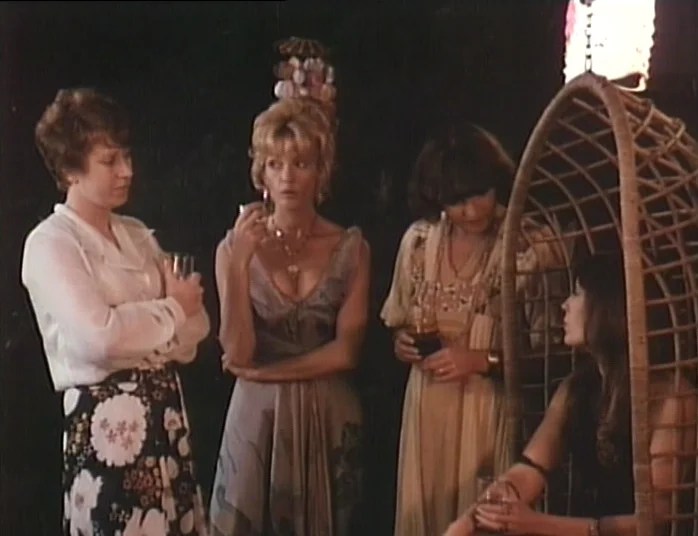
Several of the cast members had performed assorted roles in various productions of the play. Kennedy was a beloved, much-lauded figure from TV; this was his first time in a straight acting part. ‘Old-timer’ Barrett had been active on stage, TV and films for 24 years. Blundell had won fame/notoriety from starring in a pair of popular sex farces. He’d also produced the play back in 1971. **
“Your wife, mate… your wife is one of the great bourgeois monsters of our time!”
Former Australian Prime Minister John Gorton, 64, was bloke enough to do a cameo. Production cost (in Oz dollars) is listed as A$330,000, which in 2025 equals A$2,536,000. The native box office looks to have been A$871,000, roughly A$6,732,000 in 2025. No other figures are readily available from its international bookings. Don & partiers didn’t rock up in the States until 1982, riding the refreshing East tailwind from the first two Mad Max outings and Gallipoli, and joining 82’s Aussie gifts The Year Of Living Dangerously and The Man From Snowy River.
* Beresford: “I couldn’t find anything else to make because the films were so reviled critically that I thought that, with these two films, I’ll never work again…Yes, Don’s Party saved my life.” He was referring to The Adventures Of Barry McKenzie and Barry McKenzie Holds His Own, successful at the box office but virulently detested by critics. Thankfully he kept going—to Breaker Morant, Tender Mercies, Driving Miss Daisy and Black Robe. We like his undervalued A Good Man In Africa, And Starring Pancho Villa as Himself and Paradise Road. He moved on. Did the critics? Could they?

**—involved parties—Kennedy, Hargreaves, Blundell and Hopkins would feature in The Odd Angry Shot, a neat little 1979 drama about Australian soldiers serving in the Vietnam War. Lang, Raymond, Drynan, Bishop and Taylor all had extensive careers in TV, films and stage. Binney did scattered work for a decade, on TV and in just a few films.
Williamson wrote a sequel play in 2011, “Don Parties On”, with mixed results. No film resulted, and by that time five of the original cast had passed away.

Click to enlarge for clarity
 Movies ala Mark