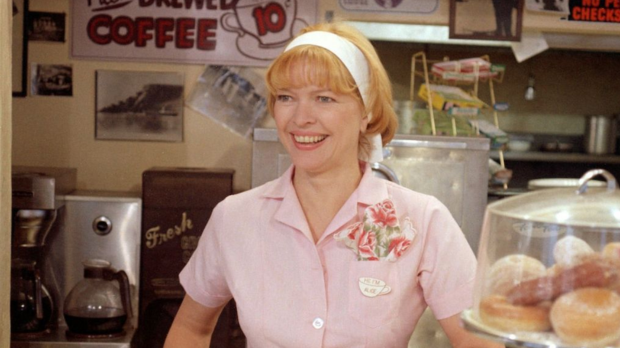
ALICE DOESN’T LIVE HERE ANYMORE was a big hit, critically and commercially, topped by Ellen Burstyn taking the Oscar for Best Actress of 1974. Burstyn, 41, around on stage and TV for almost 20 years, had been in a few negligible films before late-dating to the fore with The Last Picture Show and The Exorcist. Her pin-point smash in this relationship/s dramedy is a tour de force, and the glue that holds the mixed bag movie together. This was Martin Scorsese’s third time at bat, following up his breakout Mean Streets. The script was a first-time effort from Robert Getchell, later to do Bound For Glory, Mommie Dearest and Sweet Dreams. *

When her boorish husband is killed in a traffic accident, ‘Alice Hyatt’ (Burstyn) and pre-teen son ‘Tommy’ (Alfred Lutter, 13) leave their New Mexican town, which they don’t like in the first place (Socorro should’ve sued over a bad rap, but at least this made others aware it was actually there) bound for Monterrey, California, where Alice was born and raised. Out of funds in Phoenix, she tries to get work as a singer, and briefly makes a go at it until getting involved with the wrong guy, who turns out to be not just married but dangerous. Fleeing to Tucson (Phoenix looking less charming than Socorro) Alice finds steady work as a waitress in a chaotic, rowdy diner, where one customer, local rancher ‘David’ (Kris Kristofferson), finds her appealing. While she toils, restless and bored Tommy gets into mischief.
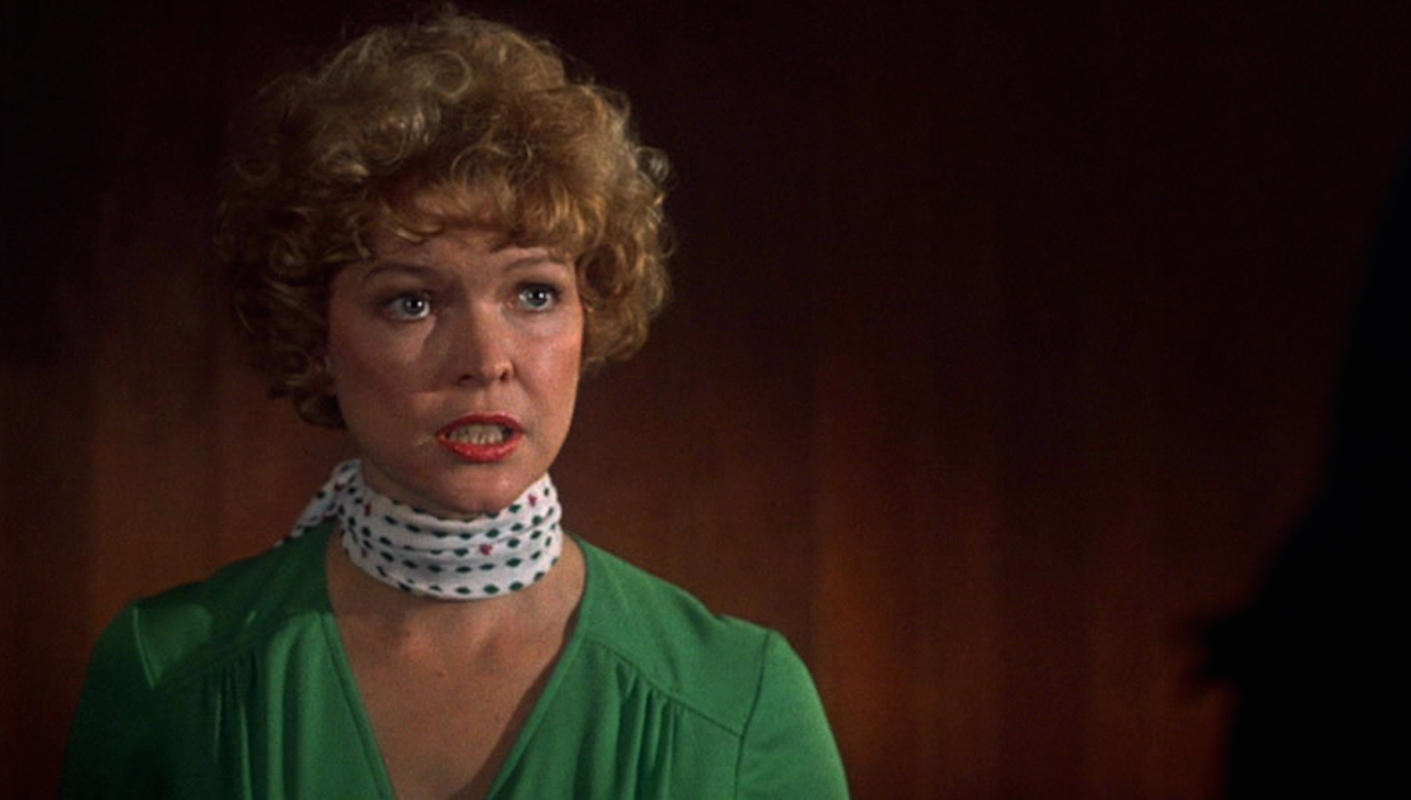
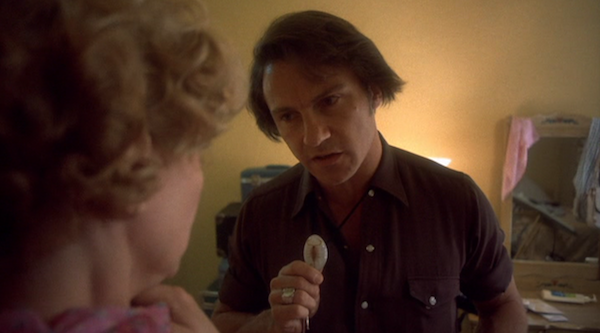
Burstyn is marvelous and the loser/winner Alice has the depth of a real-life character rather than a coy made-to-fit cutout. The damaged but dogged lady valorously/desperately juggles her convergent and conflicting personality components: dependent, loyal, stifled wife turned broke and bereft widow; doting, flustered single mother and overtaxed nurturer; vibrant, smart, attractive and sensual woman with unmet emotional and tactile needs; and an individual yearning for artistic self-expression, recognition and maybe even some approval. Struck & stuck. Luck could come in handy. Unvarnished, un-“cute” Lutter is a natural as the uprooted and isolated kid, but Tommy, while pitiable, is frequently so obnoxious you’ll want her to take a detour to the Meteor Crater and dump him there. The always compelling Billy Green Bush does well in the brief but telling part as the not-too-bright husband who doesn’t appreciate her or show kindness to his child. As the pal Tommy meets in Phoenix, 11-year-old Jodie Foster again shows preternatural ability to project reality into fiction. As ‘Ben’, the fling from hell in Phoenix who goes from silly strange to explosively sadistic, Harvey Keitel (brought in by Scorsese) is believably frightening. With these characters and in some smaller snippets with others, situations serious or amusing play out relatable and real.
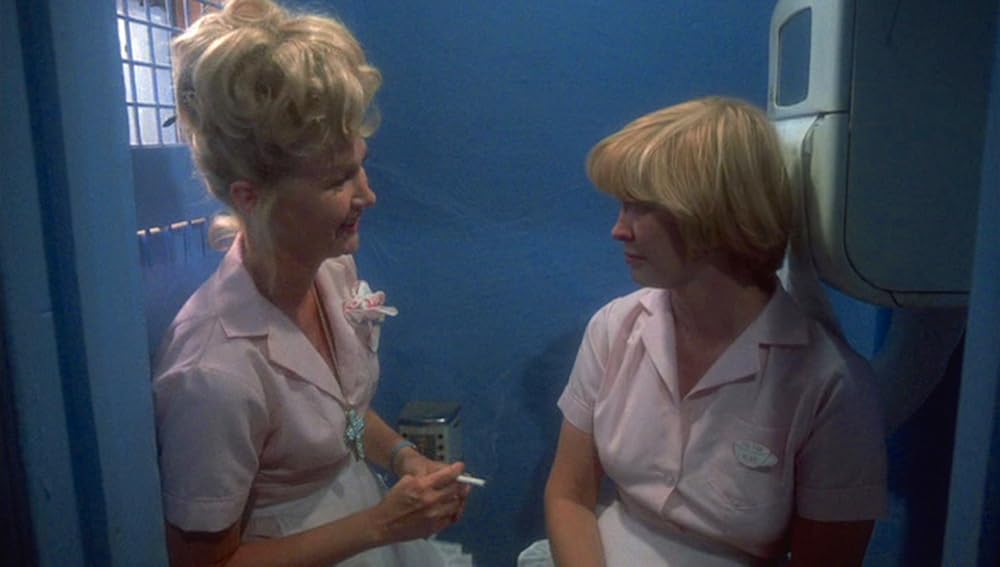
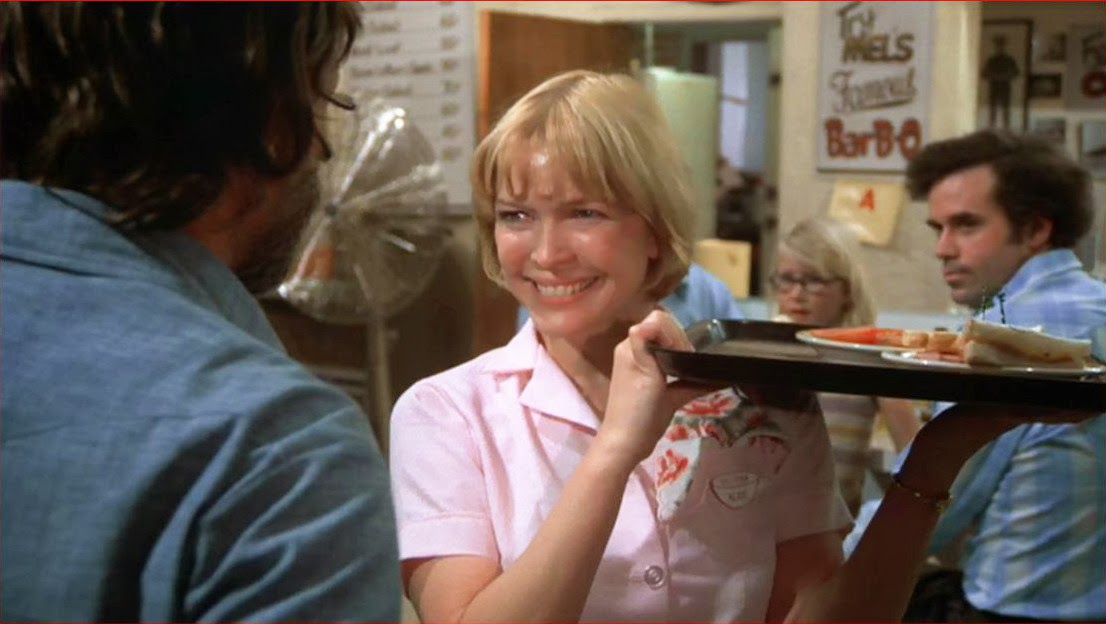
On the flip side, the writing for Kristofferson’s role doesn’t feel authentic and his just-adequate acting next to Burstyn’s excellence is an uneasy mix. Worse, almost the entire Mel’s diner episode is bogus, a “little people” slur so coarse and overdone it isn’t funny but offensive, with the foul-mouthed ‘Flo’ played by Diane Ladd, supposedly ‘earthy’ and ‘real’, not endearing but insulting. Nonetheless she was slotted for an Oscar nomination as Supporting Actress: it went in a sentiment gesture to Ingrid Bergman for Murder On The Orient Express–should’ve gone to Madeline Kahn for Blazing Saddles. A nomination also went to the script, but while Getchell’s first half is first-rate, once the diner nonsense takes over, the hold frays. Throughout, Burstyn is terrific and the movie, both lopsided modern Americana and genuine ‘statement’ is a touchstone piece for many living in the ‘there’ that Alice hoped to leave behind.
Done up for $1,800,000, taking 25th place in 1974, the gross $23,900,000. With good work from Vic Tayback, Lelia Goldoni, Valerie Curtin, Lane Bradbury and Murray Moston. 112 minutes.
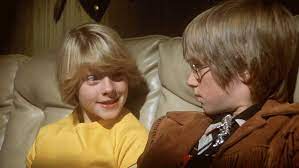
* Burstyn: “It was early in the Women’s Movement, and we were all just waking up and having a look at the pattern of our lives and wanting it to be different…I wanted to make a different kind of film. A film from a woman’s point of view, but a woman that I recognized, that I knew. And not just myself, but my friends, what we were all going through at the time. So my agent found Alice Doesn’t Live Here Anymore .” Impressed with new blood Scorsese’s Mean Streets, using the clout she commanded from the mega-success of The Exorcist, she picked him to direct. She drew her Academy gold against serious contenders, all playing women in less-than-positive circumstances: Diahann Carroll’s Claudine (another beleaguered single mom), Faye Dunaway in Chinatown, Valerie Perrine for Lenny and Gena Rowland’s A Woman Under The Influence.
Later a TV series, Alice, with Linda Lavin, Vic Tayback (again as Mel) and Polly Holliday (a cleaned-up, more bearable Flo. Eight years (1976-85), 202 episodes.
 Movies ala Mark