
THE LAST HURRAH—“You wouldn’t want me to break with tradition, would you?” says ‘Frank Skeffington’, the Irish-American hero/icon/bandit chieftain of this 1958 political drama, part lament, part satire. Make that American-Irish, as Skeffington is mayor of a big New England city and the director calling the shots on the film was 63-year-old John Martin Feeney. The son of Irish immigrants, he was born and raised in Maine, USA, but, as John Ford, one of cinema’s foremost chroniclers and interpreters of Americana, he was one bucko never shy about celebrating “Erin go Bragh”. He had ample room to bask in blarney in this tale, lifted by screenwriter Frank Nugent (eleven Ford spins, including The Quiet Man and The Searchers) from Edwin O’Connor’s 457 page bestseller, based on James Curley, a serial mayor of Boston, popular and colorfully corrupt. He died at 84, a few weeks after the movie premiered.
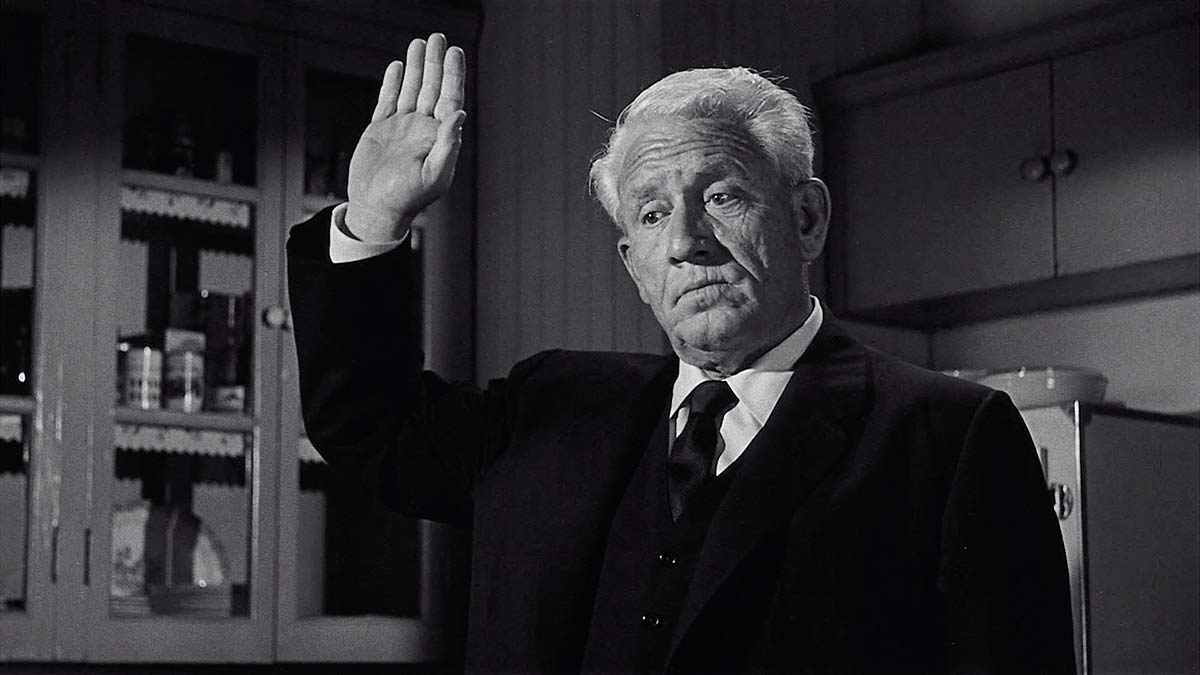
The US, ‘back East’, the 1950’s. Both venerated and detested, Frank Skeffington (Spencer Tracy, 58) has been the city mayor so long it’s almost like he came over on the Mayflower. Except those Pilgrims were Protestants, and Skeffington’s tribe, boat borne refugees arriving two centuries later, were Catholic. Those real estate claims and religious stakes figure in the animosity the city’s old-line WASP’s, including its bankers and publishers, hold for Skeffington, along with envy over his popularity among the ‘lower classes’ and his skill as a schemer. Yet as the aging lion and his loyal machine cronies gear up for one more election, it’s not only the pious blueblood power bloc he has to battle with; there’s also a fresh young crowd of voters and a brash new age (TV, rock & roll), poised to shake & rattle the quo & status. Time up, day over?
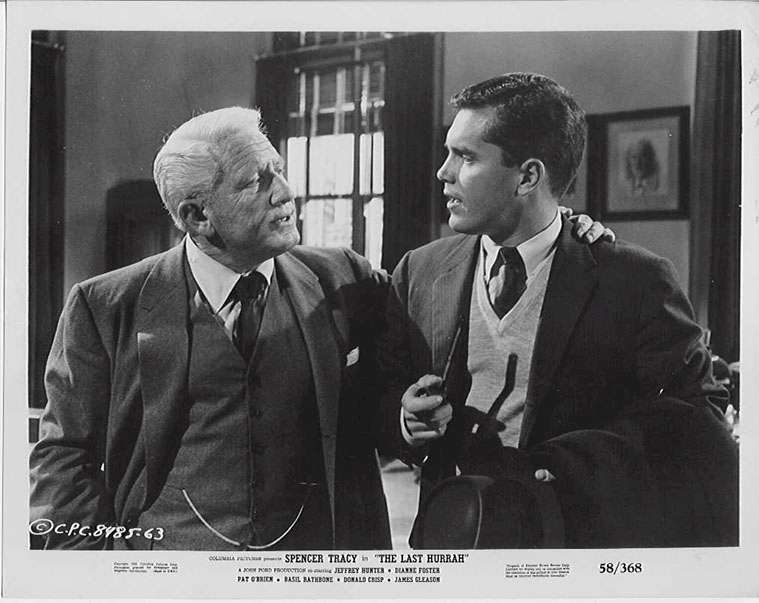
Sentimental—and to a degree shrugged off as such at the time—seen in the present day’s politics of idiocy & obscenity the plot and issues could be cavalierly tagged as quaint. Yet while Ford, leaning into his crotchety period, stewed what amounts to an Irish wake of classic character actors, the script—marked by a good deal of sly humor—was both timely and prescient. As it was being made, a certain American-Irish political dynasty, spawned in the close quarter rough & tumble of the Curley/Skeffington arena, was about to ascend to the biggest of big times, mightily aided by mastering media messaging. Today, with electronic assault & battery as constant as breathing, the neighborhood finessing shown in this story isn’t just old-fashioned, it may as well be prehistoric. At least what killed the dinosaurs wasn’t self-inflicted.
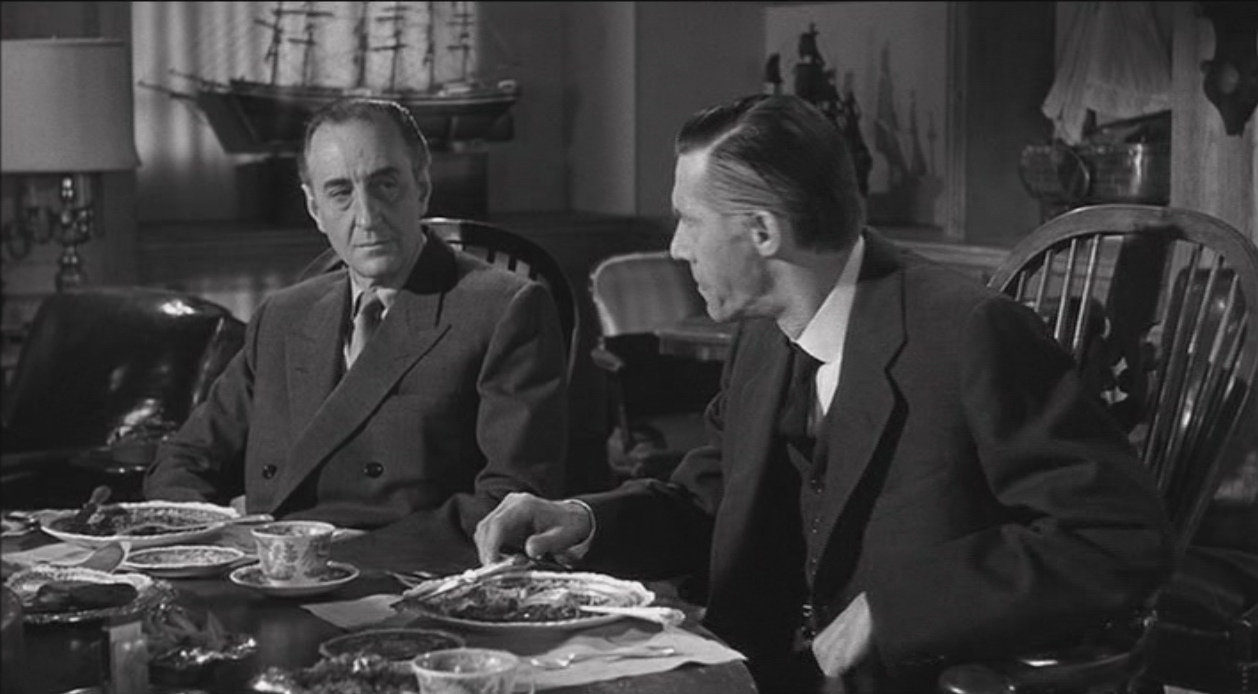
Basking in the rich material, Tracy is superb, meshing to a fare-thee-well with engaged and revitalized veterans Basil Rathbone, Pat O’Brien, John Carradine, Edward Brophy, James Gleason, Wallace Ford and Frank McHugh. Incisive, funny, eloquent, moving, it’s a bittersweet farewell piece, a finger-to-chest protest and a grudging realization that turning back the clock and resetting it are two different things. One’s a vain fool’s errand, the other a hopeful course correction. Always fond of a fracas, Ford asks us to wrestle with the contradiction.

At $2,300,000 it was costly for a Ford picture, and when the tag for prints and advertising were added the disappointing gross of $3,100,000 meant a loss of $1,800,000. That placement of 71st for the year was a drop of 27 places since his previous release The Wings Of Eagles, which had only done modest business, even with reteaming John Wayne and Maureen O’Hara. Tracy was Oscar-nominated that year—for another aging character facing time and (literal) tide, also from a novel, The Old Man And The Sea. Perhaps Hemingway’s honest fisherman was more readily sympathetic than O’Connor’s wily politician, or maybe the much costlier production pulled more studio pressure to save it from red ink, but Spence felt he was better in The Last Hurrah, and Ford considered it one of his own favorites.
During the 121 minutes Ford fans will find reasons to smile from Jeffrey Hunter, Donald Crisp, Carleton Young, Jane Darwell, Willis Bouchey, Ken Curtis, O.Z. Whitehead, Basil Ruysdael, Anna Lee, William Leslie and Jack Pennick. Also jostling in the mob: Ricardo Cortez, Dianne Foster (third billed but a wan part), Frank Albertson, Richard Deacon, James Flavin, Edmund Lowe, Rand Brooks, Harry Lauter and Roy Jenson. Wake TF up, raise holy hell and vote!—while it’s still allowed.

 Movies ala Mark