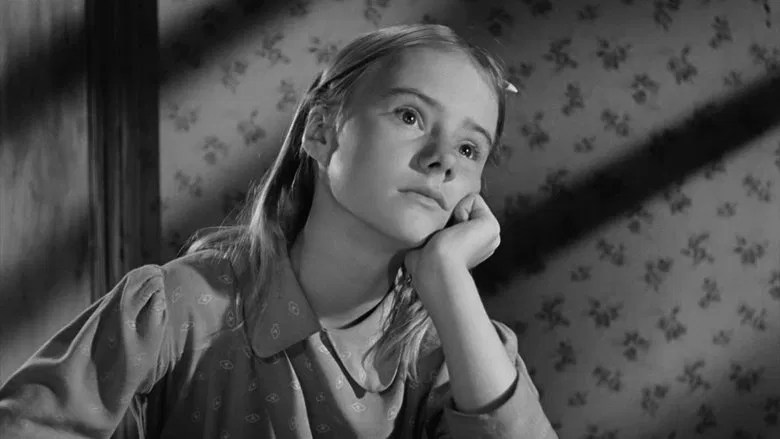
A TREE GROWS IN BROOKLYN, one of 1945’s best movies, marked Elia Kazan’s debut as a feature film director, guiding heartfelt performances from a sterling cast in adapting Betty Smith’s semi-autobiographical novel/memoir. The screenplay came from the married couple of Tess Slesinger and Frank Davis with some uncredited dialogue assist from Anita Loos; their script got an Oscar nomination. James Dunn strolled away with the Supporting Actor statuette, and 13-year-old Peggy Ann Garner took home the Academy Juvenile Award. *
FRANCIE: “Beshrew the witch! With venomous…” NEELEY: “That ain’t even English!” FRANCIE: “It is, too! Shakespeare wrote the best English of anybody!” NEELEY: “All right, then you tell me what it means, you’re so smart.” FRANCIE: “I didn’t say I know what it means. I said I liked it.”
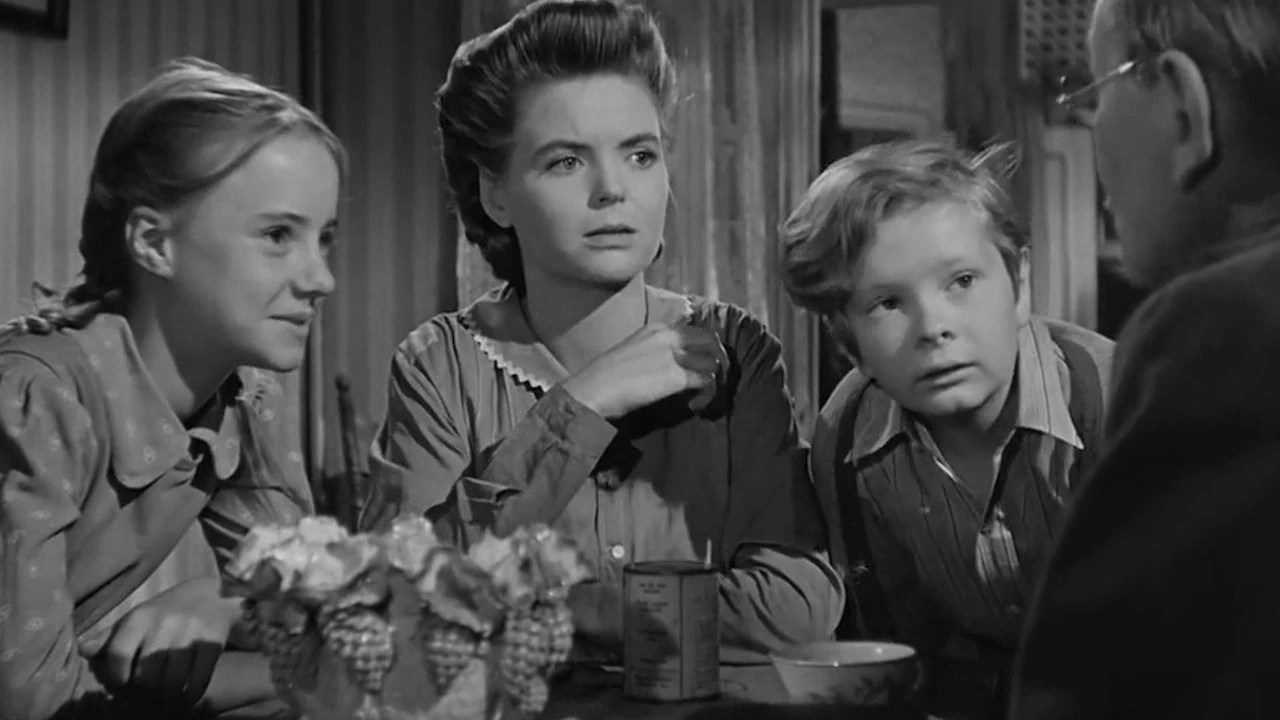
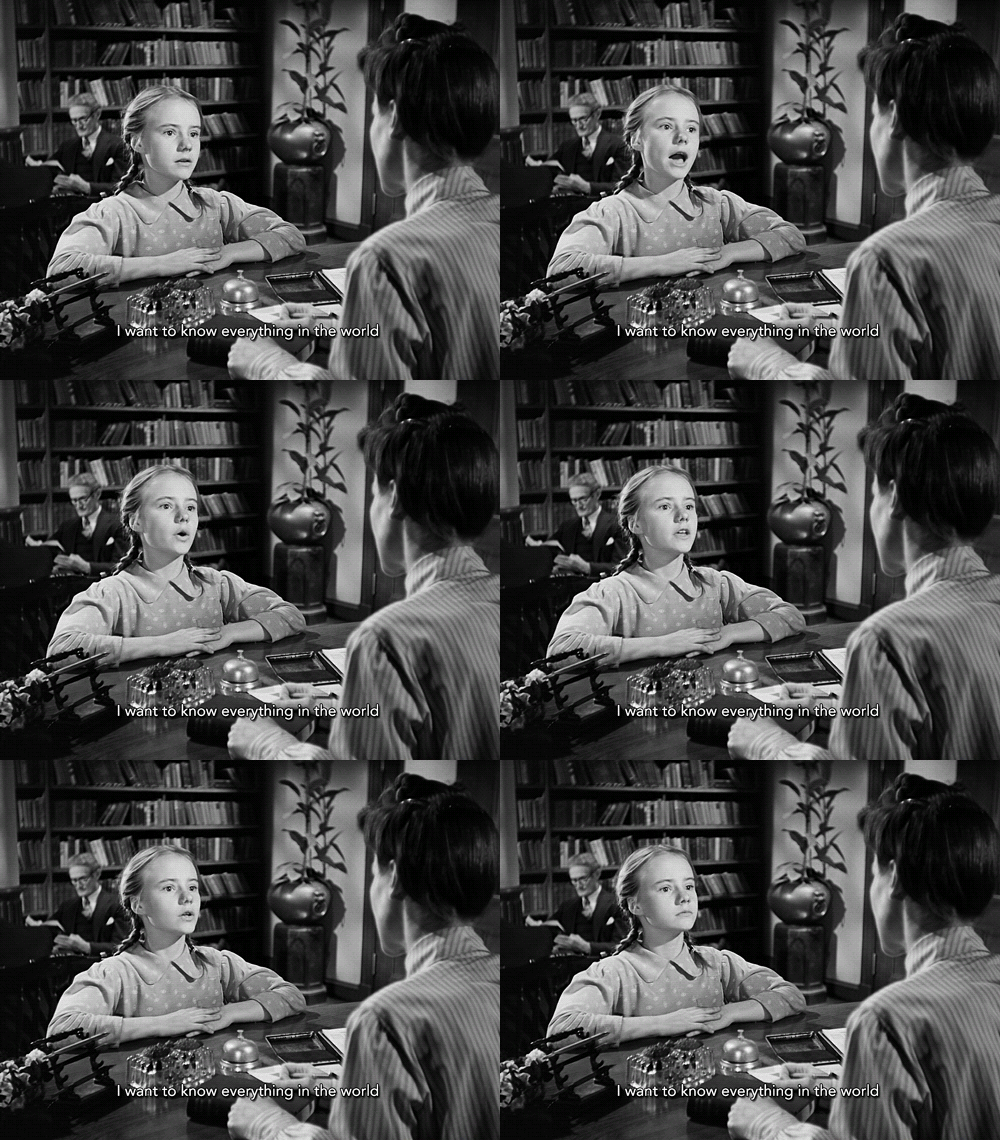
Brooklyn, 1912. Bright eleven-year-old ‘Francie Nolan’ (Garner) loves to read—she’s diligently plowing thru every book in the library, in alphabetical order—and keenly observant, shows a gift for creative writing. Younger brother ‘Neely’ (Ted Donaldson) is rambunctious. Mother ‘Katie’ (Dorothy McGuire) is not only homemaker but breadwinner and disciplinarian because father ‘Johnny’ (Dunn), a natural charmer, is too fond of the bottle and pipe-dreaming to get and keep steady employment. That problem alone would strain a marriage: living in a tenement in a crowded, poverty-wracked neighborhood worsens the Nolan’s chances of moving up, let alone securing security or happiness.

Honed by his success on the stage, Kazan’s sensitive handling of his inaugural feature (he’d done two shorts) reveals his essential thrust as a director: “I don’t move unless I have some empathy with the basic theme.” The empathetic story, richly drawn characters and all-around splendid performances make this straightforward human drama a shared experience that genuinely earns the descriptors ‘heart-warming’ and ‘tear-jerking’. Minus false sentiment, emotional impact is honestly wrought, the humor disarmingly natural, the joys & defeats, pains & hopes hold truth and register with immediacy that doesn’t date. We believe in and care for these people. Leon Shamroy’s cinematography is a major assist, Alfred Newman’s scoring in the background a perfect selection of classic period tunes. *
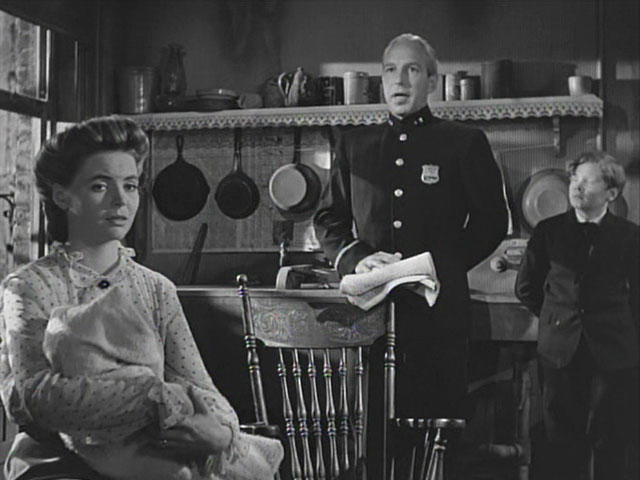
Though Garner has the central role, McGuire drew top-billing. The former model and stage actress had become an instant star in her first film, 1943’s Claudia. Too smart to let vanity trump talent, her beauty—a blend of patrician and unpretentious—is muted to suit Katie’s still young but already dispirited and lifeworn attitude. Only 28, this role forecast those that in the following decade would see her repeatedly cast as ‘the indomitable mom’. At 42, James Dunn’s once bright career had hit the skids, thanks largely to—mirroring Johnny Nolan—his problems with booze: he hadn’t worked for five years before Kazan cast him. His natural sunniness (everyone liked Dunn, just as they did Nolan) mixed with inner pain made the perfect fit of actor to character. The Academy Award praise he received was sadly amiss for co-star Joan Blondell, 39, who should’ve drawn a nomination for her exuberant turn as ‘Sissy’, the delightfully earthy older sister to Katie, a sympathetic defender of the self-wounded Johnny and a terrific Aunt confidante to the kids. Also excellent is Lloyd Nolan, playing against his more familiar tough guy terrain as soft-spoken, kindly-natured policeman ‘Officer McShane’. Ted Donaldson, 11, gets a good share of laughs as the spunky (but not bratty) kid brother. Garner, acting since 1938, won this part on the strength of her work in Jane Eyre and The Keys Of The Kingdom. She appeared in two other pictures in 1945, Nob Hill (a bigger box office strike) and Junior Miss. Like many child actors, her adult career didn’t flourish, but her outstanding performance in A Tree Grows In Brooklyn still shines many decades later, every expression and line reading brimming with naturalism and sincerity.
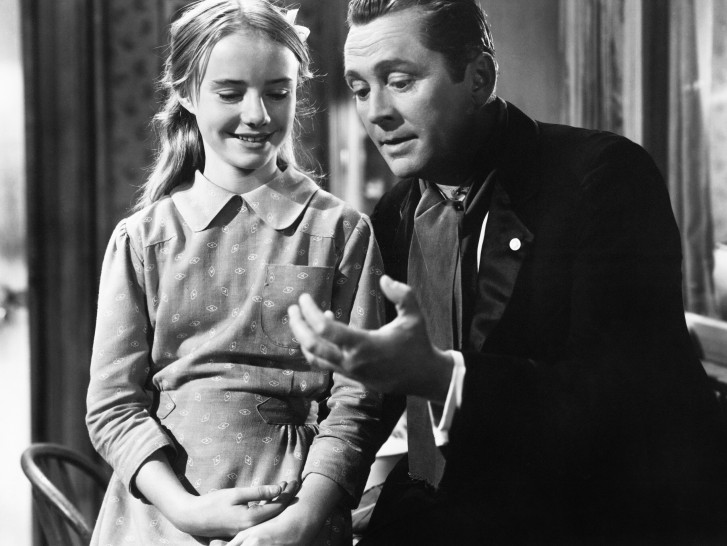
The 128 minute treatment covers only a portion of the 493-page bestseller, which had extensive before & after coverage of the family. Produced for $3,600,000, amassing a gross of $8,300,000, the ticket taking hit #27 in 45′.
With James Gleason, Charles Halton, Ferika Boros (‘Grandma’), Ruth Nelson (‘Miss McDonaugh’, Francie’s thoughtful schoolteacher), John Alexander, Art Smith and Adeline De Walt Reynolds. Future badass William Smith, 11, is one of the kids in the crowd. Eventual director Nicholas Ray made his Hollywood debut, working as the dialogue coach.
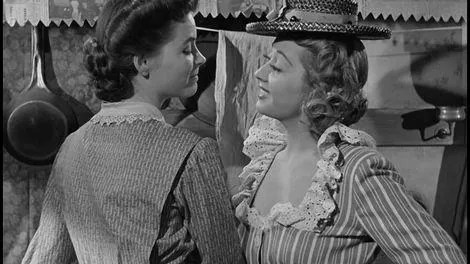
* Leon Shamroy: “The obtrusive camera is like a chattering person—something we can do without. It’s okay for the camera to join the conversation, so to speak, but it must never dominate. It must never distract from the story. The real art of cinematography lies in the camera’s ability to match the varied moods of players and story, or the pace of the scene.” He grabbed an Oscar that same year for his Technicolor work on Leave Her To Heaven.
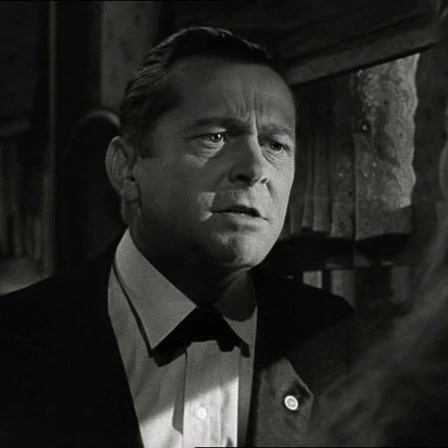 ** Kazan: “They were both like children. Jimmy Dunn was a beautiful child…I treated him and Peggy the same way. I also threw them together a lot. I would tell Jimmy about her father being away and how much she missed him. I got him concerned about her. And I would tell her she was important to Jimmy and got her to love Jimmy…there is a scene later where Johnny and Kathy decide he must tell Francie that she has to quit school and go to work. There is no other way to afford the baby that’s coming. Johnny goes in determined, but before he can get to it, she tells him how much she wants to be a writer and his resolve melts. I didn’t need to do a lot of schmoozing before we shot that seen, as important and emotional as it was. The values were obvious and by then Jimmy loved Peggy as his own. How could any feelingful person not want Peggy Ann Garner to be anything she wanted?”
‘Mother’ McGuire: Friendly Persuasion, Old Yeller, A Summer Place, Swiss Family Robinson, The Dark At The Top Of The Stairs, Summer Magic, The Greatest Story Ever Told (Mom of mom’s).

 Movies ala Mark