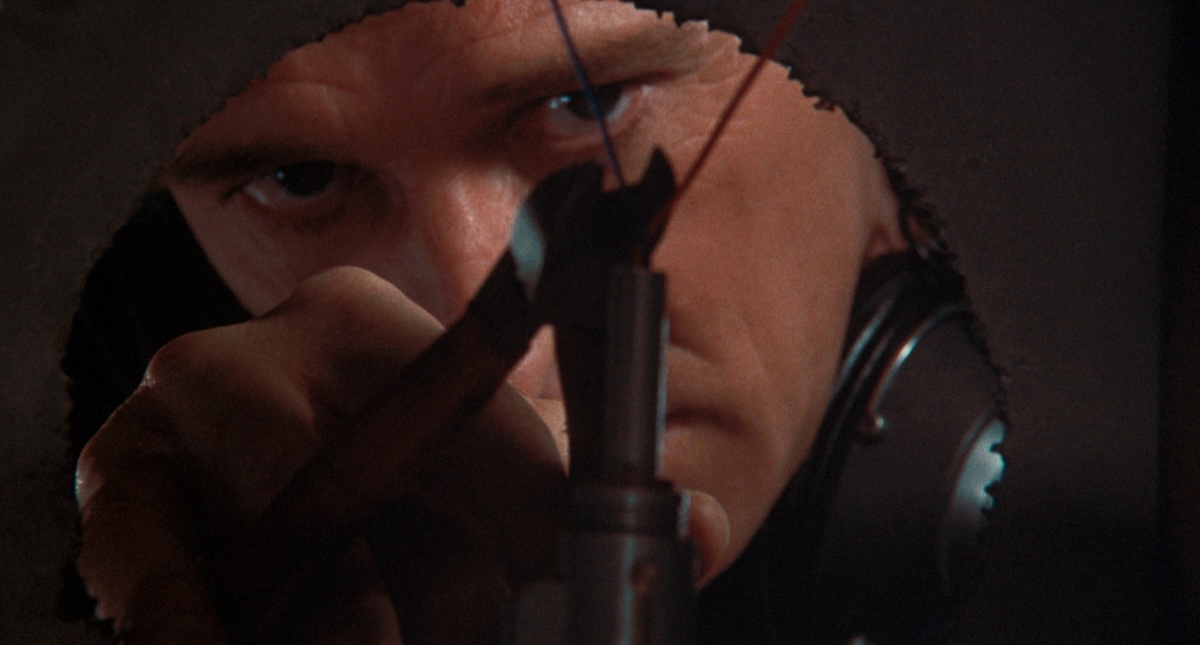
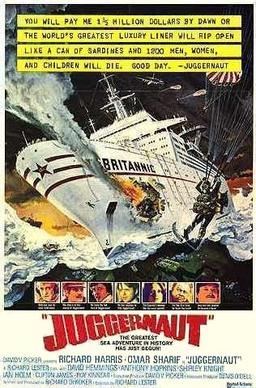
JUGGERNAUT, a well-crafted 1974 thriller, won good reviews and decent business abroad but didn’t stir much of a wave at the US box office, $4,500,000 and 66th place. Some post hoc musing, including from its director, had the lukewarm response blamed on advertising and poster art pushing it as a ‘disaster’ pic, but that doesn’t really pan out since it was released before the year’s trifecta of disaster epics, The Towering Inferno, Earthquake and Airport 1975, all major hits. Though they were really part of an ensemble piece, top-billed stars Richard Harris and Omar Sharif had both lost their drawing power, or maybe it was that the somewhat archaic title didn’t register? I recall being a bit disappointed seeing it at 19, so perhaps aging isn’t just recommended for wine and cheese.
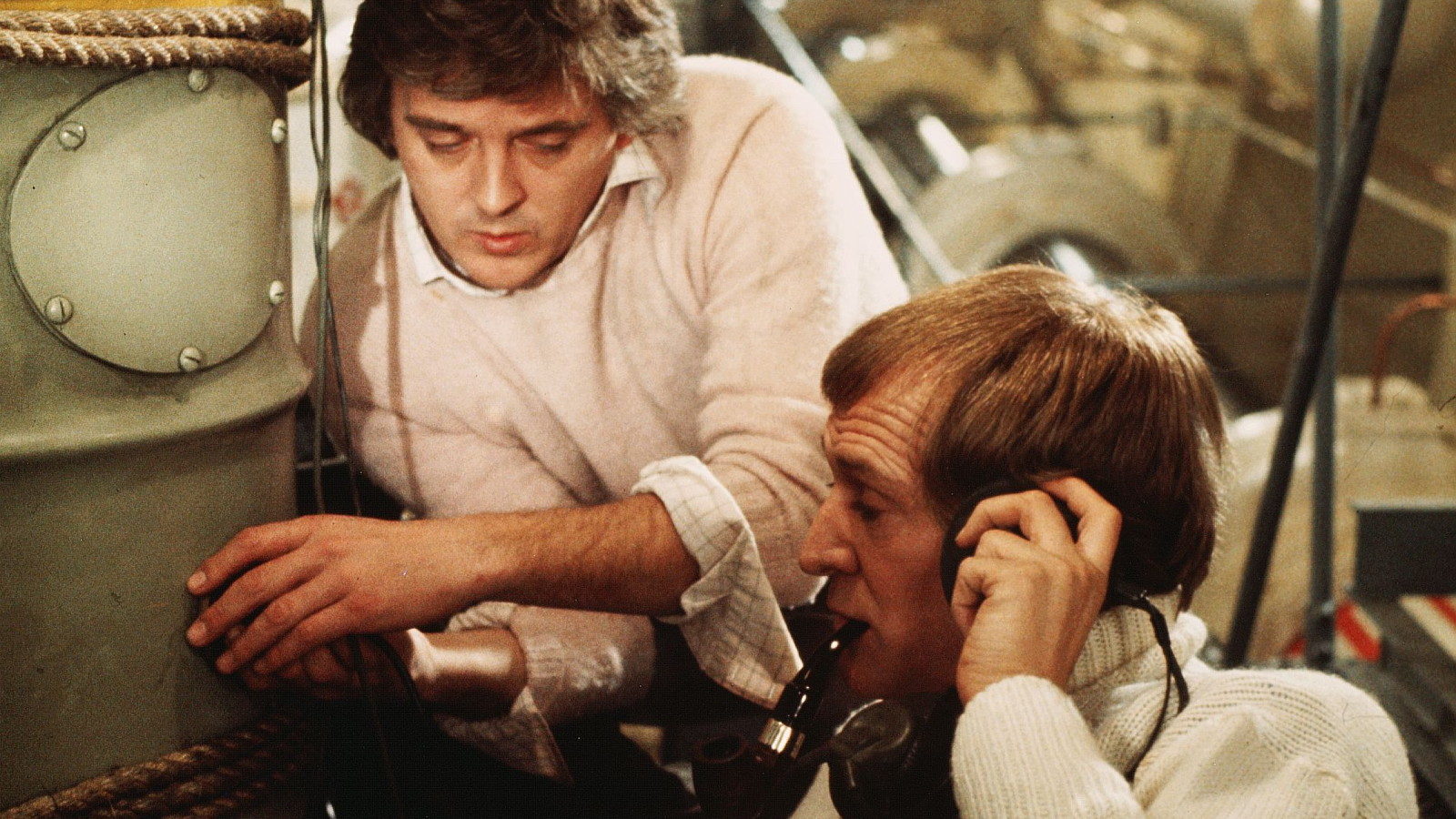
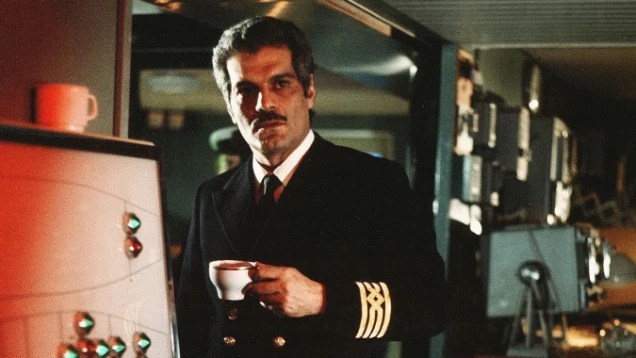 Plowing thru the gale-angered North Atlantic, the passenger liner ‘Britannic’ is informed that along with 1,200 passengers it’s carrying seven drums packed with explosives, booby-trapped and timed to blow unless a £500,000 ransom (£5,542,236 in 2025) is forked over by the shipping line. A Royal Navy bomb disposal unit led by ace defuser ‘Lt. Cmdr. Anthony Fallon’ (Harris) is flown out to help, while ship’s ‘Captain Alex Brunel’ (Sharif) tries to keep his passengers as calm as death-threatened hostages can hope to be, given that the rough seas would likely founder lifeboats even if anyone could get into them after the time ticking terminates. Back in London, ‘Superintendent John McLeod’ (Anthony Hopkins) searches for the mystery blackmailer and line owner ‘Nicholas Porter’ (Ian Holm) struggles over the price of paying up when the government insists on ‘no deal’.
 Inspired by an actual bomb threat to the QE2 that had Special Forces airdrop in to save the day, producer Richard Alan Simmons came up a script. Two directors (Bryan Forbes and Don Medford) bailed on the project, so Richard Lester (fresh off The Three Musketeers) was the cavalry to the rescue, coming aboard just three weeks before the shoot was set to commence. First off, he rewrote the script, whipping up a new one with Alan Plater, a smart move when you look up Simmons credits as a screenwriter. Filming was done on the cruise ship Hamburg, with the cast, crew and 250 extras who signed on for a free trip under the condition that it would take place in bad weather on the North Sea.
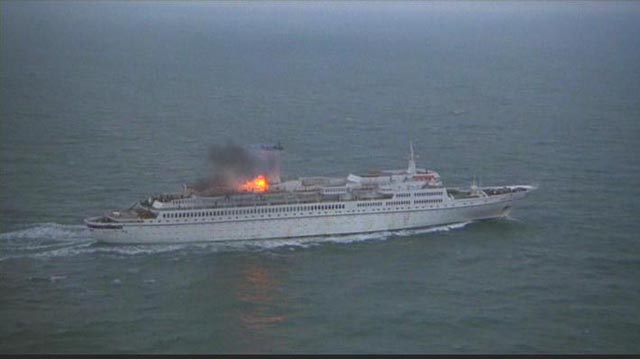
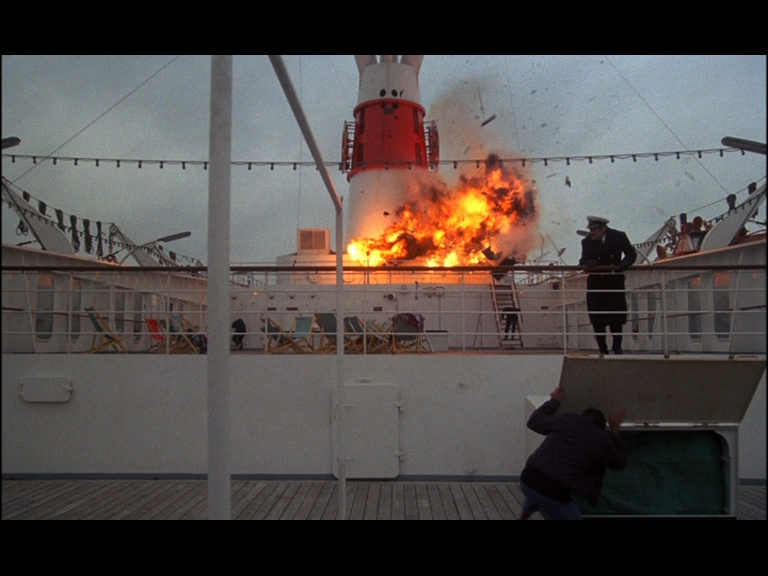
There’s a multitude of thinly drawn characters, some more interesting or amusing/distracting than others, with Lester favorite Roy Kinnear having the juiciest part as the ship’s ham-jolly Social Director. Harris goes for the jocular vein until he gets an expected scene to theatrically rage (Beef ala Harris, overdone) and Sharif’s emotionally distant officer allows little range for anything beyond impatience; the captain’s subplot with passenger Shirley Knight goes nowhere. Not yet overly familiar to wide audiences, Holm, 42, and Hopkins, 37, are checkmated by bland exchanges of expository dialogue, and distancing camera blocking. They’re all professional but the strength of the show is derived from the novelty of the setting (nearest candidate the mediocre Assault On A Queen from 1966), with impressive bow-on views of the ship pounding thunderously thru the waves, the obvious slick and rocking decks ensuring the cast is buffeted and slip-slide navigating them. Best is the exciting, dangerous-looking sequence when the rescue unit, having parachuted into the ocean, scale the side of the ship via ladders dangling over the sides. The ensuing scenes of attempting to defuse the barrel bombs are reasonably tense, and a few sample detonations spur things along—you don’t make a large scale TNT-centered movie without at least some payoff racket.
The Atlmanesque back & forth in the ranks is primed with a slew of fine actors that Lester cast in small parts: David Hemmings (3rd-billed, hardly anything to do), Clifton James (token American), Freddie Jones, Julian Glover, John Stride, Cyril Cusack, Roshan Seth, Michael Hordern, Jack Watson, Simon MacCorkindale. 110 minutes.

 Movies ala Mark