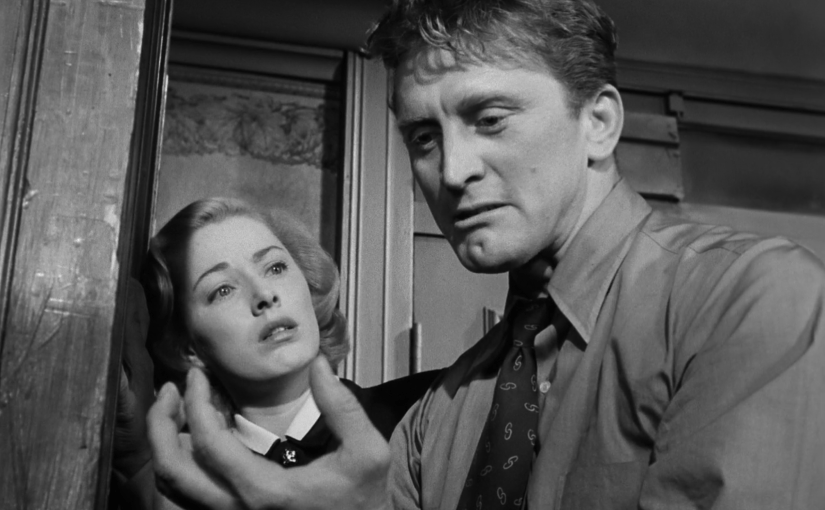
DETECTIVE STORY, adapted from Sydney Kingsley’s hit play, was one of 1951’s “movies for grownups” (A Streetcar Named Desire, A Place In The Sun, Death Of A Salesman), this one directed & produced by William Wyler, with Wyler’s brother Robert and Philip Yordan handling the screenplay. Made for $1,500,000, it was the year’s 15th most successful at the box office, taking in $8,000,000, drew good reviews and a quartet of Oscar nominations. Considered hard-hitting at the time, it’s lost some punch thanks to a couple of overheated performances, but remains fairly absorbing and the 103 minutes click past swiftly.
“Take a couple of drop dead pills.”
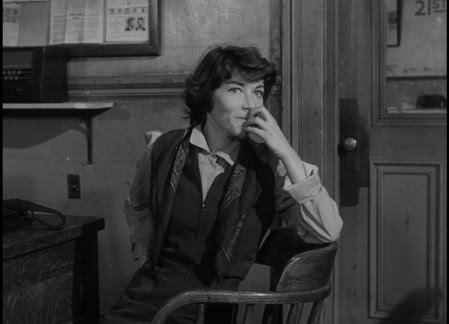
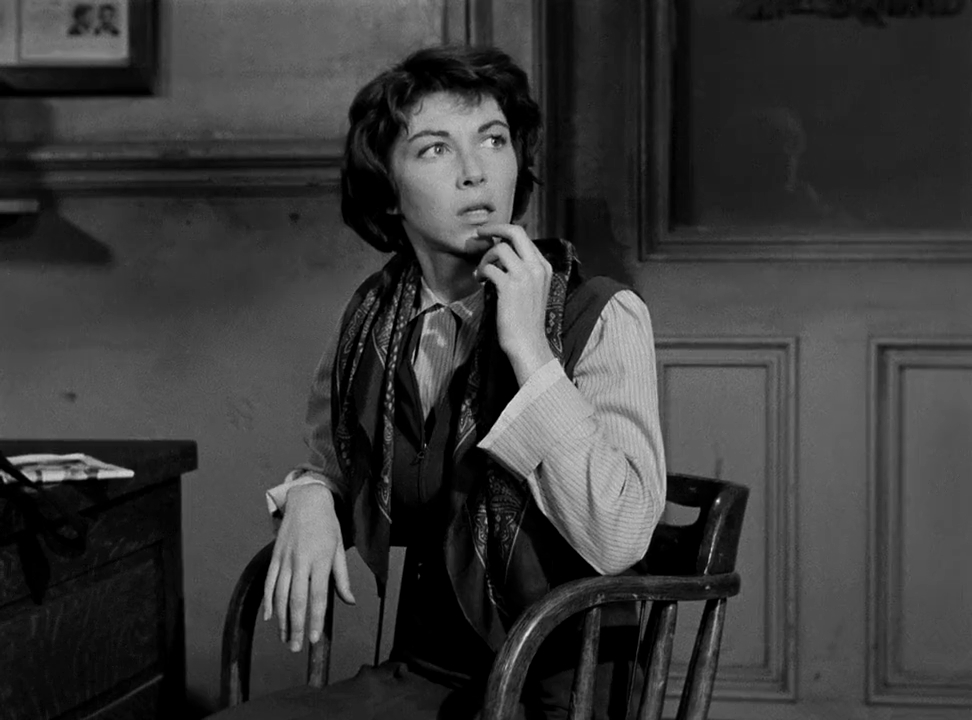
The cops in a New York City precinct have a steady clientele of perps to process, from the ditzy and defeated to the deranged and dangerous. Driven and pitiless, detective ‘Jim McLeod’ (Kirk Douglas) uses his authority to work out his inner demons, which place him in personal as well as professional hot water when he finds that his wife ‘Mary’ (Eleanor Parker) may share a secret with a sleazy illegal abortionist (George Macready) Jim is keen to put away. McLeod’s partner ‘Lou Brody’ (William Bendix, very good) is no pushover, but he has a more humane approach. Cases and characters include a young man (Craig Hill) who, to impress a model, foolishly filched some money from his employer, a nervous, basically harmless shoplifter (Lee Grant) and a pair of creepy burglars (Joseph Wiseman and Michael Strong) with extensive and deadly serious rap sheets.
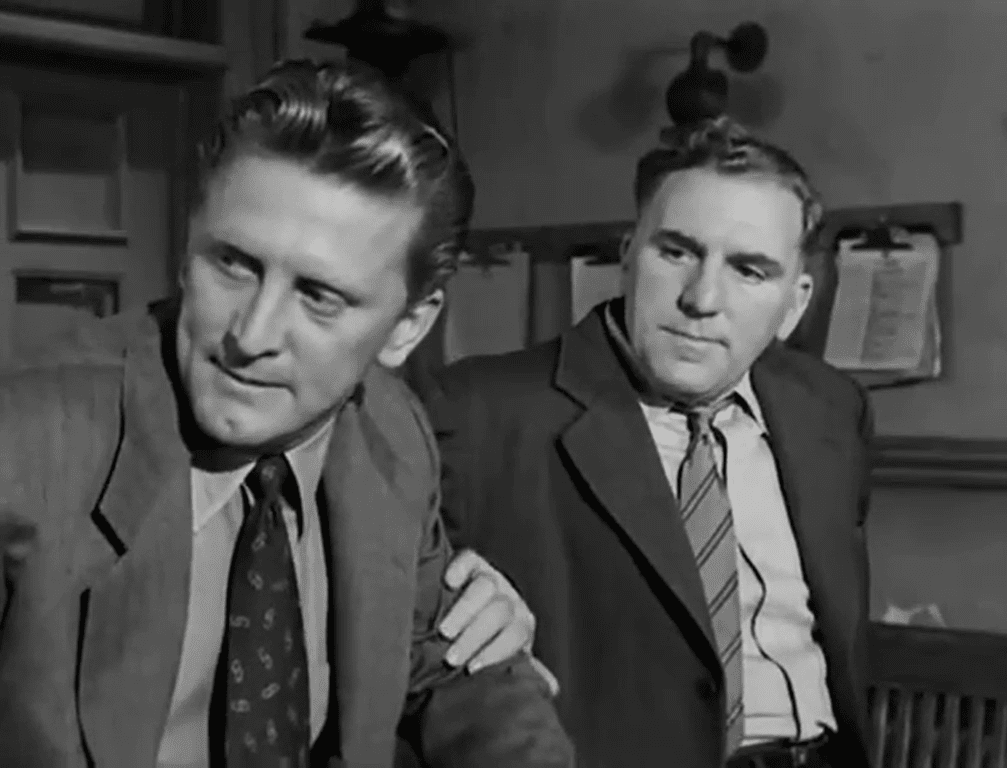
Wyler’s direction was Oscar nominated (his 7th of a record 12, with three wins) as was the script. Parker went on the list, too; she’s good but no one stood a chance against Vivien Leigh for A Streetcar Named Desire. The welcome surprise and most deserving nominee was debuting Lee Grant, 25, who had also made her stage bow in the play two years earlier; touching, funny, charming, vulnerable, she’s terrific. *
Wiseman and Strong also repeated their roles from the play. Wiseman’s wildly theatrical performance is utterly bizarre: maybe it looked “real” at the time but today it comes off almost like a parody. But the chief indulgence comes from Douglas; was this the role that kicked off his penchant for occasionally overdoing intensity to the point where impressionists (or fans) could get quick chuckles doing a Kirk Douglas Impression. He was also on view—and better—that year in the less-seen scalder The Big Carnival/Ace In The Hole (as a real bastard) and the soso western Along The Great Divide, his first of fourteen in the genre.

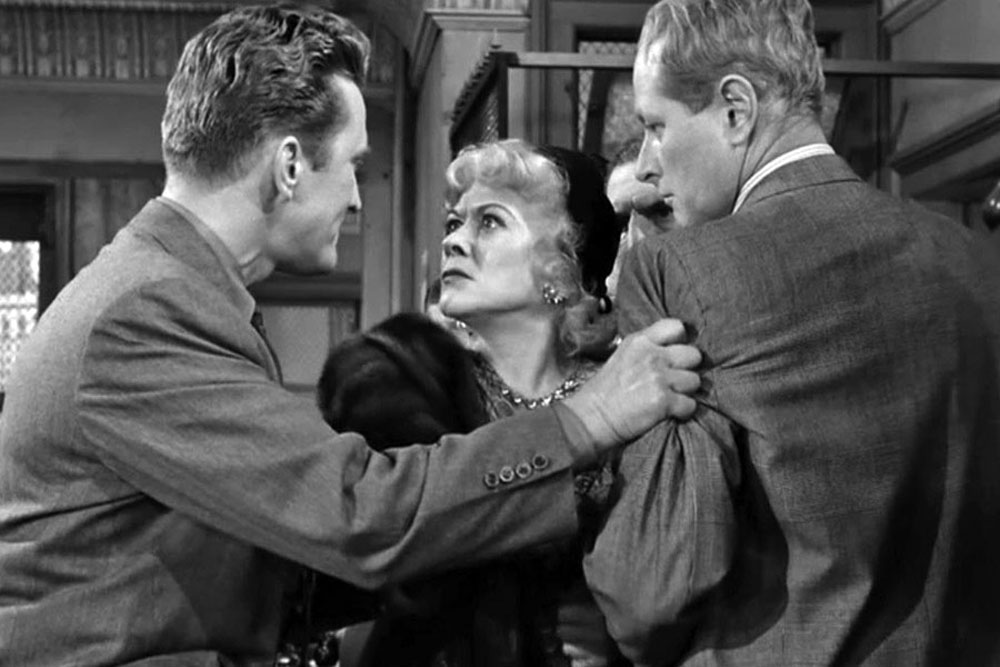
With keen work from Horace McMahon (lieutenant managing the menagerie), Cathy O’Donnell (sweetie hoping to help the cornered Hill), Warner Anderson (Macready’s smug lawyer), Frank Faylen (easygoing ‘good cop’), Gladys George (flashing spite in great “tough dame” style), Gerald Mohr (smooth ooze as ‘Tami Giacopetti’, what, you don’t trust that name?), Bert Freed (detective patiently trying to deal with Grant’s prattle) and Burt Mustin (irked custodian).
* Grant’s nom was from left-field, figuratively: she was promptly blacklisted that same year—refusing to be a fink—and only got two film parts over the ensuing twelve years, Storm Fear in 1955, Middle Of The Night in 1959. Playwright Kingley, also known for Dead End (which Wyler directed in 1937) was a blacklist casualty as well.
 Movies ala Mark