
A MATTER OF LIFE AND DEATH received a mixed reception from critics when released in England late in 1946, then did respectable business at the nation’s cinemas. In the States—distributors shying over ‘Death’ in the title— it went out as Stairway to Heaven, placing (according to Cogerson) 84th for the ’46 crop, with Variety citing a gross of $1,750,000. Made for £320,000 (£17,126,833 in 2025), the ingenious supernatural fantasy/romance drama outlived the initial review shrugs and unimpressive ticket sales, and today is hailed as a classic, another jewel from the writing-producing-directing team of Michael Powell and Emeric Pressburger.
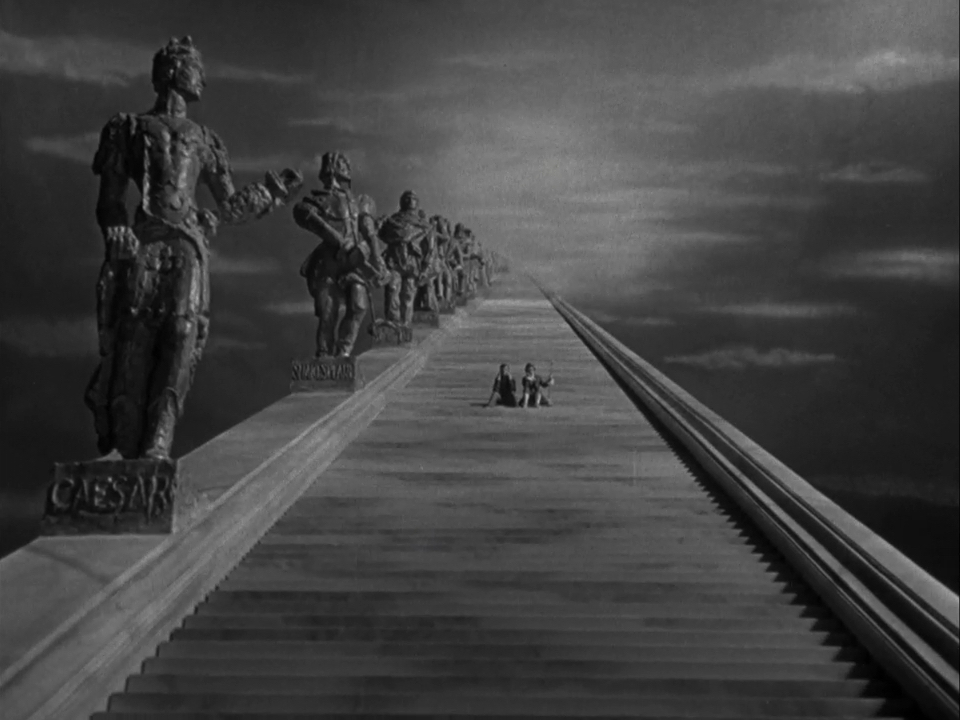
“This is the story of two worlds, the one we know and another which exists only in the mind of a young airman whose life and imagination have been violently shaped by war. Any resemblance to any other world known or unknown is purely coincidental”.
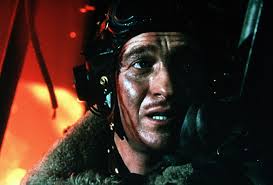
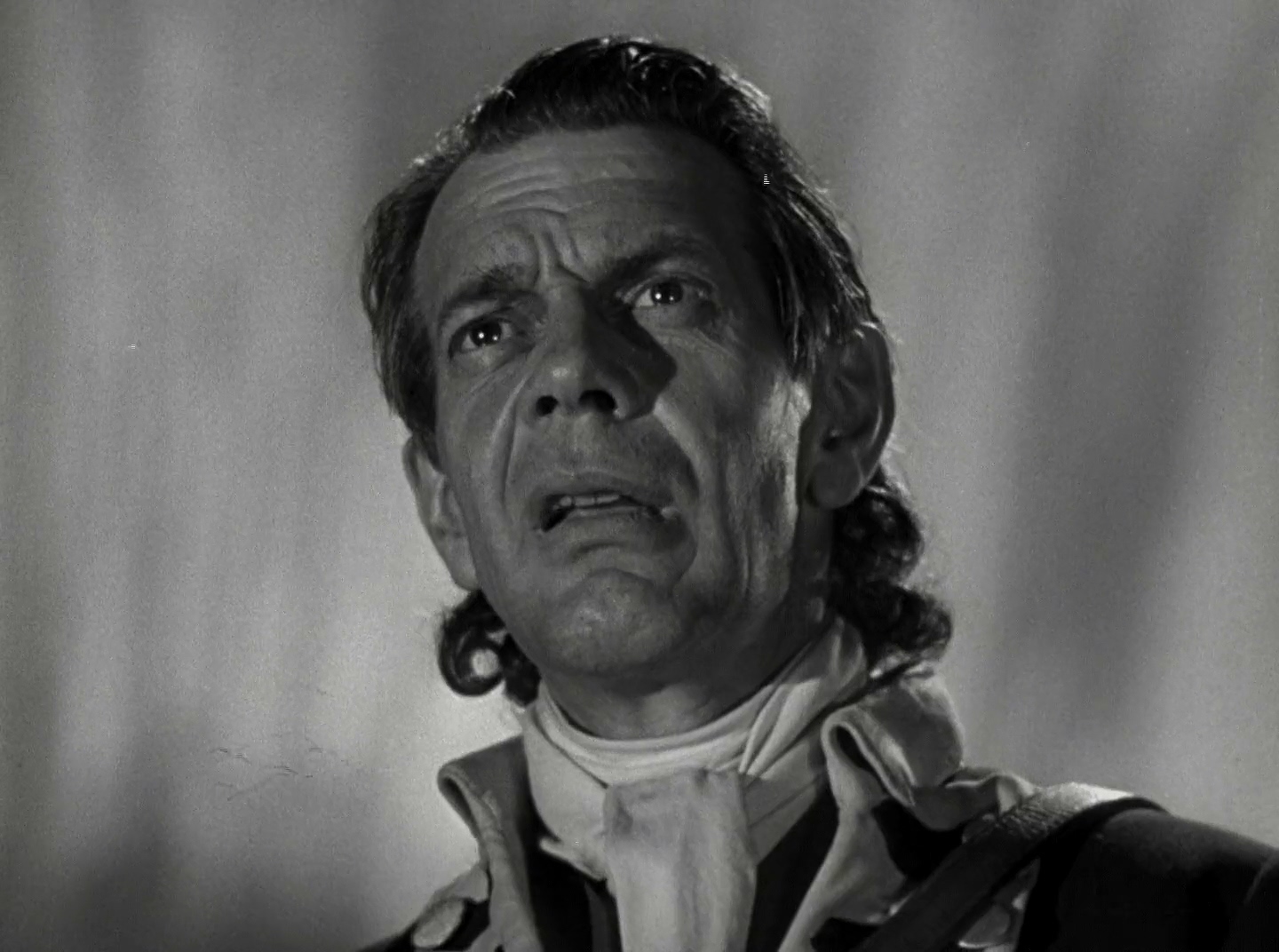
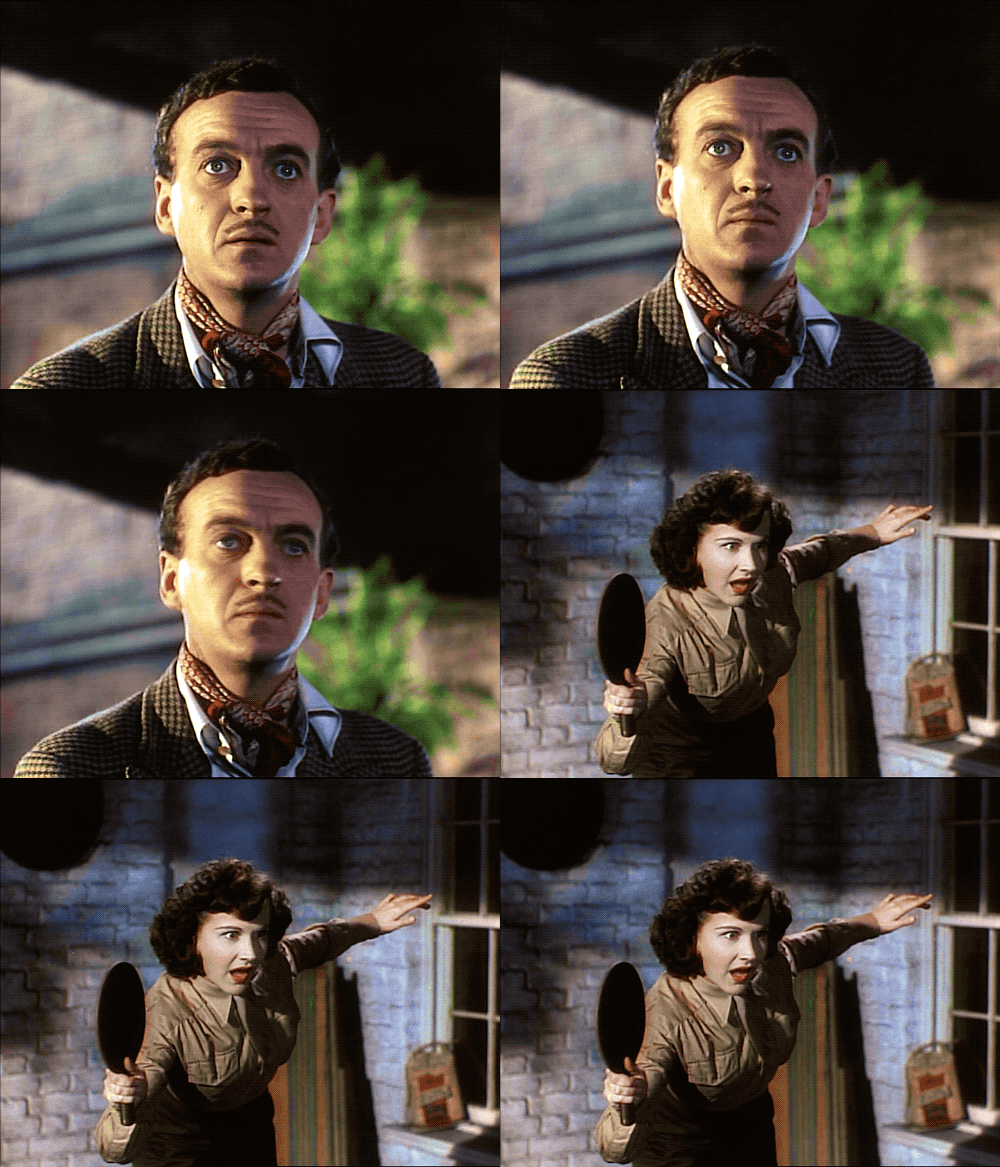
As WW2 winds down, RAF pilot ‘Peter Carter’ (David Niven) bails out of his burning plane without a parachute. Before he jumps to certain death he has a final conversation with ‘June’ (Kim Hunter), an American WAC volunteer manning a transmission station in England. Peter awakes on a beach near June’s base, amazed to have somehow survived the fall. But has he? ‘ ‘Conductor 71’, a representative from the ‘Other World’ in the form of a fussy French aristocrat (Marius Goring) from the Marie Antoinette era, informs him that he is in fact deceased but his transition to the afterlife was missed: superiors and rules from above have given Peter three days among ‘the living’ to select someone to make a case for the ‘need’ of his miraculous survival. Fate puts that die-or-live task in the hands of ‘Dr. Reeves’ (Roger Livesey), who attends Peter’s ‘brain injury’ down on Earth; ultimately Reeves faces off against a ‘heavenly’ tribunal and a mass audience of departed souls. He defends the fallen airman’s right to stay alive against the ‘his time has clearly come’ argument presented by prosecutor ‘Abraham Farlan’ (Raymond Massey), a Yankee killed by the British during the Revolutionary War and as a result eternally embittered against everything to do with Great Britain.

“A weak mind isn’t strong enough to hurt itself. Stupidity has saved many a man from going mad.”
Afterlife stories had figured in earlier films (Liliom (remade as Carousel), Here Comes Mr. Jordan (redone as Heaven Can Wait), The Devil And Daniel Webster, Between Two Worlds, A Guy Named Joe (reworked as Always), with a surge of “what for?/what next?” reflection spurred by the traumatic losses from the war. Along with this elaborate Brit entry, Hollywood in ’46 provided the one that would become the most famous, It’s A Wonderful Life, as well as The Time Of Their Lives and Angel On My Shoulder. From France came Beauty And The Beast. The Powell-Pressburger team had added their film-making prowess to the war effort in a remarkable slate of beautifully crafted rallying cry’s that included 49th Parallel, The Life And Death Of Colonel Blimp, A Canterbury Tale and I Know Where I’m Going. Strains in US-British relations as the power & leadership locus shifted was impetus behind this offering, using a fantasy and romantic angle to assuage the sense of loss the conflict reaped and soften differences in manner, style and ‘billing’ between the battered and exhausted ‘Mother Country’ and her brash, musclebound offspring.
Whether it had any effect on the snippy riffing between cousins is hard to gauge, but as a meditation on mission, mortality and meaning, the nobility of sacrificing self for the sake of others, a salute to the power of love and a dazzling demonstration of creative visual effects to enhance rather than overshadow theme and ideas it’s a considerable achievement.

Back in cinema action after serving with distinction in the real thing, this gives Niven not his most famous role (Around The World In 80 Days was a decade away) but the one with the greatest depth until 1958’s Separate Tables. Massey goes for controlled fervor as the prosecutor in the sky and the redoubtable Livesey adds another performance medal to those he earned from Powell & Pressburger’s The Life And Death Of Colonel Blimp and I Know Where I’m Going. The thoughtful dialogue exchanges and ruminations on cosmic cause & effect contest for attention with splendidly conceived art direction, cinematography (Jack Cardiff) and special effects.

With Robert Coote, Abraham Sofaer, Kathleen Byron, Richard Attenborough (23, with one line), Joan Maude, Bonar Colleano and Lois Maxwell (uncredited debut at 19, a while—in Earth years—before becoming essential to HMSS as ‘Miss Moneypenny). 104 minutes.


 Movies ala Mark