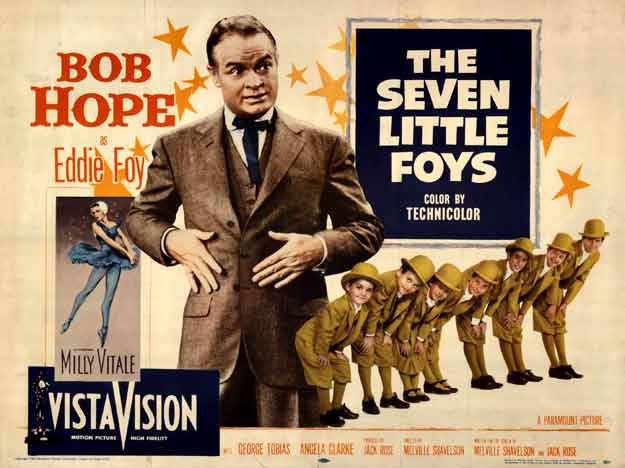
THE SEVEN LITTLE FOYS, excavating back into America’s vaudevillian roll call, were a father & offspring musical-comedy team who pattered & hoofed their way across stages for over a decade in the 19-teens & 20’s. The 1955 movie pastiche spun around them stars Bob Hope as the Pop, giving him one of his half-handful of semi-dramatic roles, directed by Melville Shavelson (It Started In Naples, Cast A Giant Shadow), who co-wrote the script with Jack Rose. This job of fact-splicing managed to get them an Oscar nomination for Best Story, which is a better joke than most of the gags in the script. *
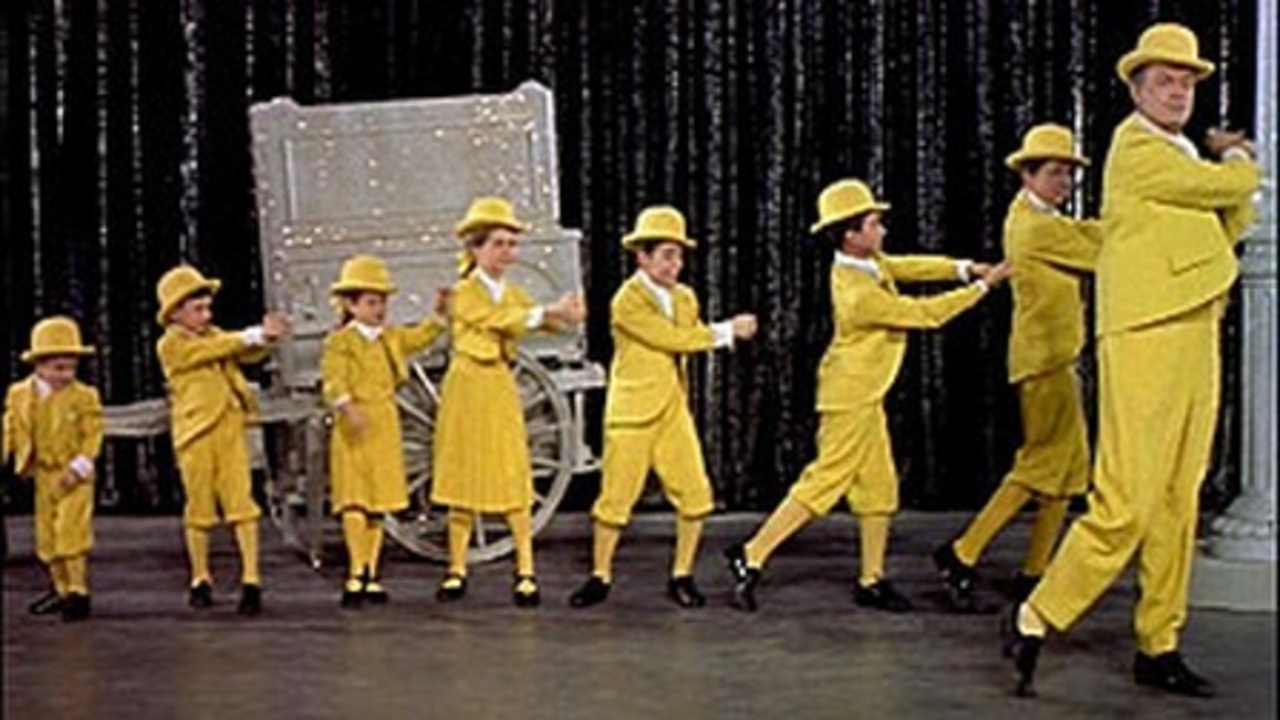
The remembrance—narrated by Charlie Foy, one of the seven—begins back in the late 1890’s, when stage entertainer Eddie Foy (1856-1928), adamantly solo, touring in his song & dance act, falls for visiting Italian ballerina Madeleine Mirando (Milly Vitale). After getting hitched they soon begin adding to the family, which eventually includes five boys and two girls. Also part of the household is Madeleine’s sister (Angela Clark), who thinks Eddie is a bounder, always away on tours. After illness claims Madeleine, Eddie decides to incorporate the children into his act, and they become quite popular for a good while. The movie was also popular, the 24th biggest earner at the 1955 box office, taking care of the $1,500,000 production cost with a healthy $11,400,000 gross.
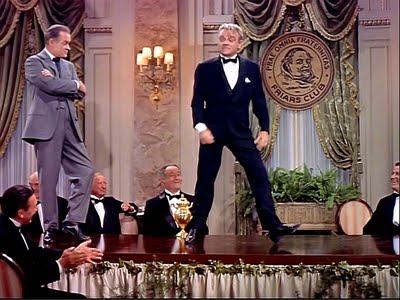
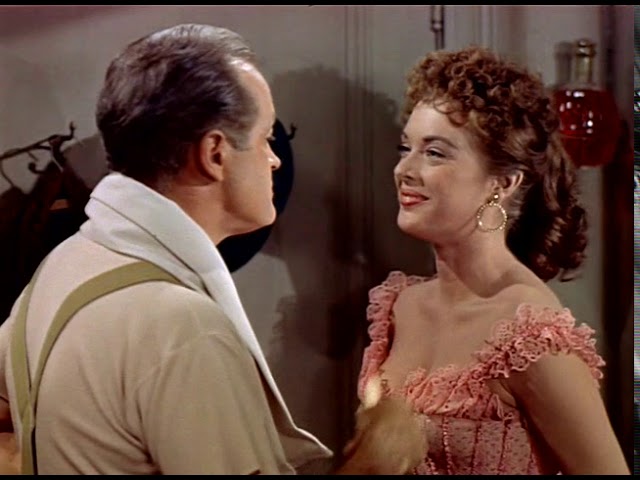
The cornball chore has two things going for it. First is that Milly Vitale, 21, is lovely and vivacious in one of her few English-language parts (she appeared in The Juggler, War And Peace and A Breath Of Scandal). Second, and the best-known feature of the show is a brief guest appearance from James Cagney, reprising his George M. Cohan of Yankee Doodle Dandy. In his four minute scene Cohan and Foy do a friendly competitive tabletop dance-off at a banquet. Cagney, 55, and Hope, 51, pull it off in grand style–the definite highlight of the movie. A third compliment could go to the pretty Technicolor, but that’s mitigated considerably because whoever made the transfer to disc blew it: the movie was shot in wide-screen VistaVision and the video transfer is squashed down to the older screen ratio.
Otherwise, it’s a chore. First off, from start to finish Foy behaves like a selfish jerk, tossing likability and sympathy out the window. Fidelity to facts aren’t usually strong suits in old wheezers about ‘beloved’ entertainers (The Jolson Story, etc.) and this one’s a prime example. Madeleine (1869-1918) was actually was his third wife (of four) and bore eleven children, seven who lived and became–were forced into, really—the act. The script leaves out Foy’s earlier encounters with Wyatt Earp and Bat Masterson, including a stint in Tombstone, Arizona, where he was nearly plugged by one of the Clanton Gang (John Ford did a fictional version of this in My Darling Clementine) and one truly major event is treated so briefly and indifferently it’s almost a joke. On Dec. 30, 1903, Foy was doing his act at the Iroquois Theater in Chicago. A fire broke out and Foy, to his credit, tried to stem panic; he escaped the blaze by crawling thru a sewer. The worst theater fire in American history, it killed more than 600 people. The movie glosses over it.
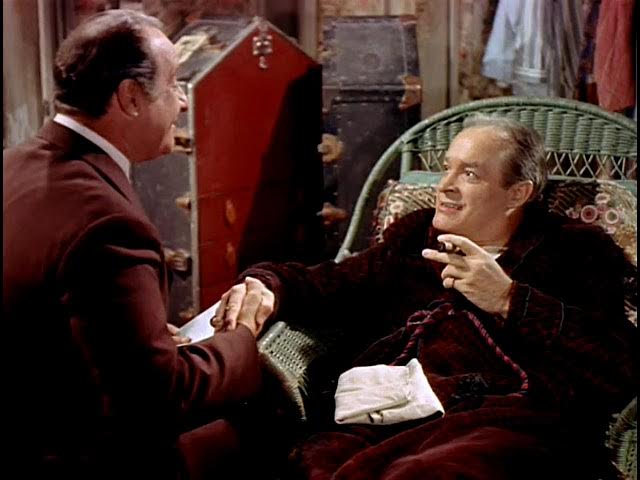
Eddie Foy Jr. would go on to play his father onscreen four times (Frontier Martial, Lillian Russell, Yankee Doodle Dandy and Wilson). Melville Shavelson would also direct Hope’s next, Beau James, a straight biodrama about Jimmy Walker, colorful Mayor of New York City, whose time in office partly coincided with the Foy clan’s time in the lime-lite.
93 minutes, with George Tobias, Billy Gray, Lydia Reed, Jerry Mathers (age 6), Dabbs Greer, Milton Frome, King Donovan, Joe Flynn.
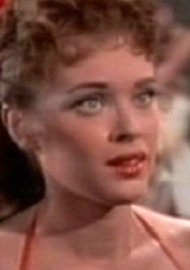
Milly Vitale, 1932-2006
 Movies ala Mark