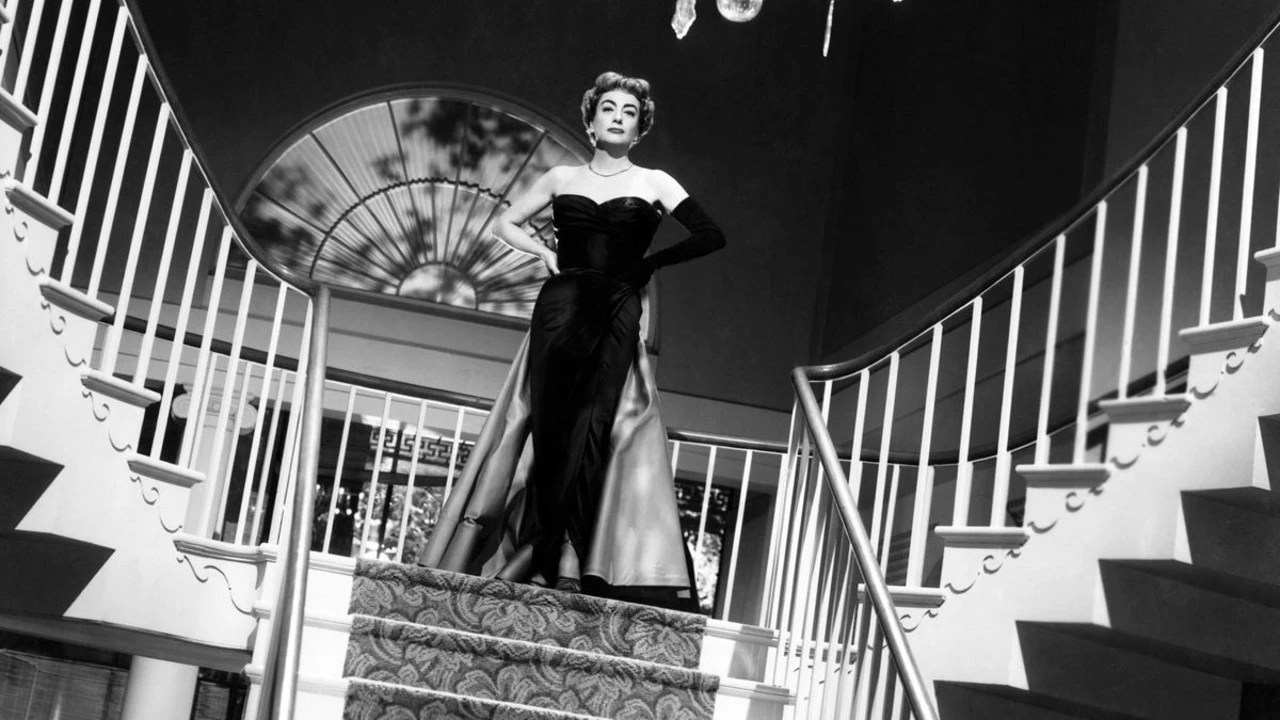
QUEEN BEE—“Aren’t I wicked?” So purrs Joan Crawford in a 1955 melodrama so campy it’s almost delirious. Among the Dominant Dame types she veered to in the latter half of her career, the vicious in-house homewrecker in this hysterical trash-treat ranks at the top. As ‘Eva Braun Phillips’, her highness rules a Georgia mansion with a manner that leaves no cell in the hive in doubt as to whose sting packs the most painful buzzkill. “And miss a party? Darling, a party is to women what a battlefield is to men.” *
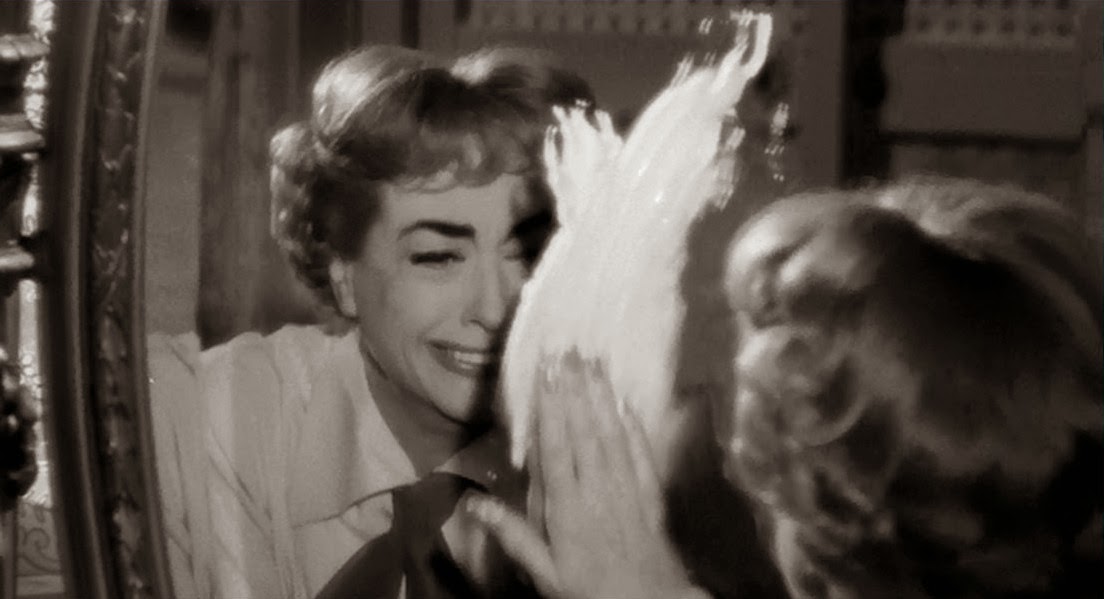
During an eventful stay at cousin Eva’s southern-fried estate ‘Jennifer Stewart’ (Lucy Marlow) discovers what other unhappy denizens and hangers-on victims already know; Eva is a one-woman delta force of manipulation and cruelty that spares no-one for any longer than she needs them to use against someone else. Among the cornered and cowed are drink-sodden, zoned out husband ‘Avery’ (Barry Sullivan), nicknamed ‘Beauty’ because of a facial scar (via Eva), Avery’s shell-shocked sister ‘Carol’ (Betsy Palmer), a walking dart board for Eva’s spite, and surly ‘Jud Prentiss’ (John Ireland) who wants to marry Carol but is sexually spider-webbed by Eva—he tells her “”You’re like some fancy kind of disease. I had it once and now I’m immune.” Not for long, you weak bastard.

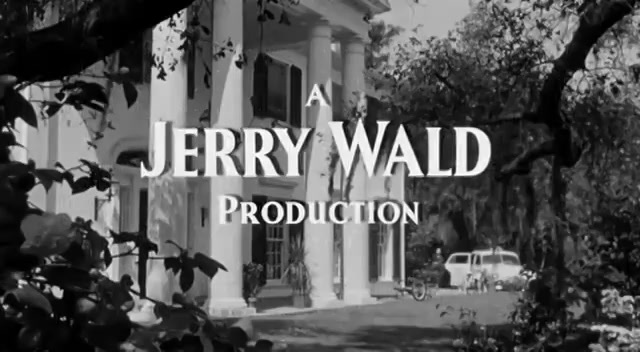
Even though her box office draw had dropped considerably by this point, Joan Dearest ushered this white panther out of the jungle and into the haunted mansion under pure iron-clad star clout. She spent $15,000 for the rights to Edna L. Lee’s novel “The Queen Bee”, sold them to Columbia with conditions: she’d star, Jerry Wald would produce, Ranald MacDougall for the screenplay and directing, with Charles Lang as cinematographer. Plus she’d approve, per contract, her costuming, make-up and hair design. “Any man’s my man if I want it that way.”
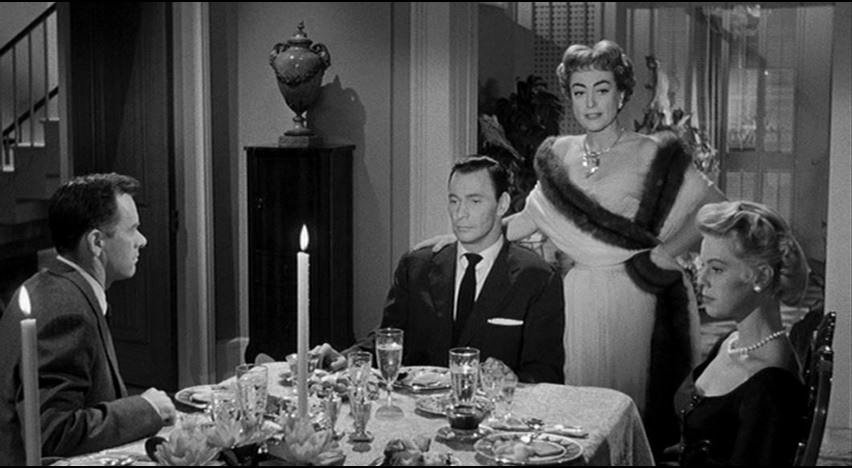
Over the top all the way, and 95 minutes of fun for being so. The setting is the sort of plantation showpiece that comes with an elaborate staircase (made for ‘sweeping down’), hushed ‘help’ (loyal and “colored”), and well-loaded gun racks, just in case bitter, bourbon-fueled hubby wants to muzzle-velocity an old hound or flesh wound a pesky relative. Ridiculous but rich, and Crawford eats it up like a lioness after baby impalas. Spooky-eyed Marlow, 22, is pretty bad: Columbia trotted her out, briefly, not for discernible acting talent but for her legs, which were outstanding, but unfortunately hidden in this role. Sullivan, Palmer and Ireland go with the pyroclastic flow. I approached seeing this out of duty to the compendium requirements of the jobby, expecting to be bored to the vodka zone after about ten minutes. But not only was it surprisingly enjoyable for the mix of honed craft and gaudy excess, but it served to spark warm memories in recalling a wonderful former flame, deceased and terribly missed; sweet Sandra would have been in stitches watching this camp fest. If you’re blessed to have a partner with a sense of the absurd, this meller wallow is a guaranteed hoot.
Though it drew Oscar nominations for Cinematography (Lang’s 11th of 18 nominations) and Costume Design (all those Jean Louis gowns Joan parades in), the gross of $2,800,000 was just 115th in ’55. Undeterred, Miss Crawford kept on swinging.
With William Leslie (being slick in a loathsome way), Fay Wray (47, Kong survivor now an Eva casualty reduced to babbling nonsense), Katherine Anderson (nanny for the kids, references from Dachau), Linda Bennett (frightened child #1), Tim Hovey (frightened child #2), Willa Pearl Curtis (maid who best shush the sass) and William Walker (silent butler).
* Purportedly, Crawford’s daughter Christina offered that this portrayal of evil Eva was close to her own “Mommie Dearest” memories. Who knows? Who cares?

 Movies ala Mark